
Qwen-Robot Suite – Alibaba Tongyi's Physical-World Foundation Model Suite
Executive Summary:
Qwen-Robot Suite is Alibaba Tongyi Lab's foundation model suite for physical-world intelligence, comprising Qwen-RobotNav (navigation), Qwen-RobotManip (manipulation), and Qwen-RobotWorld (world model...
1. What Is Qwen-Robot Suite
Qwen-Robot Suite is Alibaba Tongyi Lab's foundation model suite for physical-world intelligence, comprising Qwen-RobotNav (navigation), Qwen-RobotManip (manipulation), and Qwen-RobotWorld (world model). Language-first interfaces bridge vision-language representation to physical action space for unified cross-embodiment, cross-scene training and inference—general LLMs act as top-level planners dynamically invoking physical tools for long-horizon closed loops. This architecture marks a key step from pure language intelligence to embodied AI—a reusable, extensible, composable robotics foundation framework.
Technical positioning and domain: Embodied AI and robot foundation models. Language unifies navigation, manipulation, and world prediction in one suite. Unlike per-task/per-body silos, unified vision-language-action space enables zero-shot generalization across bodies and scenes—a new path in robot foundation models.
Research background: Tongyi Lab robotics team builds on Qwen and VLM research. Motivation: hard skill transfer across heterogeneous bodies, planning-perception gaps in long tasks, and data barriers. A unified suite lowers application development barriers and moves embodied AI toward real deployment.
Core value: Solves robotics “fragmentation”—separate models and pipelines per body, task, and scene. Language-first interfaces let general LLMs call physical tools seamlessly from language understanding to physically grounded actions, aligning vision-language space with action space to cut integration cost.
Technical characteristics: Unified 80-dim state-action space for zero-shot transfer across 15 robot platforms; language-driven dual-stream world model with full VLM as action encoder internalizing physics; parameterized vision allocation protocol so navigation adapts task modes and sensor configs dynamically.
2. Key Features
Unified physical navigation: Qwen-RobotNav covers instruction following, point/goal navigation, target tracking, autonomous driving, and embodied QA in one model. Parameterized vision allocation and controllable observation protocol adjust token budget, temporal decay, and camera weights across 15.6M training samples without architecture changes per task.
Cross-embodiment manipulation: Qwen-RobotManip supports 15 platforms—single/dual arm, dexterous hand, mobile base—mapping vision-language to actions. Qwen3.5-4B VL backbone plus flow-matching DiT action head; unified 80-dim state-action and camera-frame end-effector deltas mask morphological numeric differences.
World dynamics prediction: Qwen-RobotWorld takes natural-language action descriptions and predicts physically plausible futures for manipulation, driving, and navigation. 60-layer dual-stream MMDiT couples Qwen2.5-VL semantics with video latents; full MLLM action encoder internalizes rigid body, fluid, gravity knowledge.
Agent tool composition: All three expose language-first APIs for general Qwen models to invoke and compose. Top planner decomposes long goals; bottom models execute physical actions—plan-execute-feedback loops with multi-step nav, evidence gathering, failure recovery.
Zero-shot real deployment: Deploy on Unitree Go2 etc. without scene-specific finetune—80-dim representation and camera-aligned actions yield 2× prior SOTA in real environments across 15 platforms.
Large-scale open-data training: RobotManip trained >38,100 hours on open data only—11,320 h robot, 1,933 h human video, 24,808 h human-to-robot synthetic cross-embodiment data—showing alignment matters more than raw scale alone.
3. How to Use
Choose module: Navigation → Qwen-RobotNav; manipulation → Qwen-RobotManip; future prediction → Qwen-RobotWorld. Each has independent language-first API.
Configure interface: Tune four-axis controllable observation protocol—visual token budget, temporal decay, per-camera weights, frame sampling (keyframes vs uniform)—to sensors and task complexity.
Connect planner: Upper agent (e.g., Qwen-3.5) decomposes goals (“get water from kitchen”) into nav (“go to kitchen”) and manip (“grasp cup”) subtasks calling RobotNav and RobotManip.
Execute closed loop: Bottom models output actions or future frames to real robot or sim; planner adjusts from feedback; evidence-notebook failure recovery supported.
Memory management: Cross-episode memory and evidence notebook compress context for multi-step navigation, environment evidence, and recovery—long-horizon consistency.
4. Pros and Cons
| Pros |
|---|
| Language-first unified API: Natural language across nav, manip, drive—LLM tool calls without per-robot protocols—lower integration complexity. |
| Strong cross-embodiment generalization: 80-dim + camera-frame actions—zero-shot across 15 platforms, 2× prior real-world SOTA—lower deploy cost. |
| All-open-data training: >38K hours without proprietary robot hoard—human-to-robot synthesis lowers data barrier; alignment > scale. |
| Physically consistent generation: World model ranks #1 among open models on WorldModelBench etc.—Newtonian/conservation/fluid behavior in predictions. |
5. Comparison with Similar Tools
| Dimension | Qwen-Robot Suite | π0.5 (Physical Intelligence) | Octo (UC Berkeley) |
|---|---|---|---|
| Architecture | Three-model suite (nav+manip+world)+ agent layering | Single end-to-end VLA | Transformer manipulation foundation |
| Data strategy | All open (>38K h), human-to-robot synthesis | Large private teleop | Open X-Embodiment 80K+ demos |
| Body compatibility | Unified 80-dim, 15 platforms / 20+ embodiments | Specific bodies, limited cross-morph | Many arms/grippers, limited generalization |
| Action interface | Language-first for manip/nav/drive | Action tokens, language auxiliary | Action sequences, language condition |
| Generalization | Zero-shot cross-body, open-world deploy | Strong in-distribution, weaker OOD/cross-body | Good in-distribution, weak novel objects |
| System integration | LLM planner + dynamic tools | End-to-end, external planning for long tasks | Needs external planner |
Selection guidance: Cross-body, cross-scene, long-horizon teams: Qwen-Robot Suite’s layered three-model design and language-first LLM integration. Single-task manipulation in-distribution: π0.5 may excel but weak cross-body. Academia: Octo open data culture. Industry vision generalization: RT-2 route with action generalization caveats.
6. Editor's Take
Qwen-Robot Suite innovates on “language-first unified interface”—language as the action representation for all physical models, not just a side condition. Nav, manip, and world prediction integrate in one agent framework for full language-to-physics loops. 80-dim unified state-action, camera-frame deltas, and context policy adaptation offer reusable answers to the embodiment semantic gap.
Practical impact: lower robotics app barriers—open-data training shows alignment beats brute scale; human-to-robot synthesis is empirically validated. Zero-shot cross-body saves per-platform retraining. World model physical consistency could synthesize cheap training video.
Audience: robotics labs, embodied AI developers, physical-world AI app builders. Researchers get data strategy and architecture reference; industry gets faster line retargeting across robot models.
Architecture scales with more bodies and scenes; language-first hooks await stronger general LLMs. Gaps: incomplete open release, limited real-world proof, heavy compute.
Strong innovation and data strategy; −1 for incomplete open access, limited validation, and compute until public weights and broader benchmarks land.
7. Use Cases
Home service robots: Long chores—tidying, laundry, cooking assist—planner splits nav/manip with failure recovery in unstructured homes.
Warehouse logistics: One nav model for search, inventory, AGV tracking—zero-shot across AGV models without per-model training.
Autonomous driving and embodied navigation: Urban driving, indoor instruction following, open exploration—evidence QA for explainable decisions; world model for future-state planning.
Simulation data synthesis: World model generates physically plausible frames from language actions—cheap supplemental training for manip/nav.
Collaborative industrial arms: Skill migration across 15 industrial/service platforms—language retarget on line changeovers without reprogramming each arm.
8. FAQ
Q: Fully open? Where are weights?
A: Weights, blog, and project pages may not be fully public yet—watch Tongyi GitHub and HuggingFace. Read technical blogs for architecture until release.
Q: Supported hardware? Zero-shot adaptation?
A: 15 embodiments including Unitree Go2—zero-shot cross-body without scene finetune. Adjust four-axis vision protocol (cameras, resolution) per hardware.
Q: World model accuracy for decisions?
A: #1 among open models on WorldModelBench-style physics benchmarks—but use as assist with sensor feedback on critical decisions, not sole authority.
Q: Integrate with existing LLM apps?
A: Language APIs for tool use by Qwen-3.5-class planners. Need Python, PyTorch, basic ROS familiarity for deployment stack.
Q: All-open training—performance ceiling?
A: >38,100 h via human-to-robot synthesis—alignment over volume is the thesis; performance should improve as open data grows.
Related AI Model Articles
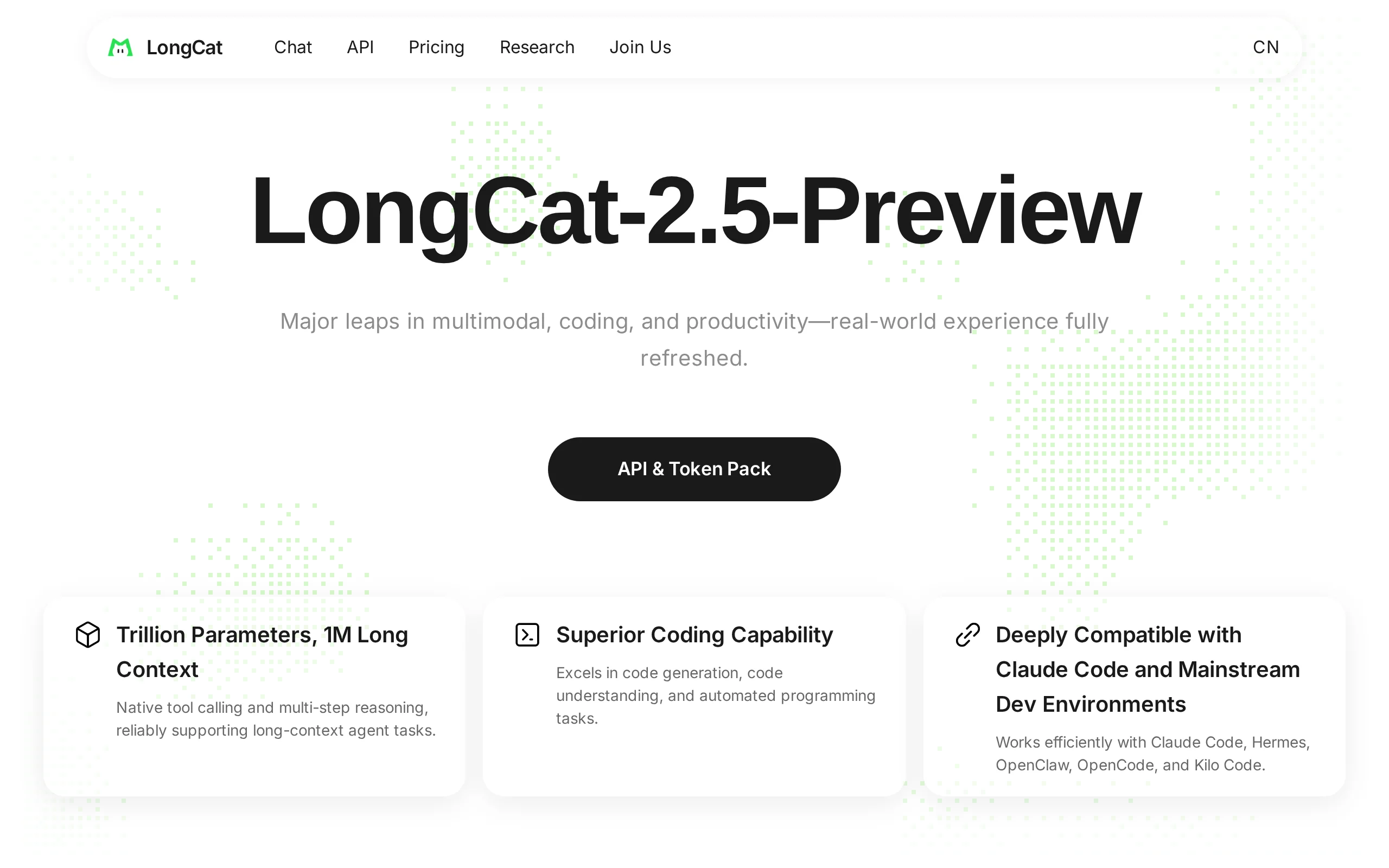
In-Depth Review of Longcat-2.5-preview: Meituan's Next-Generation Multimodal Long-Range Agent Model
LongCat-2.5-preview is Meituan's latest next-generation large model. Building upon the 1.6T total parameters, approximately 48B active parameters, and native 1M token context of LongCat-2.0, it marks ...
Xiaomi MiMo-V2.6 – Xiaomi's Open-Source Multimodal Model Series
Xiaomi MiMo-V2.6 is a series of fully multimodal models released and open-sourced by Xiaomi, comprising two native full-modal models: Pro and Flash. It is centered on large-scale Agentic reinforcement...
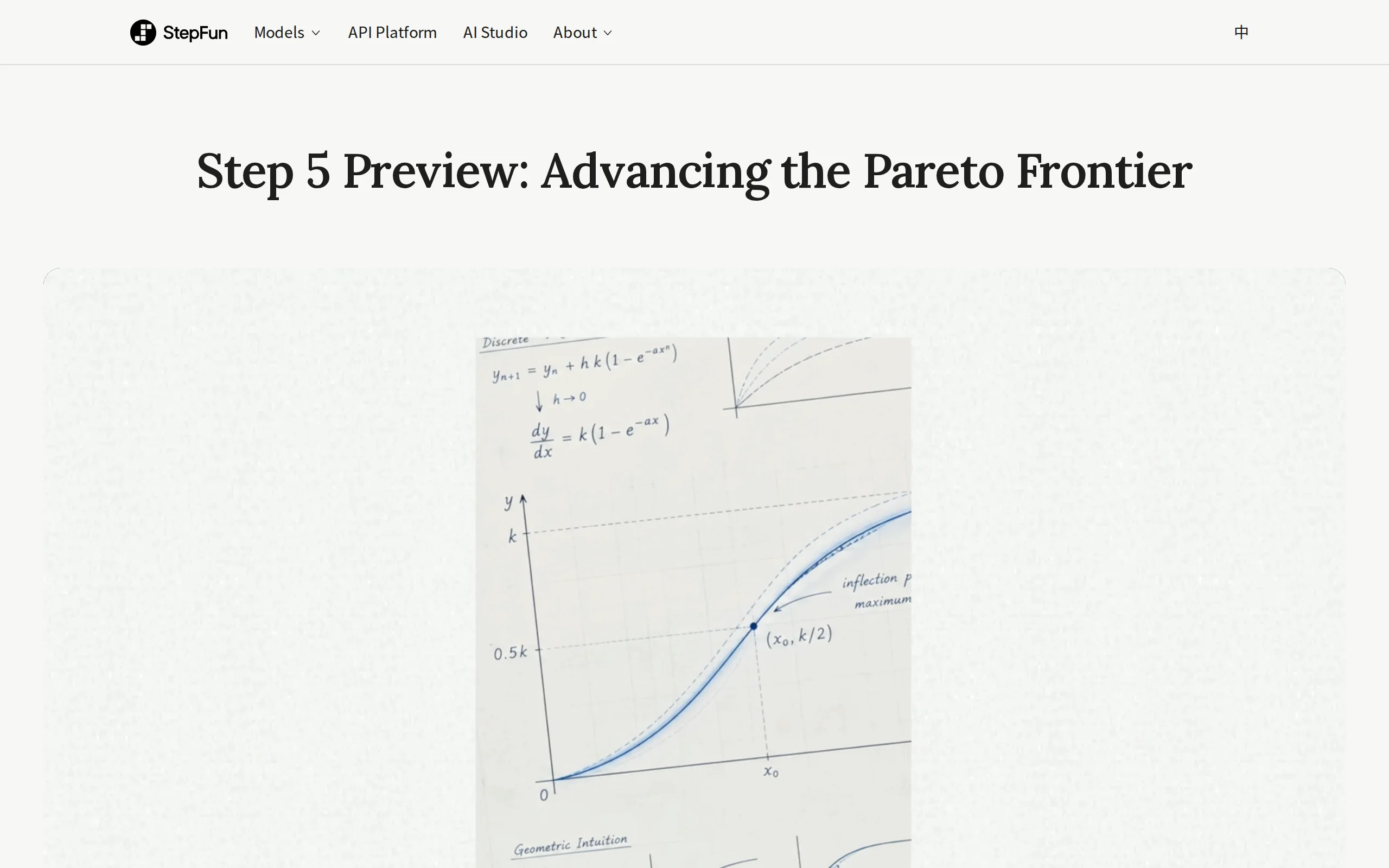
In-Depth Review of Step 5 Preview: A 600B Sparse MoE Flagship with 1M Token Context and 1/8 Cost Advantage
Step 5 Preview is a new-generation flagship foundation model launched by StepFun, designed for real-world Agentic tasks. Based on a sparse MoE architecture, the model has a total of 600B parameters bu...
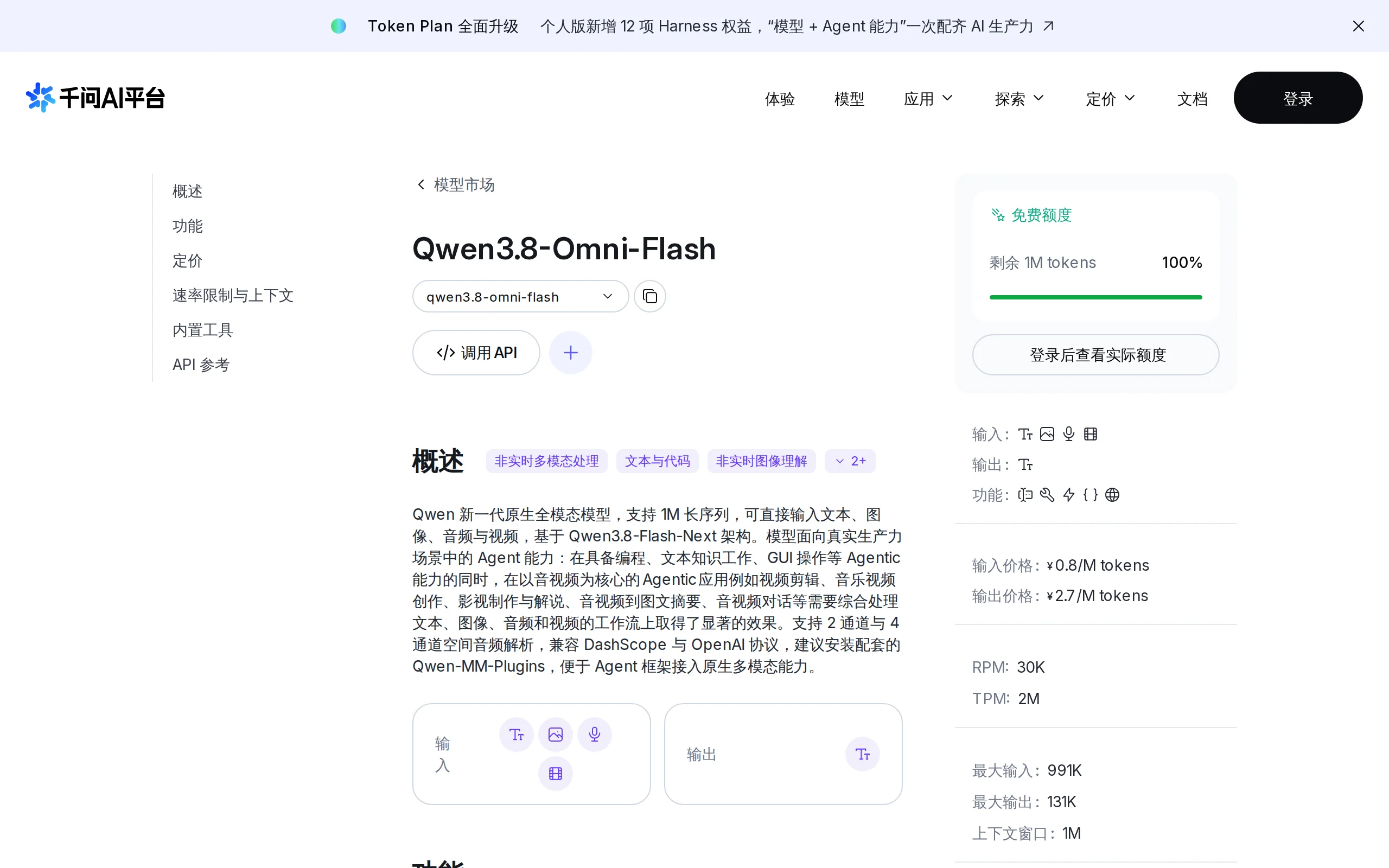
Qwen3.8-Omni-Flash – A Native Multimodal Model Launched by Alibaba Qwen
Qwen3.8-Omni-Flash is a native multimodal model launched by Alibaba Qwen. It jointly models four modalities—text, image, audio, and video—within a single architecture, supporting a context length of u...
© All Rights Reserved. Some content on this site is partially generated by AI with human review.