
Qwen-Image-Bench – Qwen Team's Text-to-Image Model Evaluation Benchmark
Executive Summary:
Qwen-Image-Bench is a standardized benchmark dataset from Alibaba's Qwen team (Tongyi Qianwen) for evaluating text-to-image models—1,000 carefully designed test samples covering Chinese and English pr...
1. What Is Qwen-Image-Bench
Qwen-Image-Bench is a standardized benchmark dataset from Alibaba's Qwen team (Tongyi Qianwen) for evaluating text-to-image models—1,000 carefully designed test samples covering Chinese and English prompts, released under Apache-2.0. It aims to provide a unified, reproducible, multi-dimensional evaluation framework for image generation, filling the gap in Chinese-scenario coverage in existing benchmarks and helping developers and researchers objectively compare actual generation capabilities across models—including text rendering, image editing, general generation, and semantic consistency.
Technical positioning and domain: Qwen-Image-Bench belongs to model evaluation benchmarks at the intersection of NLP and computer vision, focused on text-to-image generation capability assessment. It is not merely a prompt collection but a complete framework with standardized evaluation scripts, multi-dimensional scoring, and structured output reports—addressing industry pain points: inconsistent evaluation standards, hard-to-reproduce results, and missing Chinese-scenario benchmarks.
Development background: Developed by the Qwen team with Alibaba's deep expertise in vision-language models, including Qwen-Image and Qwen-Image-Edit. Motivation: lack of a standardized benchmark covering Chinese scenarios with multi-dimensional automated evaluation—making it hard for model publishers to fully validate capabilities and researchers to compare fairly.
Core value: Solves three core text-to-image evaluation problems: (1) inconsistent standards—different papers and projects use different datasets and metrics, hindering cross-comparison; (2) missing Chinese evaluation—mainstream benchmarks like GenEval and DPG-Bench focus on English, inadequately assessing Chinese text rendering and cultural elements; (3) hard-to-reproduce evaluation—lack of standardized scripts and automated scoring. Qwen-Image-Bench provides unified test sets, scripts, and multi-dimensional automated scoring.
Technical characteristics: Multi-dimensional, multilingual, standardized design. Covers general generation, text rendering, image editing, and semantic consistency. Automated scripts combine GenEval, DPG, GEdit, and other benchmark metrics for composite scoring. 1k samples balance representativeness with low reproduction barrier and compute cost. Good ecosystem compatibility—evaluates Qwen-Image, FLUX, Stable Diffusion, and other mainstream models.
2. Key Features
Chinese-English bilingual evaluation: Test samples cover Chinese and English for comprehensive multilingual image generation assessment. Chinese prompts specifically test Chinese text rendering, cultural element understanding, idioms, and poetic imagery; English prompts align with GenEval and DPG-Bench for international comparability.
Multi-dimensional capability assessment: Evaluates text rendering (accurate specified text), image editing (local modification while preserving semantics), general generation (high-quality images from descriptions), and semantic consistency (image-prompt alignment)—not single-capability only.
Standardized test pipeline: Unified evaluation scripts and data format for fair cross-model comparison. All test cases use standardized JSON with prompts, dimension labels, expected effect descriptions, etc. Scripts auto-parse, batch generate, and score—eliminating human bias.
Open-source dataset: 1k carefully designed test cases covering complex scenarios and fine-grained tasks—general generation (landscapes, people, objects), text rendering (poster text, signage), image editing (style transfer, object replacement)—each manually reviewed for prompt quality.
Automated scoring support: Combines multi-benchmark metrics (GenEval object detection accuracy, DPG VQA scores, GEdit editing fidelity, etc.) for automated evaluation. Built-in scoring algorithms select appropriate metrics per dimension and generate structured reports for cross-model comparison.
Strong ecosystem compatibility: Native adaptation for Qwen-Image, Qwen-Image-Edit via API or local models. Also supports third-party models (FLUX, Stable Diffusion, GPT Image, etc.)—configure corresponding inference interface or local model path.
3. How to Use
Environment and prerequisites: Linux or macOS recommended; Python 3.8+. For local model evaluation, NVIDIA GPU with at least 16GB VRAM (e.g., RTX 4080 or better); API evaluation needs no special hardware. Install PyTorch (2.0+ recommended), Diffusers, Transformers, Pillow, etc.
Clone repository and install dependencies: GitHub
QwenLM/Qwen-Image-Bench:git clone https://github.com/QwenLM/Qwen-Image-Bench.git. In project directory runpip install -r requirements.txtfor evaluation scripts, data tools, and visualization components.Configure target model: Create or modify
config.yamlin project root—specify model type (localorapi), model path or API endpoint, inference parameters (output resolution recommended 1024×1024, sampling steps, Guidance Scale, etc.). For local models, ensure weights downloaded to specified path.Load dataset and run generation: Run
python run_benchmark.py --config config.yaml. Script loads 1k test samples, calls model for each image. Generated images saved to./outputs/images/with JSON metadata for parameters and generation info.Run automated evaluation: After generation, run
python evaluate.py --input ./outputs/images/ --output ./outputs/report/. Script scores from text rendering accuracy, semantic consistency, image quality, editing fidelity, etc. Multi-benchmark metrics produce dimension scores and overall score.Output and compare results: Structured evaluation report (Markdown) in
./outputs/report/with per-dimension scores, radar charts, and cross-model comparison. Multiple model runs can auto-merge for comparison.Custom extension (optional): Add custom test cases in
./data/custom/(same format as official dataset) or modify metric weights inconfig.yamlfor specific business scenarios—e.g., higher text rendering weight for e-commerce.
4. Pros and Cons
| Pros |
|---|
| Strong Chinese-scenario focus: Enhanced Chinese text rendering and cultural element evaluation—posters, idioms, festivals—addressing mainstream benchmark Chinese coverage gaps for fair Chinese text-to-image assessment. |
| Comprehensive evaluation dimensions: General generation, precise editing, complex text rendering, semantic consistency—systematic reflection of model performance across scenarios, not single capability. |
| Moderate scale, easy reproduction: 1k samples balance representativeness with low barrier and compute cost—single evaluation completes in hours on consumer GPU—rapid iteration for researchers and developers. |
| Strong ecosystem compatibility: Native Qwen-Image adaptation; also FLUX, Stable Diffusion, GPT Image, etc.—flexible local and API deployment. |
| Friendly open license: Apache-2.0 permits commercial use and free secondary development—build private evaluation pipelines or integrate into training validation. |
5. Comparison with Similar Tools
| Dimension | Qwen-Image-Bench | GenEval | DPG-Bench |
|---|---|---|---|
| Organization | Qwen team (Alibaba) | Meta FAIR, UW, UCLA | Academia (Hu et al., 2024) |
| Dataset size | 1,000 test samples | 553 templated prompts | 1,065 dense prompts |
| Prompt characteristics | Chinese-English bilingual, multi-dimensional tasks | Short prompts, compositional templates | Long prompts, paragraph-level dense scenes |
| Evaluation dimensions | General generation, text rendering, image editing, semantic consistency | Single/dual object, counting, color, position, attribute binding | Attributes, entities, global scene, relations, others (counting/text) |
| Evaluation method | Automated multi-dimensional scoring with multi-benchmark metrics | End-to-end object detection verification | VQA model (BLIP-2) Q&A verification |
| Language support | Chinese and English bilingual | Primarily English | Primarily English |
| Chinese focus | Strong (designed Chinese text rendering and cultural scenarios) | Weak | Weak |
| Open license | Apache-2.0 | Open source | Open source |
Selection advice: Teams prioritizing Chinese text-to-image evaluation should choose Qwen-Image-Bench—Chinese text rendering and cultural scenario cases effectively test Chinese-environment performance. Researchers aligning with international benchmarks for English evaluation: GenEval and DPG-Bench have more accumulated data and paper citations—good English evaluation supplements. Users seeking comprehensiveness across more dimensions (image quality, diversity, robustness): HEIM offers larger dataset and richer dimensions but needs more compute and human annotation cost.
6. Editor's Take
Qwen-Image-Bench demonstrates high technical innovation and practical value as a text-to-image evaluation benchmark from the Qwen team. Most notable contribution: filling the Chinese text-to-image evaluation gap. Mainstream benchmarks like GenEval and DPG-Bench focus on English with near-zero coverage of Chinese text rendering, idioms, and traditional culture. Qwen-Image-Bench's 1k Chinese-English bilingual cases systematically address this with standardized tooling for Chinese model R&D and evaluation. Multi-dimensional design (general generation, text rendering, image editing, semantic consistency) is more comprehensive than single-dimension benchmarks—better reflecting real-world composite capability.
Practical highlights: ease of use and ecosystem compatibility. Standardized scripts, clear config, and automated scoring let even less technical developers get started quickly. Local and API evaluation modes cover academic research to commercial application. Apache-2.0 lowers barriers for commercial use and secondary development.
Improvement areas: small dataset (1k) limits statistical significance for extreme edge cases. Dimensions are comprehensive but omit video, 3D, etc.—limited for full multimodal evaluation. As Qwen team self-developed benchmark, Chinese case design quality awaits third-party independent verification—possible in-house model bias.
Best for: text-to-image R&D teams for pre-release standardized evaluation; academic researchers for benchmark comparison in papers; AI application developers for model selection.
Future potential: as Chinese text-to-image models (Qwen-Image, CogView, etc.) grow rapidly, demand for Chinese benchmarks will increase. Qwen-Image-Bench could become de facto Chinese standard—but needs continuous case updates, dataset expansion, more dimensions, and third-party verification for authority.
Basis: Strong innovation (Chinese gap fill), high practical value (ease of use, ecosystem fit); 0.5 star deducted for small dataset and pending Chinese evaluation authority verification.
7. Application Scenarios
Pre-release standardized evaluation: Before official launch or open source, validate model quality and stability across 1k Chinese-English cases in general generation, text rendering, image editing. Qwen-Image team can run evaluation before new releases to ensure Chinese poster generation, English signage, etc. meet standards.
Cross-model capability comparison: Compare Qwen-Image, FLUX, GPT Image 1, SeedDream, Stable Diffusion, etc.—dimension scores reveal strengths and weaknesses. Tech selection teams may find low text rendering but strong image editing—choose per business needs.
Chinese generation specialized testing: Validate text rendering in Chinese posters, PPTs, e-commerce images, cultural scenarios. E-commerce platforms test product names, promo tags, brand logos—assess Chinese semantics, layout, cultural element understanding and visual expression.
Image editing capability evaluation: Style transfer, local modification, text replacement, object add/remove. Design teams evaluate semantic consistency and visual fidelity when replacing poster text, changing colors, or adding elements.
Academic benchmark citation: Authoritative benchmark dataset in papers for credibility and reproducibility. Researchers cite alongside GenEval, DPG-Bench to showcase Chinese-scenario advantages.
8. FAQ
Q: Does Qwen-Image-Bench require specific hardware?
A: The benchmark framework itself has no special hardware requirements—it does not generate images directly. Evaluation calls text-to-image models to generate images. Local model evaluation: NVIDIA GPU with 16GB+ VRAM recommended. API evaluation (e.g., Qwen-Image API): no special hardware; ordinary PC suffices for evaluation scripts.
Q: Does it support custom test cases?
A: Yes. Add custom cases in ./data/custom/ matching official JSON format (prompt, dimension, expected_description, etc.). Scripts auto-include them; modify config.yaml for custom case weights or separate output.
Q: How reliable are evaluation results?
A: Based on automated scoring with multi-benchmark metrics (GenEval, DPG, GEdit, etc.) widely validated in academia. Automated evaluation cannot fully replace human assessment—especially subjective dimensions like image quality and aesthetics. Use automated results as initial reference; supplement key cases with human review.
Q: Can it evaluate non-Qwen text-to-image models?
A: Yes. Model-agnostic framework—evaluate any text-to-image model by configuring inference interface or local model path. Verified compatibility with FLUX, Stable Diffusion, GPT Image, etc. Different models may need inference parameter tuning (Guidance Scale, sampling steps) for best results.
Q: How does Qwen-Image-Bench differ from GenEval and DPG-Bench?
A: Three core differences: (1) language—Qwen-Image-Bench supports Chinese-English bilingual; GenEval and DPG-Bench primarily English; (2) dimensions—Qwen-Image-Bench covers general generation, text rendering, image editing, semantic consistency; GenEval emphasizes object attribute binding; DPG-Bench emphasizes dense scene description; (3) ease of use—Qwen-Image-Bench provides complete scripts and automated scoring; GenEval and DPG-Bench often require custom evaluation code.
Q: What configuration parameters matter during evaluation?
A: For fairness and reproducibility, unify: output resolution (1024×1024 recommended), sampling steps (50 recommended), Guidance Scale (7.5 recommended), random seed (fixed at 42). Models may need tuning for best results—but keep unified for cross-comparison. Document parameters in evaluation reports.
Q: Will test cases be updated regularly?
A: No official update schedule published yet. As open source, community can submit new cases via Issue or Pull Request. Follow GitHub Releases for updates. Users can custom-expand cases without waiting for official updates.
9. Project Links
- GitHub repository: https://github.com/QwenLM/Qwen-Image-Bench
- HuggingFace dataset: https://huggingface.co/datasets/Qwen/Qwen-Image-Bench
- arXiv paper: https://arxiv.org/pdf/2605.28091
Related AI Model Articles
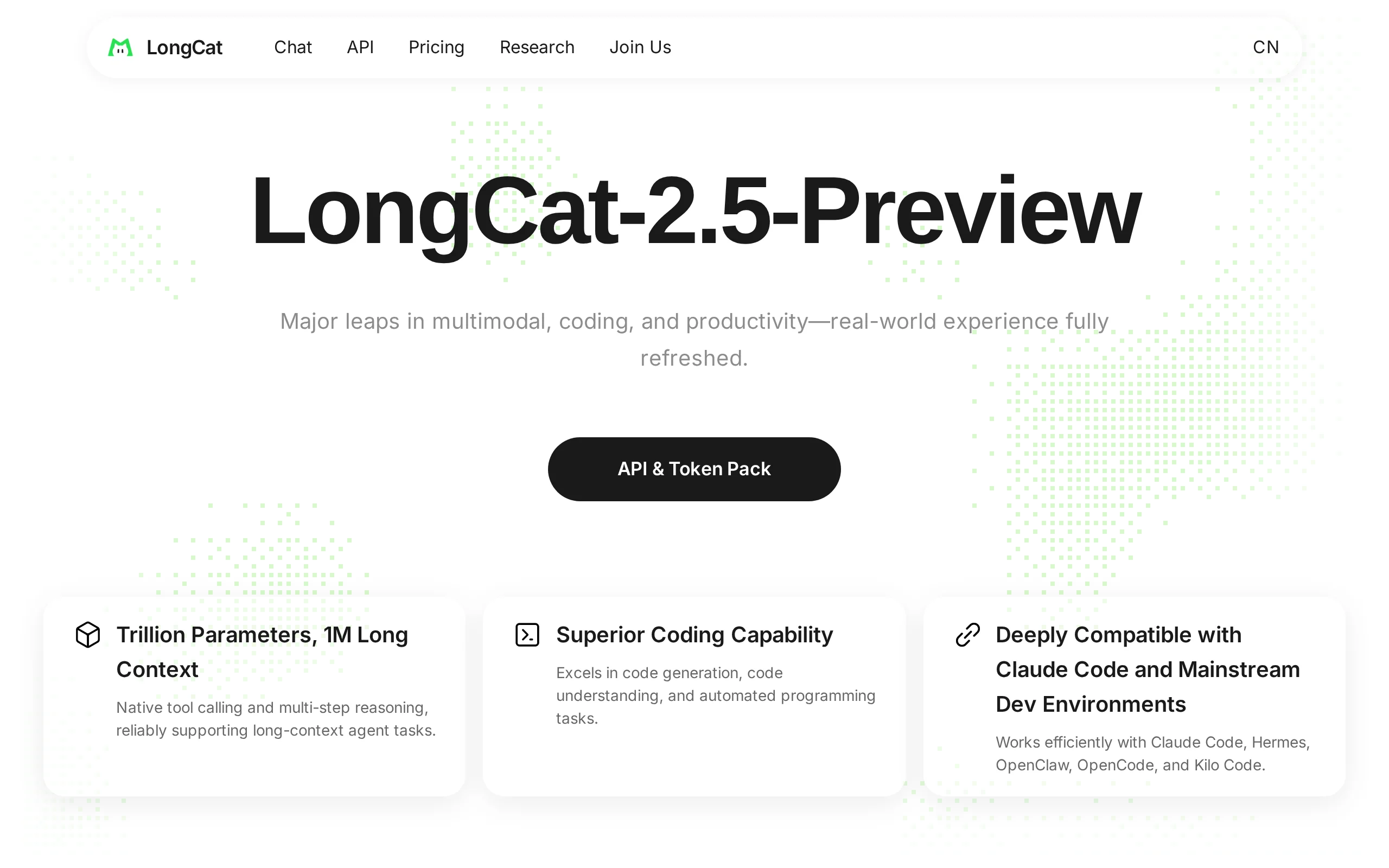
In-Depth Review of Longcat-2.5-preview: Meituan's Next-Generation Multimodal Long-Range Agent Model
LongCat-2.5-preview is Meituan's latest next-generation large model. Building upon the 1.6T total parameters, approximately 48B active parameters, and native 1M token context of LongCat-2.0, it marks ...
Xiaomi MiMo-V2.6 – Xiaomi's Open-Source Multimodal Model Series
Xiaomi MiMo-V2.6 is a series of fully multimodal models released and open-sourced by Xiaomi, comprising two native full-modal models: Pro and Flash. It is centered on large-scale Agentic reinforcement...
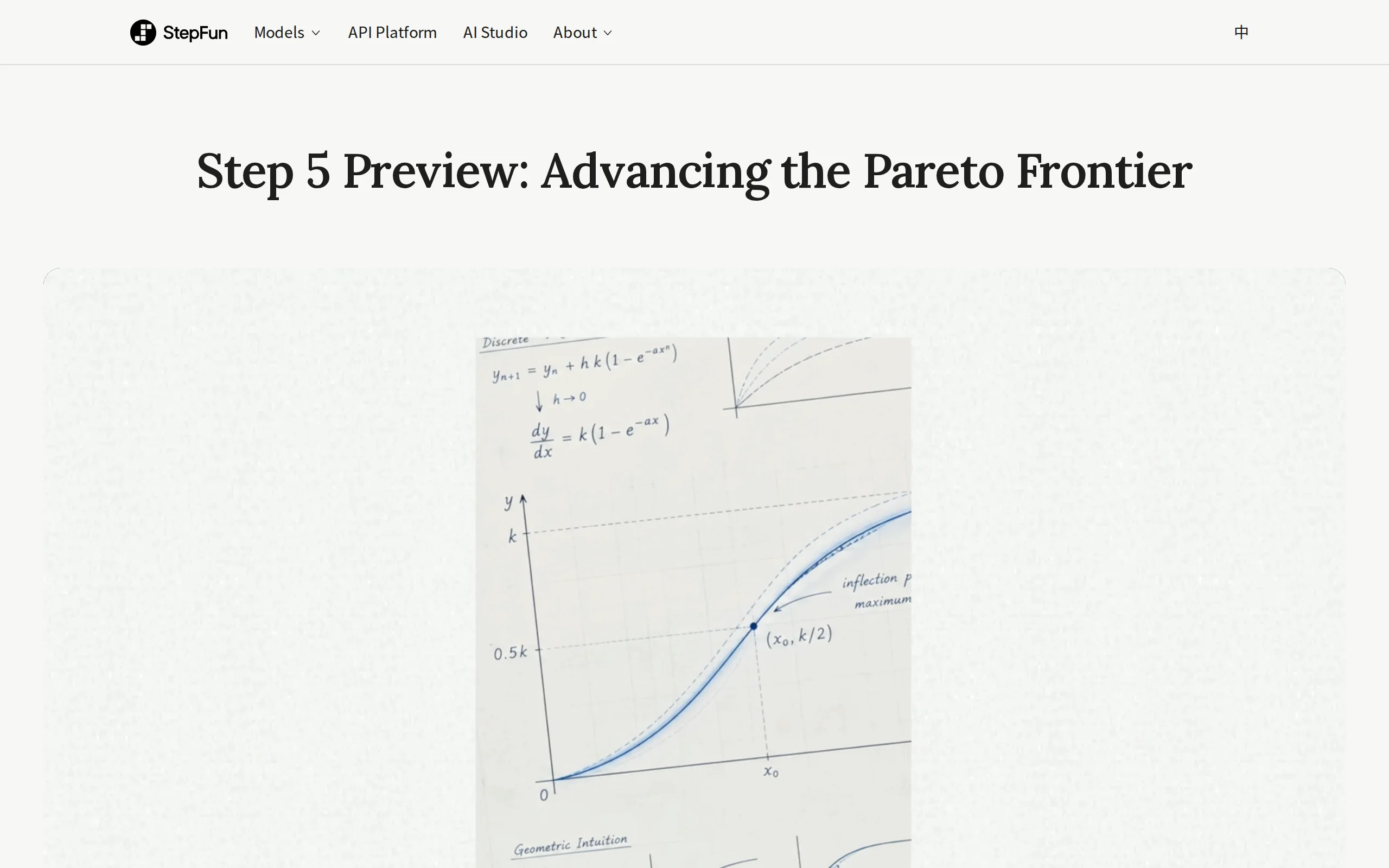
In-Depth Review of Step 5 Preview: A 600B Sparse MoE Flagship with 1M Token Context and 1/8 Cost Advantage
Step 5 Preview is a new-generation flagship foundation model launched by StepFun, designed for real-world Agentic tasks. Based on a sparse MoE architecture, the model has a total of 600B parameters bu...
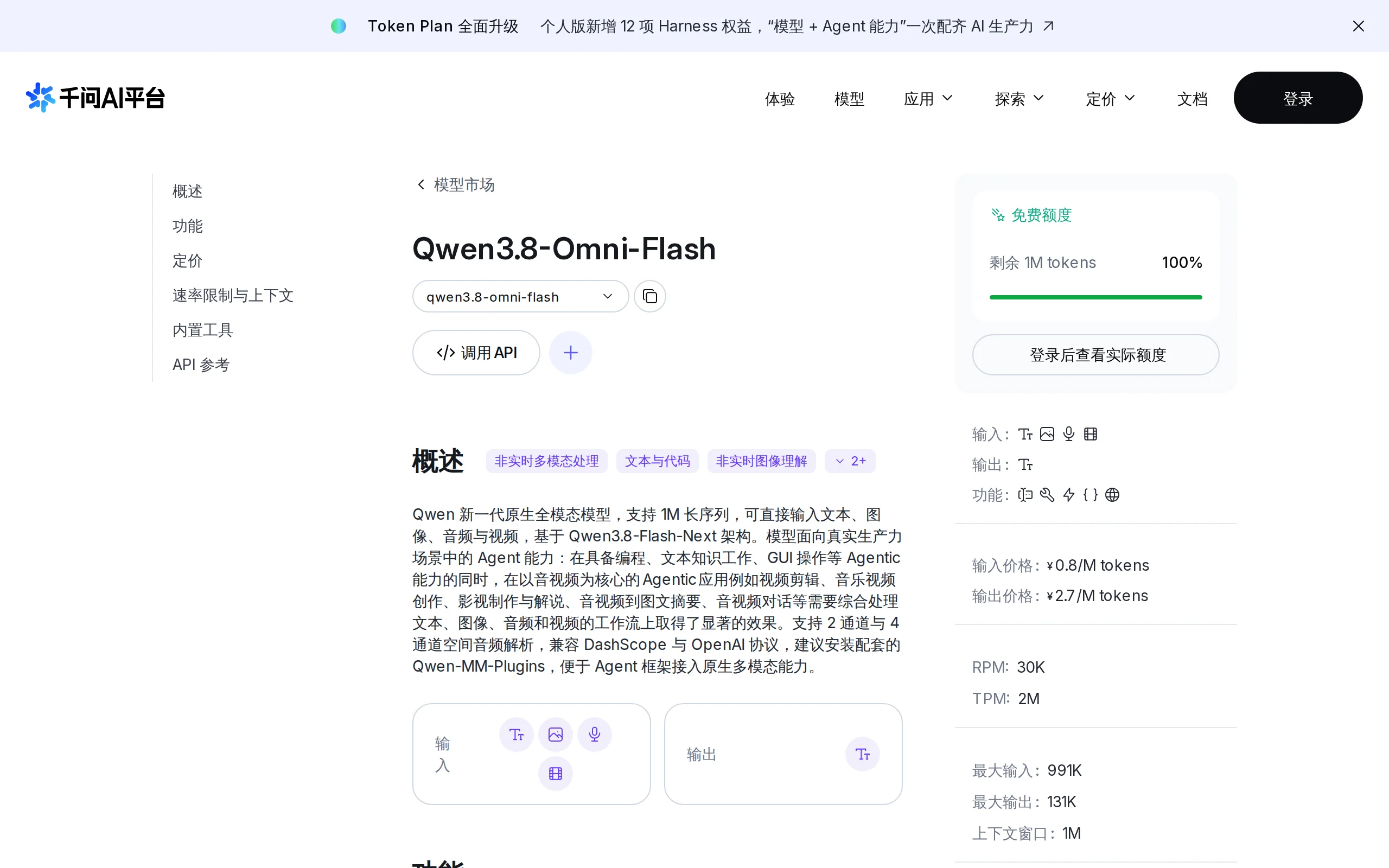
Qwen3.8-Omni-Flash – A Native Multimodal Model Launched by Alibaba Qwen
Qwen3.8-Omni-Flash is a native multimodal model launched by Alibaba Qwen. It jointly models four modalities—text, image, audio, and video—within a single architecture, supporting a context length of u...
© All Rights Reserved. Some content on this site is partially generated by AI with human review.