
MiniCPM-V 4.6 – OpenBMB's Open-Source Edge Multimodal LLM
Executive Summary:
MiniCPM-V 4.6 is an edge multimodal large language model from ModelBest (OpenBMB) with a 1.3B-parameter LLM backbone, deeply optimized for on-device deployment on mobile hardware. Built on the llama.c...
1. What Is MiniCPM-V 4.6
MiniCPM-V 4.6 is an edge multimodal large language model from ModelBest (OpenBMB) with a 1.3B-parameter LLM backbone, deeply optimized for on-device deployment on mobile hardware. Built on the llama.cpp inference stack, it fully supports iOS, Android, and HarmonyOS NEXT, and runs entirely offline. The full package is roughly 1.6GB (Q4_K_M quantization) and needs as little as 6GB RAM for smooth operation. At this tiny parameter scale, it delivers visual perception close to much larger models—covering image understanding, OCR, video frame analysis, and other multimodal tasks.
Technical positioning and domain: MiniCPM-V 4.6 sits in the edge multimodal LLM category, focused on mobile and edge computing. Its distinctive angle is compressing multimodal vision-language capability into a 1.3B-parameter footprint so that workloads that once required cloud or high-end GPUs can run offline on phones and tablets, filling a gap in high-accuracy on-device multimodal inference.
Development background: Developed by the OpenBMB team, which has deep roots in NLP and small-model research through the MiniCPM language model series. The motivation is mobile AI demand for privacy (data never leaves the device) and low-latency interaction (no network round trips). MiniCPM-V 4.6 is the latest MiniCPM-V iteration, with a focus on on-device inference efficiency and vision encoder compression.
Core value: It addresses three pain points for running multimodal LLMs on edge devices: model size too large to deploy, inference latency too high for good UX, and privacy risk from cloud upload. Through aggressive quantization and architecture tuning, MiniCPM-V 4.6 is among the first 1.3B-scale models to deliver production-grade multimodal understanding, giving mobile developers an out-of-the-box engineering path.
Technical characteristics: A hybrid precision strategy keeps the vision tower (ViT) at f16 while the LLM uses Q4_K_M GGUF quantization, balancing visual quality and footprint. ARM-optimized llama.cpp integration delivers roughly 1.5× higher on-device token throughput than comparable small models. Full reference projects ship for iOS, Android, and HarmonyOS, sharply lowering integration cost.
2. Key Features
Fully local on-device inference: Powered by llama.cpp, all inference runs on device with no network required. Users can do image Q&A, OCR, and visual analysis in dead zones (garages, flights) without privacy leakage from cloud upload.
Ultra-lightweight footprint: The LLM is ~0.5GB (Q4_K_M); the vision tower (mmproj) ~1.1GB; total download ~1.6GB. Compared with 7B-class models at 4–6GB, this dramatically lowers storage requirements so mid-range phones can host it.
Native support on three mobile platforms: Complete sample projects for iOS (Xcode / Swift), Android (Gradle / Kotlin), and HarmonyOS NEXT (DevEco / ArkTS). Developers can import and integrate multimodal capability without building an inference pipeline from scratch.
Multimodal understanding: Supports image captioning, visual Q&A, document OCR, and video frame understanding. At 1.3B parameters, OCR accuracy and scene understanding approach 3B–4B models, showing strong parameter efficiency.
Low memory bar: 6GB RAM recommended for smooth use; 4GB devices can still run basic inference (multi-turn chat may be limited). KV cache and weight sharing reduce peak memory for many mid-range phones and tablets.
Open-source demos and extensibility: Prebuilt packages (TestFlight / APK / HAP) for direct trial, plus full source. Teams can customize UI, extend features, or fine-tune for vertical scenarios.
3. How to Use
Environment requirements:
- Hardware: iOS — iPhone 12+ (A14); Android — 6GB+ RAM; HarmonyOS — Kirin or equivalent performance.
- Software: iOS — Xcode 15+, iOS 16+; Android — Android Studio, Gradle 8+; HarmonyOS — DevEco Studio 5.0+.
- Storage: at least 2GB free for model download and cache.
Build from source:
git clone https://github.com/OpenBMB/MiniCPM-V-Apps.gitgit submodule update --init --recursivefor llama.cpp and dependencies.- iOS: open
MiniCPM-V-demo/MiniCPM-V-demo.xcodeprojin Xcode and Run. - Android: in
MiniCPM-V-demo-Android, run./gradlew assembleDebug. - HarmonyOS: open
MiniCPM-V-demo-HarmonyOSin DevEco Studio, configure signing, connect device, Run.
Model deployment:
- Download from Hugging Face
openbmb/MiniCPM-V-4.6-gguf: LLM GGUF (~0.5GB) andmmproj-model-f16.gguf(~1.1GB). - On first launch, use built-in Model Manager → Download.
- Android:
adb pushmodels to the app’s external storage path. - HarmonyOS:
hdc file sendto the target directory.
- Download from Hugging Face
Configuration and best practices:
- Q4_K_M balances size and quality; Q5_K_M adds ~200MB for higher precision.
- First load takes ~10–15s depending on device; later inference ~200–500ms per call.
- In multi-turn chat, clear KV cache every 3–5 turns to avoid OOM.
- For video frames, keep rate at or below 1fps to limit compute load.
4. Pros and Cons
| Pros |
|---|
| Extreme lightweight design: 1.3B parameters and ~1.6GB total make it one of the smallest production-ready edge multimodal stacks, fitting many mid-range devices. |
| Tri-platform native samples: Full iOS/Android/HarmonyOS projects avoid per-platform inference adapters and cut integration cost. |
| Strong privacy: All processing stays local—ideal for medical imaging, contracts, and other sensitive workflows. |
| Healthy open ecosystem: Apache 2.0, commercial and academic use, active community and frequent updates. |
5. Comparison with Similar Tools
| Dimension | MiniCPM-V 4.6 | Qwen3.5-VL-2B | Phi-3.5-vision |
|---|---|---|---|
| Team | ModelBest (OpenBMB) | Alibaba (Qwen) | Microsoft Research |
| LLM params | 1.3B | 2B | 3.8B |
| Vision encoding | Early compression in ViT, 50%+ less compute | Standard ViT | Standard ViT |
| Edge token throughput | ~1.5× Qwen3.5-0.8B baseline | Baseline | ~0.8× baseline |
| Model size (Q4) | ~1.6GB (LLM 0.5GB + mmproj 1.1GB) | ~1.5GB+ | ~3.2GB |
| Recommended RAM | ≥ 6GB | ≥ 6GB | ≥ 8GB |
| Multimodal tasks | Image understanding, OCR, video | Image, OCR, documents | Image, OCR |
| Edge demos | Full iOS / Android / HarmonyOS | Self-adapt required | iOS sample only |
| Inference stacks | llama.cpp, SGLang, vLLM, Ollama | vLLM, llama.cpp | ONNX Runtime |
| License | Apache 2.0 | Apache 2.0 / Qwen License | MIT |
Selection advice:
- For mobile apps needing iOS/Android/HarmonyOS coverage, MiniCPM-V 4.6 is currently the only option with complete reference projects—fastest path to integration. The 1.3B footprint stays usable on lower-end phones.
- If maximum visual accuracy matters and hardware is strong (8GB+ RAM), Qwen3.5-VL-2B wins on OCR and documents but needs custom on-device pipelines. Phi-3.5-vision is larger and harder to deploy on edge due to size and runtime constraints.
6. Editor's Review
MiniCPM-V 4.6 shows impressive engineering in edge multimodal LLMs. Its core breakthrough is lifting a 1.3B model toward 3B-class multimodal quality via vision encoder compression and hybrid quantization—especially keeping the vision tower at f16 while quantizing the LLM with Q4_K_M, a balance that is still uncommon in this category.
In practice, the biggest win is lowering the deployment bar. At ~1.6GB and 6GB RAM, many mid-range phones (Redmi Note, Honor X series, etc.) can run it smoothly, democratizing mobile AI. Tri-platform support—including full HarmonyOS—is a real advantage for domestic replacement and regulated IT environments.
Best for mobile app developers, privacy-sensitive teams (healthcare, finance, legal), and edge hardware vendors. Researchers also get a strong small-model multimodal baseline and solid engineering docs.
Future upside: if later versions compress the vision encoder further (quantization or distillation) and extend context toward 8K tokens, long-document and complex interaction scenarios will improve materially.
Excellent on edge lightweight design and engineering completeness; half a star off for visual accuracy and context length. Overall, one of the most practical edge multimodal options available today.
7. Use Cases
Offline mobile AI assistant: Image Q&A, object ID, and visual analysis without network—e.g., identify a plant and care tips while hiking or in weak-signal areas.
On-device document scan and OCR: Offline extraction from contracts, invoices, business cards, and handwritten notes. Field staff can scan contract clauses without uploading sensitive data—aligned with GDPR and data-security regulations.
Privacy-sensitive visual analysis: Local pre-screening of medical images, ID extraction, etc., with no third-party cloud exposure—suited to hospitals, law firms, and government.
Low-bandwidth image labeling: Creators and e-commerce ops generate captions, tags, and moderation locally in remote or in-flight conditions without online APIs.
Embedded vision on smart hardware: Smart doorbells, dashcams, industrial inspection—1.3B low-power design enables near-real-time visual understanding and voice feedback.
8. FAQ
Q: Which image formats and resolutions are supported?
A: JPEG, PNG, BMP, etc. Recommended input is 448×448 (native ViT resolution). Very large images are downscaled; OCR on tiny text may suffer. For documents, 300 DPI+ scans work best.
Q: Will it lag on low-end phones? How to optimize?
A: On Kirin 710, Snapdragon 665, etc., latency can hit 1–2s per call. Tips: use Q4_K_M; cap input at 224×224; disable persistent KV cache and clear after each turn.
Q: Chinese OCR support and accuracy?
A: Yes. ~92–95% on clean printed docs (Song/Hei); ~80–85% on handwriting, stylized fonts, or low light. Roughly 3–5 points below Qwen3.5-VL-2B but leading among 1.3B-class models.
Q: How do I integrate into my app? What skills are needed?
A: Native mobile skills per platform (Swift/Obj-C, Kotlin/Java, ArkTS). Flow: clone official project → customize UI/logic → optionally swap models → build. Mid-level mobile devs often finish in 2–3 days with provided docs.
Q: Update cadence and maintenance?
A: MiniCPM-V has shipped major updates every 2–3 months since early 2024. OpenBMB commits to long-term maintenance; the community is active (5k+ GitHub stars). Apache 2.0 allows community forks if official pace slows.
Q: Can it run on PC or server?
A: Yes—via llama.cpp, SGLang, vLLM, Ollama on Linux/Windows/macOS. PC inference is faster (<100ms per call in many setups), useful for dev/debug or edge servers.
9. Project Links
- GitHub: https://github.com/OpenBMB/MiniCPM-V-edge-demo
- Hugging Face: https://huggingface.co/openbmb/MiniCPM-V-4.6
- Release notes: https://openbmb.notion.site/MiniCPM-V-4-6-Release-Notes
Related AI Model Articles
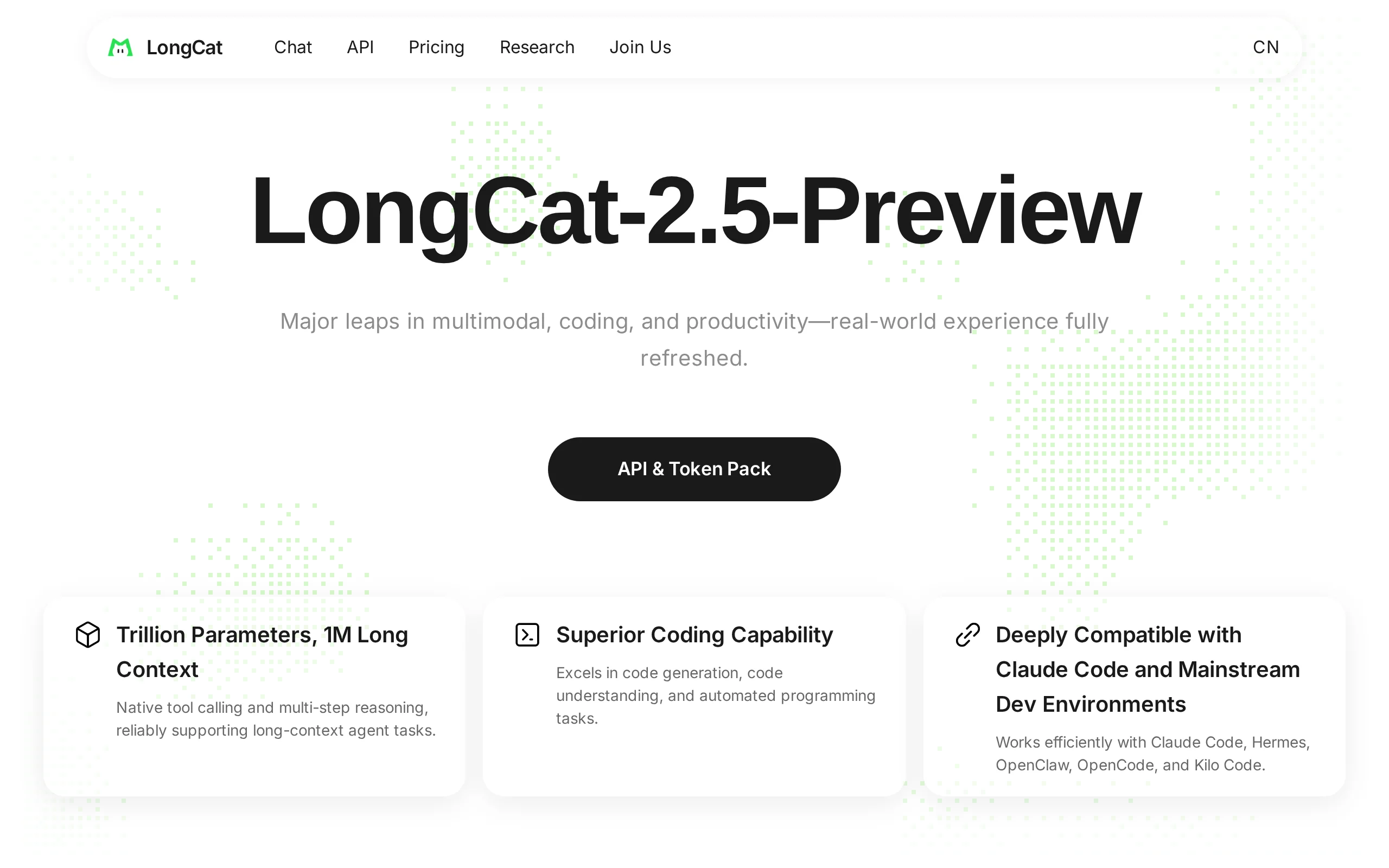
In-Depth Review of Longcat-2.5-preview: Meituan's Next-Generation Multimodal Long-Range Agent Model
LongCat-2.5-preview is Meituan's latest next-generation large model. Building upon the 1.6T total parameters, approximately 48B active parameters, and native 1M token context of LongCat-2.0, it marks ...
Xiaomi MiMo-V2.6 – Xiaomi's Open-Source Multimodal Model Series
Xiaomi MiMo-V2.6 is a series of fully multimodal models released and open-sourced by Xiaomi, comprising two native full-modal models: Pro and Flash. It is centered on large-scale Agentic reinforcement...
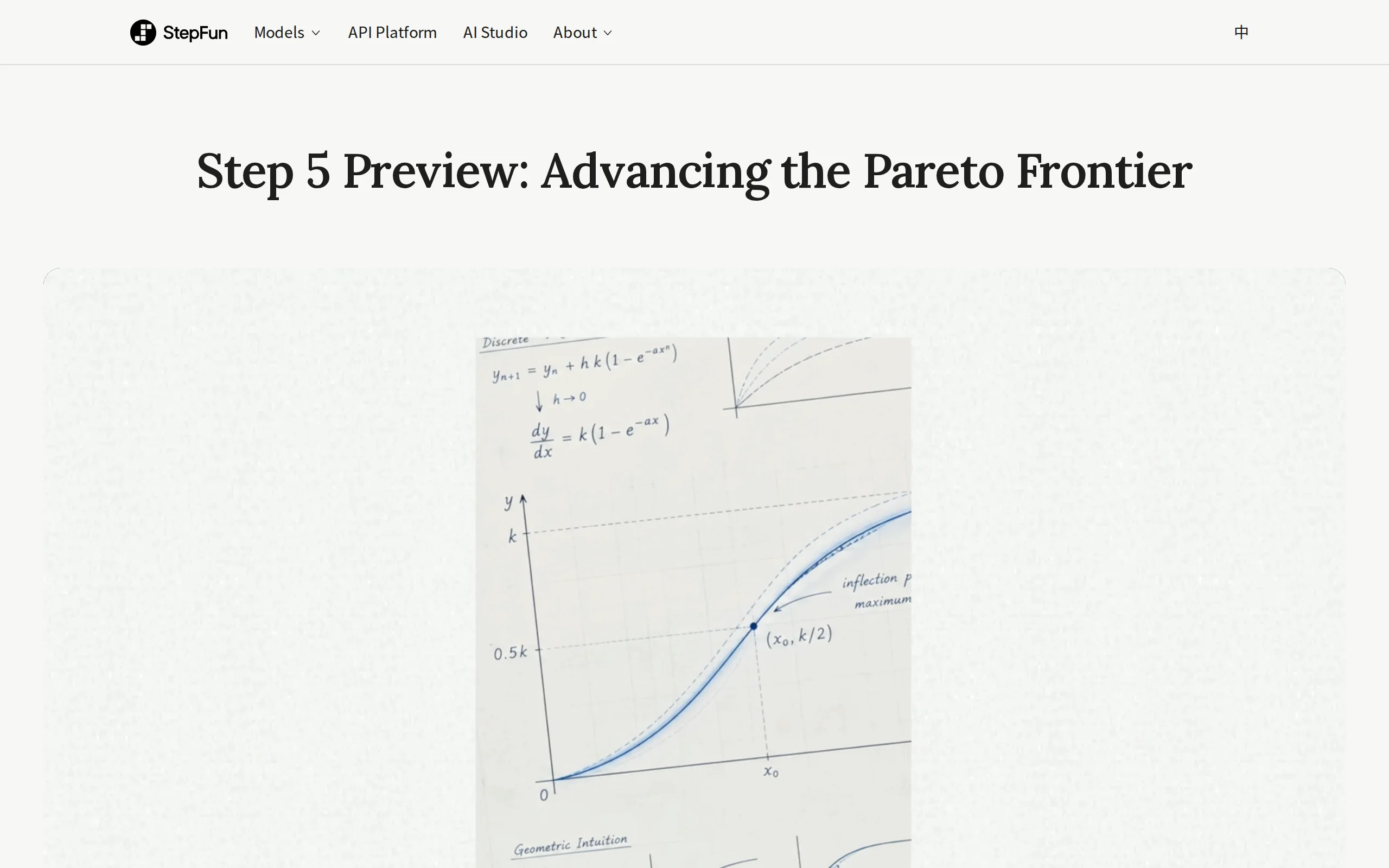
In-Depth Review of Step 5 Preview: A 600B Sparse MoE Flagship with 1M Token Context and 1/8 Cost Advantage
Step 5 Preview is a new-generation flagship foundation model launched by StepFun, designed for real-world Agentic tasks. Based on a sparse MoE architecture, the model has a total of 600B parameters bu...
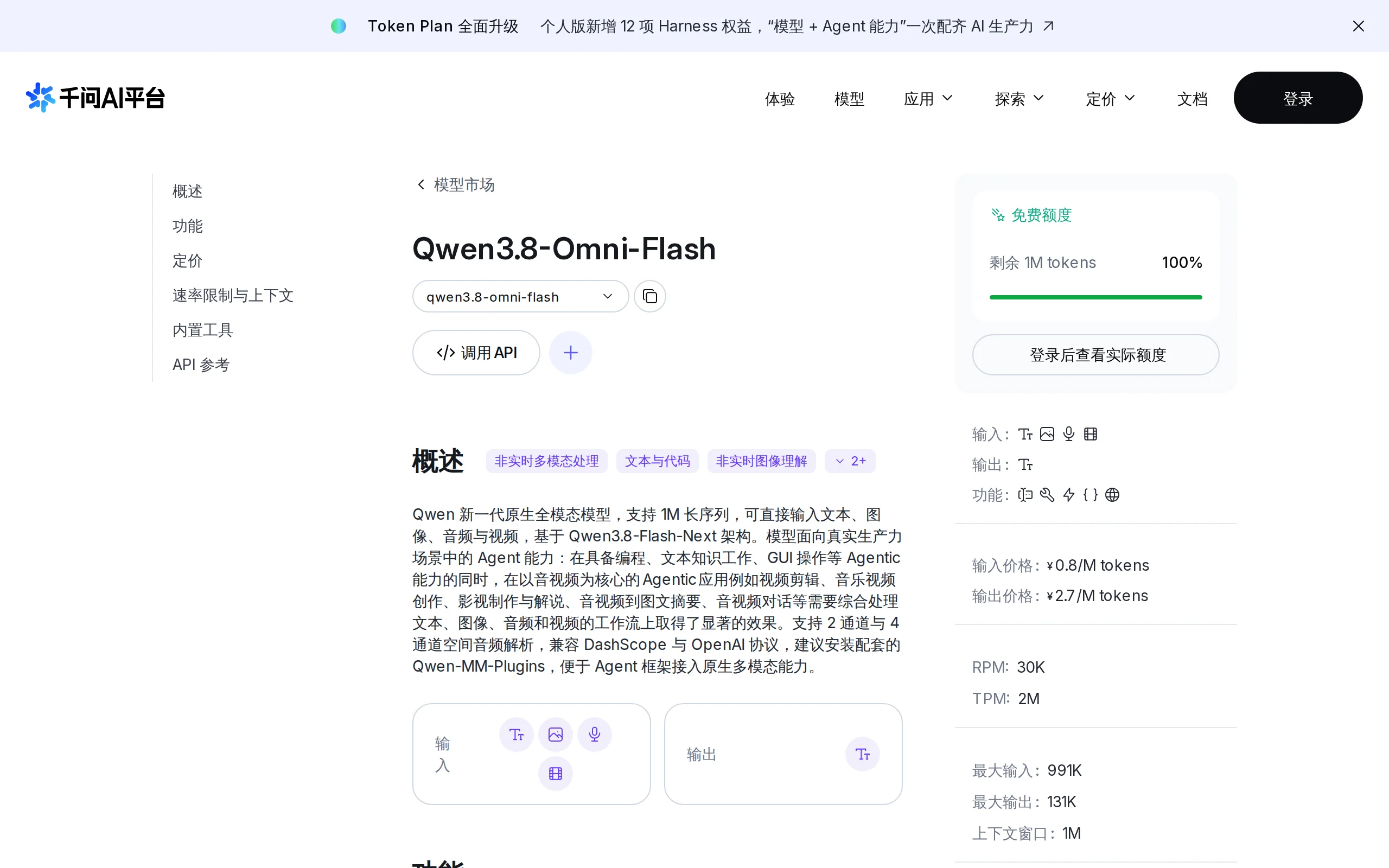
Qwen3.8-Omni-Flash – A Native Multimodal Model Launched by Alibaba Qwen
Qwen3.8-Omni-Flash is a native multimodal model launched by Alibaba Qwen. It jointly models four modalities—text, image, audio, and video—within a single architecture, supporting a context length of u...
© All Rights Reserved. Some content on this site is partially generated by AI with human review.