
AudioLib – Developer Audio Infrastructure: One API, Massive Music Library
Executive Summary:
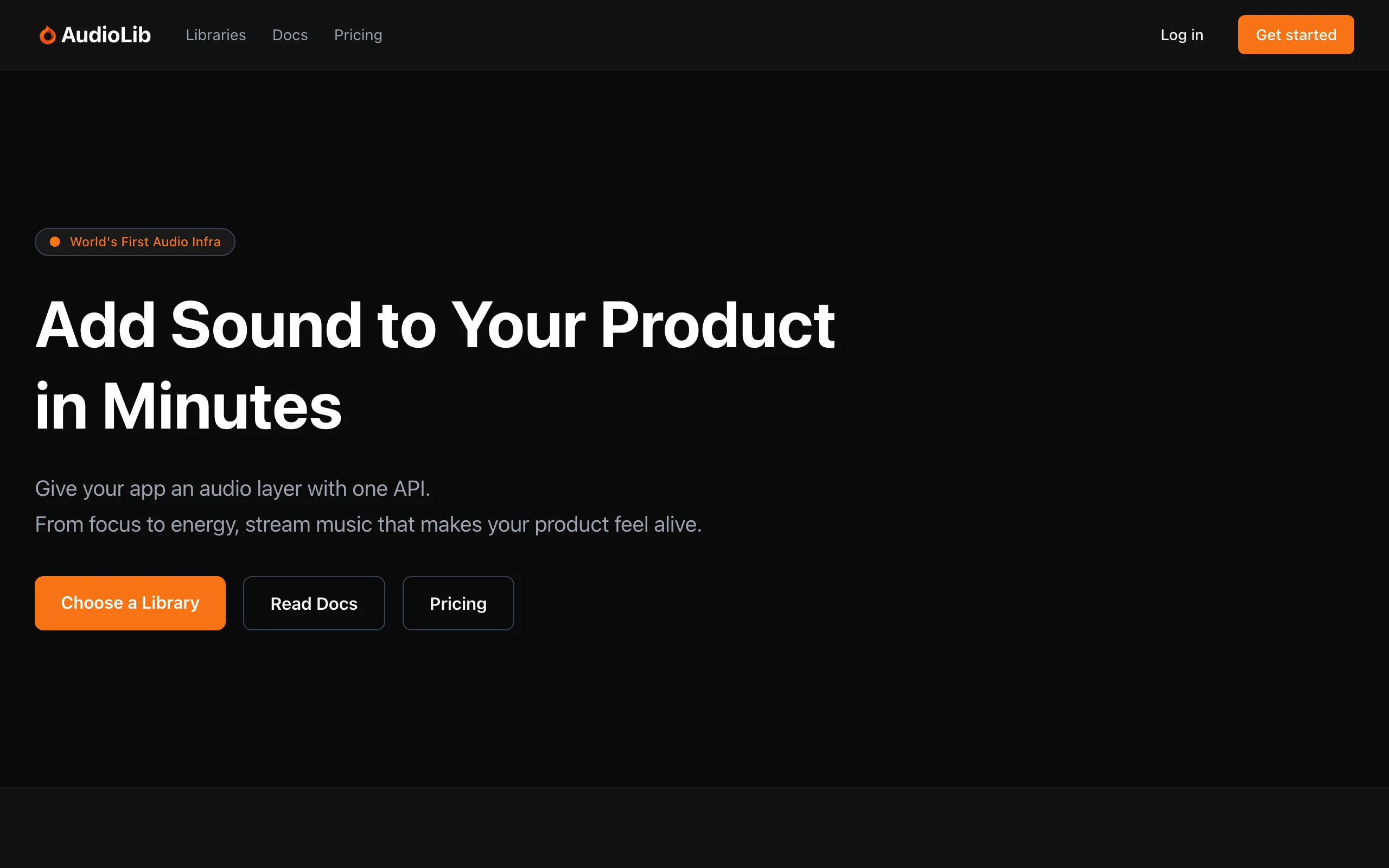
AudioLib is a developer audio infrastructure platform from Yang Yue and the 43Music team—positioned as the "OpenRouter for audio." One unified REST API exposes a library of 100,000+ original tracks so...
1. What Is AudioLib
AudioLib is a developer audio infrastructure platform from Yang Yue and the 43Music team—positioned as the "OpenRouter for audio." One unified REST API exposes a library of 100,000+ original tracks so apps can add background music without heavy SDKs, custom players, copyright negotiations, or local catalog management. With an API key and a library name, a simple POST returns a CDN audio URL—"one line to music" integration.
Image source: Official article
Technical positioning and domain: DevTools × audio infrastructure—API-first background music for mobile, web, IoT, and games, filling the gap for lightweight, low copyright-risk audio APIs.
Development background: 43Music accumulated 100k+ original tracks in roughly a year. Observed pain: copyright complexity, integration cost, catalog ops—so they API-ified their library.
Core value: Shifts music integration from heavy asset mode to light service mode—original catalog removes royalty negotiations; no SDK—one call completes integration. Dramatically lowers the bar for quality BGM in products.
Technical characteristics: Minimal REST API, Bearer auth, any language (cURL, Python, JS). Scene-based libraries + random rotation per call—fresh BGM loops without repetition fatigue. Time-limited CDN URLs play client-side—no server proxy, low latency.
2. Key Features
Single API audio fetch: POST
/v1/audiowithlibrary(e.g.audio.focus) → playable URL—no SDK.Large curated libraries: 100k+ originals by function (
audio.focus,audio.sleep,audio.workout) and style (audio.lofi,audio.rock,audio.pop)—scene-matched curation.Random rotation: Each call picks a random track from the library—call again after playback for variety without repeat loops.
Bearer Token auth: Keys start with
alp_; headerAuthorization: Bearer alp_xxxx—standard HTTP compatibility.Usage dashboard: Logs and request counts for monitoring, cost control, and incident debug—infrastructure-grade visibility.
Zero copyright negotiation: All 43Music originals—commercial use without third-party royalties—strong compliance story for startups and products.
3. How to Use
Register and API key: Sign up at https://www.audiolib.ai/; create an
alp_key in the dashboard—guard it as the sole credential.Browse libraries: On "Libraries," preview by name/tag (function vs style)—pick what matches product tone.
Call the API:
curl -X POST https://api.audiolib.ai/v1/audio \
-H "Authorization: Bearer YOUR_API_KEY" \
-H "Content-Type: application/json" \
-d '{"library": "audio.focus"}'
Play response: Parse JSON
url(time-limited CDN)—feed to<audio>, AVPlayer, etc. Request again when the track ends for the next random pick.
4. Pros and Cons
| Pros |
|---|
| Minimal integration: One API—no SDK, player, or rights talks—benchmark simplicity among music APIs. |
| Zero royalty risk: All in-house originals—safe for commercial apps and ads. |
| Low transparent cost: Per-call billing; free tier 300 calls/mo; paid from ~$2.9/mo—far below traditional sync fees. |
| Scene libraries: Focus/sleep/workout and lofi/rock/pop—fast module-level BGM matching. |
5. Comparison with Similar Tools
| Dimension | AudioLib | Mubert | Spotify Web API |
|---|---|---|---|
| Positioning | Developer audio infra | AI realtime BGM | Streaming API |
| Integration | Single REST, no SDK | SDK + streams | OAuth 2.0 + SDK |
| Copyright | In-house originals, no negotiation | Check license scope; partly AI | Playback only; no commercial remix |
| Music source | 100k+ pre-generated library | AI realtime | Licensed catalog |
| Billing | Per call/month | Subscription/generation | User Premium needed |
| Best for | App/site BGM | Video/live dynamic score | Playlists/social |
| Dev friendliness | Very high—one call | Medium streams | Low OAuth/copyright |
Selection advice: Indie/startup apps needing fast, compliant BGM (focus, meditation, ecommerce) → AudioLib. Dynamic video/live scoring → Mubert. Playback/social → Spotify/SoundCloud with heavier compliance.
6. Editor's Take
AudioLib nails an overlooked problem—BGM integration used to mean rights hell or building a player stack. Productizing music as a REST API with zero negotiation is true developer-infra thinking. Scene libraries plus random rotation show real use-case empathy.
For most non-music apps, "good enough BGM that fits the scene" beats bespoke scores—AudioLib democratizes that at low cost.
Audience: Mobile/web/game/IoT devs needing background audio without music ops. Not for music apps or pixel-perfect cue control.
Future: BPM/mood filters, longer clips, developer-upload hosting, community libraries could expand the platform.
— half star off for no exact track pick and online dependency; still revolutionary for its target devs.
7. Use Cases
Focus/productivity apps:
audio.focusfor pomodoro, todo, white-noise companions—instant appropriate BGM.Health/meditation:
audio.sleep,audio.ambientfor sleep and yoga apps—atmosphere without user curation.Ecommerce/brand sites: Style libraries (
audio.pop,audio.rock) matching brand vibe—longer sessions.Games/metaverse: Per-level/zone library swaps via API—immersion without bloating game binaries.
8. FAQ
Q: After 300 free calls, does music stop?
A: Yes. When the monthly free quota is exhausted, the API returns an error and playback cannot fetch new URLs until you upgrade to a paid plan or wait for the next billing cycle reset. Monitor the dashboard usage chart and set internal alerts in your app so users are not surprised by silent BGM in production.
Q: CDN URL lifetime?
A: Links are intentionally short-lived (typically minutes to a few hours, configured server-side). Do not cache URLs in databases or CDN edge caches for long periods. Best practice: call /v1/audio immediately before each playback session, or implement a refresh hook when your player receives a 403/expired response.
Q: Request a specific song?
A: No. AudioLib is scene-oriented, not on-demand catalog browsing. Each POST randomly selects one track from the named library. If you need deterministic sound design (exact intro length, fixed BPM, or branded jingle), you will need a different licensing model or host your own assets alongside AudioLib for ambient layers only.
Q: Commercial use in paid apps/ads?
A: Yes. The platform grants developers rights to use returned audio inside their products, including paid apps, SaaS dashboards, marketing landing pages, and video ads, without separate PRO or label negotiations. You must still comply with the Terms of Service, attribution requirements if any are added in future policy updates, and applicable local advertising regulations.
Q: 401 or other errors?
A: Verify the Authorization: Bearer alp_... header, exact library string from the Libraries page, and that your account has remaining quota or an active subscription. Inspect the dashboard request log for structured error codes—common causes include typos in library names, revoked keys, or exceeding rate limits during traffic spikes.
9. Project Links
- Website: https://www.audiolib.ai/
Related AI Model Articles
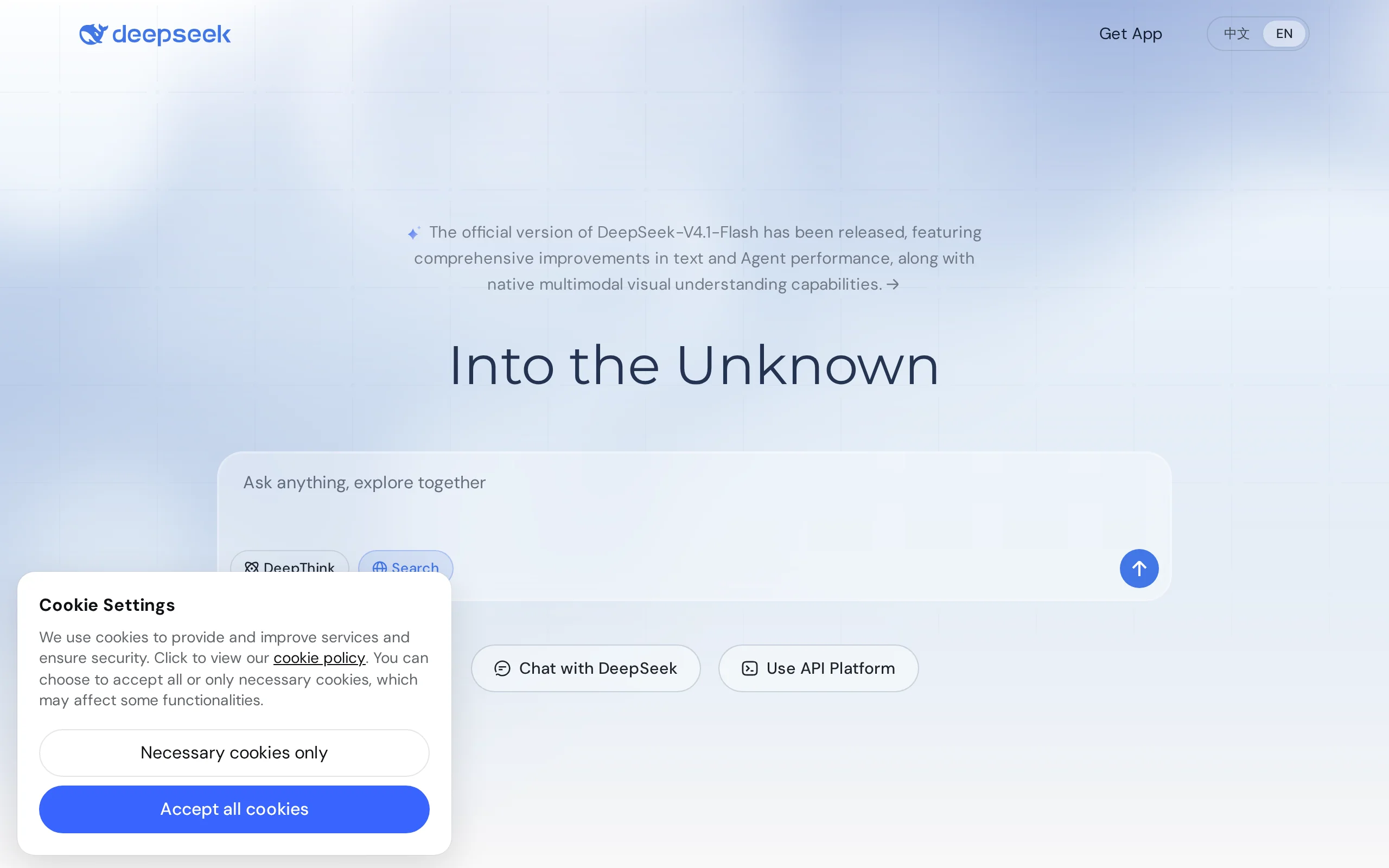
Review of DeepSeek Harness Desktop: How the Official GUI Client Lowers the Bar for Agent Usage
DeepSeek Harness Desktop is the official graphical client launched by DeepSeek, designed to provide a visual interface for the originally command-line-based DeepSeek Harness framework. After users log...
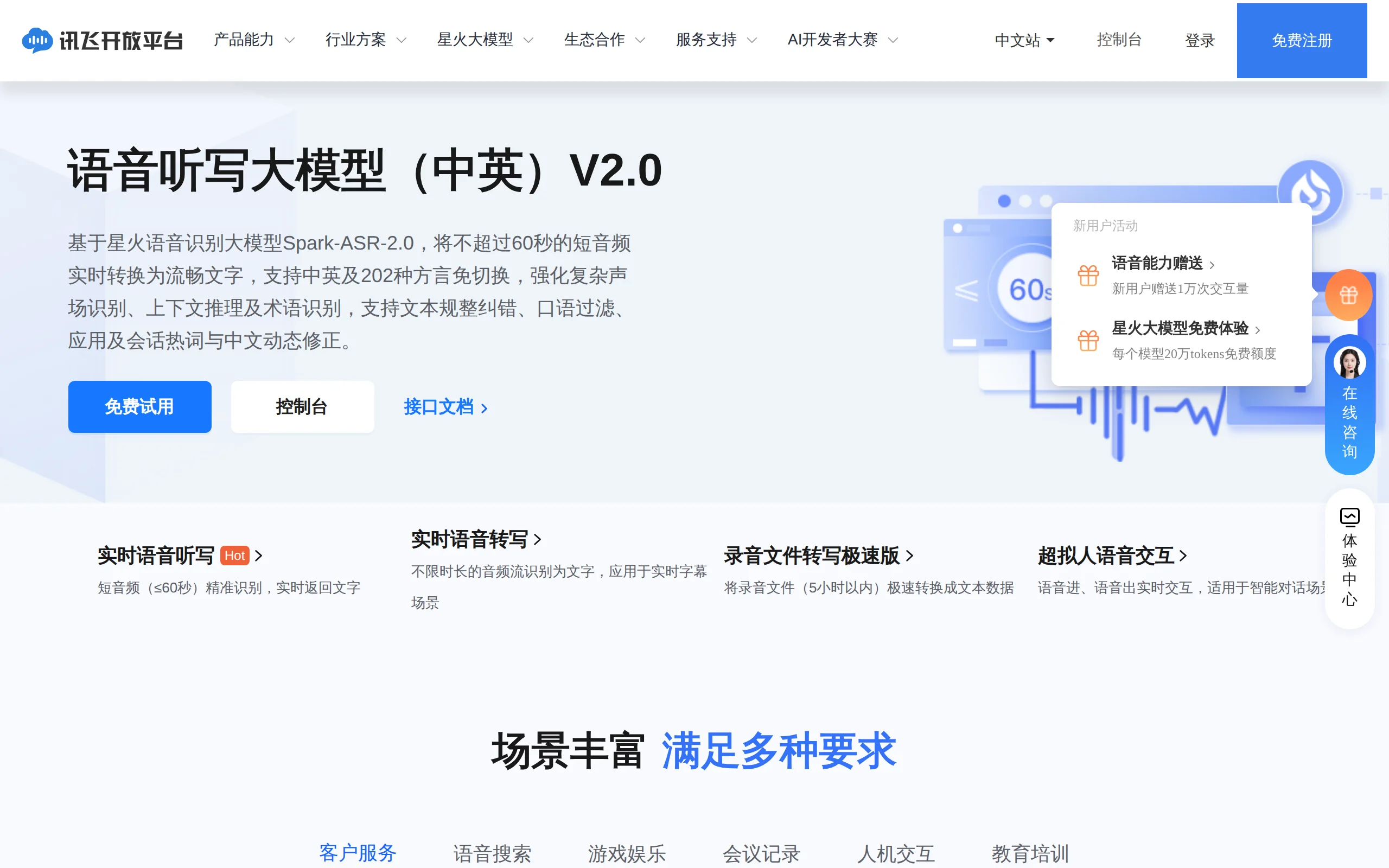
In-Depth Review of Spark-ASR-2.0: A New Paradigm in Speech Recognition with Non-Autoregressive Architecture
Spark-ASR-2.0 is the latest generation speech recognition large model launched by iFLYTEK based on its proprietary Spark-Audio speech foundation model. This model continues the non-autoregressive para...

Qwen-Audio-3.1: A Full-Stack Evaluation of the Qwen Audio Large Model Series
Qwen-Audio-3.1 is a series of large audio models launched by Alibaba's Qwen. It consists of five models: ASR speech recognition, ASR-Next audio understanding, TTS speech synthesis, TTS-Next audio crea...

Qwen3.8-LiveTranslate – A Real-Time Simultaneous Interpretation Model Launched by Alibaba Tongyi
Qwen3.8-LiveTranslate is a real-time simultaneous interpretation large model launched by the Tongyi Qianwen team at Alibaba. Based on the Interleave single-stream architecture, it processes audio and ...
© All Rights Reserved. Some content on this site is partially generated by AI with human review.