
MAI-Image-2.5 – Microsoft's Flagship Text-to-Image Model
Executive Summary:
MAI-Image-2.5 is a flagship text-to-image model from Microsoft Research and the strongest release in the MAI-Image family. On the Arena text-to-image leaderboard it climbed to #3 with 1,254 points—72 ...
1. What Is MAI-Image-2.5
MAI-Image-2.5 is a flagship text-to-image model from Microsoft Research and the strongest release in the MAI-Image family. On the Arena text-to-image leaderboard it climbed to #3 with 1,254 points—72 points higher than the previous generation—and broke the long-standing Google DeepMind and OpenAI dominance of the top five. Its core breakthrough is stronger text rendering and commercial visual capabilities, enabling accurate generation of posters, packaging, labels, and other business assets that include readable text. It also delivers major gains in visual reasoning, scene consistency, and instruction following. Microsoft positions it as a more production-ready image generation solution, marking an important step toward practical, professional text-to-image technology.
Technical positioning and domain: A multimodal generative text-to-image model focused on producing high-quality, high-fidelity images from text prompts. Its distinctive angle is shifting from "make it look good" to "make it correct and useful," with particular emphasis on text accuracy and visual logic in commercial design.
Development background: Built by Microsoft Research on deep expertise in computer vision, NLP, and deep learning. The motivation is that existing text-to-image models struggle with business designs and brand assets that contain text, falling short of enterprise requirements.
Core value: It addresses two major pain points in commercial image generation: inaccurate or unreadable text, and weak visual logic in object structure and spatial relationships. MAI-Image-2.5 moves AI image output from creative experimentation toward commercial production, giving designers, marketers, and enterprises a more reliable content tool.
Technical characteristics: Built on an advanced diffusion architecture with targeted training for text rendering and visual logic. Its key advantage is precise fusion of text and image, plus strong consistency in object structure, lighting, and proportions in complex scenes—leading instruction following and overall completion quality.
2. Key Features
Precise text rendering: The model's most differentiated capability. It accurately generates and renders text on posters, packaging, labels, and similar assets—including font, size, color, and layout—solving the garbled, blurry, or wrong text that has plagued AI image tools and making direct use in commercial design realistic.
Commercial-grade visual generation: Stronger completion for brand visuals, product presentation, and marketing assets. Output approaches professional design in composition, color, and lighting, suitable for e-commerce product shots and campaign posters with lower production overhead.
Enhanced visual reasoning: Significantly better object structure, scene layout, lighting direction, proportions, and spatial relationships. For prompts like "a red ceramic vase on a wooden table with an open book beside it," the model produces structurally sound, lighting-consistent, well-composed images with stronger visual logic than prior versions.
High-precision instruction following: More accurate understanding of complex prompts with multiple objects, attributes, actions, and backgrounds. Results align better with user intent and need less prompt iteration.
Multi-style coverage: Supports realistic photography through stylized illustration. Users can switch styles via prompt—for product renders or brand illustrations—with consistently strong output.
Strong in-scene consistency: Within a single generation, elements stay aligned in style, lighting, and perspective. When placing a brand logo on packaging, logo material and lighting integrate naturally with the package instead of looking pasted on.
3. How to Use
MAI-Image-2.5 is currently accessed through Microsoft and partner online platforms—no local deployment required.
Environment requirements: No local hardware or software stack. Any internet-connected device with a modern browser (desktop, tablet, or phone) is enough. Inference runs in the cloud.
Arena experience: The model is live on the Arena text-to-image leaderboard. Visit Arena, enter a prompt, and test generation— the fastest path for individuals and developers.
MAI Playground: Microsoft says the model will launch on the official MAI Playground within two weeks at a site such as
microsoft.ai/playground, typically with richer controls (size, style, etc.).Foundry integration (developers/enterprises): Within two weeks, Foundry access will provide API keys for programmatic integration into apps and workflows.
Key configuration: On Arena or Playground, results are mainly shaped by prompt engineering. Use structured prompts covering subject, background, style, lighting, color, and text—e.g., "A modern coffee shop poster on a brick wall with bold white sans-serif text 'COFFEE TIME' centered." Negative prompts help exclude unwanted elements.
Best practices: Because text rendering is optimized, specify text content, font style, and placement explicitly. Add spatial relations ("to the left of…," "at the top of…") to leverage visual reasoning. Start simple and add detail gradually.
4. Pros and Cons
| Pros |
|---|
| Industry-leading text rendering: Text accuracy and readability on commercial assets far exceed most mainstream models, solving a core blocker for business use. |
| High commercial readiness: Positioned as "closer to production-ready" with stronger completion, brand maturity, and visual logic for drafts and concept validation. |
| Stronger visual reasoning: Better object structure, layout, and spatial relations with fewer physically implausible errors. |
| Accurate instruction following: Handles complex multi-condition prompts well, reducing trial-and-error cost. |
5. Comparison with Similar Tools
| Dimension | MAI-Image-2.5 | GPT Image 2 (OpenAI) | Gemini-3.1 Flash Image (Google) |
|---|---|---|---|
| Arena rank | #3 (1,254 pts) | #1 | #2 |
| Text rendering | ⭐ Core strength—built for commercial assets | Strong on complex text | Strong, stable text |
| Commercial visual maturity | ⭐ "Closer to production-ready" | High; strong photorealism | High; rich detail |
| Visual reasoning & instructions | ⭐ Significantly improved | Strong on complex prompts | Strong coherence |
| Generation speed | Undisclosed; likely mid-tier | Mid-slow for top quality | ⭐ Flash-fast iteration |
| Ecosystem | Microsoft MAI; platforms opening | Mature OpenAI API ecosystem | Google Gemini integration |
| Core positioning | Commercial text + visuals | General high-quality generation | Fast general generation |
Selection guidance:
- Need accurate text on packaging, posters, or infographics? MAI-Image-2.5 is the best fit today.
- Need maximum speed and rapid iteration? Gemini-3.1 Flash Image is the efficient choice.
- Need the broadest ecosystem and most mature APIs? GPT Image 2 remains the versatile default.
- Prioritize artistry and lighting? Imagen 3 is still a strong creative tool.
6. Editor's Take
MAI-Image-2.5 marks text-to-image moving from spectacle toward utility. For years, models impressed visually but failed on text in commercial workflows. Microsoft targeted text accuracy as the core breakthrough—a hard problem requiring deep coupling of language understanding and visual generation. MAI-Image-2.5 validates that path.
Commercial readiness is the headline. For e-commerce, advertising, and brand design, it can produce drafts—and sometimes near-final assets—not just inspiration. It lowers the skill bar for on-brand visuals and may reshape content pipelines.
Best for brand designers, e-commerce operators, marketers, and business users who need accurate, efficient imagery. Pure fine-art users may prefer other tools; enterprise users seeking reliability should pay close attention.
Competition is entering a more specialized, scenario-driven phase. With Azure and Microsoft 365, MAI-Image-2.5 could become a strong commercial image engine.
Rationale: Top-tier text rendering and commercial utility; −0.5 for early ecosystem, undisclosed speed, and non-leadership in pure art use cases. Essential for business image generation workflows.
7. Use Cases
- Brand packaging design: Rapid mockups with correct brand names, ingredient copy, and logos from product and material prompts.
- Marketing posters and infographics: Accurate titles, slogans, data, and charts for digital and print campaigns.
- E-commerce product scenes: Structurally sound product stills and lifestyle shots with natural lighting and proportions.
- Logo and VI mockups: Brand marks on paper, metal, glass, signage, cards, and billboards for proposals and brand books.
- Stylized commercial illustration: Art-directed pieces that still carry correct commercial text—e.g., a watercolor café menu titled "Summer Specials."
8. FAQ
Q: Are there limits on text length and fonts?
A: Very long passages or tiny type may blur. Keep text to a line or a few keywords and specify font style in the prompt. The model mimics common styles (sans-serif, serif, script) but cannot reproduce exact font files.
Q: Can I use outputs commercially? What about copyright?
A: Terms depend on the platform (Playground, Foundry, Arena partners). Generally, official API/Playground outputs grant usage rights, but review Microsoft service terms before large-scale commercial distribution.
Q: How fast is it vs GPT Image 2 and Imagen 3?
A: No public speed numbers yet. As a flagship quality model, expect mid-tier latency—possibly slower than Gemini Flash—but acceptable for most design workflows (seconds to low tens of seconds).
Q: Does it support specific art styles (cyberpunk, ukiyo-e, etc.)?
A: Yes. Name the style in the prompt. Mainstream styles work well; niche or hybrid styles may need iteration.
Q: How do I get API access?
A: Foundry integration is rolling out within two weeks via Azure AI Foundry or similar. Watch Microsoft AI blog and Foundry announcements for pricing and onboarding.
Q: Can it output high resolution?
A: Yes. Exact max resolution is not fully public, but expect at least 1024×1024 or higher on supported platforms.
9. Project Links
Related AI Model Articles
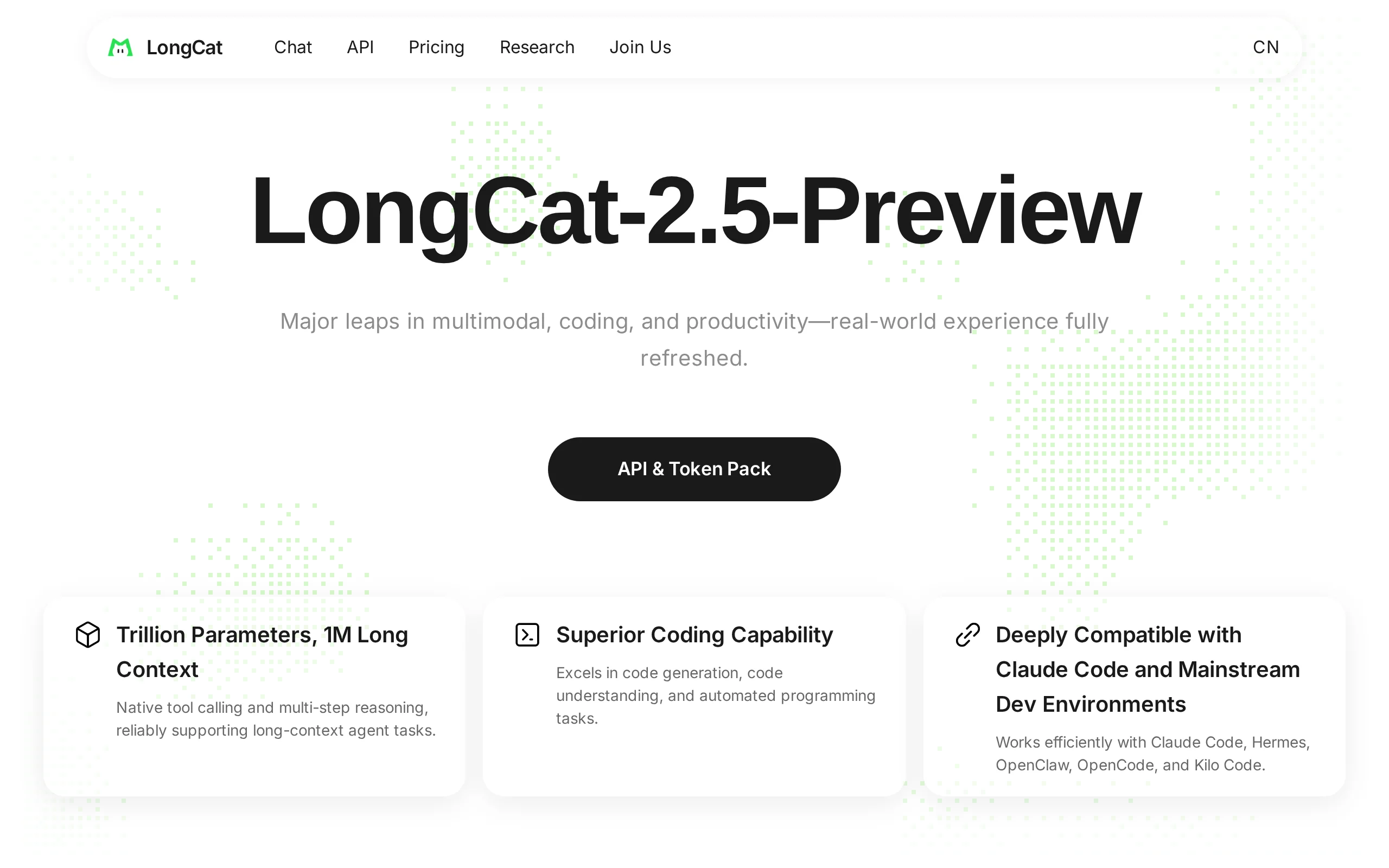
In-Depth Review of Longcat-2.5-preview: Meituan's Next-Generation Multimodal Long-Range Agent Model
LongCat-2.5-preview is Meituan's latest next-generation large model. Building upon the 1.6T total parameters, approximately 48B active parameters, and native 1M token context of LongCat-2.0, it marks ...
Xiaomi MiMo-V2.6 – Xiaomi's Open-Source Multimodal Model Series
Xiaomi MiMo-V2.6 is a series of fully multimodal models released and open-sourced by Xiaomi, comprising two native full-modal models: Pro and Flash. It is centered on large-scale Agentic reinforcement...
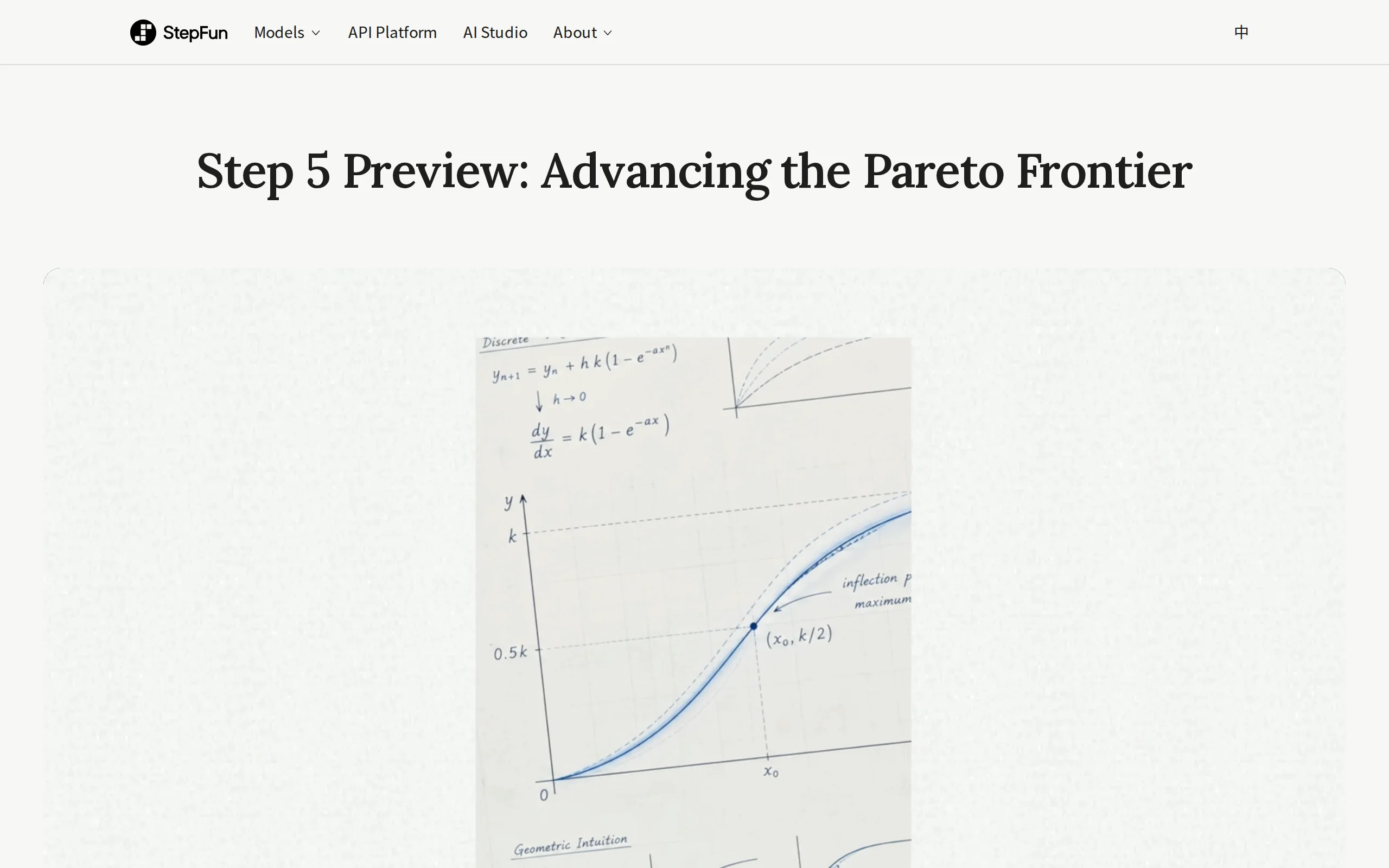
In-Depth Review of Step 5 Preview: A 600B Sparse MoE Flagship with 1M Token Context and 1/8 Cost Advantage
Step 5 Preview is a new-generation flagship foundation model launched by StepFun, designed for real-world Agentic tasks. Based on a sparse MoE architecture, the model has a total of 600B parameters bu...
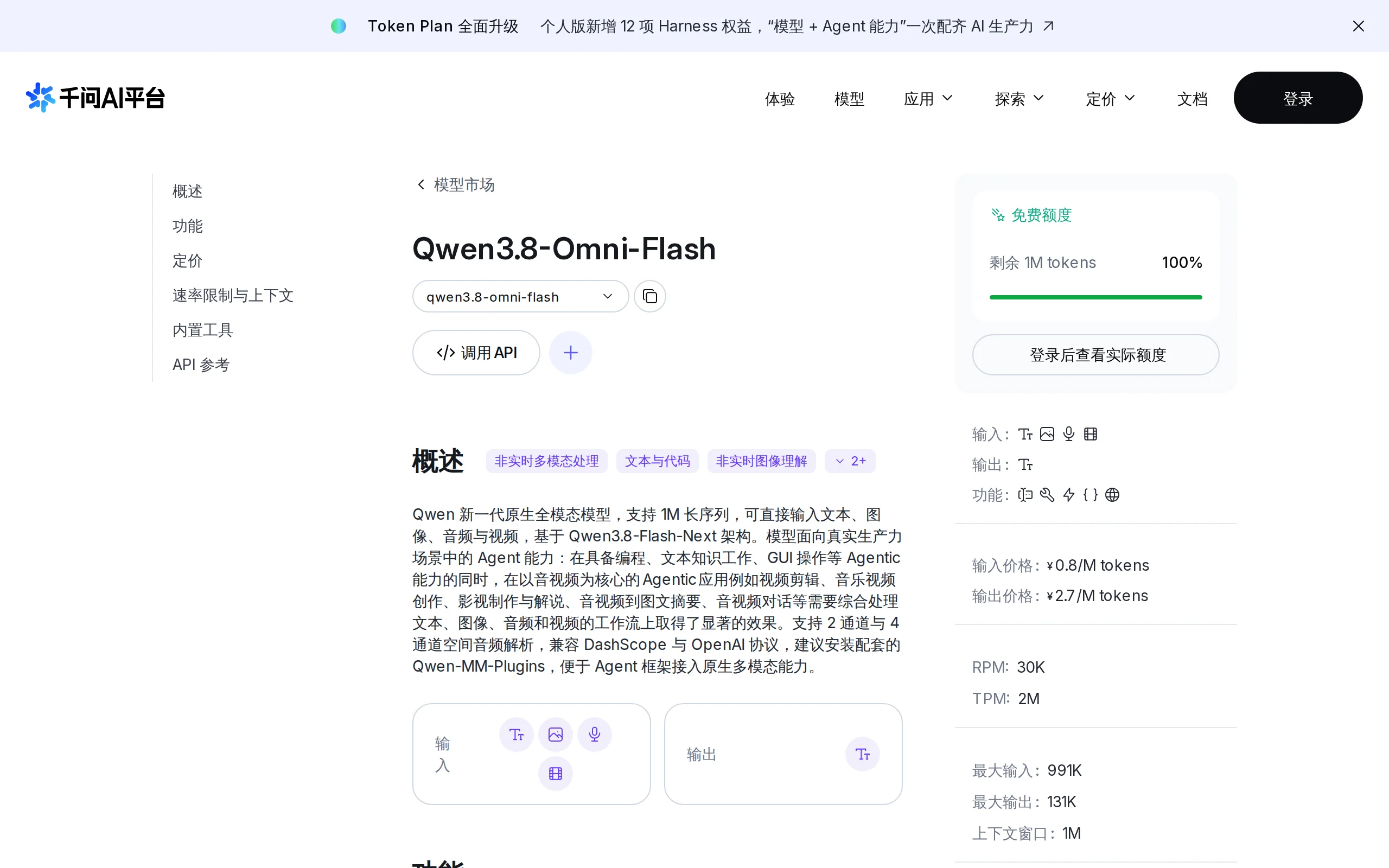
Qwen3.8-Omni-Flash – A Native Multimodal Model Launched by Alibaba Qwen
Qwen3.8-Omni-Flash is a native multimodal model launched by Alibaba Qwen. It jointly models four modalities—text, image, audio, and video—within a single architecture, supporting a context length of u...
© All Rights Reserved. Some content on this site is partially generated by AI with human review.