
LongCat-Video-Avatar 1.5 – Meituan's Open-Source Digital Human Video Generation Model
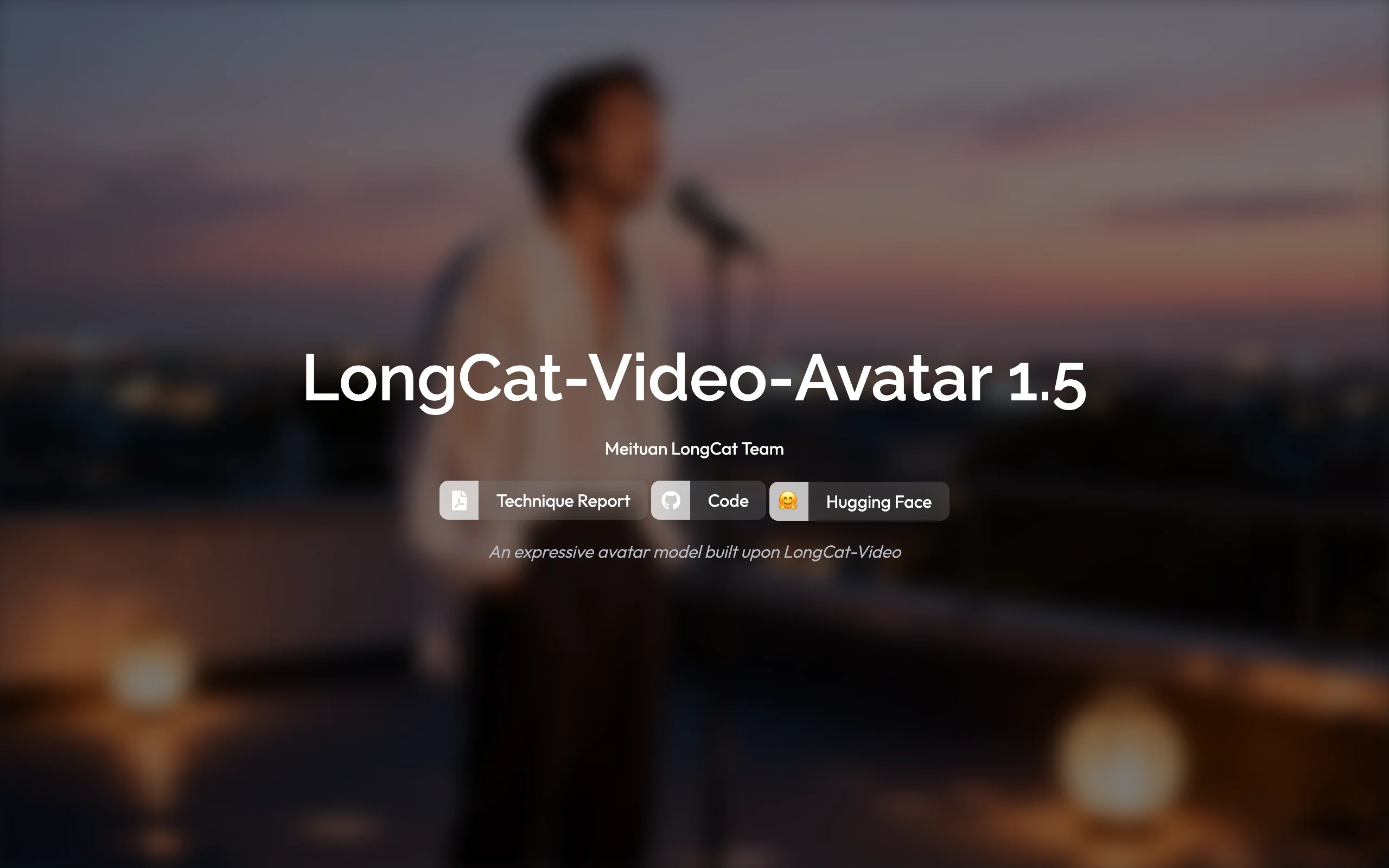
Executive Summary:
LongCat-Video-Avatar 1.5 is Meituan LongCat's open audio-driven digital human video framework, built on the 13.6B-parameter LongCat-Video base. Upgrading the audio encoder from Wav2Vec2 to Whisper-Lar...
1. What Is LongCat-Video-Avatar 1.5
LongCat-Video-Avatar 1.5 is Meituan LongCat's open audio-driven digital human video framework, built on the 13.6B-parameter LongCat-Video base. Upgrading the audio encoder from Wav2Vec2 to Whisper-Large-v3 dramatically improves lip-sync; Step Distillation cuts inference to 8 steps; 480P/720P and INT8 quantization are supported. It delivers production-grade physical plausibility and temporal stability for solo/multi-person dialogue, singing, and stylized animation—fully open under MIT for deploy and extension.
Image source: Official article
Technical positioning and domain: CV and multimodal generation—audio-driven talking head generation. It combines large video models with fine-grained audio features, distillation, and quantization for high-precision, stable, commercially usable open digital humans.
Development background: Meituan LongCat team with prior LongCat-Video releases. Demand from e-commerce livestream, edtech, and virtual support; open solutions lacked lip-sync, long-video identity drift, and speed—addressed here via open high-precision, efficient tooling.
Core value: Balances lip-sync accuracy vs. stability and speed vs. quality. Whisper-Large-v3 improves lip match; Step Distillation ~5× faster at similar quality. Native dual-audio interaction, continuation, and stylization out of the box.
Technical characteristics: Coarse-to-fine spatiotemporal generation with Block Sparse Attention; multi-reward GRPO for text alignment, visual quality, and motion coherence; INT8 and multi-GPU context parallelism on consumer GPUs.
2. Key Features
Single-audio driven video: One audio track plus prompt or reference image yields dynamic, lip-accurate talking video. Whisper-Large-v3 phoneme-level features maintain sync under speed and emotion changes.
Multi-audio interaction: Dual audio streams for two-person dialogue, turn-taking, etc. Time alignment handles switching and overlap—no manual editing for multi-role visuals.
Video continuation and long video: Native continuation extends minutes without color drift or identity break via segmented generation and latent state handoff—courses, live replay, long talks.
Stylization and animation: Generalizes to anime, animals, complex real-world conditions, 3D animation styles—audio-driven capability beyond photoreal faces.
Singing and performance: Music-driven expressions and stable full/half-body performance for virtual idols and music video use.
Multi-task base model: Underlying LongCat-Video supports text-to-video, image-to-video, and continuation in one framework.
3. How to Use
Environment: Clone repo, Conda env, PyTorch 2.6.0, FlashAttention-2, dependencies. Linux (Ubuntu 20.04+), NVIDIA GPU 16GB+, CUDA 12.1+.
Download weights:
huggingface-cli download meituan-longcat/LongCat-Video-Avatar-1.5 --local-dir ./weights(~26GB).Single-audio generation: JSON with audio path, prompt, reference image:
{
  "audio_path": "./input/audio.wav",
  "prompt": "A person speaking naturally",
  "ref_image_path": "./input/ref.jpg"
}
Run
run_demo_avatar_single_audio_to_video.pywith--model_type avatar-v1.5 --use_distill --use_int8. Output in./output.Multi-audio: JSON with two audios and character info; run
run_demo_avatar_multi_audio_to_video.py. Merge (overlap) or Concatenation (turn-taking).Continuation: Add
--num_segments 4(etc.) for longer continuous video; ~15 s per segment by default.WebUI:
streamlit run ./run_streamlit.pyfor interactive upload and parameters.
Notes: INT8 slightly lowers quality—use when VRAM tight; --use_distill recommended; set CUDA_VISIBLE_DEVICES for multi-GPU.
4. Pros and Cons
| Pros |
|---|
| Leading lip-sync: Whisper-Large-v3 beats Wav2Vec2 on mouth accuracy and smooth expression transitions. |
| Long-video identity: Continuation keeps stable identity and body motion—no color drift in long talking shots. |
| Fast inference: 8-step distill ~5× faster vs. undistilled—better for latency-sensitive apps. |
| MIT commercial open: Free deploy and fork for enterprises. |
| VRAM friendly: INT8 + multi-GPU on 16GB cards—lower bar than some open peers. |
5. Comparison with Similar Tools
| Dimension | LongCat-Video-Avatar 1.5 | HeyGen | Kling Avatar 2.0 |
|---|---|---|---|
| Developer | Meituan LongCat | HeyGen | Kuaishou |
| License | MIT open | Closed commercial | Closed commercial |
| Audio encoder | Whisper-Large-v3 | Undisclosed | Undisclosed |
| Inference steps | 8 (distilled) | Undisclosed | Undisclosed |
| Lip accuracy | High (major upgrade) | High | High |
| Long-video stability | Strong (native continuation) | Medium | Medium |
| Multi-person | Native dual-audio | Supported | Supported |
| Stylization | Anime, animals, etc. | Limited | Limited |
| Resolution | 480P / 720P | Up to 4K | Up to 1080P |
| Hardware | INT8, 16GB VRAM | Cloud API | Cloud API |
Selection advice: Open, customizable digital human video for dev teams/SMEs—best pick with MIT, INT8, multi-audio, and continuation. Need 4K or turnkey cloud—HeyGen et al. Researchers gain a strong lip-sync + distillation baseline.
6. Editor's Take
LongCat-Video-Avatar 1.5 innovates by pairing Whisper-Large-v3 with large video models—a first in open lip-sync at this level. Eight-step distillation without quality collapse matters for deployment. Multi-reward GRPO balances alignment, visuals, and motion thoughtfully.
It solves drift, multi-person generation, and stylization for live commerce, edtech, and virtual support—clear commercial paths. MIT lowers the bar for quality previously commercial-only.
Audience: e-commerce ops, schools cutting course cost, creators, multimodal researchers. Not ideal for 4K purists; 720P suffices for most apps.
Architecture scales—expect Chinese fine-tunes, higher res, richer style templates with community growth.
— Resolution and Chinese gaps; otherwise leading open package.
7. Use Cases
AI spokesperson and e-commerce: Product audio + reference image → batch lip-sync promo video; continuation for multi-minute listings on short-video platforms.
Online education: Course audio → stable virtual instructor with gestures; multi-audio for Q&A scenes.
Virtual customer service: Branded digital agents with multi-turn dialogue visualization on web or outbound calls.
Short video and social: Sing/perform audio → stylized (anime, realistic) clips for TikTok, Bilibili, etc.
8. FAQ
Q: Minimum VRAM?
A: 16GB with INT8 for smooth 480P; 24GB+ for 720P or FP16.
Q: Chinese speech?
A: Supported but weaker than English; fine-tune on Chinese audio for production.
Q: Identity drift on long video?
A: Use continuation with sensible --num_segments (15–30 s each); keep reference lighting/angle consistent.
Q: INT8 quality impact?
A: Slightly less detail/color; lip-sync and motion largely unchanged. FP16 if VRAM allows.
Q: Commercial use?
A: MIT allows commercial use/modification; generated content must comply with law.
Q: Control two speakers' order?
A: Timestamp two audios in JSON; Concatenation for turns, Merge for simultaneous speech.
9. Project Links
Related AI Model Articles
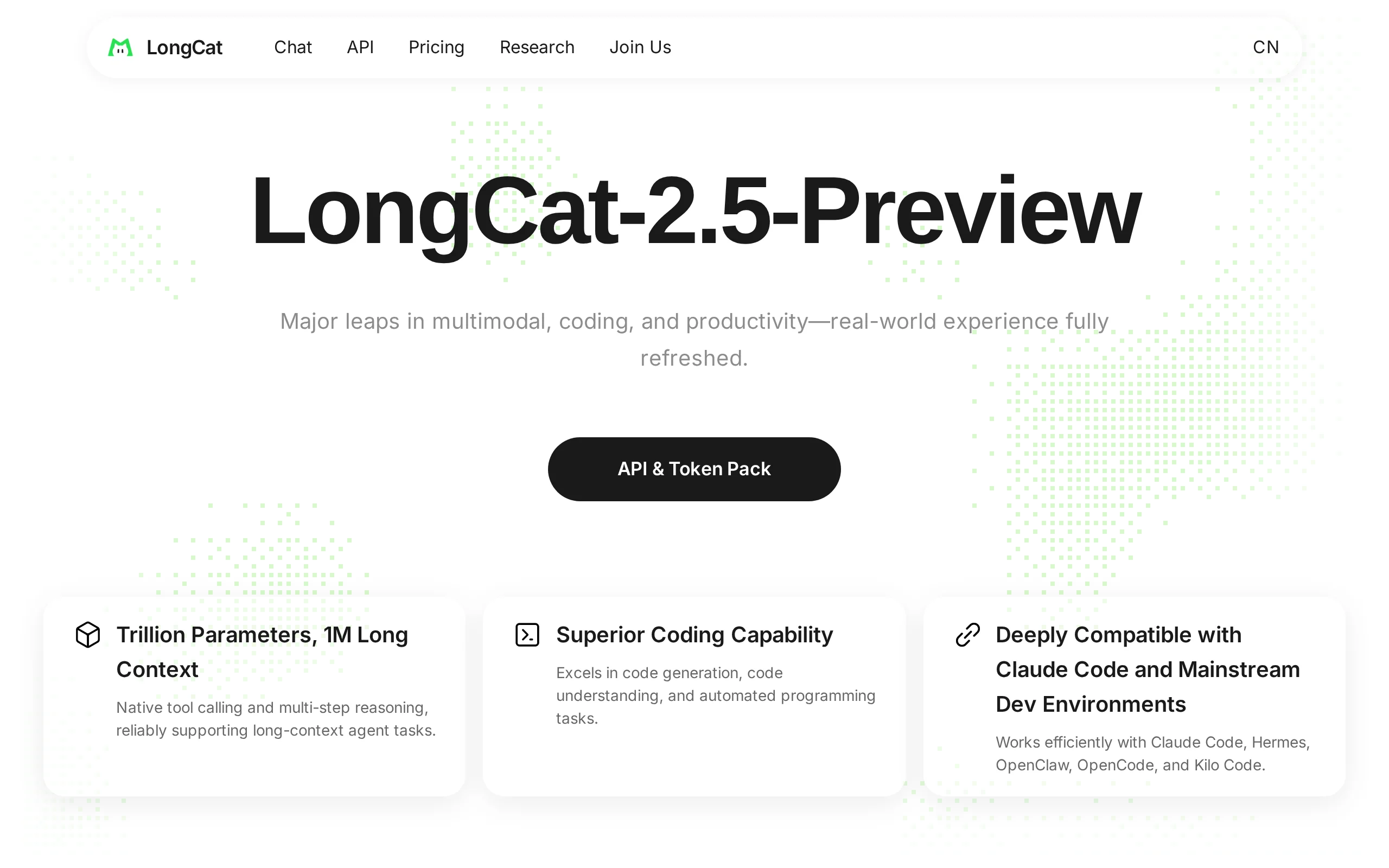
In-Depth Review of Longcat-2.5-preview: Meituan's Next-Generation Multimodal Long-Range Agent Model
LongCat-2.5-preview is Meituan's latest next-generation large model. Building upon the 1.6T total parameters, approximately 48B active parameters, and native 1M token context of LongCat-2.0, it marks ...
Xiaomi MiMo-V2.6 – Xiaomi's Open-Source Multimodal Model Series
Xiaomi MiMo-V2.6 is a series of fully multimodal models released and open-sourced by Xiaomi, comprising two native full-modal models: Pro and Flash. It is centered on large-scale Agentic reinforcement...
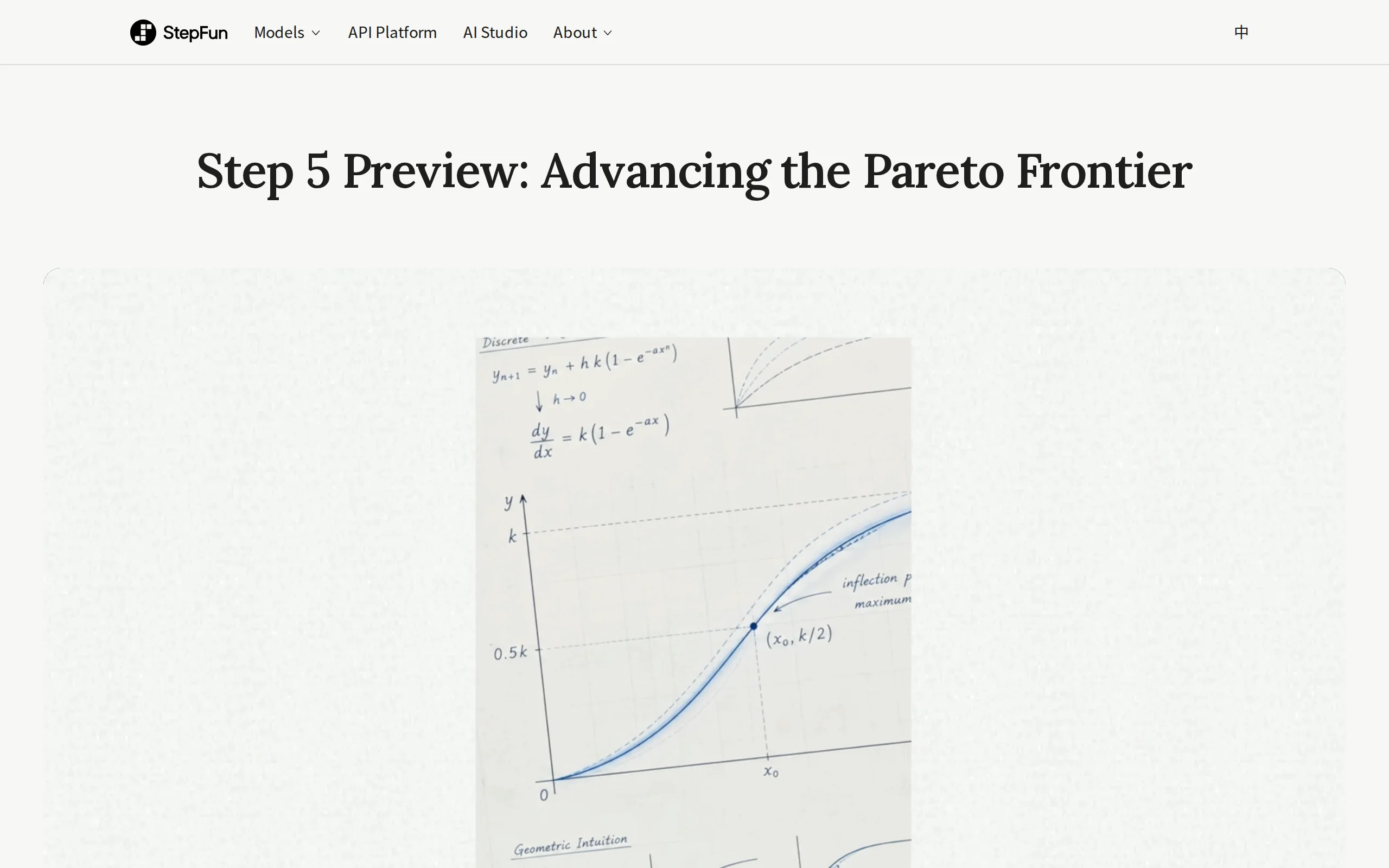
In-Depth Review of Step 5 Preview: A 600B Sparse MoE Flagship with 1M Token Context and 1/8 Cost Advantage
Step 5 Preview is a new-generation flagship foundation model launched by StepFun, designed for real-world Agentic tasks. Based on a sparse MoE architecture, the model has a total of 600B parameters bu...
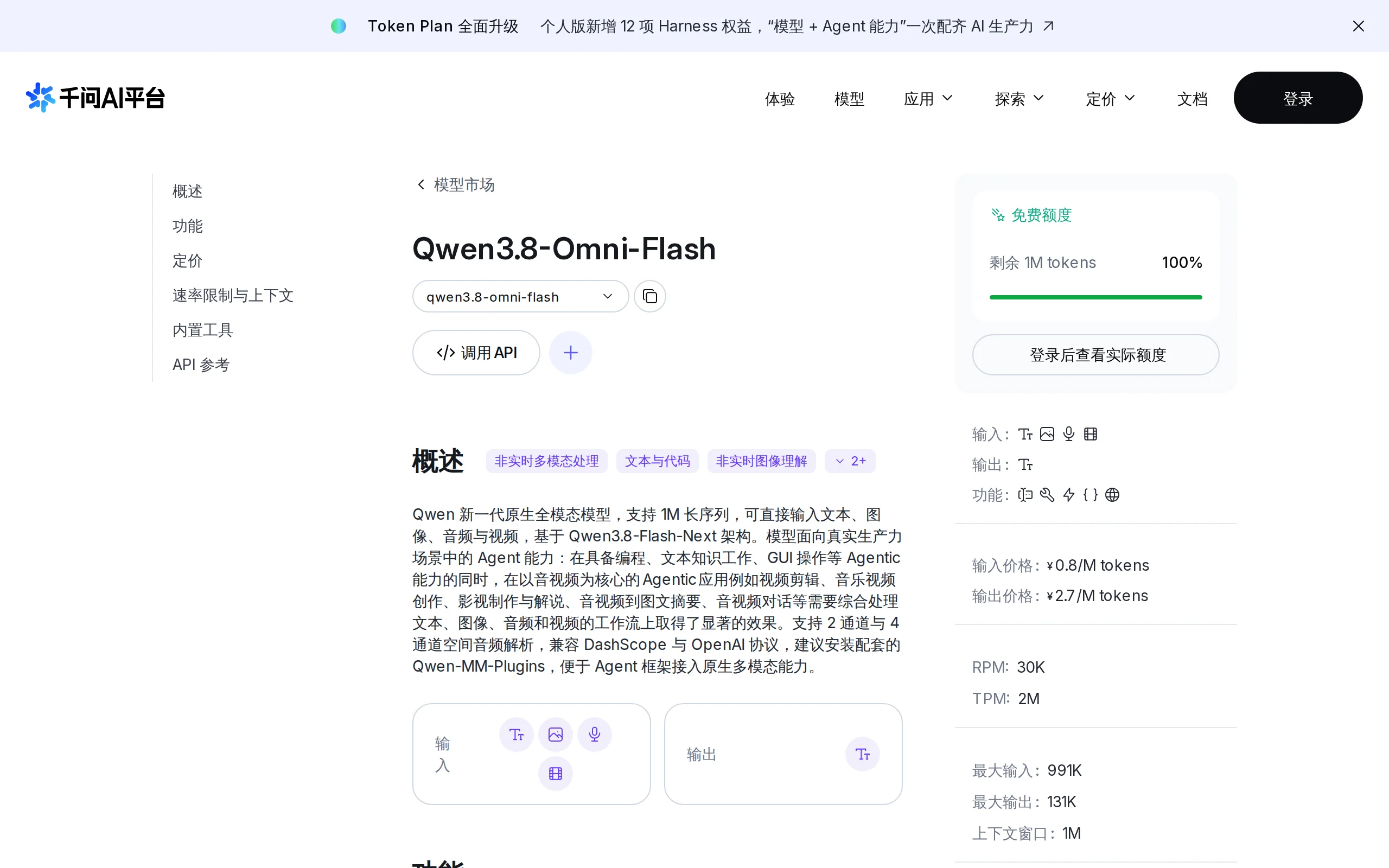
Qwen3.8-Omni-Flash – A Native Multimodal Model Launched by Alibaba Qwen
Qwen3.8-Omni-Flash is a native multimodal model launched by Alibaba Qwen. It jointly models four modalities—text, image, audio, and video—within a single architecture, supporting a context length of u...
© All Rights Reserved. Some content on this site is partially generated by AI with human review.