
LOGOS – Alibaba's First Open Unified Scientific Foundation Model
Executive Summary:
LOGOS (Language Of Generative Objects in Science) is the first open unified scientific grammar multi-domain generative foundation model from Alibaba ATH-Token Foundry and Renmin University of China Ga...
1. What Is LOGOS
LOGOS (Language Of Generative Objects in Science) is the first open unified scientific grammar multi-domain generative foundation model from Alibaba ATH-Token Foundry and Renmin University of China Gaoling School of Artificial Intelligence. It encodes heterogeneous scientific objects—proteins, small molecules, materials, antibodies—into a unified token sequence using a pure sequence modeling paradigm, matching or beating domain-specific methods on six tasks including pocket-conditioned ligand generation, retrosynthesis prediction, protein editing, and material generation. Most notably, with only 1B parameters it surpasses the 56B-parameter NatureLM on multiple tasks, validating extreme parameter efficiency for “one model for many scientific tasks” and opening a new path for AI-driven scientific discovery.
Technical positioning and domain: LOGOS is a multi-domain scientific generative foundation model building one framework for biology, chemistry, materials, and more. Unlike single-domain models (molecule-only or protein-structure-only), LOGOS breaks disciplinary silos within one unified generative AI framework—part of the emerging “scientific foundation model” direction.
Research background: Joint development by Alibaba ATH-Token Foundry and RUC Gaoling AI. Alibaba brings deep foundation-model experience (Qwen lineage); RUC Gaoling AI contributes NLP and multimodal research. Motivation: science has heterogeneous data (protein sequences, molecular graphs, crystal structures) and traditional per-domain models are costly with poor cross-domain transfer. LOGOS addresses that directly.
Core value: “Unified scientific grammar” encodes diverse scientific objects as one token sequence so one model learns and generates proteins, molecules, materials, and more. This cuts multi-domain engineering cost and enables positive transfer from joint multi-task training—better than isolated task training (“1+1>2”). Pure sequence modeling removes dependence on scarce expensive 3D structure data, lowering barriers in drug discovery and materials design.
Technical characteristics: Unified scientific grammar plus spatial interaction discretization: a shared vocabulary encodes heterogeneous objects as discrete token sequences; textual description grammaticizes 3D contact patterns so the model learns spatial interaction without explicit 3D coordinates. “Form aligned with objective” means pretraining sequence form matches downstream I/O, closing the pretrain-finetune gap and boosting task performance.
2. Key Features
Pocket-conditioned ligand generation: Given protein pocket 3D information encoded as sequence, LOGOS generates small-molecule drugs with optimized binding affinity, drug-likeness (e.g., Lipinski’s Rule of Five), and synthesizability—critical for early drug discovery and shrinking virtual screening pools.
Retrosynthesis prediction: From target molecule structure, LOGOS predicts precursors and reaction routes with 74.8% Top-1 accuracy—helping chemists plan synthesis with less trial-and-error, especially for complex natural products or drug molecules.
Pocket site identification: From amino acid sequence alone, LOGOS predicts small-molecule binding sites without 3D structure—58.5% Top-n accuracy on HOLO4K. Valuable for targets lacking experimental structures (membrane proteins, intrinsically disordered proteins).
MOF material generation: Generates novel metal-organic framework (MOF) structures with 17.78% novel building block (NBB) ratio—76% above baselines—exploring unknown chemical space with novel topologies for gas storage, separation, and energy conversion.
Protein editing: Directed sequence edits to improve stability, activity, or specificity—0.93 on hard Fitness tasks vs. 0.34 baseline (+174%). Important for enzyme engineering, biocatalysts, and therapeutic protein optimization.
Antibody CDR design: Designs complementarity-determining region (CDR) sequences for higher antigen affinity—79.82% AAR (Amino Acid Recovery), beating structure-dependent inverse folding methods—accelerating therapeutic antibody development.
3. How to Use
Obtain open resources: Download weights from HuggingFace LOGOS-Hub or inference code and examples from GitHub (LOGOS-Hub/LOGOS). Prefer Git LFS for large weight files.
Environment and dependencies: PyTorch-based; GPU with CUDA 11.8+ recommended. Install transformers, accelerate, torch, etc. via
pip install -r requirements.txt. Use a conda env to avoid conflicts.Deploy with LLM ecosystem: Compatible with vLLM for fast inference and bitsandbytes for quantization to save VRAM. Reuse existing LLM infrastructure—no separate stack required.
Downstream task calls: Format scientific objects as LOGOS unified grammar token sequences—pocket info for ligand generation, SMILES for retrosynthesis, etc. Autoregressive generation produces outputs. Follow official example scripts for formatting.
Notes and best practices: Pick model size (1B/3B/8B) by task—1B for rapid prototypes, larger for precision. On limited hardware, use 1B with vLLM continuous batching. Keep input length within context (≤2048 tokens recommended).
4. Pros and Cons
| Pros |
|---|
| Unified scientific grammar: Encodes proteins, molecules, materials as one token sequence with positive cross-domain transfer; joint multi-task training beats isolated training. |
| Extreme parameter efficiency: LOGOS-1B at 1/56 the size of NatureLM (1B vs 56B) wins on multiple tasks—lower deployment cost. |
| Zero 3D coordinate dependency: Pocket site ID needs sequence only—no scarce 3D data—especially for hard-to-crystallize proteins. |
| Reuses LLM engineering stack: Shared architecture/training/inference with LLMs—vLLM, quantization, distributed inference without a custom stack. |
5. Comparison with Similar Tools
| Dimension | LOGOS | NatureLM | ESM-2 |
|---|---|---|---|
| Core architecture | Unified scientific grammar + pure sequence autoregression, shared vocab | Multimodal encoder-decoder, 3D coords and geometric nets | Protein sequence Transformer, masked LM |
| Parameter scale | 1B / 3B / 8B | 8×7B MoE, 56B total | 650M / 3B / 15B |
| Task coverage | Proteins, molecules, materials, reactions, antibodies, pocket ID | Molecule gen, protein structure | Protein structure, function, mutation effects |
| Cross-domain transfer | Unified grammar enables bio/chem/materials transfer | Per-domain modeling, weak cross-domain transfer | Proteins only |
| Parameter efficiency | 1B beats 56B on multiple tasks | Needs larger scale for similar performance | Efficient but single-domain |
| Engineering compatibility | LLM stack (vLLM, quantization), low deploy cost | Separate from LLM stack, higher engineering cost | HMMER, AlphaFold ecosystem |
Selection guidance: Teams spanning proteins, molecules, and materials should choose LOGOS for unified grammar and cross-domain transfer with extreme parameter efficiency—LOGOS-1B deploy cost far below NatureLM 56B, ideal for resource-limited labs.
For protein-only structure or function work, ESM-2 remains mature and validated. For small-molecule property or reaction tasks only, ChemBERTa may suffice; for retrosynthesis plus protein editing together, LOGOS’s integrated approach wins.
6. Editor's Take
LOGOS’s unified scientific grammar is among the most breakthrough ideas in scientific AI recently. Heterogeneous objects as one token sequence solves long-standing multi-domain fusion problems; joint training yields transfer impossible with siloed specialist models. 1B beating 56B validates the design emphatically.
Practically, zero 3D dependency matters: many targets lack structures (membrane proteins, IDPs)—LOGOS does pocket ID and ligand generation from sequence alone, widening drug discovery scope. LLM ecosystem compatibility lets enterprises reuse inference infra without a separate stack—lower landing cost.
Audience: computational chemists and bioinformaticians in drug discovery, materials researchers, synthetic biologists in enzyme/protein design, and AI researchers on scientific foundation models. Teams wanting “one model for everything” get a compelling path.
Future: extend to more modalities (spectra, microscopy, genomics), structured outputs (3D coords, molecular graphs), and faster long-sequence inference for large molecules and complex materials.
Basis: paradigm-level innovation, strong practical value for cross-domain research, impressive parameter efficiency; inference efficiency and complex structure modeling still room to grow. Essential for scientific AI practitioners.
7. Use Cases
AI-assisted drug design: From target pocket structure, LOGOS generates candidates meeting affinity, drug-likeness, and synthesizability—many candidates in minutes from sequence or pocket info, accelerating hit discovery.
Chemical synthesis planning: Input target molecules for 74.8% Top-1 retrosynthesis—plan routes for natural products or drugs with less wet-lab trial and error.
Protein engineering: Directed edits for stability, activity, substrate specificity—0.93 on hard Fitness tasks shows the model finds function-critical residues for enzymes and biocatalysts.
New materials discovery: Generate novel MOF structures with +76% NBB ratio—explore unknown chemical space for gas storage, separation, energy conversion validation.
Antibody drug development: Design high-affinity CDR regions at 79.82% AAR—affinity maturation for therapeutic antibodies, faster discovery-to-clinic.
8. FAQ
Q: How does LOGOS differ from NatureLM?
A: LOGOS uses unified scientific grammar—one token sequence across proteins, molecules, materials—with cross-domain transfer. NatureLM is larger (56B) but per-domain silos limit transfer. LOGOS-1B beating NatureLM shows the design advantage.
Q: Does LOGOS need a GPU?
A: Yes, PyTorch on NVIDIA GPU recommended. 1B runs smoothly on one A100 80GB; 3B/8B need multi-GPU or more VRAM. Use vLLM quantization (e.g., 4-bit) when constrained.
Q: Can LOGOS be used commercially?
A: Open license—check LICENSE on GitHub for terms. Weights and code appear open for research and commercial use; confirm limits on redistribution and product integration.
Q: What are LOGOS input/output formats?
A: Unified token sequences—SMILES for small molecules, one-letter amino acid codes for proteins, specific crystal encodings for materials. See official format guides to convert objects to model input.
Q: How does LOGOS perform on pocket ligand generation?
A: First pure-sequence method to beat 3D-coordinate diffusion models on this task—optimizes affinity, drug-likeness, and synthesizability together. See arXiv for detailed metrics.
Q: Does LOGOS support fine-tuning?
A: Yes, standard finetune on pretrained weights. LLM-compatible architecture works with HuggingFace Trainer; LoRA recommended to save VRAM and reduce catastrophic forgetting.
9. Project Links
- GitHub: https://github.com/LOGOS-Hub/LOGOS
- HuggingFace: https://huggingface.co/LOGOS-Hub
- arXiv paper: https://arxiv.org/pdf/2606.16905
Related AI Model Articles
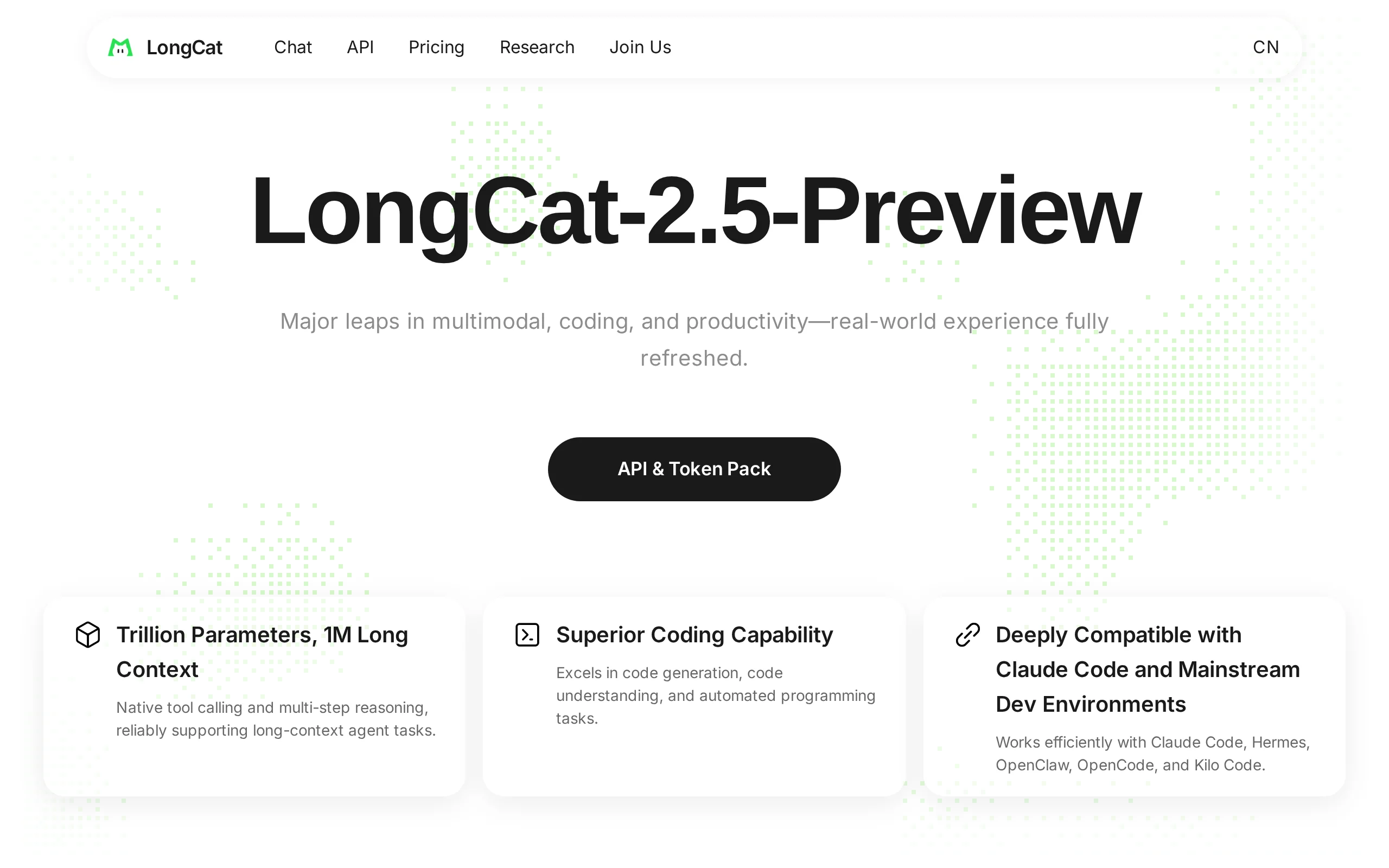
In-Depth Review of Longcat-2.5-preview: Meituan's Next-Generation Multimodal Long-Range Agent Model
LongCat-2.5-preview is Meituan's latest next-generation large model. Building upon the 1.6T total parameters, approximately 48B active parameters, and native 1M token context of LongCat-2.0, it marks ...
Xiaomi MiMo-V2.6 – Xiaomi's Open-Source Multimodal Model Series
Xiaomi MiMo-V2.6 is a series of fully multimodal models released and open-sourced by Xiaomi, comprising two native full-modal models: Pro and Flash. It is centered on large-scale Agentic reinforcement...
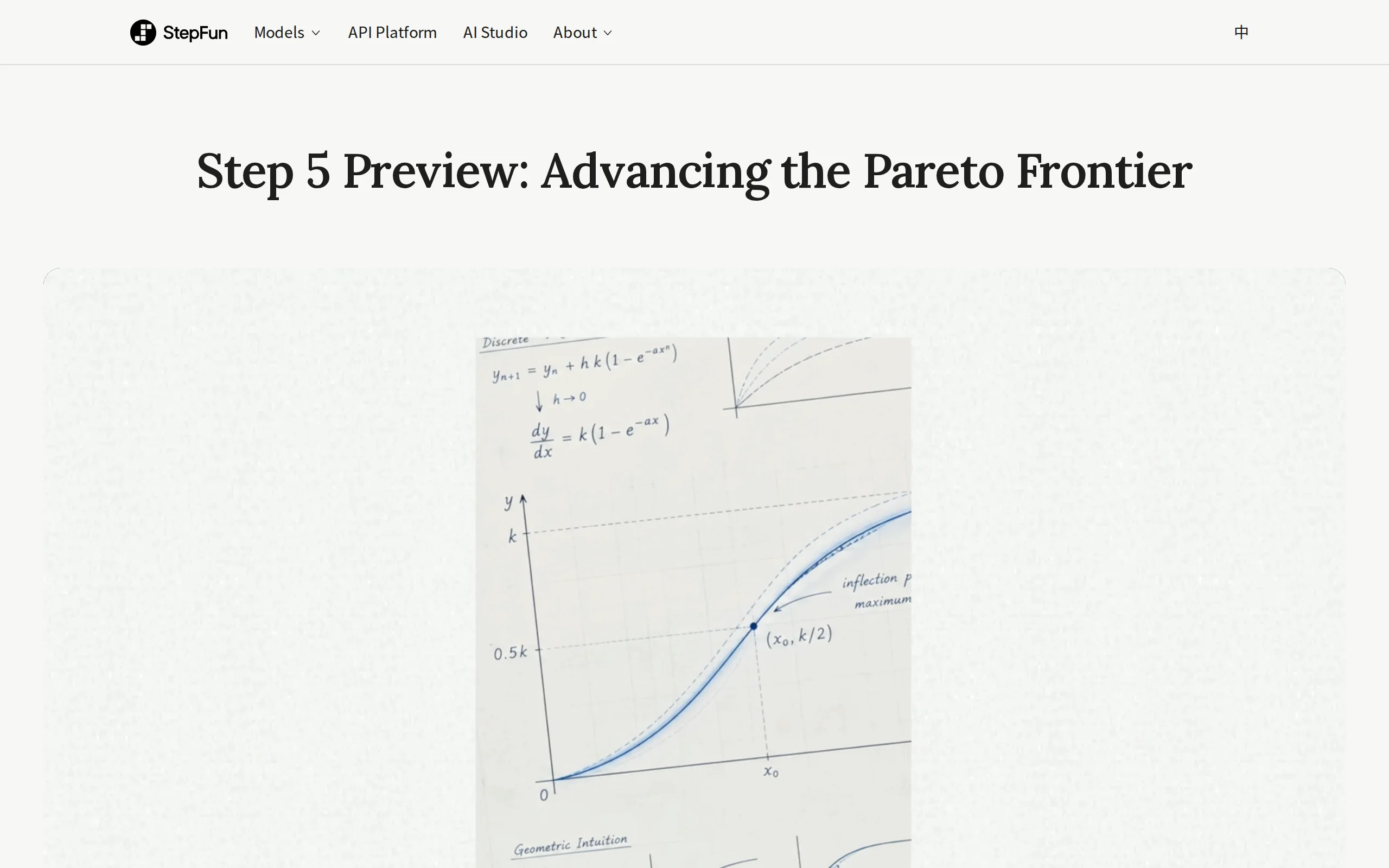
In-Depth Review of Step 5 Preview: A 600B Sparse MoE Flagship with 1M Token Context and 1/8 Cost Advantage
Step 5 Preview is a new-generation flagship foundation model launched by StepFun, designed for real-world Agentic tasks. Based on a sparse MoE architecture, the model has a total of 600B parameters bu...
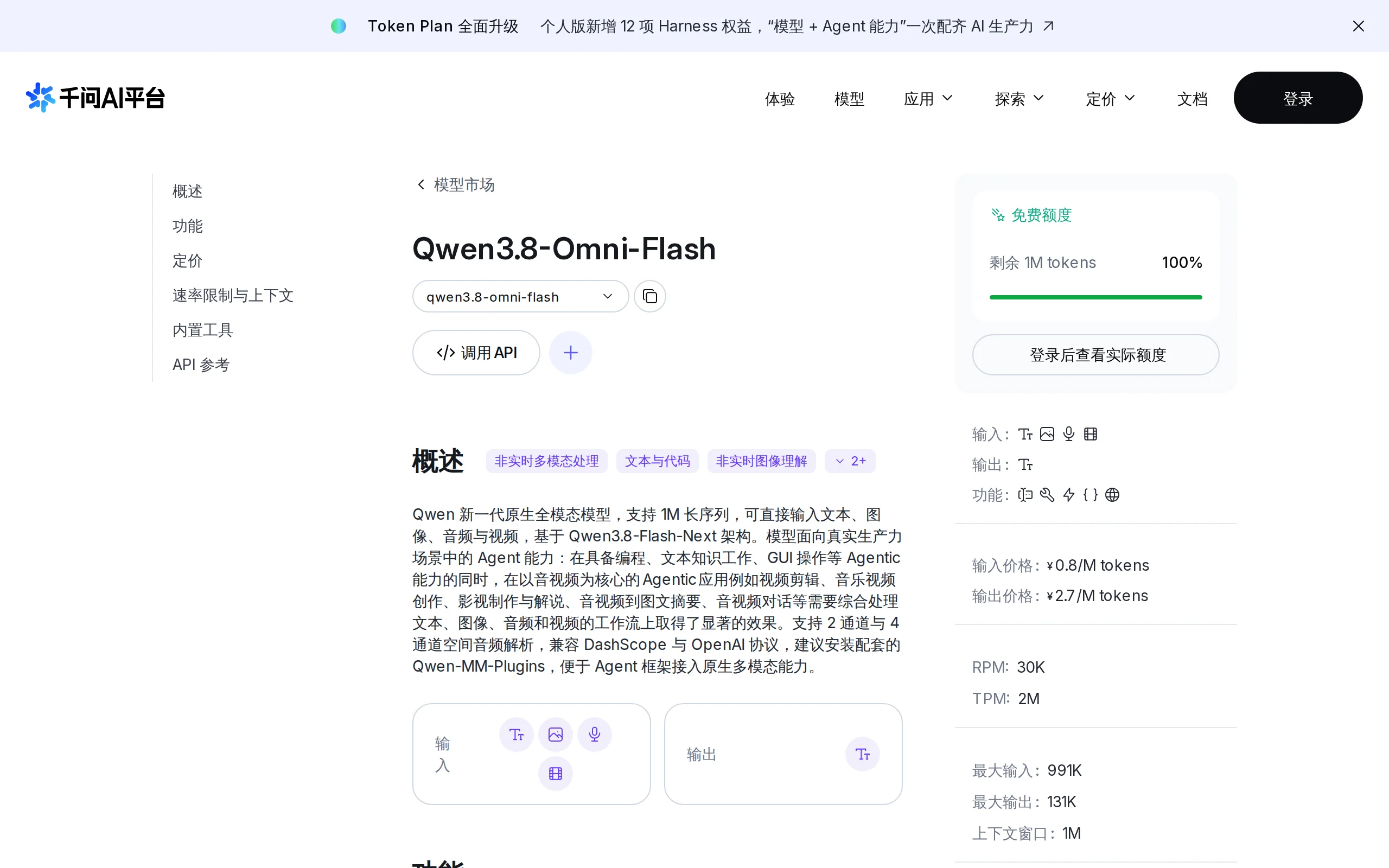
Qwen3.8-Omni-Flash – A Native Multimodal Model Launched by Alibaba Qwen
Qwen3.8-Omni-Flash is a native multimodal model launched by Alibaba Qwen. It jointly models four modalities—text, image, audio, and video—within a single architecture, supporting a context length of u...
© All Rights Reserved. Some content on this site is partially generated by AI with human review.