
HiDream-O1-Image-Pro – HiDream.ai's Flagship Image Model
Executive Summary:
HiDream-O1-Image-Pro is HiDream.ai's flagship image generation model built on the native full-modal UiT (Unified Transformer) architecture with over 200B parameters. It sets new SOTA across text-to-im...
1. What Is HiDream-O1-Image-Pro
HiDream-O1-Image-Pro is HiDream.ai's flagship image generation model built on the native full-modal UiT (Unified Transformer) architecture with over 200B parameters. It sets new SOTA across text-to-image, high-fidelity text rendering, instruction-based image editing, and multi-subject personalization. The model maps raw image pixels, discrete text tokens, and multi-task conditions into a continuous shared token space for deep fusion at the representation layer—fundamentally replacing the traditional diffusion paradigm of separate image/text encoding followed by concatenation. Its 8B open-source version previously topped the Artificial Analysis open-model leaderboard; the Pro release further validates native full-modal architecture scalability, marking a key step toward unified multimodal modeling at HiDream.
Image source: Official article
Technical positioning and domain: Belongs to multimodal generative AI, focused on text-to-image, image editing, and cross-modal understanding. Distinctively uses native full-modal architecture rather than traditional LDM (Latent Diffusion Model), addressing multimodal fusion at the representation layer with high-fidelity, highly controllable image generation.
R&D background: Developed by HiDream with deep expertise in computer vision, NLP, and multimodal learning. Motivation came from inherent defects in traditional diffusion models—complex semantic understanding, text rendering, and multi-subject consistency—aiming to break bottlenecks through architectural innovation and evolve from "stitched" to "native" unified fusion.
Core value: HiDream-O1-Image-Pro solves distorted text rendering, weak complex-scene semantic understanding, and inconsistent multi-subject features in traditional models. It first validates native full-modal architecture feasibility at 200B+ scale, offering a new paradigm for image generation and "Any to Any" cross-modal capability as foundation for future world models.
Technical characteristics: UiT native full-modal unified architecture for deep fusion of image, text, and task conditions; 200B+ parameter scale for strong representation and SOTA benchmarks; high-fidelity text rendering for precise in-image text; architecture scalability maintaining performance leadership from 8B to 200B+.
2. Key Features
General text-to-image: Generate high-quality, high-fidelity diverse images from natural language descriptions. The model understands complex semantic relations—spatial layout, object interaction, abstract concepts—and produces visually consistent scenes from photorealistic to artistic styles.
High-fidelity text rendering: Precisely generates embedded text in images, solving industry pain points of distortion, misalignment, and blur in traditional diffusion models. Highly valuable for ad design and poster generation requiring text-image fusion, significantly improving output usability.
Instruction-based image editing: Modify existing images via natural language—replace objects, adjust colors, change styles—with strong intent understanding and overall consistency. Supports flexible content repainting and creative adjustment.
Multi-subject personalization: Maintains feature consistency and style unity across multiple subjects in complex scenes. When generating images with specific people and objects, the model keeps recognizable visual features across viewpoints and actions.
Diverse scene generation: Covers multiple art styles (oil painting, watercolor, cyberpunk) and complex visual scenes (cityscapes, nature, sci-fi settings) with strong cross-domain generalization without style-specific fine-tuning.
Any to Any cross-modal capability: Supports conversion from any input modality (text, image, speech) to any output (image, video, text), laying foundation for unified multimodal understanding and generation systems and expanding application boundaries.
3. How to Use
HiDream-O1-Image-Pro currently has no public online entry or API; based on technical characteristics and industry norms, expected workflow:
Environment requirements: 200B+ parameters require high-performance compute. Expect at least 8× NVIDIA A100 (80GB) or H100 GPUs, 512GB+ system RAM, 500GB+ storage for weights and cache. Ubuntu 20.04+, CUDA 12.0+, PyTorch 2.0+.
Model acquisition and deployment: Obtain weights via official channels (HuggingFace or enterprise API). For open 8B version:
git clonerepo,pip install -r requirements.txt. For closed Pro version: expect HiDream SDK or API key authorization.Core usage flow: Load model and run inference via Python:
from hidream import HiDreamPipeline
pipe = HiDreamPipeline.from_pretrained("hidream/HiDream-O1-Image-Pro")
image = pipe("A futuristic cityscape with neon lights, high detail").images[0]
image.save("output.png")
API mode: send text via HTTP, receive generated image.
Key configuration: Adjust
num_inference_steps(default 50—increase for detail, decrease speed),guidance_scale(default 7.5—text adherence),negative_prompt(exclude unwanted elements). Start with defaults and tune gradually.Notes and best practices: Use mixed precision (FP16/BF16) to reduce VRAM. For text rendering, specify text content and font style in prompts (e.g., "bold, sans-serif font"). For multi-subject generation, comma-separate subject descriptions with relative positions (e.g., "a red car on the left, a blue house on the right").
4. Pros and Cons
| Pros |
|---|
| Leading native full-modal architecture: UiT deeply fuses image, text, and task conditions in shared token space, fundamentally solving semantic understanding gaps from separated modalities in traditional LDM. |
| SOTA across multiple tasks: Refreshes SOTA on text-to-image, text rendering, instruction editing benchmarks; text rendering especially strong, solving long-standing industry pain points. |
| Validated architecture scalability: Performance leadership from 8B to 200B+ proves native full-modal paradigm scales strongly, aligned with LLM trends. |
| Any to Any cross-modal capability: Any input to any output modality provides foundation for unified multimodal and world models with strong extensibility. |
5. Comparison with Similar Tools
| Dimension | HiDream-O1-Image-Pro | FLUX.2 [dev] | Midjourney V7 |
|---|---|---|---|
| Underlying architecture | UiT native full-modal (Unified Transformer) | Diffusion Transformer | Diffusion (undisclosed) |
| Parameter scale | 200B+ (Pro) / 8B (open) | ~12B | Undisclosed |
| Text rendering | SOTA-level precise embedded text | Excellent, multilingual | Good, complex text occasional errors |
| Open source | 8B open / Pro closed | Open (weights + code) | Closed (subscription) |
| Core advantage | Native full-modal unified modeling, Any to Any | Rich open ecosystem, stable quality | Top aesthetic quality, unique art style |
| Deployment | Local (cluster) / future API | Local (single GPU) | Cloud (subscription) |
| Community ecosystem | Emerging, limited resources | Active, rich plugins | Active, many tutorials |
Selection advice: For enterprise applications prioritizing text rendering and complex semantic understanding (ad design, film post-production), HiDream-O1-Image-Pro's SOTA and native full-modal architecture have clear advantages but require high compute investment. Resource-limited teams needing fast deployment: FLUX.2 [dev] or Stable Diffusion 3.5 offer open source and lower hardware barriers. For aesthetic and creative quality, Midjourney V7 remains top choice but closed subscription limits customization. HiDream-O1-Image-Pro represents the technical frontier; ecosystem maturity and availability need time.
6. Editor's Take
HiDream-O1-Image-Pro marks a new stage in image generation. Technical innovation centers on native full-modal UiT: traditional diffusion (Stable Diffusion) uses U-Net or DiT with separate image/text encoding fused via cross-attention—"stitched" processing loses information at the representation layer. HiDream unifies image pixels, text tokens, and task conditions in one continuous shared space for true deep fusion. Theoretically closer to ideal unified multimodal modeling; 200B+ validation of scalability is milestone significance.
Practically, breakthroughs in high-fidelity text rendering and instruction editing solve long-standing industry pain. Traditional models distort, blur, or miss characters in text-in-image generation; HiDream's SOTA directly improves ad design and poster commercial usability. Multi-subject personalization also has unique value in IP operations and film creation.
Audience: better suited for enterprise users, research institutions, and professional creators with high compute. Individual developers and small teams can validate with the 8B open version. Future API and distilled versions will greatly expand reach.
Deductions for no public access and extreme hardware barriers; technical innovation and performance warrant high score. Cloud API and ecosystem maturity could make it an industry benchmark.
7. Application Scenarios
Commercial marketing and ad design: Generate high-quality product images, marketing posters, and ad assets for cross-border e-commerce and brand advertising. High-fidelity text rendering precisely fuses copy with visuals for integrated creative output, improving click-through and conversion. HiDream's HiBurst agent already produces 1M+ e-commerce videos annually.
Film creation and short drama production: Movie-grade quality for creative ideation, storyboarding, and rendering. Generate visual scenes from scripts with consistent multi-character features. FrameZan platform has produced 5,000+ minutes of short comics using this technology.
Social media content production: Personalized visual content for short video and graphic stories. Natural language descriptions quickly generate covers, illustrations, or backgrounds. Vivago serves 40M+ users across 100+ countries/regions.
IP operations and derivative development: IP character design, style transfer, and cross-media derivatives. Maintain IP character consistency across scenes and styles; convert from original art to animation and comics, lowering IP development cost.
Education and training material generation: Illustrations, diagrams, and teaching charts for textbooks, courseware, and training materials. Accurately visualize complex concept descriptions, improving learning material intuitiveness and appeal.
8. FAQ
Q: How does HiDream-O1-Image-Pro differ from ordinary diffusion models?
A: Core difference is architecture. Traditional diffusion (Stable Diffusion) uses U-Net or DiT with separate encoding and cross-attention fusion—modal information remains separated. HiDream uses native full-modal UiT, mapping image pixels, text tokens, and task conditions to shared continuous token space for deep fusion—significant advantages in complex semantic understanding and text rendering.
Q: What hardware does the model require?
A: Pro (200B+): cluster-scale GPUs—at least 8× NVIDIA A100 (80GB) or H100, 512GB+ RAM. 8B open version runs on single A100 (40GB) or RTX 4090 (24GB) with mixed precision. Linux recommended, CUDA 12.0+.
Q: How to obtain and use the model?
A: 8B open version: download weights and code from HuggingFace or GitHub per official README. Pro currently has no public access; expect future API or enterprise service. Follow HiDream official channels for updates.
Q: Why is text rendering better?
A: UiT represents text tokens and image pixels in the same space; the model directly learns relationships between text shape, position, style, and image content—not indirect cross-attention after separate encoding. Deep fusion enables precise text generation without distortion and misalignment.
Q: Does the model support Chinese input?
A: Technical reports indicate mainly English optimization; 8B open version shows some Chinese understanding. Pro Chinese support awaits official release testing. English prompts recommended for best results.
Q: How fast is generation?
A: Pro (200B+): tens of seconds to minutes per inference depending on steps and hardware. 8B on single A100: ~5–10 seconds for 512×512. Distillation and inference optimization should improve speed.
9. Project Links
- GitHub (8B open): https://github.com/HiDream-ai/HiDream-I1
- HuggingFace model page: https://huggingface.co/HiDream-ai/HiDream-O1-Image-Pro
- HiDream site: https://www.hidream.ai
Related AI Model Articles
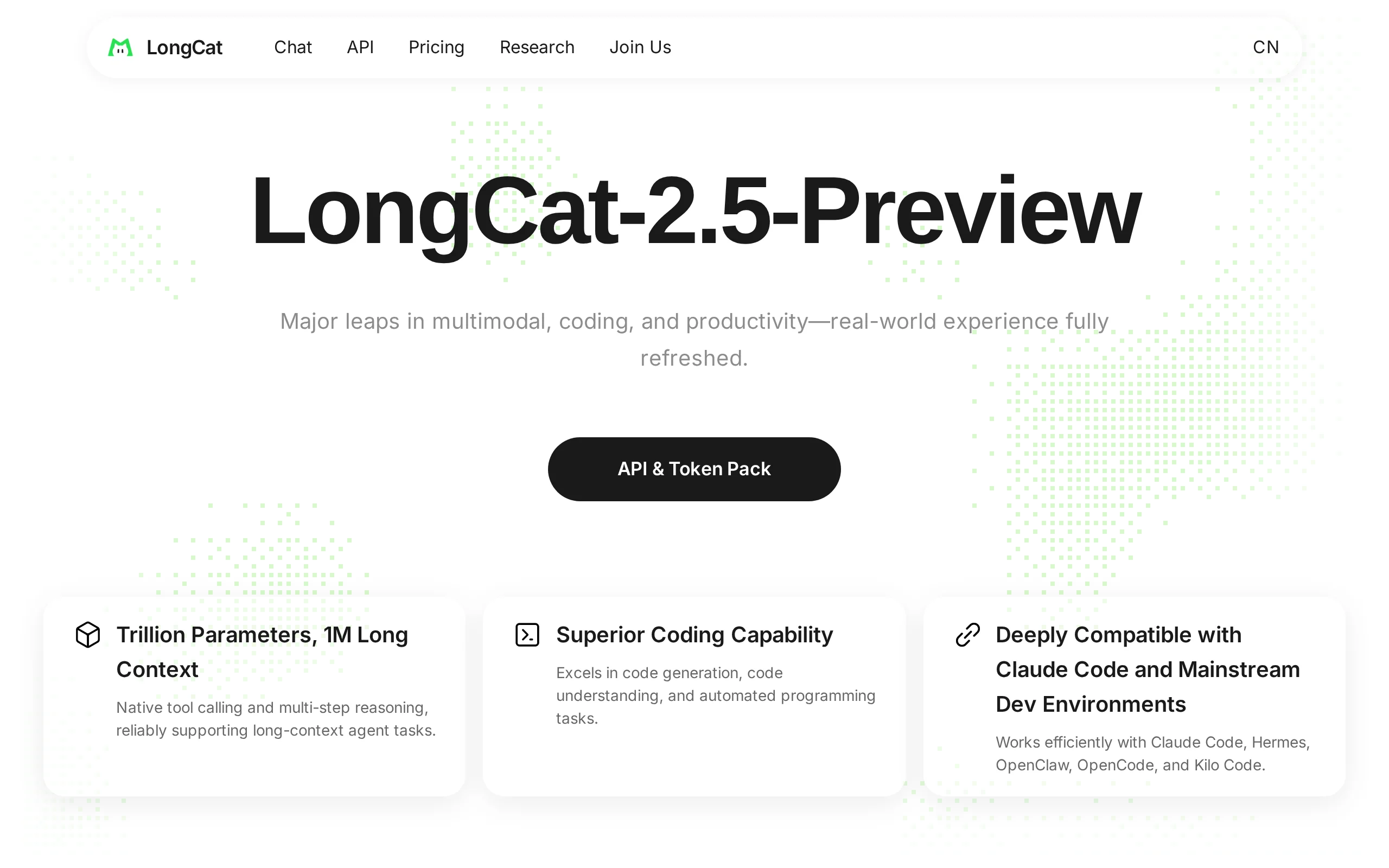
In-Depth Review of Longcat-2.5-preview: Meituan's Next-Generation Multimodal Long-Range Agent Model
LongCat-2.5-preview is Meituan's latest next-generation large model. Building upon the 1.6T total parameters, approximately 48B active parameters, and native 1M token context of LongCat-2.0, it marks ...
Xiaomi MiMo-V2.6 – Xiaomi's Open-Source Multimodal Model Series
Xiaomi MiMo-V2.6 is a series of fully multimodal models released and open-sourced by Xiaomi, comprising two native full-modal models: Pro and Flash. It is centered on large-scale Agentic reinforcement...
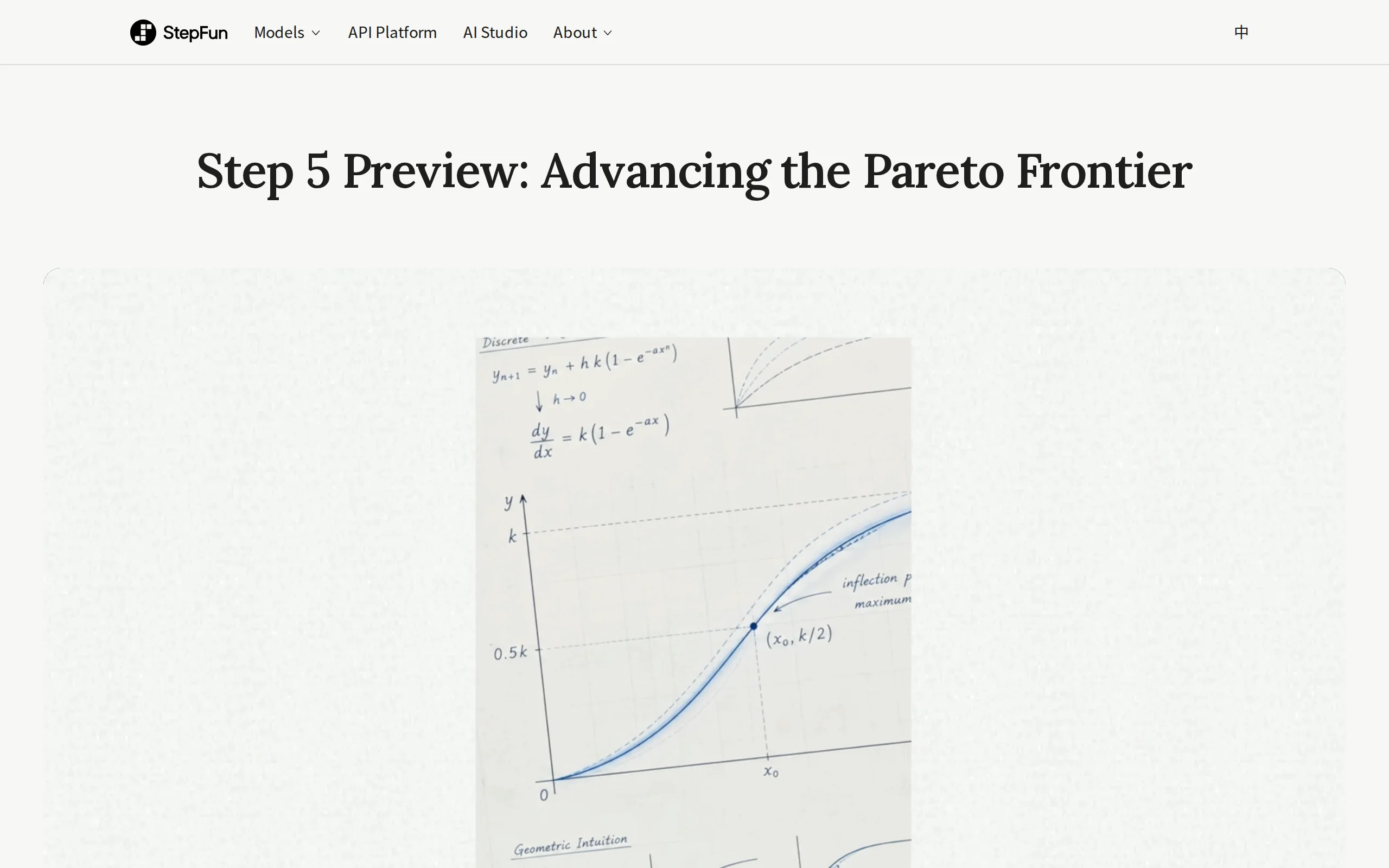
In-Depth Review of Step 5 Preview: A 600B Sparse MoE Flagship with 1M Token Context and 1/8 Cost Advantage
Step 5 Preview is a new-generation flagship foundation model launched by StepFun, designed for real-world Agentic tasks. Based on a sparse MoE architecture, the model has a total of 600B parameters bu...
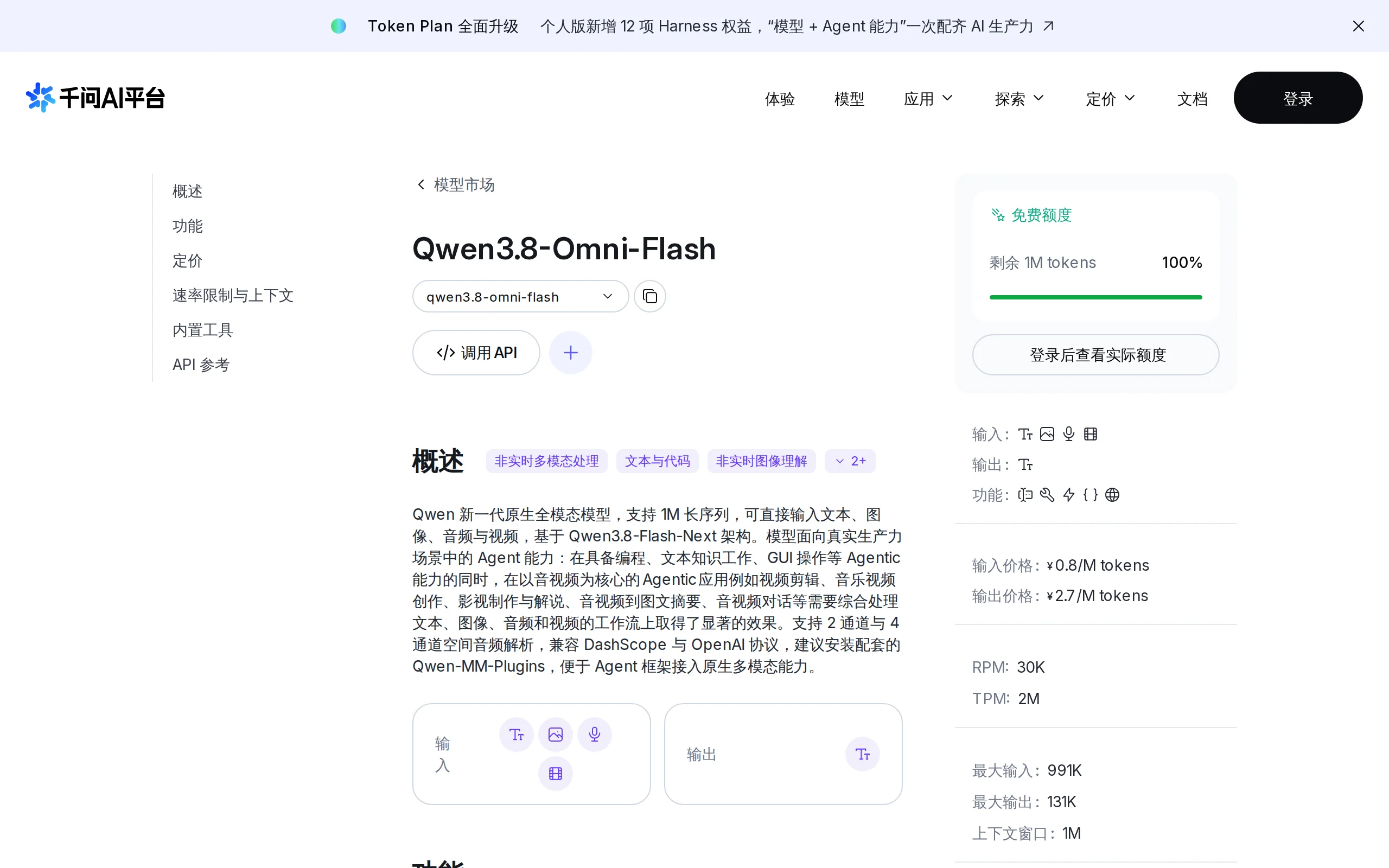
Qwen3.8-Omni-Flash – A Native Multimodal Model Launched by Alibaba Qwen
Qwen3.8-Omni-Flash is a native multimodal model launched by Alibaba Qwen. It jointly models four modalities—text, image, audio, and video—within a single architecture, supporting a context length of u...
© All Rights Reserved. Some content on this site is partially generated by AI with human review.