
Ponytail – Open-Source AI Agent Plugin That Slashes Generated Code Volume

Executive Summary:
Ponytail is an open-source AI Agent code-minimization plugin. It injects a “senior lazy developer” minimalist mindset into 10+ mainstream AI coding tools—including Claude Code, Codex, and Cursor—forci...
1. What Is Ponytail
Ponytail is an open-source AI Agent code-minimization plugin. It injects a “senior lazy developer” minimalist mindset into 10+ mainstream AI coding tools—including Claude Code, Codex, and Cursor—forcing the Agent to run a six-step decision ladder before generating code. It can reduce code volume by 80–94%, cut token API costs by 47–77%, and improve runtime speed by 3–6×. The plugin runs zero-config and cross-platform without changing your existing workflow, shifting AI output from over-engineering toward minimum viable implementations while preserving safety and accessibility—and materially improving developer efficiency and resource use.
Technical positioning and domain: Ponytail sits in AI-assisted programming as a code-quality optimizer at generation time. Unlike post-hoc compressors or refactor tools, it acts on the Agent’s decision process at the source, reducing unnecessary code and dependencies—not optimizing after the fact. It is an “AI coding agent rule set,” not a formatter or linter.
Development background: Created and open-sourced by DietrichGebert in response to over-engineering in AI coding tools—Agents tend to add redundant wrappers, third-party libraries, and unnecessary abstraction, bloating code, slowing execution, and raising maintenance cost. Ponytail injects experienced developer principles—YAGNI and KISS—to correct default model behavior.
Core value: Ponytail resolves the tension between code quality and cost efficiency in AI programming. Developers get simpler, faster, cheaper generated code without sacrificing safety or completeness. High-frequency API teams can cut token spend by nearly 80%; interactive coding sees noticeably lower latency. Auditable ponytail: comment markers give teams a transparent path for review and knowledge transfer.
Technical characteristics: The core mechanism is a six-step decision ladder that forces the Agent, before any code, to check: Is it truly needed (YAGNI)? Can stdlib suffice? Native platform API? Existing dependency? Single-line expression? Only then minimal custom implementation. Four intensity modes (lite/full/ultra/off) adapt to project needs, plus review commands for auditing existing codebases.
2. Key Features
Six-step decision ladder: Before any code, the Agent evaluates six minimization tiers in priority order: YAGNI, stdlib, native platform API, reuse existing dependency, single-line expression, minimal custom implementation—eliminating over-engineering at the root.
Four intensity modes:
lite,full,ultra, andoff.liteapplies basic YAGNI;fullenables the full ladder;ultraaggressively strips non-core abstraction;offdisables the plugin. Usefull/ultrafor prototypes andlitein production to keep necessary error handling.Code review commands:
/ponytail-reviewaudits current diff for removable redundancy;/ponytail-auditfull-repo audit marking slim-down locations;/ponytail-debtcollects tech debt deferred for performance or security. Ponytail affects new generation and helps teams clean legacy bloat.Cross-platform plugin: Supports Claude Code, Codex, OpenCode, Gemini CLI, Cursor, Windsurf, Copilot, Pi Agent, and 10+ tools. Install via plugin marketplace or copy rule files into project directories—low integration friction.
Zero-config plug-and-play: No config files or workflow changes. After install, Ponytail activates each session via rules or lifecycle hooks embedded in Agent context.
Safety floor preserved: Trust-boundary validation, data-loss handling, security, and accessibility are never compromised. An exemption list prevents forced simplification of auth, data validation, and a11y code.
Auditable and traceable: Each minimization path is marked with
ponytail:comments noting which ladder step and why—e.g.,// ponytail: YAGNI – removed unused validation wrapper—for transparent review and rollback.
3. How to Use
Requirements: Ponytail has no standalone runtime; it runs inside host AI coding tools. Install at least one of: Claude Code, Codex (OpenAI), OpenCode, Gemini CLI, Cursor, Windsurf, GitHub Copilot, Pi Agent. No special OS constraints.
Install on Claude Code:
/plugin marketplace add DietrichGebert/ponytail
/plugin install ponytail@ponytail
Ponytail auto-activates each new session. Switch intensity with
/ponytail-mode full, etc.Install on Codex:
codex plugin marketplace add DietrichGebert/ponytailInstall and trust lifecycle hooks in
/plugins.Install on Gemini CLI:
gemini extensions install https://github.com/DietrichGebert/ponytailExtension loads as always-on context; no manual activation.
Install on Cursor / Windsurf / Copilot: Copy rule files from the Ponytail repo (
.cursor/rules/,.windsurf/rules/,.github/copilot-instructions.md) to the matching paths in your project root. Ensure paths match official docs.Install on OpenCode: Add to
opencode.json:{ "plugin": ["./.opencode/plugins/ponytail.mjs"] }Ensure
AGENTS.mdis loaded.Intensity configuration: Switch via env vars or session commands—e.g.,
/ponytail-mode ultrain Claude Code. Usefull/ultrafor prototypes,litein production. Changes apply immediately without restart (marketplace tools); rule-file tools may need file edit + restart.Notes: Validate on a test project first. Add exemption rules if critical security logic is over-trimmed (see repo docs). Run
/ponytail-auditperiodically with team review.
4. Pros and Cons
| Pros |
|---|
Dramatic code reduction: Median 80–94% less code—e.g., native <input type="date"> instead of flatpickr wrappers—smaller footprint and maintenance. |
| Cost and speed: 47–77% lower tokens, 3–6× faster on Haiku/Sonnet/Opus—meaningful API savings and UX improvement. |
| Zero-config: One command or file copy; 10+ Agent platforms; minimal learning curve. |
| Safety floor: Trust boundaries, data loss, security, a11y never compromised; exemption list reduces production risk. |
| Cross-platform: Unified install pattern across Claude Code, Codex, Cursor, etc.—easy team rollout. |
Auditable: ponytail: markers support review and “minimal-first” culture. |
5. Comparison with Similar Tools
| Dimension | Ponytail | Caveman |
|---|---|---|
| Core positioning | AI code-minimization rule plugin; forced six-step ladder | Code optimization/minimization plugin (control) |
| Decision mechanism | Six steps: YAGNI → stdlib → native → dependency → one-liner → minimal custom | Undisclosed flow; claims minimization |
| Install | Marketplace / copy rules; 10+ tools | Plugin; limited tool support |
| Intensity | lite / full / ultra / off | No clear tiers |
| Review commands | /ponytail-review, /ponytail-audit, /ponytail-debt |
None |
| Reported effect | 80–94% less code, 47–77% cost, 3–6× speed | Weaker than Ponytail (no exact data in source) |
| Cross-platform | Claude Code, Codex, Cursor, Windsurf, Copilot, Gemini CLI, etc. | Limited |
Selection advice: Teams prioritizing extreme minimization and cost control should choose Ponytail—especially high-frequency API prototyping. If default Agent output is acceptable or cost/volume do not matter, skip plugins; if Agents over-wrap or over-import libraries, strongly consider Ponytail. Caveman is a lighter alternative with weaker effects and less configurability.
6. Editor's Review
Ponytail opens a new optimization dimension in AI-assisted programming—from post-hoc compression to in-flight constraint. The six-step ladder counteracts LLMs’ tendency toward maximal-likelihood verbosity by injecting senior developer heuristics—a creative “rules over model” pattern with strong results for code where precision and maintainability matter.
Practically, 80–94% code reduction and 47–77% cost savings are validated on Haiku/Sonnet/Opus—not theoretical. Monthly token bills can drop sharply; 3–6× speed improves daily dev UX. Zero-config cross-platform install minimizes adoption cost.
Clear audience: all AI coding tool users, especially high-API teams, minimal-code senior engineers, and Tech Leads standardizing team style. Beginners should start with lite to learn minimization decisions without functional gaps.
Future: deeper IDE integration, visual audit UI, user-defined ladder rules would increase value. Cross-platform compatibility must track evolving AI coding ecosystems.
Strong innovation and practical value, excellent ease of use; −0.5 for advanced docs and lack of traditional IDE plugin.
7. Use Cases
Rapid prototyping: MVP phase—
fullmode forces stdlib and native APIs, drops unnecessary third-party deps and abstractions (e.g.,<input type="date">vs. flatpickr), cutting prototype time from hours to tens of minutes.Legacy codebase slim-down:
/ponytail-auditmarks dead wrappers and duplicate utilities withponytail:paths for incremental refactor and tech-debt reduction.Teaching and code review: Onboarding and reviews use the ladder to explain “why no extra wrapper here”;
ponytail:comments make decisions discussable.Low-cost AI programming: ~77% lower tokens per generation for Codex/Claude API workflows—CI code gen, test script automation, etc.
Mobile and edge:
ultramode for memory/power-constrained devices—avoid large libraries and heavy abstractions.
8. FAQ
Q: Will Ponytail delete my existing code?
A: No. It only influences new Agent-generated code. Audit commands suggest changes; you apply them manually.
Q: How to avoid over-minimization?
A: Start with lite. Test thoroughly with full/ultra. Built-in exemptions protect validation and auth; add custom exemptions per repo docs if needed.
Q: Chinese variable names or comments?
A: Rules favor English naming but logic-based minimization works for Chinese projects. ponytail: comments remain English.
Q: How to verify Ponytail is active?
A: /plugin list on marketplace tools; generate code on rule-file tools and look for ponytail: markers; compare code length and dependency use before/after.
Q: Conflict with ESLint/Prettier?
A: No. Ponytail affects generation; ESLint/Prettier format/lint afterward. Use Ponytail first, linters second.
Q: How to uninstall?
A: /plugin uninstall ponytail for marketplace tools; delete rule files and restart for Cursor/Windsurf/Copilot.
Q: Do intensity mode changes apply immediately?
A: Yes for session-command tools (e.g., Claude Code). Rule-file tools need file edits and restart—see repo docs.
9. Project Links
Related AI Model Articles
OpenMuse – CopilotKit Open-Source Personal AI Assistant
OpenMuse is an open-source personal AI assistant project developed by the CopilotKit team. Its core design philosophy is "giving an Agent a computer" — by combining a persistent browser, optional Linu...
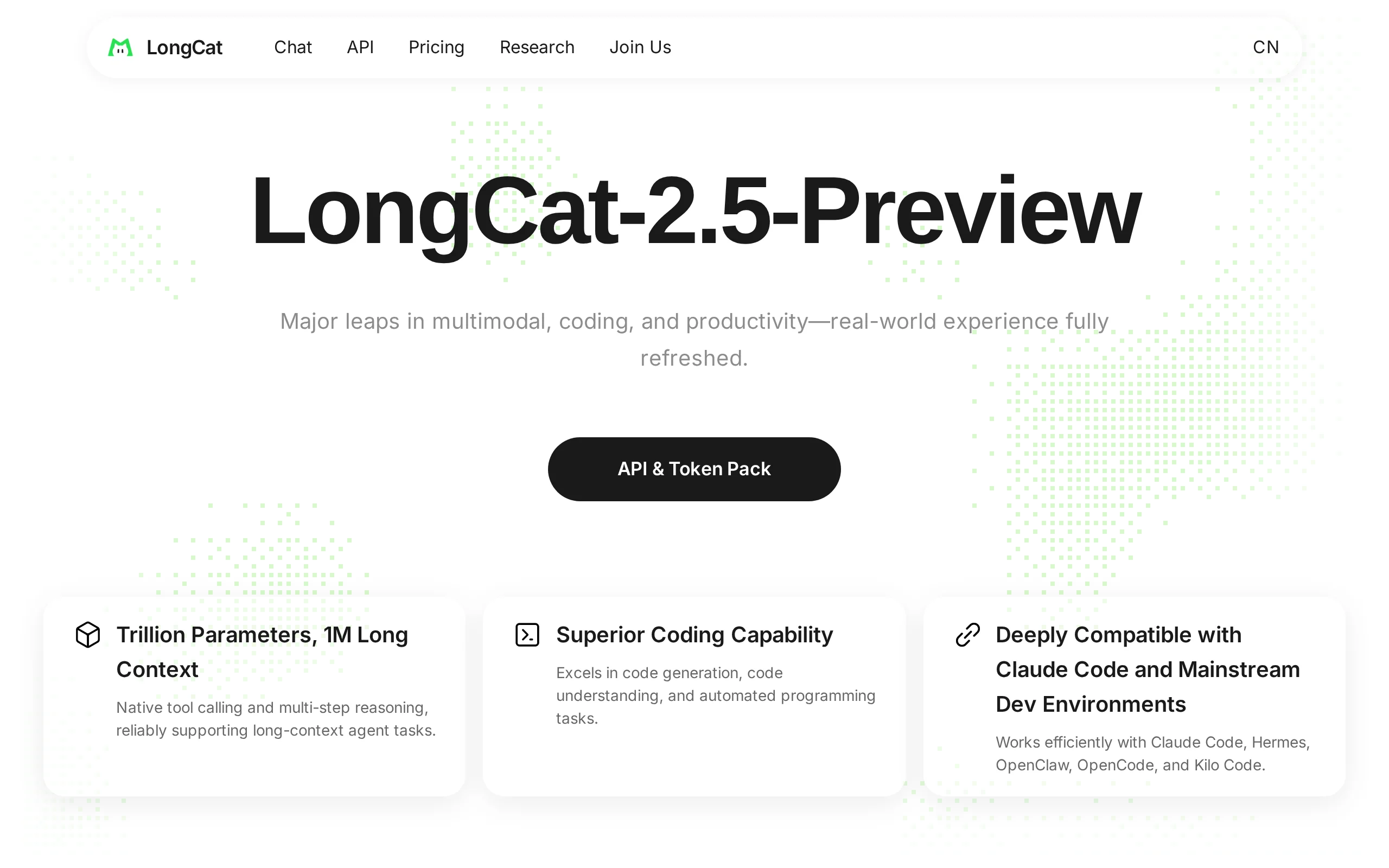
In-Depth Review of Longcat-2.5-preview: Meituan's Next-Generation Multimodal Long-Range Agent Model
LongCat-2.5-preview is Meituan's latest next-generation large model. Building upon the 1.6T total parameters, approximately 48B active parameters, and native 1M token context of LongCat-2.0, it marks ...
Review of DeepSeek Harness Desktop: How the Official GUI Client Lowers the Bar for Agent Usage
DeepSeek Harness Desktop is the official graphical client launched by DeepSeek, designed to provide a visual interface for the originally command-line-based DeepSeek Harness framework. After users log...
Step Code – In-Depth Review of StepFun's Open-Source Terminal Programming Agent
Step Code is an open-source terminal programming agent launched by StepFun, licensed under the MIT License, which allows developers to complete the full workflow of code writing, debugging, execution,...
© All Rights Reserved. Some content on this site is partially generated by AI with human review.