
PaddleOCR-VL-1.6 – Baidu's Document Parsing Vision-Language Model
Executive Summary:
PaddleOCR-VL-1.6 is a vision-language model (VLM) for document parsing from Baidu's PaddlePaddle team. With only 0.9B parameters, it achieves a new SOTA of 96.33% on the OmniDocBench v1.6 benchmark, s...
1. What Is PaddleOCR-VL-1.6
PaddleOCR-VL-1.6 is a vision-language model (VLM) for document parsing from Baidu's PaddlePaddle team. With only 0.9B parameters, it achieves a new SOTA of 96.33% on the OmniDocBench v1.6 benchmark, surpassing both open-source and closed-source solutions. It uses a two-stage decoupled architecture—layout analysis plus VLM recognition—upgraded through pure data-driven training for accurate parsing of text, formulas, tables, ancient texts, seals, and more, with zero-cost migration from version 1.5 while balancing extreme lightness and high accuracy.
Technical positioning and domain: Document intelligence and OCR crossover—converting scans, PDFs, and photos into structured Markdown/JSON/DOCX. Unlike general multimodal LLMs, PaddleOCR-VL-1.6 specializes in document-level understanding at minimal parameter count, excelling in complex layouts, math, tables, and ancient texts as a high-accuracy, low-cost industrial parser.
Research background: Built on years of PaddleOCR lineage (PP-OCR, PP-Structure). PaddleOCR-VL is the team's VLM direction; 1.6 keeps the 1.5 architecture and achieves gains purely through data augmentation and training strategy—showing deep data-engineering expertise.
Core value: Addresses low accuracy on complex documents (formulas, tables, ancient texts, seals) and high deployment cost of general LLMs. 0.9B parameters run on consumer GPUs or Apple Silicon yet beat 235B models like Qwen3-VL on OmniDocBench—a practical "small model, big capability" option for SMBs and enterprises.
Technical characteristics: NaViT dynamic-resolution vision encoder; ERNIE-4.5-0.3B language model for structured output; region-aware data augmentation simulating scan, skew, lighting, and screen-capture distortions; three-stage progressive training (pretrain → SFT → GRPO RL) for unified multi-task optimization.
2. Key Features
Text recognition (multilingual): 109 languages, OmniDocBench v1.6 text score 96.8, covering print, handwriting, vertical text. Gains from realistic distortion simulation especially help low-quality scans and screen captures.
Math formula recognition (LaTeX): Complex formulas (integrals, matrices, superscripts) to LaTeX, score 97.5 beating GLM-OCR and MinerU—critical for academic and textbook digitization via formula datasets and GRPO format alignment.
Complex table structure (merged cells): Multi-level headers, merged cells, cross-page tables with TEDS 94.8. Outputs full structure trees and merges cross-page tables—not just cell text—suitable for financial reports and research tables.
Ancient texts and vertical layout: Optimized for traditional Chinese, variant characters, and vertical reading order in ancient books; large ancient-text data in 1.6 addresses rare glyphs and vertical order issues.
Seal recognition: Detects and extracts text from official, financial, and contract seals with position coordinates—useful for contract review and invoice verification with improved robustness in 1.6.
Chart parsing to structured data: 11 chart types (pie, line, bar, etc.) converted to structured values, labels, and trends for automated reporting.
Structured export (Markdown/JSON/DOCX): Preserves hierarchy (headings, paragraphs, lists) and element coordinates; DOCX is directly editable for office workflows.
Cross-page table merging: Detects continuity across pages and merges split tables to avoid broken data in long documents.
3. How to Use
Environment: NVIDIA GPU (CUDA 12.6 recommended); Apple Silicon, Kunlun, Ascend, AMD, Intel also supported. Python 3.8+, PaddlePaddle GPU 3.2.1 (
pip install paddlepaddle-gpu==3.2.1). For CPU or domestic chips, see official docs.Install:
pip install -U "paddleocr[doc-parser]"installs core dependencies including document parsing components. Use a virtual environment.CLI:
paddleocr doc_parser -i your_document.pngorpaddleocr doc_parser -i document.pdfoutputs Markdown by default; supports images and PDF batch processing with per-page merge.Python API:
from paddleocr import PaddleOCRVL
pipeline = PaddleOCRVL()  # initialize pipeline
result = pipeline.predict("your_document.png")  # returns structured dict
print(result)
pipeline.save_to_markdown(result, "output.md")
pipeline.save_to_json(result, "output.json")
Supports batch processing and result export in custom pipelines.
Docker:
docker pull ccr-2vdh3abv-pub.cnc.bj.baidubce.com/paddlepaddle/paddleocr-vl:latest-nvidia-gpufor isolated server deployment without local Python.HTTP inference service:
paddleocr genai_serverstarts HTTP service with vLLM, SGLang, FastDeploy, Transformers, llama.cpp backends. POST images for structured results at scale.
Notes:
- First run downloads ~1.2GB weights—ensure network access.
- Domestic chips need matching PaddlePaddle and
FLAGS_use_custom_device. - Very large PDFs (100+ pages) should be split to control memory.
4. Pros and Cons
| Pros |
|---|
| SOTA accuracy at minimal size: 0.9B params, 96.33% OmniDocBench v1.6, leading text, formula, and table scores vs. same-scale models. |
| Zero-cost architecture migration: 1.6 matches 1.5 architecture—swap weights without code or redeploy changes. |
| Broad hardware support: NVIDIA (including Blackwell), Apple Silicon, Kunlun, Ascend, AMD, Intel. |
| Strong real-world robustness: SOTA on scan, warp, screen capture, lighting, and skew via realistic augmentation. |
5. Comparison with Similar Tools
| Dimension | PaddleOCR-VL-1.6 | GLM-OCR |
|---|---|---|
| Architecture | Two-stage: PP-DocLayoutV3 + 0.9B VLM | End-to-end VLM (GLM-4V family) |
| Parameters | 0.9B | 0.9B |
| OmniDocBench v1.6 total | 96.33% | 95.22% |
| Formula score | 97.5 | 96.5 |
| Table TEDS | 94.8 | 85.2 |
| Real-world robustness | SOTA (all 5 scenarios) | Baseline (no special optimization) |
| Ancient/seal | Specialized enhancement | Supported, not specialized |
| Deployment | Local Python / Docker / HTTP | Local Python / Docker |
| License | Apache 2.0 | Apache 2.0 |
Selection advice:
- Peak accuracy with limited resources: PaddleOCR-VL-1.6 leads formulas, tables, and ancient text; 0.9B runs smoothly on RTX 3060-class GPUs.
- GLM ecosystem or stronger NLU: GLM-OCR is solid for general documents but weaker on tables (TEDS 85.2) and robustness.
- Existing PaddleOCR pipelines: MinerU 2.5 is larger and slightly less accurate but fits teams unwilling to migrate architecture.
6. Editor's Review
PaddleOCR-VL-1.6 exemplifies "small model, big capability." Innovations: (1) pure data-driven leap to 96.33% SOTA without architecture changes; (2) region-aware augmentation for realistic distortions; (3) three-stage training unifying OCR, formulas, tables, and seals in one model avoiding multi-model error chains.
0.9B parameters enable Apple Silicon and consumer GPU deployment—enterprises get document parsing beyond GPT-4o-class models without high-end servers—ideal for finance, education, and healthcare document workloads.
Target users: R&D teams digitizing documents, backend engineers integrating OCR, and ops processing contracts, invoices, and papers at scale. More languages and layouts could make PaddleOCR-VL an industrial standard.
— highest accuracy in the 0.9B class, lowest deployment cost, broad hardware support, fully open source. Docs and ecosystem dependency are minor drawbacks.
7. Use Cases
Document digitization and archiving: Batch convert scans and books to Markdown/JSON preserving layout—for libraries, archives, publishers via API or CLI at thousand-page scale.
Office automation: Extract contract clauses, invoice amounts and tax IDs, report tables into ERP/OA systems—e.g., daily expense parsing with fewer manual errors.
Education and research: LaTeX formulas and tables from PDF papers for literature review and data organization.
Financial compliance: Structured parsing of bills, statements, and reconciliations for auto-entry and compliance checks.
Healthcare IT: Structure EMRs, lab reports, and prescriptions for HIS integration—photo prescriptions to drug names and dosages with fewer transcription errors.
8. FAQ
Q: How much VRAM is needed?
A: ~2GB FP16 at inference; RTX 3060 6GB works. Apple Silicon M1/M2 needs 4GB+ unified memory. CUDA 12.6 recommended.
Q: How to migrate from 1.5 to 1.6?
A: Same architecture—replace weights in paddleocr_vl/model.pdparams or pip install -U "paddleocr[doc-parser]" for auto update.
Q: Languages and Chinese performance?
A: 109 languages; Chinese (simplified/traditional/ancient) is core. OmniDocBench Chinese: text 96.8, formula 97.5, table 94.8—leading competitors with vertical and variant character enhancements.
Q: Can it run on CPU?
A: Yes, but slow (~5–10 s/page). Intel 12th gen+ or Ryzen 7+ recommended; GPU or Apple Silicon for batch work.
Q: Difference from standard PaddleOCR?
A: Standard PaddleOCR is detection + recognition + orientation; PaddleOCR-VL is a VLM outputting structured documents with formulas, tables, charts—higher accuracy, slightly slower; choose VLM for complex docs, classic OCR for plain text.
Q: Custom training?
A: No full official fine-tune scripts yet; weights are open—developers can fine-tune on PaddlePaddle following PaddleOCR training docs.
9. Project Links
Related AI Model Articles
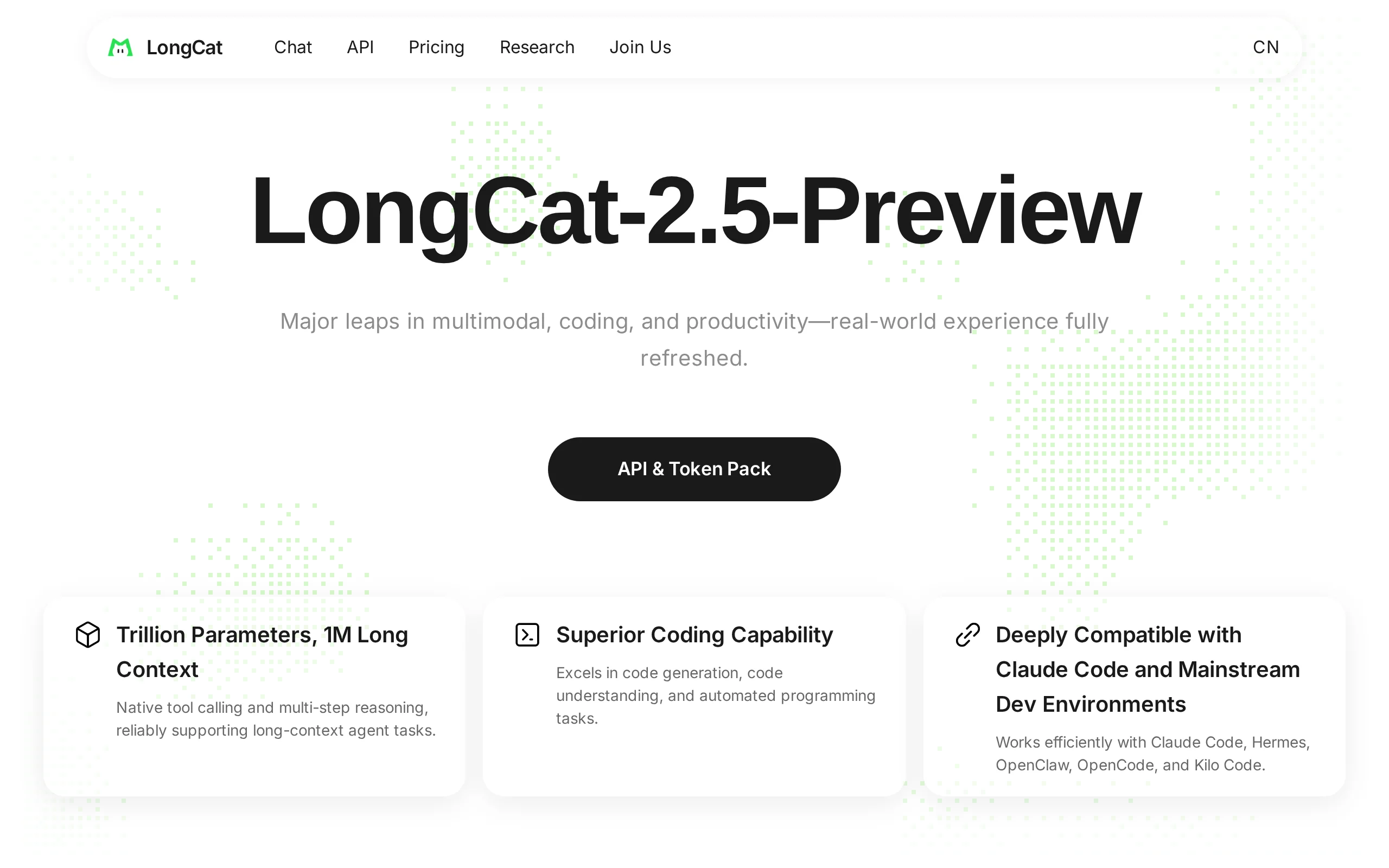
In-Depth Review of Longcat-2.5-preview: Meituan's Next-Generation Multimodal Long-Range Agent Model
LongCat-2.5-preview is Meituan's latest next-generation large model. Building upon the 1.6T total parameters, approximately 48B active parameters, and native 1M token context of LongCat-2.0, it marks ...
Xiaomi MiMo-V2.6 – Xiaomi's Open-Source Multimodal Model Series
Xiaomi MiMo-V2.6 is a series of fully multimodal models released and open-sourced by Xiaomi, comprising two native full-modal models: Pro and Flash. It is centered on large-scale Agentic reinforcement...
In-Depth Review of Step 5 Preview: A 600B Sparse MoE Flagship with 1M Token Context and 1/8 Cost Advantage
Step 5 Preview is a new-generation flagship foundation model launched by StepFun, designed for real-world Agentic tasks. Based on a sparse MoE architecture, the model has a total of 600B parameters bu...
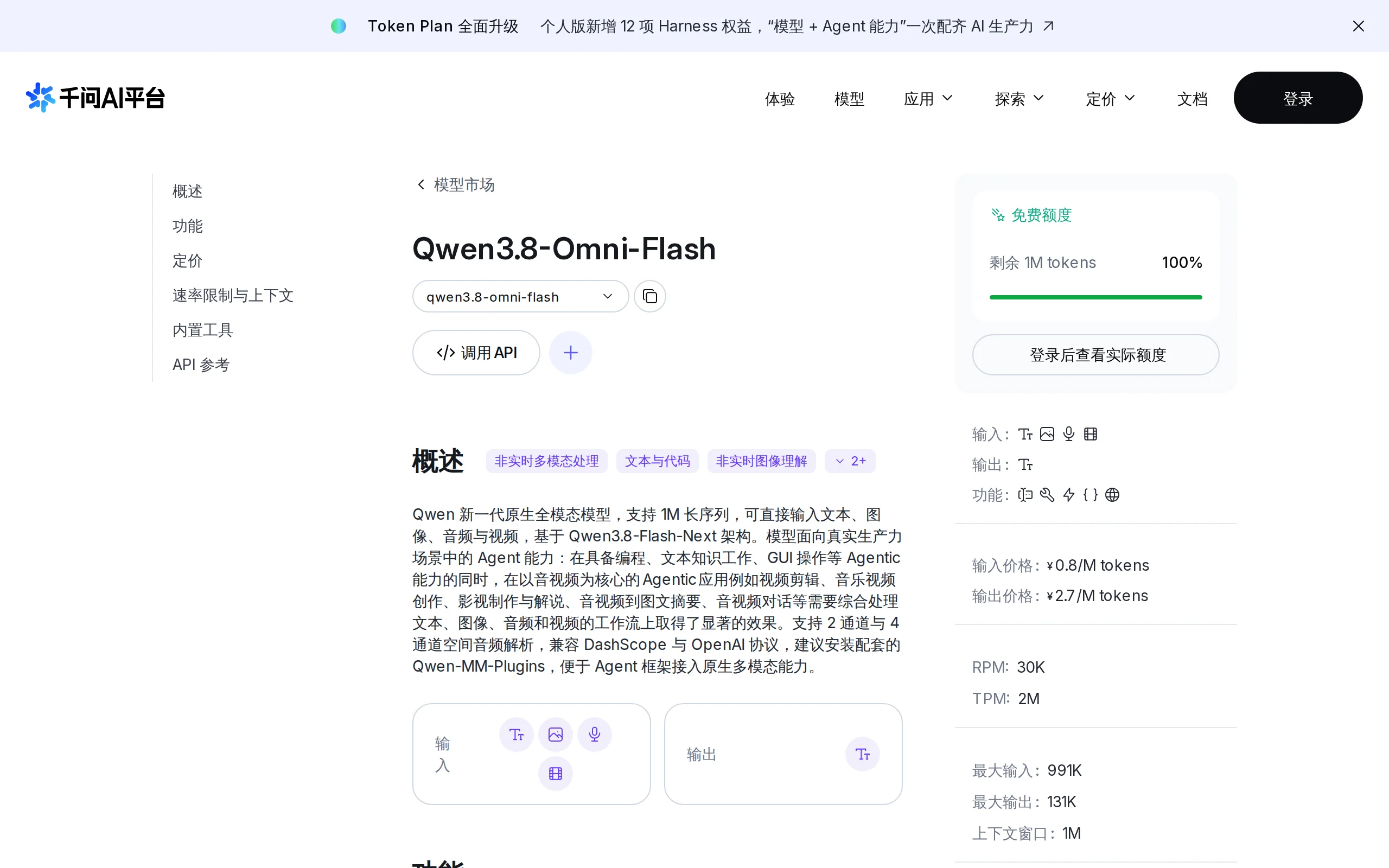
Qwen3.8-Omni-Flash – A Native Multimodal Model Launched by Alibaba Qwen
Qwen3.8-Omni-Flash is a native multimodal model launched by Alibaba Qwen. It jointly models four modalities—text, image, audio, and video—within a single architecture, supporting a context length of u...
© All Rights Reserved. Some content on this site is partially generated by AI with human review.