
Meoo – Generate a complete front-end and back-end website in 1 minute, truly zero-threshold development!

Executive Summary:
Meoo is a cloud-based AI development tool launched by Alibaba's ATH business group on April 15, 2026. It is positioned as a "versatile AI partner that can code, understand design, and self-deploy." Us...
1. What is Meoo
Meoo is a cloud-based AI development tool launched by Alibaba's ATH business group on April 15, 2026. It is positioned as a "versatile AI partner that can code, understand design, and self-deploy." Users only need to describe their requirements using natural language, and Meoo can automatically generate complete websites, H5 pages, mini-programs, and other web applications within one minute, and deploy them with a single click to Alibaba Cloud. This product integrates mainstream large language models in China, such as Qwen, Kimi, GLM, and MiniMax, combining code generation, interface design, back-end logic, database configuration, and cloud deployment into a unified workflow. It completely breaks down the technical barriers of traditional development, enabling non-technical users to independently build full-stack applications.
Image source: Official article
Image source: official article
Technical positioning and domain: Meoo belongs to the category of AI-driven low-code/no-code application development platforms, focusing on the full automatic generation of web applications. Unlike traditional low-code platforms, it does not rely on drag-and-drop components or pre-set templates. Instead, it uses large language models to understand user intent and directly generates runnable complete code, covering front-end interfaces (HTML/CSS/JS/React, etc.), back-end logic (Node.js/Python, etc.), and database solutions. Its positioning lies between AI coding assistants (such as GitHub Copilot) and full-stack development platforms, emphasizing end-to-end delivery capabilities from "zero to one."
Development background: This tool was developed by Alibaba's ATH business group (a sub-group of the Alibaba Cloud Intelligence business group), leveraging Alibaba Cloud's deep expertise in cloud computing, large models (Qwen series), and developer tools. The motivation for its development stems from the current focus of AI coding tools on code snippet completion, lacking the ability to directly transform requirements into deployable applications. Meoo aims to lower the threshold for small and medium enterprises and individual developers to build online services, while also attracting more users to the Alibaba Cloud ecosystem.
Core value: Meoo addresses the high-cost issues in traditional development processes such as requirement communication, environment configuration, front-end and back-end integration, and deployment and operations. Its core value lies in shortening the cycle from "idea" to "launch" from days to minutes, without requiring users to have programming or operations knowledge. For scenarios such as product prototype validation, rapid setup of marketing campaign pages, and internal tool generation, it provides an almost zero-cost method for trial and error.
2. Key Features
Full-stack code generation: Users describe their requirements in natural language (e.g., "a blog system with user login and article publishing"), and Meoo automatically generates a complete project that includes frontend pages, backend APIs, database table structures, and deployment configurations. The generated code uses mainstream technology stacks (React/Vue + Node.js/Express), with a clear structure that can be run directly.
Support for multiple application types: Not limited to traditional websites, it also supports mini-programs, marketing H5 pages, data visualization dashboards, and PPT presentations. Users can specify the output type through dialogue, and the AI automatically adapts to the corresponding framework and interaction model, such as generating WeChat mini-program code or ECharts chart configurations.
One-click cloud deployment: Generated applications can be directly deployed to Alibaba Cloud without manually configuring servers, domains, or databases. The platform automatically handles domain binding, SSL certificates, and elastic scaling, and provides a temporary preview link for testing. After deployment, the application can be accessed over the public internet, making it ideal for rapid launch scenarios.
Iterative editing and optimization: Users can continue to provide modification suggestions on the generated results (e.g., "change the button color to blue" or "add a search feature"). The AI understands the context and makes incremental changes to the relevant code, rather than regenerating the entire content. This iterative approach greatly improves the efficiency of building complex projects and avoids redundant full regeneration.
Multi-model intelligent routing: The platform aggregates models such as Qwen3-Coder, Kimi K2.5, GLM-5, and MiniMax-M2.5, and automatically routes tasks to the most suitable model based on the task type (code generation, content writing, logical design). For example, complex algorithm logic is prioritized with Qwen3-Coder, while UI design descriptions are handled by Kimi K2.5, ensuring optimal output quality at each stage.
Automatic database and backend logic configuration: For applications requiring data persistence, Meoo automatically generates relational database table structures (MySQL compatible) or NoSQL solutions, along with corresponding CRUD API interfaces. Users do not need to write SQL statements or configure database connections; all backend logic is encapsulated by AI as RESTful APIs.
Sandbox preview and debugging: An online sandbox environment is provided, allowing generated applications to be previewed and debugged in real time within an isolated environment. Users can view page effects, test API responses, and provide modification feedback directly in the sandbox, without needing to set up a local development environment.
Team collaboration and version management: Supports project sharing and collaborative work among multiple users, enabling team members to iterate on the same project. The platform automatically saves the history of each modification and allows rollback, making it suitable for rapid prototyping and internal reviews within teams.
3. How to Use
Environment Requirements and Prerequisites: Meoo is a pure cloud-based tool and does not require any local software installation. Users only need an Alibaba Cloud account (free registration) and access to the Meoo official website or console entry point. It is recommended to use Chrome or Edge browsers, and the network environment must be able to access Alibaba Cloud services normally. Free tier users have a certain monthly quota for generation times and deployment resource limits.
Creating a New Project: After logging into the Meoo platform, click on "New Project" and describe your requirements in natural language within the dialog box. For example: "Create an enterprise website with four pages: homepage, product showcase, about us, and contact us, with a simple and modern style." The system will automatically analyze the requirements and start generating, typically outputting a preview result within 30 seconds to 1 minute.
Preview and Iterative Modifications: Once generation is complete, the platform automatically opens a sandbox preview window. Users can view the page effects, click interactive buttons, and test form submissions. If adjustments are needed, simply enter modification instructions in the dialog box (e.g., "Change the homepage carousel to three images," "Add a phone number field to the contact form"). The AI will perform incremental updates based on the current project. Refresh the preview after each modification to see the changes.
Deployment and Launch: When the application meets your satisfaction, click the "Deploy" button. The system will automatically complete domain allocation (a secondary domain is provided by default), SSL certificate configuration, and cloud resource provisioning. After deployment, a formal access link will be generated and can be used directly for external display or business purposes. If you need to bind a custom domain, you can configure DNS settings in the Alibaba Cloud console.
Key Configuration Notes: In project settings, users can choose a preferred model (e.g., default routing or specify the use of a large model), set technology stack preferences (React or Vue), and enable or disable database functionality. For complex projects, it is recommended to clearly define functional boundaries when describing requirements to avoid generating too much content at once, which may reduce output quality. Best practice is to generate in modules: first create the core page structure, then gradually add functional details.
Notes: Code generated by the free tier cannot be exported to the local environment (only available in the sandbox and deployed instances). The paid tier supports code package downloads. Applications generated by Meoo comply with Alibaba Cloud service terms and must not be used for illegal or non-compliant content. For high-concurrency or customized deployment, it is recommended to use the enterprise version or contact technical support.
4. Pros and Cons Analysis
| Pros |
|---|
| Zero-threshold full-stack development: Users can generate complete applications through natural language without requiring programming knowledge. Backend logic, databases, and deployment are fully automated, significantly lowering the development barrier. |
| Multi-model aggregation advantage: Integrates top domestic large models and automatically routes tasks based on their nature, delivering high-quality outputs in code generation, copywriting, and logical design. |
| Minute-level delivery speed: From requirement description to an accessible application, the average time is 1-3 minutes, ideal for rapid prototyping and time-sensitive activity page creation. |
| Iterative incremental modifications: Supports context-based incremental updates, eliminating the need to regenerate from scratch each time, greatly improving efficiency for multi-round adjustments. |
| Automatic operations and elastic scaling: After deployment, the system automatically handles server maintenance, security hardening, and traffic elastic scaling, freeing users from infrastructure concerns. |
5. Comparative Analysis with Similar Tools
Below is a comparison of Meoo with three mainstream competitors: GitHub Copilot (code completion type), Vercel AI SDK (AI-assisted generation type), and Dora AI (no-code website generation type).
| Comparison Dimension | Meoo | GitHub Copilot | Vercel AI SDK |
|---|---|---|---|
| Core Architecture | Multi-model aggregation inference + cloud-based full-stack generation | Single-model code completion (based on OpenAI Codex) | Frontend component generation + Vercel deployment integration |
| Generation Scope | Full-stack (frontend + backend + database + deployment) | Code snippets / function-level completion | Frontend page / component code |
| Deployment Method | One-click deployment to Alibaba Cloud with automatic operations and maintenance | Only generates code; requires self-deployment | One-click deployment to Vercel |
| Technical Stack Flexibility | Supports mainstream frameworks such as React, Vue, Node.js, and Express | Supports multiple languages, but no project structure generation | Primarily supports React and Next.js |
| Learning Curve | Zero threshold; natural language description is sufficient | Requires programming knowledge to understand completion suggestions | Requires understanding of AI SDK calling methods |
| Open Source License | Closed-source (free version has functional limitations, paid version is subscription-based) | Closed-source (free for individuals, paid for teams) | Open-source (MIT) |
| Community Ecosystem | Leverages the Alibaba Cloud ecosystem with relatively comprehensive documentation | Largest global developer community with rich plugins | Active open-source community with customizable models |
Selection Recommendations: For non-technical users or scenarios requiring rapid deployment of complete web applications (such as marketing landing pages, corporate websites, or product prototypes), Meoo is the optimal choice, as its end-to-end delivery capability far exceeds that of other tools. If the user is a professional developer who needs high controllability over code generation and already has a deployment process in place, GitHub Copilot is more suitable as an auxiliary coding tool. For frontend developers looking to quickly generate pages and deploy them to Vercel, the Vercel AI SDK provides flexible component-level generation capabilities, but backend logic must be handled separately. Dora AI is suitable for design-focused static page generation but lacks backend support, making it unsuitable for functional applications. Overall, Meoo currently holds a significant advantage in the "full-stack zero threshold" domain. However, if the project requires high customization or independence from the Alibaba Cloud ecosystem, other solutions should be considered.
6. Editor's Summary
The most notable innovation of Meoo is its integrated architecture that combines multi-model aggregation with full-stack auto-generation. Unlike traditional AI programming tools that only provide code snippets, Meoo connects requirement understanding, architecture design, code generation, resource allocation, and deployment operations into a complete closed loop. This requires the AI not only to understand user intent but also to possess a holistic perspective of software engineering. From practical experience, the success rate of generating simple applications (such as corporate websites or data display pages) is relatively high, with the code structure generally reasonable and directly usable in non-production environments. However, in scenarios involving complex business logic, multi-role permissions, or high concurrency, the generated code often contains logical flaws or performance issues, requiring developers to make further fixes — this highlights the current limitations of large models in system-level design.
In terms of practical value, Meoo's greatest contribution is enabling product managers, operations staff, and entrepreneurs without a programming background to independently turn their ideas into accessible applications. For internal enterprise use cases such as quickly setting up management dashboards, event pages, or prototype validation, it can save several days of development and communication costs. Additionally, its deep integration with Alibaba Cloud makes deployment and operations almost cost-free, making it ideal for small and medium-sized teams to rapidly iterate and test ideas.
The target audience is clearly defined: the core users are "light developers" — business personnel without a technical background, entrepreneurs looking to quickly validate ideas, and frontend developers who want to rapidly generate backend APIs. Professional full-stack developers may prefer to use it as an auxiliary tool, generating basic frameworks and then manually optimizing them.
The future development potential of Meoo depends on two key factors: first, the continuous improvement of large model capabilities, especially in understanding complex system architectures; and second, whether the platform can gradually open up support for custom model integration and code export, thereby reducing the risk of vendor lock-in. If Alibaba can continue to enhance the quality of code generation and enrich the ecosystem (such as a plugin marketplace or template community), Meoo has the potential to become a significant player in the low-code domain, possibly even reshaping the development paradigm for small to medium-sized web applications.
7. Application Scenarios
Rapid Creation of Marketing Campaign Pages: Marketing personnel can describe the campaign theme, prize settings, and participation rules using natural language, and Meoo will automatically generate an H5 campaign page that includes features such as countdown timers, form collection, and sharing capabilities. The page can be deployed online with one click, and the entire process can be completed within one hour, making it ideal for time-sensitive scenarios such as e-commerce flash sales and brand promotions.
Corporate Website and Product Display: Small and medium-sized enterprises can generate responsive corporate websites without hiring a development team, simply by describing requirements such as company introductions, product categories, and case presentations. It supports multiple language versions (must be specified during the conversation) and automatically adapts to mobile devices, meeting basic brand display needs.
Internal Business Tool Generation: Teams can quickly build internal tools such as data entry forms, approval process pages, and dashboard reports. For example, a "Customer Information Management System" can be generated, including interfaces for adding, deleting, modifying, and querying data, along with basic permission controls, to replace Excel-based management and improve collaboration efficiency.
Product Prototyping and MVP Validation: Entrepreneurs can describe core functionalities using natural language during the product ideation phase, and Meoo will generate an interactive prototype application. Compared to traditional prototyping tools, Meoo produces real, executable code, making it easier to demonstrate to investors or conduct early user testing, thus accelerating product iteration.
Data Visualization Dashboards: By describing data sources (such as CSV or API) and display requirements (such as trend charts, ranking tables, and maps), Meoo can automatically generate dashboard pages based on ECharts or AntV. These pages can be directly projected for use in meetings or monitoring centers, without requiring front-end development involvement.
Online Education/Knowledge Payment Pages: Generate course listing pages, video playback pages, and payment subscription flows, with support for user registration and payment integration (requires cooperation with Alibaba Cloud payment interface). Ideal for individual instructors or small educational institutions to quickly set up an online teaching platform.
8. FAQ
Q: Can the code generated by Meoo be exported to local for modification?
A: The free version does not support code export. Applications generated with Meoo can only be previewed in the Meoo sandbox or deployed to run on Alibaba Cloud. The paid version (Professional edition and above) provides a code package download feature, allowing users to download the complete project source code to their local machine for further development using any IDE.
Q: Can I use Meoo to generate WeChat Mini Programs or Alipay Mini Programs?
A: Currently, Meoo supports generating WeChat Mini Program code (you must specify this clearly in your description). After generation, you need to use the WeChat Developer Tools for real-device testing and submission for review. Support for Alipay Mini Programs is still in the testing phase. Deployment still relies on Alibaba Cloud, and the frontend code of the Mini Program can be exported and used with the corresponding platform tools.
Q: How much traffic can the generated applications handle?
A: Applications deployed with the free version use shared resources by default, suitable for low-traffic scenarios (daily PV < 1000). The paid version allows users to choose dedicated instances or elastic scaling configurations, which can support up to millions of daily PVs. Specific performance depends on the quality of the generated code and cloud resource configuration. It is recommended to conduct stress testing in high-concurrency scenarios.
Q: If I am not satisfied with the generated result, can I ask the AI to regenerate it?
A: Yes. You can directly ask the AI to "regenerate" or "try a different style" within the conversation, and the AI will output based on the same requirements. However, note that each generation consumes a quota. It is recommended to first refine the result through iterative modifications. If multiple adjustments still do not yield satisfactory results, try describing your requirements in more detail (e.g., specifying colors, layout, and feature lists).
Q: Which databases does Meoo support? How can I modify the database structure?
A: By default, Meoo uses an Alibaba Cloud RDS MySQL-compatible database. When generating, the AI automatically designs the table structure based on your needs. If you need to make changes, you can specify them in the conversation (e.g., "Add an age field to the user table"), and the AI will update the backend API and database migration scripts accordingly. The Professional edition supports exporting database DDL files.
Q: My project needs to integrate third-party APIs (e.g., payment, maps). Can Meoo handle this?
A: Meoo can generate code frameworks for calling third-party APIs, but users need to provide the API documentation or key configuration. Specify the requirement in your description (e.g., "Integrate Alipay payment using the official SDK"), and the AI will generate the corresponding request code and callback handling. However, the actual API keys must be configured by the user themselves in the Alibaba Cloud console or environment variables.
9. Project Links
- Official documentation and tutorials: https://docs.meoo.com
- Official Aliyun introduction article: https://developer.aliyun.com/article/1745229
Related AI Model Articles
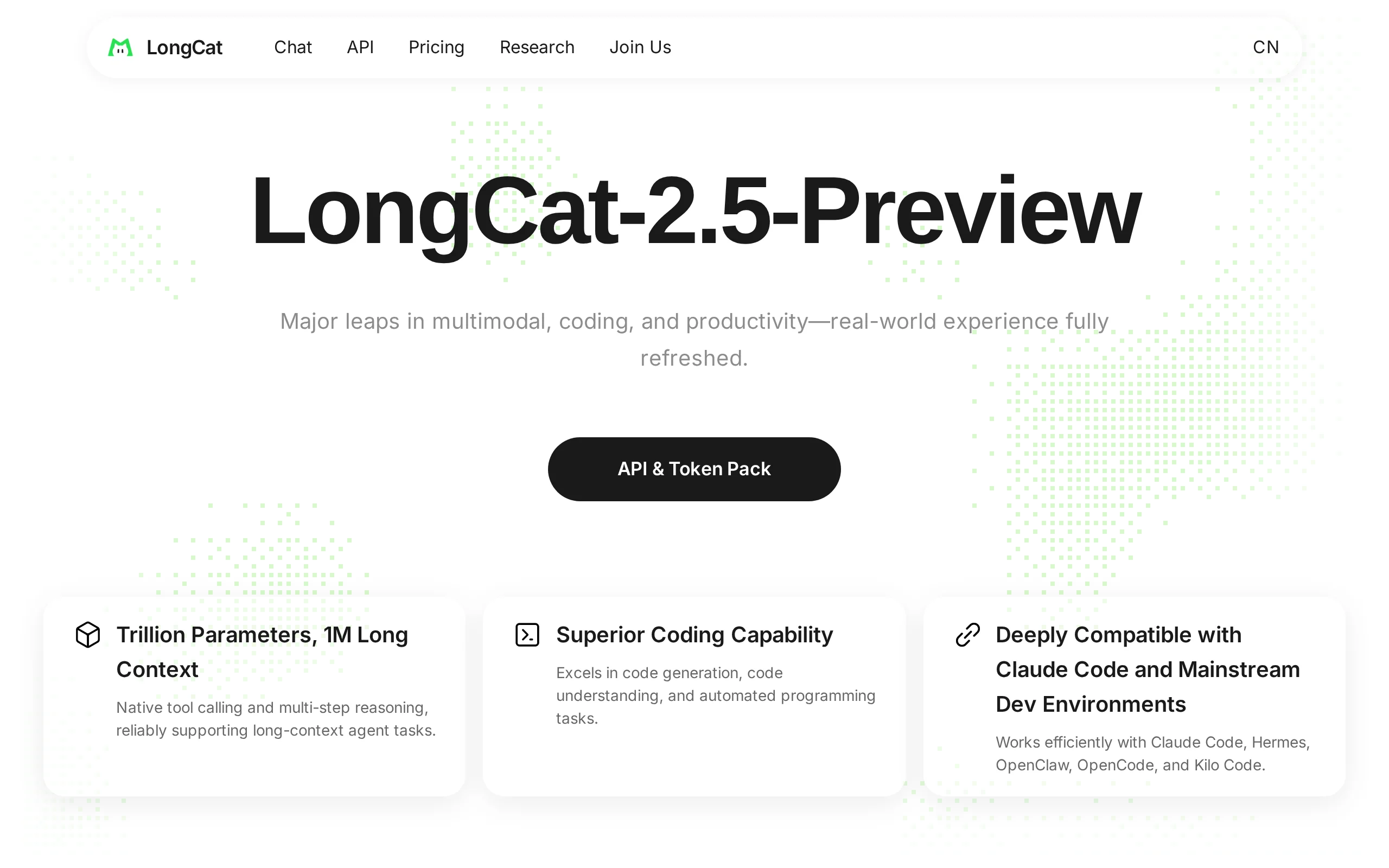
In-Depth Review of Longcat-2.5-preview: Meituan's Next-Generation Multimodal Long-Range Agent Model
LongCat-2.5-preview is Meituan's latest next-generation large model. Building upon the 1.6T total parameters, approximately 48B active parameters, and native 1M token context of LongCat-2.0, it marks ...
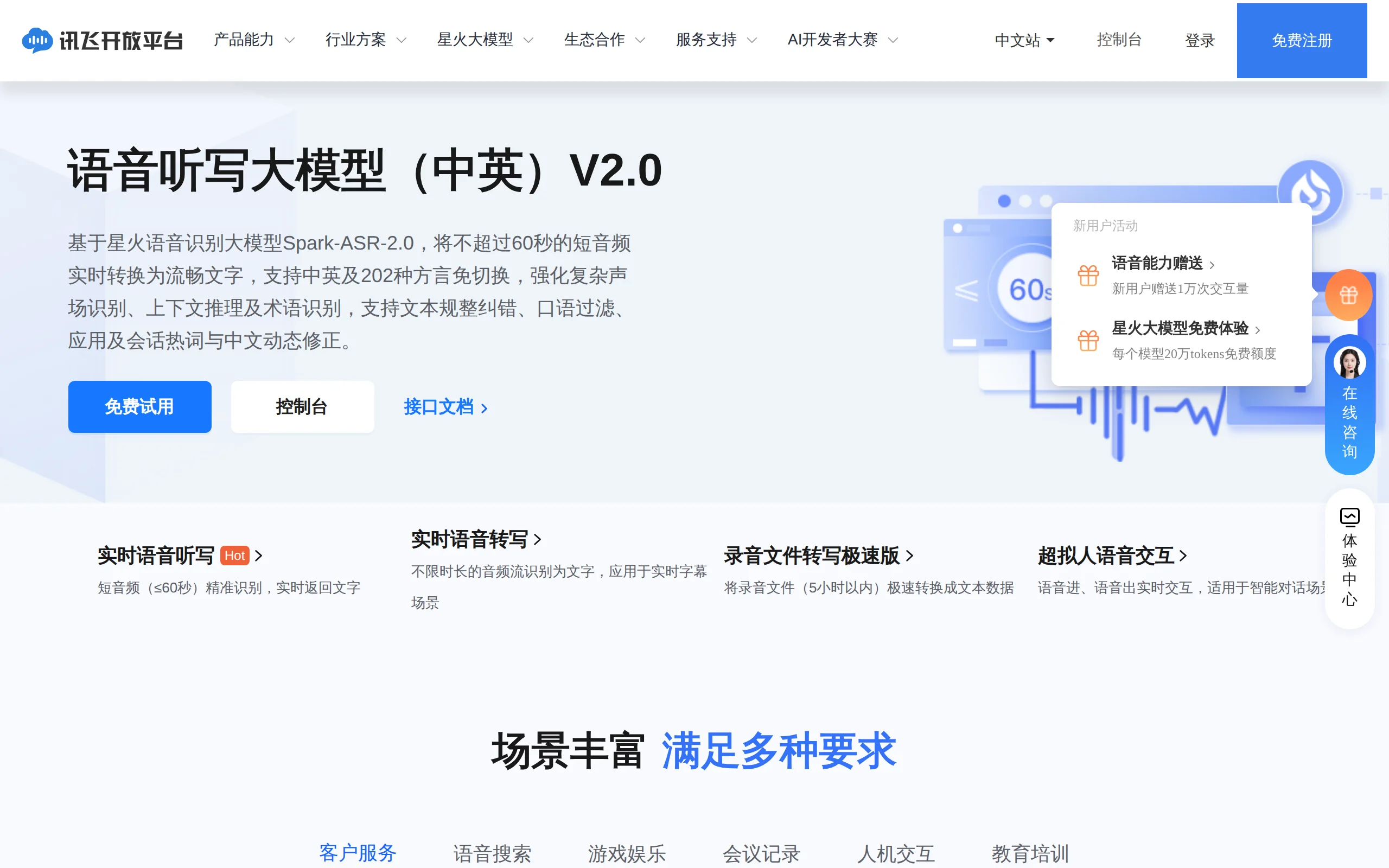
In-Depth Review of Spark-ASR-2.0: A New Paradigm in Speech Recognition with Non-Autoregressive Architecture
Spark-ASR-2.0 is the latest generation speech recognition large model launched by iFLYTEK based on its proprietary Spark-Audio speech foundation model. This model continues the non-autoregressive para...
Step Code – In-Depth Review of StepFun's Open-Source Terminal Programming Agent
Step Code is an open-source terminal programming agent launched by StepFun, licensed under the MIT License, which allows developers to complete the full workflow of code writing, debugging, execution,...
Xiaomi MiMo-V2.6 – Xiaomi's Open-Source Multimodal Model Series
Xiaomi MiMo-V2.6 is a series of fully multimodal models released and open-sourced by Xiaomi, comprising two native full-modal models: Pro and Flash. It is centered on large-scale Agentic reinforcement...
© All Rights Reserved. Some content on this site is partially generated by AI with human review.