
Cursor Router – Cursor Introduces Intelligent Model Router for Teams and Enterprises

Executive Summary:
Cursor Router is Cursor's intelligent model router designed for teams and enterprises. Trained on over 600,000 real requests, it automatically routes each programming query to the most suitable model....
1. What is Cursor Router
Cursor Router is Cursor's intelligent model router designed for teams and enterprises. Trained on over 600,000 real requests, it automatically routes each programming query to the most suitable model. It offers three modes: Intelligence, Balance, and Cost, maintaining cutting-edge performance while reducing costs by 30%–60%. This functionality has been validated through large-scale online A/B testing, with user satisfaction and code retention rate as core evaluation metrics. It is not a standalone model, but rather an enterprise-level component of the Cursor platform, aimed at addressing the trade-off between cost and performance in multi-model management.
Image source: Official article
Image source: official article
Technical Positioning and Domain: Cursor Router belongs to the intelligent routing and cost optimization layer within AI programming tools. Its unique positioning lies in dynamic model selection—classifying requests and assigning them to the most appropriate model to achieve a Pareto improvement in performance and cost. It sits between the Cursor IDE and the underlying models, acting as an "AI scheduling hub," enabling enterprises to achieve optimal overall results without manually managing multiple models.
Development Background: Developed by the Cursor team based on massive user coding request data, it aims to solve the problem of high costs when using a single high-end model (such as Claude Opus) and the inability of low-end models to handle complex tasks. After training on over 600,000 real requests and online testing with millions of requests, the routing decisions are ensured to be effective. The motivation for its development came from feedback from enterprise customers regarding uncontrolled AI programming costs, as well as the challenges of model selection due to the rapid expansion of the model ecosystem.
Core Value: Its core value lies in providing enterprises with quantifiable cost savings (30%–60%) while maintaining or even improving code quality. Through intelligent routing, enterprises no longer need to pay for high-end models for all requests, but can instead allocate resources on demand, achieving optimal resource allocation. Additionally, the router continuously adapts to new models, allowing enterprises to automatically gain access to the latest model capabilities and avoid technological obsolescence.
Technical Features: A machine learning classifier based on multi-dimensional features (query content, context, complexity, domain), equipped with a cache-aware decision mechanism to avoid hidden costs. The architecture supports continuous integration of new models, and the evaluation system uses online A/B testing rather than offline benchmarks, making it more aligned with real-world development scenarios.
2. Key Features
Intelligent Request Classification: Utilizing a machine learning classifier, this feature automatically analyzes each programming request based on multi-dimensional characteristics such as query content, context, task complexity, and domain. Trained on over 600,000 real requests, the classifier accurately distinguishes between simple code completion and complex architecture design tasks, ensuring precise routing and minimizing manual intervention.
Three Routing Modes: Offers three preset modes—Intelligence, Balance, and Cost—each corresponding to maximum intelligent output, a balance between performance and cost, and cost prioritization, respectively. Enterprises can flexibly switch between these modes based on project requirements and budget. The Balance mode achieves a user satisfaction level surpassing Opus 4.8 while reducing costs by approximately 36%. The Intelligence mode reduces costs by about 60%, and the Cost mode maximizes savings.
Cache-Aware Decision Making: During routing decisions, the system fully considers cache hit scenarios to avoid additional costs caused by cache invalidation due to model switching. Both training and evaluation incorporate cache factors, ensuring the authenticity and reliability of cost-saving data, and preventing hidden expenses so that the savings figures seen by enterprises align with actual billing.
Continuous Model Adaptation: The architecture supports frequent releases of new models, allowing the router to be easily updated to integrate the latest, more powerful models. Enterprises can automatically access the newest model capabilities without manually adjusting configurations, maintaining their technological competitiveness. This design enables Cursor Router to evolve in sync with the model ecosystem.
Automatic Operation and Transparent Integration: Once enabled, no manual intervention from developers is required. The system automatically performs request classification and model routing in the background, completely transparent to developers, without affecting the coding process or development experience. Developers can still view the current routing mode at any time, but they don’t need to concern themselves with the details of model switching underneath.
Model Neutrality and Flexible Selection: Not tied to any single model provider, it flexibly leverages the strengths of various models. Simple tasks are assigned to cost-effective models, while complex tasks are directed to inference models, achieving overall optimization. This neutrality prevents vendor lock-in, allowing enterprises to take advantage of the latest capabilities from multiple models.
Online A/B Testing Validation: Based on online testing with millions of real requests, the system continuously validates the effectiveness of routing strategies using core metrics such as user satisfaction and code retention rate. The evaluation results directly reflect real-world development scenarios, offering greater persuasiveness than offline evaluations and providing data support for ongoing router optimization.
3. How to Use
Subscription Requirements: Cursor Router is available exclusively to users of the Cursor Team and Enterprise editions. You must first upgrade your subscription plan and ensure that the Cursor client is updated to the latest version that supports the Router feature (versions released after July 2025). Personal edition users cannot enable the Auto routing mode.
Enable Auto Routing Mode: In the Cursor client's settings interface, locate the "Model" or "AI" configuration section and switch the routing mode from the default "Manual" to "Auto." At this point, Cursor Router will take over model selection, and all programming requests will be automatically categorized and routed.
Select Routing Mode: Under Auto mode, further choose between Intelligence, Balance, or Cost mode. Intelligence prioritizes the highest level of intelligence, Balance offers a compromise between performance and cost, and Cost prioritizes cost control. It is recommended to select Balance mode for the best overall experience when using it for the first time. You can later adjust based on cost reports.
Save Configuration and Verify: After saving the settings, the router takes effect immediately. Developers can continue coding normally, and all requests will be automatically categorized and routed. You can confirm the current routing mode in the status bar or logs to ensure the configuration is correct. No need to restart the IDE or reload the project.
Monitoring and Optimization: Enterprise administrators can view cost-saving reports, model usage distribution, and user satisfaction metrics through the Cursor team management panel. Based on actual data, routing modes can be dynamically adjusted—for example, switching to Cost mode when the budget is tight or temporarily using Intelligence mode during critical project periods.
Notes and Best Practices: After switching routing modes, there may be a brief cache warm-up period; ensure a stable network connection so the router can promptly retrieve the latest model information; for special security requirements, you can restrict the range of models that can be used in team settings (if supported); it is recommended to regularly update the Cursor client to obtain the latest model list and routing optimizations.
4. Pros and Cons Analysis
| Pros |
|---|
| Significant Cost Reduction: Enterprise usage data shows that costs are reduced by 30%-52% compared to using Opus 4.8 entirely, with no noticeable decline in code quality. This achieves substantial cost optimization and highlights a strong ROI, making it especially suitable for large teams. |
| Improved Quality: Online A/B testing shows that the satisfaction level of the Auto Intelligence mode is close to Fable, approximately 15% higher than Opus 4.8. This proves that the routing strategy not only reduces costs but also improves efficiency, with higher code retention rates and reduced rework. |
| Real-world Scenario Validation: The evaluation is based on online testing with millions of real requests, rather than small-scale offline assessments. The results are more aligned with actual development processes, offering high credibility and reducing theoretical bias, allowing enterprises to adopt it confidently. |
| Model Neutrality and Flexible Adaptability: It is not tied to a single model and can flexibly integrate new models. Cost-effective models can be used for simple tasks, while inference models can be used for complex tasks. The architecture design is highly adaptable, avoiding vendor lock-in and maintaining technological relevance. |
5. Comparative Analysis with Similar Tools
| Dimension | Cursor Router | GitHub Copilot | Amazon Q Developer |
|---|---|---|---|
| Routing Mechanism | Smart classifier automatically routes requests to multiple models, trained on over 600,000 requests, dynamically assigns requests to the most suitable model | Relies primarily on a single model (e.g., GPT-4o), no dynamic routing, model is fixed | Relies on Amazon Titan model, no dynamic routing, model is fixed, does not support switching between multiple models |
| Cost Optimization | Clearly provides 30%-60% cost savings, billed based on usage, with dedicated cost-saving modes and cost reports | Fixed subscription fees (individual $10/month, enterprise $19/month), no dynamic cost reduction mechanism, costs are fixed | Billed based on AWS services, no dedicated cost optimization mode, costs increase linearly with usage |
| Mode Selection | Three preset modes (Intelligence/Balance/Cost), can be flexibly switched to adapt to different budgets | No explicit routing mode, model is fixed, users cannot choose, lacks flexibility | No routing mode, model is fixed, users cannot choose, relies on AWS unified model |
| Evaluation Method | Large-scale online A/B testing + code retention rate + user satisfaction, continuously validates routing effectiveness | No similar online routing evaluation data disclosed, mainly relies on offline benchmarks and user feedback | No routing evaluation data disclosed, provides security scan evaluation, but no comparison of routing effectiveness |
| Target Users | Team/enterprise users (requires specific subscription), suitable for mid-to-large teams focusing on cost efficiency | Available for individual/team/enterprise users, wide coverage, suitable for various developers | AWS users, primarily enterprise, requires AWS ecosystem, suitable for teams heavily using AWS services |
| Model Neutrality | Not tied to a single model, flexible integration with multiple models, supports mainstream cutting-edge models (e.g., Claude, GPT, etc.) | Primarily relies on OpenAI models, recently began supporting multiple models but with limited scope, model neutrality is weak | Relies on AWS proprietary models, closed-source, poor model neutrality, cannot use models from other vendors |
| Deployment Method | Cloud-based service, integrated into the Cursor client, requires internet connection, no local deployment option | Cloud-based service, integrated into IDE plugins, requires internet connection, supports proxy | Cloud-based service, integrated into AWS tools, requires internet connection, supports VPC deployment |
Selection Recommendations: For cost-sensitive enterprise teams already using Cursor, Cursor Router's intelligent routing can significantly reduce AI programming expenses while maintaining high-quality output, making it the preferred solution. Its three modes offer flexible budget control, and when combined with cost reports, it enables precise management of AI-related expenses. For teams seeking simple integration and broad applicability, GitHub Copilot remains a reliable choice due to its large user base and stable subscription model, although it lacks dynamic cost optimization and may result in higher long-term costs. For enterprises deeply integrated into the AWS ecosystem, Amazon Q Developer provides seamless integration with AWS services, but its limited model selection and opaque pricing make it suitable for teams that have already invested heavily in AWS. For teams requiring high customization in model selection or local deployment, Tabnine offers more model options and localization capabilities, but it requires manual model switching and lacks the convenience of automatic routing, making it suitable for enterprises with special requirements for security and model control.
6. Editor's Summary
Cursor Router introduces, for the first time in the AI programming tools domain, an intelligent model routing mechanism trained on real user requests, integrating cost optimization and performance assurance into a unified decision-making framework. Its technological innovation lies in: using large-scale online A/B testing to validate routing strategies, with user satisfaction and code retention rate as core metrics, rather than traditional offline benchmarks, making the evaluation method more aligned with real-world development scenarios; a cache-aware decision mechanism that avoids hidden costs caused by model switching, ensuring the cost-saving data is genuine and reliable; and a continuous model adaptation architecture that enables rapid integration of new models, maintaining technological relevance and addressing the challenge of model selection in the face of rapid iteration. In terms of practical value, Cursor Router offers enterprises a quantifiable cost-saving solution (30%-60%), while improving overall code quality through intelligent allocation, solving the pain point of balancing cost and performance when adopting AI programming. The primary users are mid-to-large development teams, technical managers, and enterprise decision-makers who focus on AI ROI and team efficiency. For individual developers or small teams, the subscription requirement for team or enterprise versions presents a higher entry barrier. In terms of future development potential, as the AI model ecosystem becomes increasingly diverse, intelligent routing will become a standard capability in AI programming tools. Cursor Router's architectural design provides good scalability, making it likely to integrate more model types (such as code review, test generation, and documentation generation) in the future, becoming a key component of enterprise AI development infrastructure. Additionally, its online evaluation system provides a data foundation for continuous optimization, potentially driving the industry toward more refined model management practices.
7. Application Scenarios
Cost Control for Large Development Teams: Engineering teams with thousands of members can use Cursor Router's intelligent routing to assign simple coding requests (such as auto-completion and formatting) to low-cost models, while reserving complex tasks (such as architecture design and refactoring) for high-performance models. This can reduce monthly AI programming costs by 30%-60%, while maintaining code quality and significantly improving ROI, transforming AI budgets from "cost centers" into "efficiency engines."
Full-Stack Multi-Task Development: In projects that involve both simple code completion and complex architecture design, the router automatically matches different models to handle each task. Developers don't need to manually switch between models and can focus on coding. For example, lightweight models can be used for frontend UI generation, while inference models handle backend logic design, improving development efficiency and reducing context-switching costs.
Budget-Sensitive Enterprise Deployments: Under the Cost or Balance mode, the router prioritizes AI budget control while maintaining code quality, making it ideal for enterprise environments with strict cost constraints. The finance department can set a monthly AI spending cap, and the router automatically ensures that spending stays within the budget, preventing overspending while still providing high-quality model support for critical tasks.
Rapidly Iterating Technical Teams: Teams that frequently integrate newly released models can benefit from the router's automatic model list updates. The latest model capabilities can be used immediately without manually adjusting configurations. For example, when a new inference model is released, the router automatically adds it to the routing pool, allowing the team to gain immediate benefits and maintain technological leadership without waiting for the IT department to update settings.
Cross-Domain Project Development: Projects involving different domains such as frontend UI, backend logic, and algorithm inference can be automatically routed to the model that excels in each specific task type. For example, frontend tasks are routed to models specialized in UI generation, backend logic to models skilled in architecture design, and algorithm inference to models with strong mathematical capabilities, improving overall efficiency and reducing errors in model selection.
8. FAQ
Q: Does Cursor Router support Cursor Personal Edition users?
A: Currently, Cursor Router is only available to Team Edition and Enterprise Edition users. Personal Edition users cannot enable the Auto routing mode. Teams with cost optimization needs are advised to upgrade their subscription plan. Individual developers can keep an eye out for potential future expansions.
Q: Does the routing decision increase request latency?
A: The routing classification process is completed in milliseconds and is almost imperceptible to developers. In practice, due to more accurate model matching, the overall response time may actually decrease. Simple tasks no longer wait for high-end models, and complex tasks can receive more suitable models, reducing retry and correction time.
Q: How can we ensure the accuracy of routing decisions?
A: The classifier is trained on over 600,000 real requests and continuously validated through online A/B testing, using user satisfaction and code retention rate as metrics to ensure routing quality. Additionally, the classifier is constantly optimized with new data, and team feedback is incorporated into the improvement cycle.
Q: Is it possible to integrate enterprise-owned private models?
A: Currently, Cursor Router uses the list of models integrated into the Cursor platform and does not support direct integration of private models. However, the model list is continuously updated to cover mainstream and cutting-edge models. Custom model support may be available in the future, subject to official announcements.
Q: How can I monitor the cost-saving effect?
A: Enterprise administrators can view cost reports in the Cursor team settings, comparing expenditure and satisfaction data across different modes to adjust routing strategies. Specific metrics include total number of calls, usage proportion of each model, estimated savings, and user satisfaction scores, all of which can be exported for analysis.
Q: What are the specific differences between Balance mode and Intelligence mode?
A: Intelligence mode prioritizes the highest intelligence models (e.g., Claude Opus 4.8), saving approximately 60% in costs. Balance mode achieves a balance between performance and cost, with satisfaction higher than Opus 4.8 and cost reduction of about 36%. Cost mode maximizes cost savings, potentially using lighter models. It is recommended to dynamically switch modes based on the importance of the project.
Q: Do I need to retrain after switching routing modes?
A: No. The three modes are preset strategies, and switching takes effect immediately. The router adjusts model allocation weights based on the selected mode. The classifier itself continues to learn, but mode switching does not trigger retraining.
9. Project Links
- Product Official Website: https://cursor.com
- Cursor Router Official Documentation: https://cursor.com/docs/cursor-router
- Change Log: https://cursor.com/cn/changelog
- Team Edition/Enterprise Edition Subscription Page: https://cursor.com/pricing (includes price and feature comparison)
Related AI Model Articles
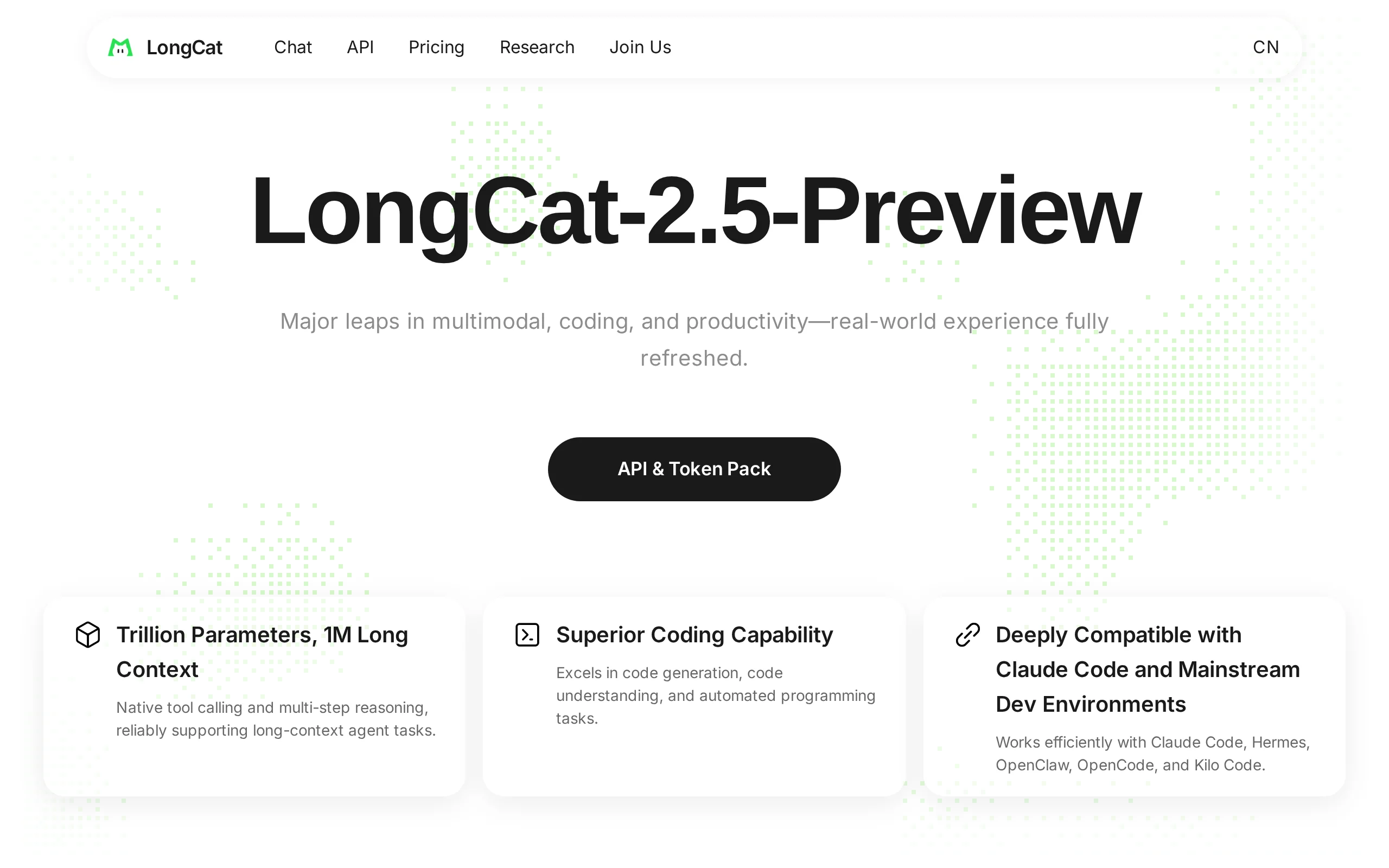
In-Depth Review of Longcat-2.5-preview: Meituan's Next-Generation Multimodal Long-Range Agent Model
LongCat-2.5-preview is Meituan's latest next-generation large model. Building upon the 1.6T total parameters, approximately 48B active parameters, and native 1M token context of LongCat-2.0, it marks ...

In-Depth Review of Spark-ASR-2.0: A New Paradigm in Speech Recognition with Non-Autoregressive Architecture
Spark-ASR-2.0 is the latest generation speech recognition large model launched by iFLYTEK based on its proprietary Spark-Audio speech foundation model. This model continues the non-autoregressive para...

Step Code – In-Depth Review of StepFun's Open-Source Terminal Programming Agent
Step Code is an open-source terminal programming agent launched by StepFun, licensed under the MIT License, which allows developers to complete the full workflow of code writing, debugging, execution,...
Xiaomi MiMo-V2.6 – Xiaomi's Open-Source Multimodal Model Series
Xiaomi MiMo-V2.6 is a series of fully multimodal models released and open-sourced by Xiaomi, comprising two native full-modal models: Pro and Flash. It is centered on large-scale Agentic reinforcement...
© All Rights Reserved. Some content on this site is partially generated by AI with human review.