
Mage – Microsoft's Open-Source 4B Parameter Multimodal Model Family

Executive Summary:
Mage is a family of open-source 4B parameter multimodal models developed by Microsoft, consisting of the streaming video/image understanding model Mage-VL and the image generation and editing model Ma...
1. What is Mage
Mage is a family of open-source 4B parameter multimodal models developed by Microsoft, consisting of the streaming video/image understanding model Mage-VL and the image generation and editing model Mage-Flow. By employing Codec-Native encoding, Mage reduces visual Tokens by 75% and accelerates inference by 3.5 times, supporting real-time video understanding. Mage-Flow enables native resolution generation and instruction-based editing, with the Turbo version capable of sampling in 4 steps, producing images in just 0.6 seconds on a single A100 GPU. This model family achieves a unified generation and understanding capability within the 4B parameter scale, significantly lowering the deployment threshold for multimodal AI.
Image source: Official article
Image source: official article
Technical Positioning and Domain: Mage belongs to the field of large multimodal models, covering tasks such as image generation, image editing, video understanding, and visual question answering. Its unique feature is the integration of a generation model (Mage-Flow) and an understanding model (Mage-VL) within the same architecture, unlike traditional approaches that deploy different models separately for each task. This unified architecture allows a single 4B parameter model to complete the full closed-loop from visual understanding to visual generation, offering significant advantages in edge devices and scenarios with moderate computational resources. Compared to traditional multimodal projects, Mage emphasizes efficiency optimization at the architectural level rather than simply stacking more parameters.
Development Background: This model was developed by Microsoft Research, leveraging Microsoft's deep expertise in computer vision, video encoding, and multimodal learning. The motivation for its development stems from the current trend where multimodal models often focus on a single task (such as only understanding or only generating) and large parameter models are costly to deploy. Mage aims to explore how high-quality multimodal generation and understanding capabilities can be achieved with fewer parameters through efficient encoding architectures and training strategies, promoting the widespread adoption of multimodal AI. The architectural design of Mage is directly supported by Microsoft's prior experience in projects such as the Phi series and the Florence series.
Core Value: Mage addresses the fragmentation issue in multimodal model deployment—previously, achieving functionalities like image generation and video understanding required multiple independent models. Mage unifies these capabilities under a single 4B model. Its Codec-Native encoding significantly reduces the number of visual Tokens, enabling video understanding to operate in real-time scenarios. Native resolution generation avoids the need for size bucket training, enhancing generation flexibility. These innovations make it easier for small and medium enterprises as well as individual developers to deploy multimodal AI capabilities, without being constrained by the high costs of deploying multiple models or requiring high computational power.
Technical Features: The core technologies of Mage include Codec-Native encoding (leveraging H.264/HEVC video encoding, distinguishing between I-frames and P-frames, reducing Tokens by 75%), a bionic dual-system architecture (System 1 is a lightweight event gateway that monitors changes, while System 2 is a causal decoder that performs inference), native resolution diffusion Transformer (NR-MMDiT, eliminating the need for size bucket training), and Rectified Flow matching training. These technologies collectively enable efficient inference and high-quality generation within the 4B parameter scale. Mage-VAE matches the reconstruction quality of FLUX.2 while incurring lower computational overhead, further enhancing generation efficiency.
2. Key Features
Image Generation (Text-to-Image): Supports arbitrary native resolutions from 512×512 to 2048×2048. The Turbo version requires only 4 sampling steps, generating a 1024×1024 image on a single A100 GPU in under 0.6 seconds. Trained using Rectified Flow matching, the generation quality stands out at the 4B parameter level, with rich detail and strong text rendering capabilities comparable to those of larger parameter models.
Instruction-Based Image Editing: Supports operations such as background replacement, style transfer, material replacement, and element addition/removal. Users can directly modify images using natural language instructions, eliminating the need for cumbersome mask operations. The Edit branch is specifically optimized for editing tasks, enabling precise local modifications while maintaining the overall consistency of the image.
Streaming Video Understanding: Mage-VL implements real-time video analysis through Codec-Native encoding, reducing visual Tokens by 75% and increasing inference speed by 3.5 times. It can process continuous video streams such as live broadcasts and surveillance footage, supporting real-time Q&A and description generation with latency controlled at the millisecond level, making it suitable for interactive scenarios requiring immediate feedback.
Multimodal Image-Text Q&A: Supports Q&A and description generation for images, documents, and videos, capable of understanding complex scenes and textual content. It performs stably on tasks such as document analysis, chart interpretation, and visual knowledge Q&A, making it ideal for enterprise-level information extraction and automated processing.
Native Resolution Generation: No need for size bucket training; images of arbitrary resolutions can be generated directly, avoiding the dependency on fixed resolution buckets in traditional diffusion models. This feature enhances generation flexibility, allowing users to freely choose output dimensions according to their needs without additional adaptation.
Ultra-Fast Sampling: The Turbo distilled acceleration version can generate high-quality images with just 4 sampling steps, significantly reducing inference time compared to standard diffusion models (which typically require 20–50 steps). It is suitable for real-time or batch generation scenarios, such as online content creation and e-commerce image production.
Biomimetic Dual-System Architecture: System 1 is a lightweight event gateway that monitors changes in video streams in real time, while System 2, the causal decoder, performs deep reasoning only when triggered by an event. This design reduces computational overhead while maintaining accuracy, enabling efficient video understanding even on resource-constrained devices.
3. How to Use
Environment Requirements: It is recommended to use a Linux operating system (Ubuntu 20.04+), Python 3.8–3.11, and PyTorch 2.0+. For hardware, we recommend an NVIDIA A100 or equivalent GPU with at least 16GB of VRAM. Mage-Flow's Turbo mode can quickly generate outputs on a single A100 card; Mage-VL's video understanding requires slightly more VRAM, so we recommend 24GB or more. Dependencies can be installed using
pip install -r requirements.txt, and CUDA and cuDNN must be configured in advance.Clone the Repository: Clone the microsoft/Mage repository from GitHub:
git clone https://github.com/microsoft/Mage.git. After entering the directory, install dependencies as specified in the README:pip install -r requirements.txt. It is recommended to use a virtual environment (e.g., conda) to isolate project dependencies and avoid conflicts with system packages.Download Weights: Download the pre-trained weights from Hugging Face. Mage-VL and Mage-Flow weights are stored separately; choose to download based on your task requirements. You can use
huggingface-cli download microsoft/Mage-VLor download directly through your browser. The weight files are large (approximately 8–10GB), so ensure a stable network connection. After downloading, place the weights in the designated project directory, or configure the path using an environment variable.Load the Model: Load the model using a Python script. For example, to load the Mage-Flow generation model:
from mage_flow import MageFlow; model = MageFlow.from_pretrained("microsoft/Mage-Flow"). Configure inference parameters, such as resolution (resolution=1024) and sampling steps (set to 4 for Turbo mode). Mage-VL is loaded similarly:from mage_vl import MageVL; vl_model = MageVL.from_pretrained("microsoft/Mage-VL").Execute Tasks: Image generation example:
output = model.generate(prompt="a cat sitting on a chair", resolution=1024, steps=4). Video understanding example:result = vl_model.analyze(video_frames, question="What is happening?"). For video stream processing, input must be frame-by-frame, supporting real-time camera streams or pre-recorded videos. Be sure to adjust batch size and frame rate to match hardware performance.Save Results: Save generated images in PNG/JPEG format:
output.save("result.png"). Save video understanding results as JSON or text files. It is recommended to record inference parameters during output for easier reproduction in the future. If batch generation is required, write a loop script and ensure proper VRAM release and error handling.
4. Pros and Cons Analysis
| Pros |
|---|
| Unified Multimodal Architecture: A single 4B model covers image generation, editing, video understanding, and Q&A, avoiding the complexity and cost of deploying multiple models, significantly enhancing system integration. |
| Codec-Native Efficient Encoding: Visual Tokens are reduced by 75%, video inference speed is increased by 3.5 times, enabling real-time streaming processing, with clear advantages in scenarios like live stream monitoring. |
| Native Resolution Flexibility: No need for size bucket training, supports arbitrary resolutions from 512 to 2048, enhancing adaptability for generation tasks and avoiding reliance on fixed resolutions in traditional models. |
| Low Hardware Requirements: The 4B model can run the full pipeline on a single A100 GPU, making it suitable for deployment by small and medium teams and edge devices, reducing the entry cost for multimodal AI. |
| Fully Open-Source and Friendly: Code, weights, and papers are all open-sourced, with a permissive license (MIT or similar), suitable for academic fine-tuning and commercial applications, with no licensing risks. |
5. Comparative Analysis with Similar Tools
| Dimension | Mage (4B) | Qwen3-VL-4B | FLUX.2 (12B) |
|---|---|---|---|
| Core Architecture | Unified generation + understanding, Codec-Native encoding, NR-MMDiT | Pure understanding architecture, ViT + Qwen3 language model, no generation branch | Pure generation architecture, MMDiT + VAE, 12B parameters, focused on image generation |
| Functional Coverage | Image generation/editing, video understanding,图文问答, real-time streaming processing | 图文 understanding, video understanding, OCR, document analysis | Text-to-image, image-to-image (style transfer, local modification) |
| Video Processing Capability | Streaming real-time understanding, 75% token compression, 3.5x speed improvement, supports live streaming monitoring | Supports video frame sampling understanding, non-streaming, weaker real-time performance | No video processing support |
| Image Generation Quality | 4B parameters, Turbo 4 steps in 0.6 seconds, quality comparable to FLUX.2, rich in details | No generation capability | 12B parameters, top-tier generation quality among open-source models, but slow inference speed (20+ steps) |
| Deployment Cost | 4B model, can run full pipeline on a single A100 card, memory requirement around 16–24GB | 4B model, can run on a single card, but requires an additional generation model (e.g., Qwen2.5-7B) | 12B model, requires larger memory (recommended 40GB+), slow inference speed |
| Open Source License | Open source (MIT or similar), full access to code, weights, and papers | Open source (Apache 2.0), active community | Open source (Apache 2.0), business-friendly |
| Chinese Support | Primarily English-focused, requires fine-tuning for Chinese | Native Chinese support, excellent performance in both Chinese and English | Primarily English-focused, Chinese generation results are generally average |
Selection Recommendations: If your project requires both image generation and video understanding, and you have limited computational resources (e.g., a single A100 card), Mage is an ideal choice — it covers the full pipeline with a single model, eliminating the need to integrate multiple models. If you are focused solely on understanding tasks and require strong Chinese capabilities, Qwen3-VL-4B or MiniCPM-V 2.6 would be more suitable, as they are specifically optimized for Chinese-English Q&A and document analysis. If you prioritize the highest image generation quality and have sufficient computational power, FLUX.2 offers superior detail and style diversity with its 12B parameters, though it requires an additional understanding model. For real-time video monitoring scenarios, Mage's streaming capabilities and low latency provide a unique advantage, making it difficult for other competitors to directly replace it.
6. Editor's Summary
Mage achieves the unification of multimodal generation and understanding at the 4B parameter scale. Its Codec-Native encoding and biomimetic dual-system architecture represent significant innovations. This design not only reduces inference costs but also enables real-time video understanding—a challenge that many larger parameter models have yet to effectively address. Compared to traditional approaches that separately deploy understanding and generation models, Mage's end-to-end unified architecture reduces system complexity and cross-model communication latency, making it particularly practical for edge deployment scenarios.
In terms of practical value, Mage is well-suited for small and medium-sized teams to quickly build multimodal applications, such as intelligent customer service, content creation, and video surveillance. Its low hardware requirements make it feasible to deploy multimodal AI on edge devices, while the open-source license further reduces commercial usage risks. Target users include AI application developers (for rapid integration of multimodal capabilities), academic researchers (for exploring efficient encoding architectures), and creative professionals (for utilizing generation and editing features).
Looking ahead, as community contributions and fine-tuning techniques mature, Mage has the potential to deliver value in more vertical domains, especially those requiring simultaneous processing of understanding and generation tasks (such as autonomous driving scene understanding and simulation, or robotic visual feedback). However, there is still room for improvement in complex reasoning and Chinese support. We look forward to future versions enhancing these capabilities while maintaining efficiency. Mage's technical approach provides a viable direction for small-parameter multimodal models—advancing capabilities through architectural innovation rather than simply increasing parameter counts.
7. Application Scenarios
Live Streaming/Event Commentary: Leveraging Mage-VL's streaming video understanding capabilities, it can analyze live video in real-time and automatically generate commentary or answer audience questions. Compared to traditional solutions, it eliminates the need for pre-recording or segment-based processing, achieving millisecond-level latency, making it suitable for sports events, gaming live streams, and other similar scenarios.
Intelligent Surveillance and Security: Deployed within surveillance systems, it can detect abnormal events (such as intrusions, fires, or object left behind) in real-time and generate alert descriptions. Mage's low computational requirements allow it to run on edge devices (such as NVIDIA Jetson), reducing reliance on the cloud and improving response speed.
E-commerce Product Image Generation: Using Mage-Flow, product main images and scene images can be quickly generated, with support for instruction-based editing (such as replacing backgrounds, adjusting styles, or adding text). E-commerce operators can generate multiple style variations in bulk, improving listing efficiency and reducing photography costs.
Social Media Content Creation: Creators can generate posters and illustrations via text instructions, or perform style transfer and add/remove elements from existing images. Mage's fast sampling enables real-time interactive creation, allowing users to rapidly iterate through design concepts.
Multimodal Assistant on Edge Devices: Deploying Mage on mobile phones and IoT devices provides localized image, text, and video understanding services, such as photo-based object recognition, video summarization, and voice-based Q&A. No internet connection is required, ensuring privacy protection, making it ideal for smart home and wearable device applications.
8. FAQ
Q: What is the relationship between Mage, Mage-VL, and Mage-Flow?
A: Mage is the general term for the model family, which includes two core sub-models: Mage-VL is responsible for video/image understanding, and Mage-Flow is responsible for image generation and editing. Both share part of the foundational architecture (such as the Codec-Native encoding concept), but they have independent weights and can be loaded separately or used jointly based on the task.
Q: What are the hardware requirements for Mage? Can it run on consumer-grade GPUs?
A: It is recommended to use an NVIDIA A100 or a GPU with equivalent computational power, with at least 16GB of VRAM. Understanding tasks can be run on consumer-grade GPUs (such as RTX 3090/4090 with 24GB VRAM), but video stream processing may be limited due to frame buffer constraints. The generation task in Turbo mode can run at a resolution of 1024×1024 on GPUs with 24GB VRAM, while higher resolutions require attention to VRAM usage. For real-time video analysis with Mage-VL, it is recommended to use a professional GPU to ensure frame rate.
Q: Does Mage support Chinese?
A: The official model is currently primarily trained on English data, and its support for Chinese is limited. Users can enhance its Chinese capabilities by fine-tuning with Chinese datasets, and there are already community efforts in this direction. Microsoft has not officially provided an optimized Chinese version, but the model architecture is extensible for multiple languages.
Q: How can I fine-tune the Mage model?
A: The code and weights of Mage are fully open-sourced, and it supports fine-tuning using the Hugging Face Transformers library. You will need to prepare a dataset relevant to the task (such as image-text pairs or video question-answer pairs), modify the training script, and ensure that the model's original capabilities are preserved. The official documentation provides a fine-tuning guide (see GitHub README), and it is recommended to use parameter-efficient methods such as LoRA to reduce VRAM consumption.
Q: What are the advantages of Mage compared to Qwen3-VL-4B?
A: Mage's advantage lies in its simultaneous support for image generation and video understanding, whereas Qwen3-VL-4B only supports understanding. If you need a single model to handle end-to-end multimodal tasks (such as generating images and understanding videos), Mage is more suitable. However, if you only need understanding and require strong Chinese capabilities, Qwen3-VL-4B may be superior in Chinese question-answering and reasoning. The two models serve different purposes and can be used complementarily.
Q: How does the Codec-Native encoding in Mage work specifically?
A: Drawing inspiration from video encoding standards such as H.264/HEVC, the video frames are divided into I-frames (fully encoded) and P-frames (only encoding the changed regions). A lightweight event gateway (System 1) detects frame-to-frame changes, and only the changed frames undergo deep inference (System 2), thereby significantly reducing the number of visual Tokens and improving inference speed. This design reduces the number of Tokens by more than 75% while maintaining spatiotemporal context.
9. Project Links
- Product Website: https://microsoft.github.io/Mage/
- GitHub Repository: https://github.com/microsoft/Mage
- HuggingFace Model Library: https://huggingface.co/collections/microsoft/mage
Related AI Model Articles
Xiaomi MiMo-V2.6 – Xiaomi's Open-Source Multimodal Model Series
Xiaomi MiMo-V2.6 is a series of fully multimodal models released and open-sourced by Xiaomi, comprising two native full-modal models: Pro and Flash. It is centered on large-scale Agentic reinforcement...
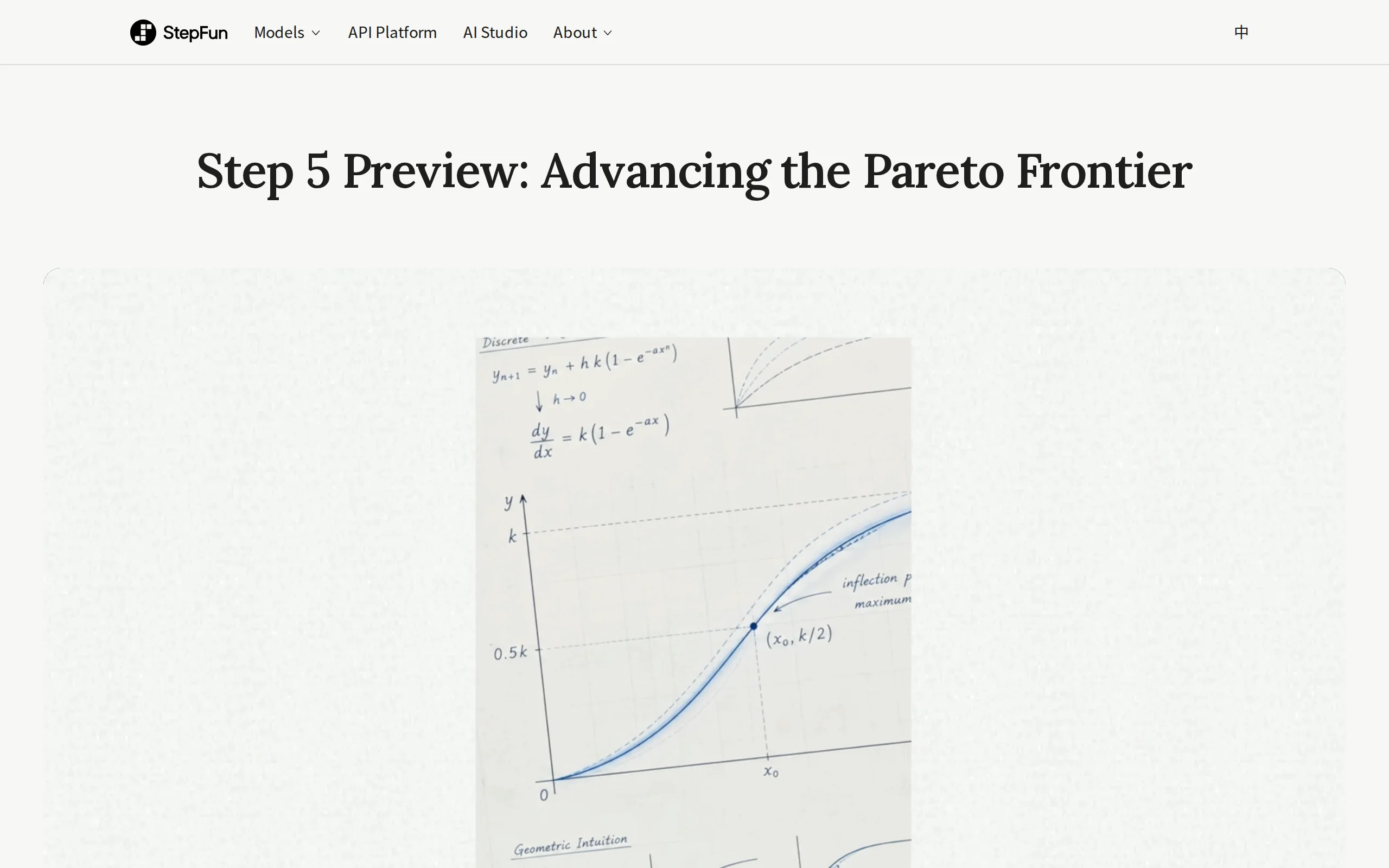
In-Depth Review of Step 5 Preview: A 600B Sparse MoE Flagship with 1M Token Context and 1/8 Cost Advantage
Step 5 Preview is a new-generation flagship foundation model launched by StepFun, designed for real-world Agentic tasks. Based on a sparse MoE architecture, the model has a total of 600B parameters bu...
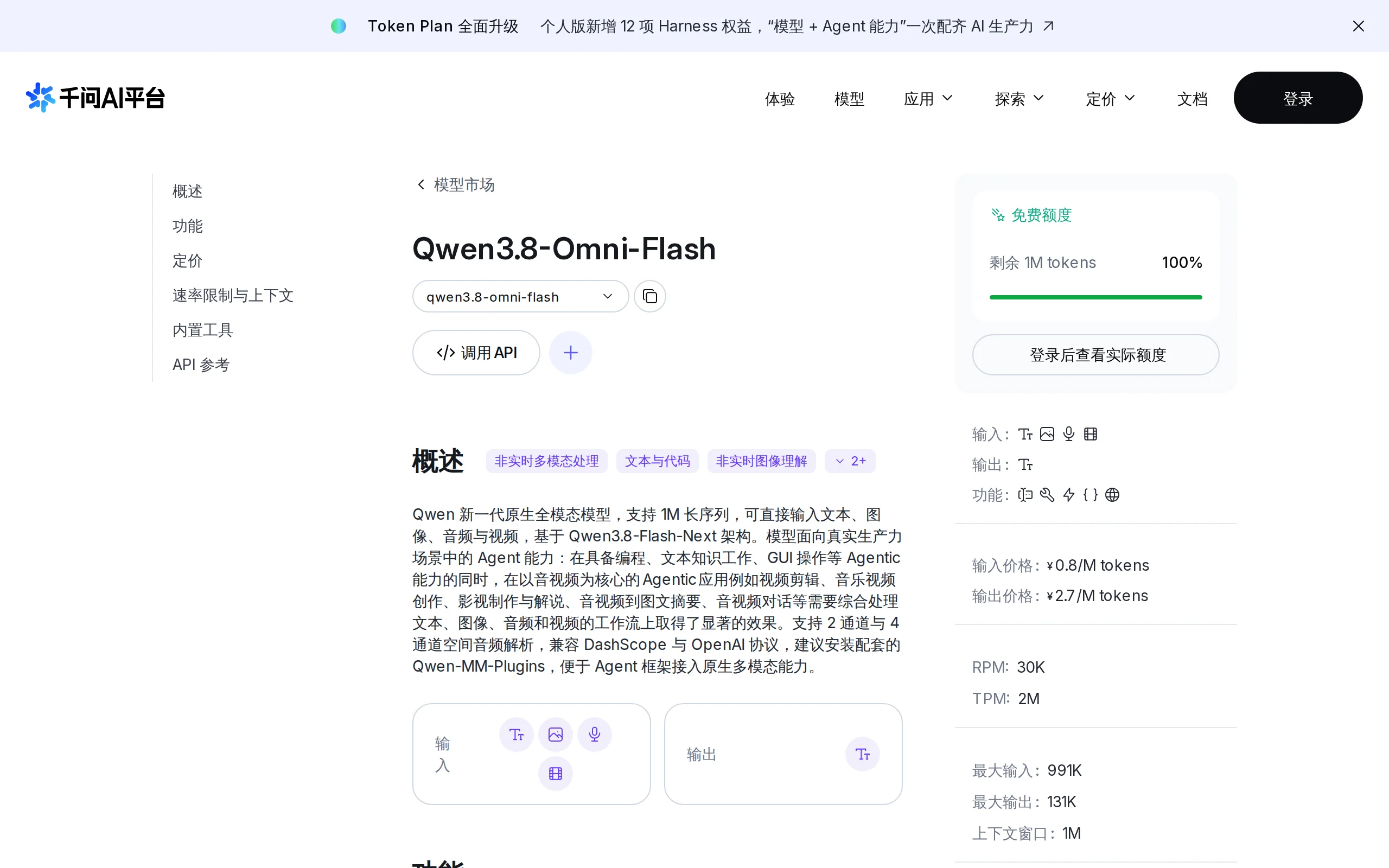
Qwen3.8-Omni-Flash – A Native Multimodal Model Launched by Alibaba Qwen
Qwen3.8-Omni-Flash is a native multimodal model launched by Alibaba Qwen. It jointly models four modalities—text, image, audio, and video—within a single architecture, supporting a context length of u...
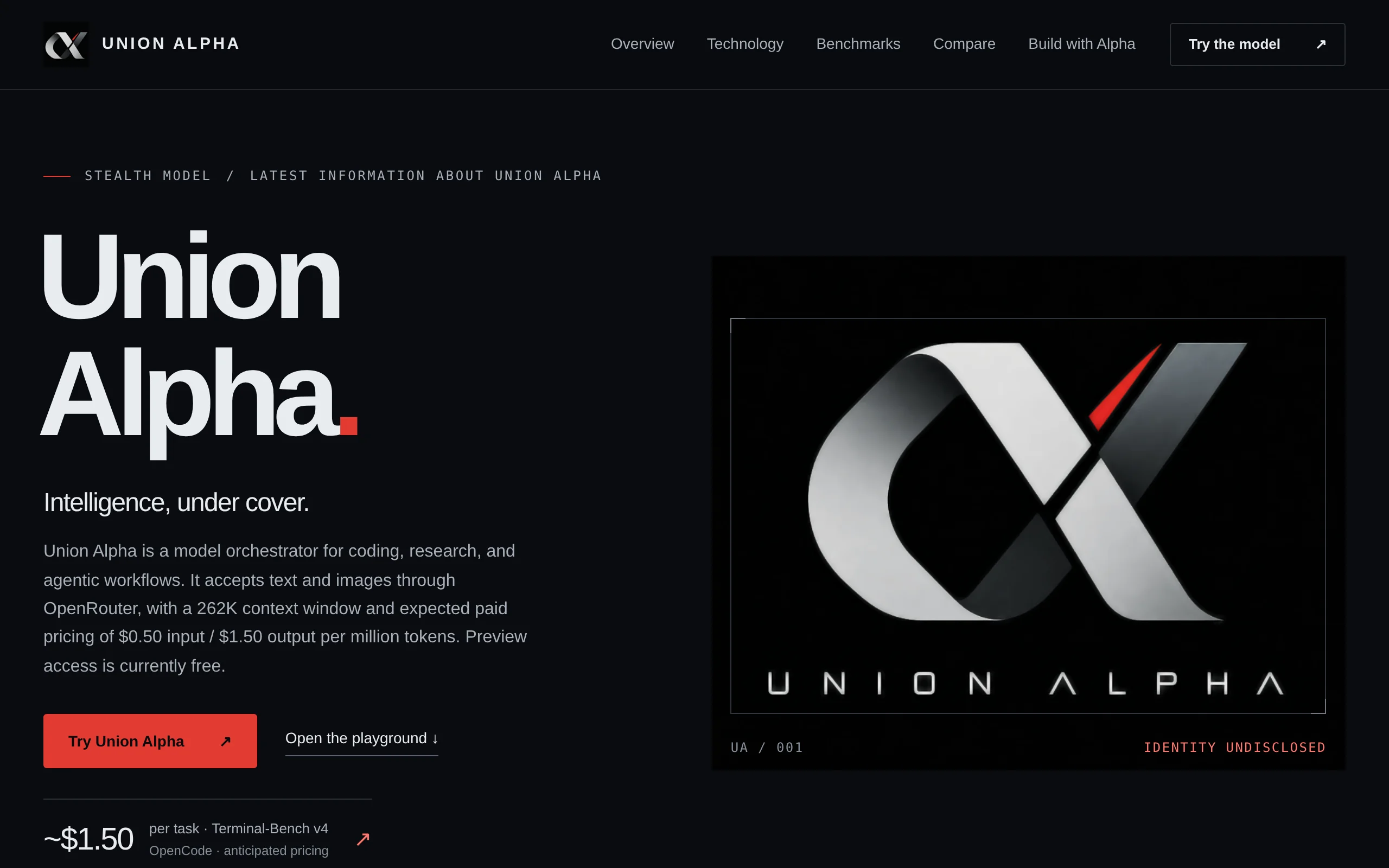
Union Alpha – A Mysterious Multimodal Large Model with Unlimited Free Access for a Limited Time
Union Alpha is a multimodal large language model released in "stealth" mode, recently launched on mainstream AI service platforms such as OpenRouter, Cline, and OpenCode. The model supports dual-modal...
© All Rights Reserved. Some content on this site is partially generated by AI with human review.