
GLM-5.2 – Zhipu AI's Next-Gen Open LLM with 1M Context
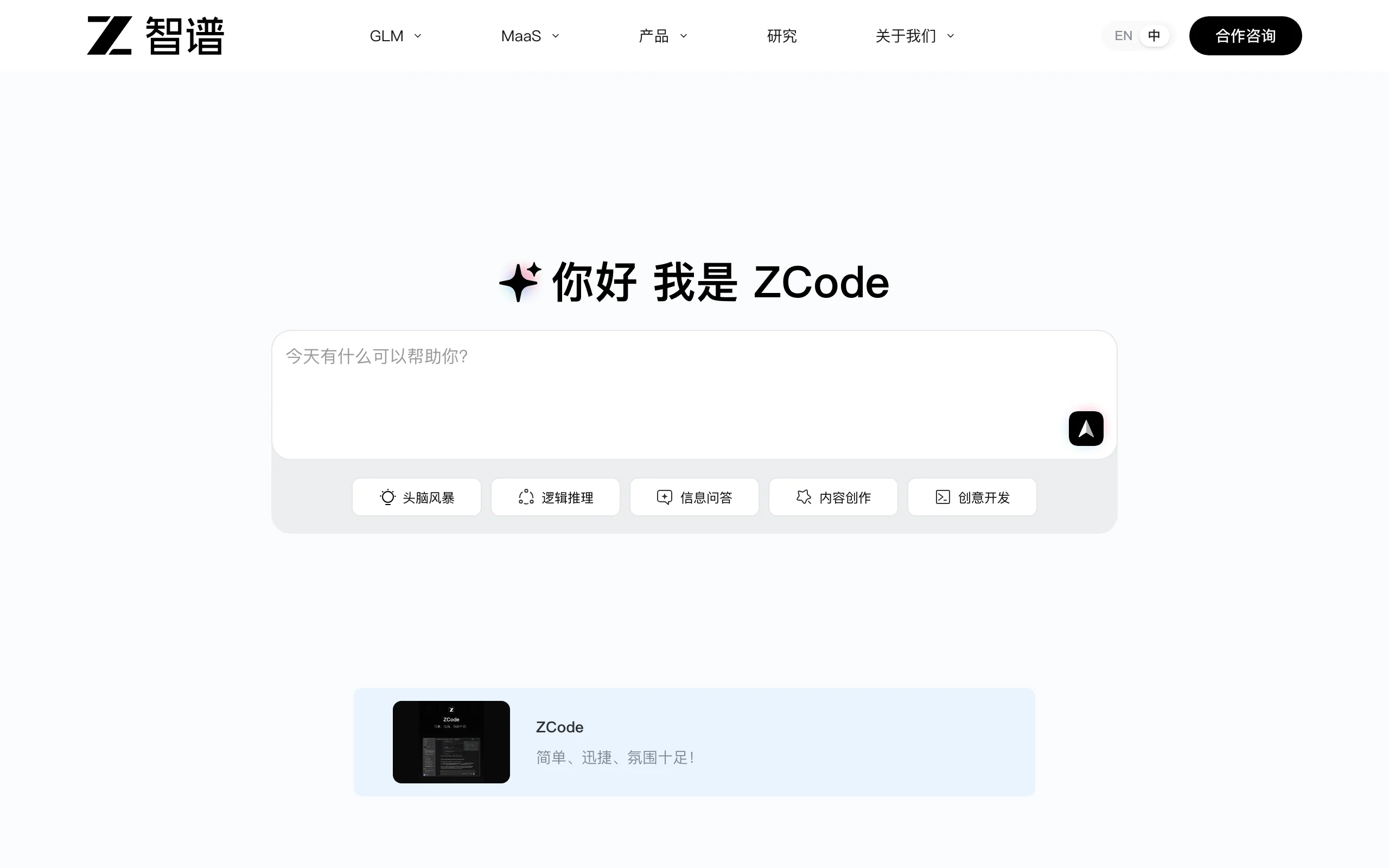
Executive Summary:
GLM-5.2 is Zhipu AI's next-generation open large language model, released on June 13, 2026, under the MIT license. Its headline features are a 1M-token ultra-long context window and deep focus on Agen...
1. What Is GLM-5.2
GLM-5.2 is Zhipu AI's next-generation open large language model, released on June 13, 2026, under the MIT license. Its headline features are a 1M-token ultra-long context window and deep focus on Agentic Coding (autonomous programming agents). The model was trained end-to-end on Huawei Ascend chips and the MindSpore framework, fully independent of NVIDIA hardware, achieving self-controlled capability from compute to algorithms. In code generation and software engineering tasks, GLM-5.2 performance is broadly on par with the top closed-source model Claude Opus 4.8, making it a benchmark among domestic open coding models.
Image source: Official article
Technical positioning and domain: GLM-5.2 is a large language model in NLP, specifically positioned for general programming and software engineering agents. Its technical path combines long-context modeling, multi-step tool use, autonomous planning, and execution to replace manual work on large-scale codebase understanding, refactoring, and debugging. Unlike general chat models, GLM-5.2 is optimized from architecture to training data around “code intelligence,” ranking among top open models on benchmarks such as SWE-Bench.
Development background: Zhipu AI (Beijing Zhipu Huazhang Technology Co., Ltd.) is a leading Chinese LLM company; its core team comes from Tsinghua University's NLP lab with deep GLM series expertise. GLM-5.2 was motivated by the gap between domestic models and overseas leaders in programming, and by enterprises constrained by export controls on compute. Choosing Huawei Ascend and MindSpore validates that domestic compute can train world-class models and provides a key example for domestic AI supply chain autonomy.
Core value: GLM-5.2 addresses two critical needs: enterprise programming scenarios requiring real-time processing of ultra-long context (e.g., entire codebases) where mainstream models often cap at 128K–256K; and insufficient Agentic Coding in open models that mostly do single-step generation without autonomous planning and multi-step execution. With 1M context and long-chain Agent mechanisms, developers can import hundreds of thousands of lines at once and let the model independently perform architecture analysis, bug fixes, and cross-file refactoring, greatly improving software engineering efficiency.
Technical characteristics: GLM-5.2 offers dual-track inference—Thinking mode and Standard mode—deep chain-of-thought for complex tasks and fast response for simple ones, balancing performance and efficiency. Training used Huawei Ascend 910B and MindSpore throughout with no NVIDIA CUDA dependency—the first domestic open coding LLM trained entirely on domestic compute at international top tier.
2. Key Features
Ultra-long context processing: 1M-token context window supports importing entire project codebases (e.g., monorepos with hundreds of thousands of lines), ultra-long technical docs, or million-line system logs. Stable attention over long horizons enables cross-file dependency analysis and global semantic understanding, significantly outperforming typical 128K/256K models.
Agentic Coding: Designed for complex software engineering with multi-step tool use, long autonomous execution chains, and dynamic planning. The model can independently run programming workflows up to 8 hours—including requirements analysis, code generation, testing, debugging, and deployment—with minimal human intervention. Agent success rates on SWE-Bench and similar benchmarks rank among top open models.
Dual-mode inference: Thinking mode uses multi-step chain-of-thought for complex logic and algorithm design; Standard mode generates directly for simple Q&A and fast code completion. Users switch by task complexity to balance performance and latency.
Code generation and full-cycle debugging: Generates high-quality, well-structured, well-commented code across multiple languages. Also supports code review, bug localization, auto-fix, and refactoring as an IDE assistant across the coding lifecycle.
Multi-file/multi-module collaboration: Understands cross-file dependencies and project architecture for global optimization in large projects. When changing an API, the model can identify and update all callers, avoiding cascade errors from local edits.
API and tool calling: Function Calling and external tool integration connect databases, search engines, code repos (Git), CI/CD pipelines, etc. GLM-5.2 can execute queries, pull code, trigger builds—not just generate code—and embed in development workflows.
Private deployment and fine-tuning: MIT-open weights enable local deployment via SGLang, vLLM, xLLM, etc., for data security and compliance. Fine-tuning on proprietary data builds domain-specific programming assistants or vertical models.
3. How to Use
Environment requirements: Model weights are planned to open around June 20, 2026. Recommended hardware: Huawei Ascend 910B or equivalent domestic AI accelerators, ≥80GB VRAM. Consumer GPUs (e.g., RTX 4090 24GB) need quantization or model parallelism with significantly slower inference. OS: Linux (Ubuntu 22.04+). Install MindSpore or PyTorch depending on inference framework.
Use via Zhipu platform: GLM-5.2 is available to all GLM Coding Plan users. Log in to Zhipu Open Platform (open.bigmodel.cn) or Z.ai and select GLM-5.2 in Lite/Pro/Max/Team tiers—no local install required for quick evaluation.
API integration: After API launch (planned next week), apply for an API key on the open platform and integrate via REST into apps, IDE plugins, or automation. API supports streaming, function calling, dual-mode switching, etc.; docs ship with API.
Switch inference mode: Specify Thinking or Standard in chat or API calls. Thinking for complex programming (algorithms, architecture refactor); Standard for quick Q&A and simple generation. Switch by task complexity to balance speed and depth.
Handle long codebases: Use 1M context to compress an entire repo into one file or upload folders (platform-supported) for cross-file analysis, global refactor, or bug localization. Use UTF-8 encoding; avoid special characters that break parsing.
Private deployment: After weight release, download model files and serve with SGLang or vLLM: download weights, configure framework (e.g., vLLM startup), load model, expose API. Recommend at least 4× Ascend 910B for real-time interaction.
Fine-tuning: Under MIT, fine-tune on proprietary code datasets. LoRA/QLoRA on 8× Ascend 910B can finish in hours. Use for language-specific optimization or internal coding standards.
4. Pros and Cons
| Pros |
|---|
| 1M ultra-long context: Truly usable 1M-token window for entire codebases or ultra-long docs; leading long-horizon performance vs. most open models. |
| Fully domestic compute: Trained on Ascend + MindSpore, no NVIDIA dependency, unaffected by export controls—strategic value for localization-focused enterprises. |
| Strong Agentic Coding: Up to 8-hour independent programming workflows; multi-step tools and planning among top open models; major efficiency gains. |
| MIT fully open: Most permissive license—download, private deploy, fine-tune, commercial use without restrictions. |
| Performance vs. international leaders: Code/software engineering broadly on par with Claude Opus 4.8; top open ranks on SWE-Bench etc.; validates domestic competitiveness. |
5. Comparison with Similar Tools
| Dimension | GLM-5.2 (Zhipu AI) | Claude Opus 4.8 (Anthropic) | Kimi K2.7 Code (Moonshot) |
|---|---|---|---|
| Developer | Zhipu AI (China) | Anthropic (US) | Moonshot (China) |
| Release | June 13, 2026 | May 28, 2026 | June 12, 2026 |
| Positioning | Flagship open coding model | Flagship closed coding model | Coding-focused open model |
| Context window | 1M tokens | 1M tokens (default) | 256K tokens |
| License | MIT (weights opening soon) | Closed, API only | Open (on HuggingFace) |
| Inference modes | Thinking + Standard (switchable) | Adaptive thinking + user effort | Thinking only (forced) |
| SWE-Bench | TBD (GLM-5.1 predecessor 58.4%) | SWE-Bench Verified 88.6% (historical high) | Significant vs. K2.6 (exact TBD) |
| Agent capability | 8-hour independent workflows | Claude Code Workflows (hundreds of parallel sub-agents) | Kimi Claw 24/7 Bench ~10% gain |
| API price (per 1M tokens) | TBD (launching next week) | $5/$25 (Fast $10/$50) | ¥6.5/¥27 (cache hit ¥1.3) |
| Domestic compute | Ascend + MindSpore, no NVIDIA | NVIDIA GPU required | Ascend supported (needs adaptation) |
Selection advice: For peak performance and mature ecosystem, Claude Opus 4.8 remains best—but closed, expensive, NVIDIA-dependent. GLM-5.2 excels in open source, domestic compute, and Agentic Coding—ideal for government, finance, defense with data security and localization requirements. Teams with NVIDIA hardware needing fast deploy: Kimi K2.7 Code is open with 256K context covering most projects—good value. Budget-limited teams wanting deep customization: DeepSeek-Coder-V2’s Apache license and mature community remain solid, but context and Agent capability lag.
6. Editor's Review
GLM-5.2 marks domestic open models entering the world-class tier in programming. Technically, 1M context is not mere window scaling—it is systematic optimization of attention, memory, and inference efficiency; Zhipu’s accumulation here deserves credit. Notably, full training on Ascend and MindSpore proves domestic compute can support top models—a milestone for breaking NVIDIA monopoly and AI supply chain autonomy.
Practically, Agentic Coding stands out: 8-hour autonomous workflows let developers offload repetitive, complex software engineering (refactors, cross-file bug fixes) and focus on architecture and product. MIT open licensing lowers enterprise barriers; private deploy and fine-tuning adapt the model to finance trading systems, industrial control software, and more.
Best for professional developers and teams handling large codebases and complex upgrades. Individuals and small projects can use the open platform without hardware cost. Note hardware requirements—consumer GPUs may not run full version smoothly; quantized/distilled variants may follow.
Strong future potential: after weight release and community growth, GLM-5.2 could become the de facto domestic coding AI standard. Zhipu’s “frontier intelligence for everyone” ethos and community co-building should accelerate capability gains. Recommend further Chinese programming optimization, lower hardware barriers, and richer docs/tutorials.
Scoring: full marks for innovation (domestic compute + 1M context + Agentic Coding) and practical value (open + private + fine-tune); −0.5 for ecosystem maturity, Chinese optimization, and weights not yet officially released.
7. Use Cases
Large codebase understanding and refactoring: Import entire monorepos (hundreds of thousands of lines) with 1M context for cross-file dependency analysis, architecture mapping, tech debt identification, and global refactor—reducing manual code reading time.
Complex software engineering and full-stack development: Agentic Coding autonomously runs requirements analysis, stack selection, front/back-end dev, DB design, and deployment—8-hour workflows for rapid prototypes or MVPs.
Legacy migration and modernization: Analyze legacy code (Java→Go, jQuery→React), auto-generate migration plans, rewrite while preserving semantics—lower cost and risk of stack upgrades.
Multi-file bug localization and fix: In large projects, trace cross-module bug propagation with ultra-long context, generate fixes and multi-file coordinated edits—especially for concurrent/distributed systems needing global state.
Code review and quality assurance: Automated Code Review for standards, security, performance—with detailed reports. Integrate into CI/CD for per-commit review.
Technical documentation and knowledge bases: Process ultra-long docs, API specs, million-line logs—extract key info, summarize, or convert to executable code—for ops troubleshooting, tech debt, knowledge base building.
8. FAQ
Q: When will GLM-5.2 weights open? Where to download?
A: Weights planned around June 20, 2026 under MIT. Download from Zhipu GitHub org (THUDM) or HuggingFace. Use online via open.bigmodel.cn or Z.ai now.
Q: Does GLM-5.2 support NVIDIA GPU? Can it run on consumer GPUs?
A: Training was on Ascend; inference frameworks (vLLM, SGLang) support CUDA, so NVIDIA works. Recommend ≥80GB VRAM (A100 80GB). RTX 4090 24GB needs 4-bit quant or parallelism with much slower inference.
Q: Thinking vs. Standard mode—difference and choice?
A: Thinking uses multi-step chain-of-thought for rigorous, explainable results—complex algorithms, architecture. Standard generates directly—fast but shallower—for simple Q&A and completion. Switch manually by complexity; auto mode may come later.
Q: GLM-5.2 vs. Kimi K2.7 Code—which is better?
A: Trade-offs. GLM-5.2: larger context (1M vs. 256K), stronger Agentic Coding (8-hour workflows), domestic compute training. Kimi K2.7 Code: already open, better Chinese optimization, lower price. Choose GLM-5.2 for huge codebases or localization; Kimi for value and Chinese scenarios.
Q: Hardware for private deployment?
A: Official recommendation: Ascend 910B, at least 4-card cluster (64GB/80GB per card). NVIDIA A100 80GB: 2 cards for FP16. VRAM depends on quantization and framework—see deployment docs (coming).
Q: API pricing and free tier?
A: API price not announced; expected with next week’s launch. Open platform typically offers free trial tokens (e.g., 1M)—see official announcement.
Q: Chinese programming and supported languages?
A: Strong support for Python, Java, C++, JavaScript, Go, Rust, etc. Chinese comments/naming OK; Chinese technical doc understanding may lag Chinese-optimized models. English code environment recommended for best results.
9. Project Links
- Zhipu Open Platform (online): https://open.bigmodel.cn/
- Z.ai (lightweight online): https://z.ai/
- Official GitHub org THUDM (weights pending): https://github.com/THUDM
- HuggingFace THUDM (weights pending): https://huggingface.co/THUDM
- Zhipu AI official site: https://www.zhipuai.cn/
Related AI Model Articles
OpenMuse – CopilotKit Open-Source Personal AI Assistant
OpenMuse is an open-source personal AI assistant project developed by the CopilotKit team. Its core design philosophy is "giving an Agent a computer" — by combining a persistent browser, optional Linu...
In-Depth Review of Longcat-2.5-preview: Meituan's Next-Generation Multimodal Long-Range Agent Model
LongCat-2.5-preview is Meituan's latest next-generation large model. Building upon the 1.6T total parameters, approximately 48B active parameters, and native 1M token context of LongCat-2.0, it marks ...
Review of DeepSeek Harness Desktop: How the Official GUI Client Lowers the Bar for Agent Usage
DeepSeek Harness Desktop is the official graphical client launched by DeepSeek, designed to provide a visual interface for the originally command-line-based DeepSeek Harness framework. After users log...
Step Code – In-Depth Review of StepFun's Open-Source Terminal Programming Agent
Step Code is an open-source terminal programming agent launched by StepFun, licensed under the MIT License, which allows developers to complete the full workflow of code writing, debugging, execution,...
© All Rights Reserved. Some content on this site is partially generated by AI with human review.