
ForgeTrain – Open-Source LLM Pre-Training Framework from ModelBest, Tsinghua, and Allies
Executive Summary:
ForgeTrain is an open-source, production-grade large-model pre-training framework released by ModelBest (面壁智能), Tsinghua University, and the OpenBMB community—the first framework claimed to be written...
1. What Is ForgeTrain
ForgeTrain is an open-source, production-grade large-model pre-training framework released by ModelBest (面壁智能), Tsinghua University, and the OpenBMB community—the first framework claimed to be written entirely by AI with zero human-authored code. It uses the Forge Engineering three-stage methodology (set standards → bit-exact alignment → performance surpassing) to train 10% faster than Megatron on NVIDIA H100, and has completed full pre-training on Huawei Ascend, producing the MiniCPM5-1B model. ForgeTrain moves "AI building AI" from theory to production validation and opens a path to automated deep learning infrastructure.
Technical positioning and domain: Large-scale distributed deep learning training, aimed at replacing human-engineered stacks like Megatron and DeepSpeed with fully automated generation for compute-heavy pre-training—cutting development cycles, hardware porting cost, and human effort.
Development background: Joint work by ModelBest, Tsinghua NLP Lab, and OpenBMB, building on MiniCPM and distributed training experience. Motivation: make model R&D scale with compute rather than headcount via AI-authored, AI-optimized training software.
Core value: Proves AI can build production complex systems—faster than Megatron on H100 and fully runnable on Ascend, breaking the "decade to rebuild a CUDA stack" bottleneck by forging per-chip software on demand.
Technical characteristics: Forge Engineering uses an automated evaluation Harness as constraint; after bit-exact alignment against a reference, AI enters performance surpassing. Zero abstraction tax—generality lives in the Harness spec, peak performance in each forged build.
2. Key Features
Production LLM pre-training: Hundreds to thousands of GPUs with automated data loading, gradient sync, model/pipeline parallelism—no manual orchestration of core training loops.
Cross-hardware adaptation: NVIDIA H100 and Huawei Ascend with completed Ascend pre-training. Same Harness, different forged optimizations per hardware—no manual porting.
Performance beyond human baselines: ~10% faster than Megatron on H100—direct ~10% compute savings from broader AI search during optimization.
Bit-exact alignment verification: Generated stack matches reference (Megatron) outputs bit-for-bit on identical inputs during the alignment phase.
Automated evaluation Harness: Machine-checkable correctness and performance benchmarks that constrain AI generation—not just tests, but the methodology core.
Zero human code in the framework: Training logic, optimizations, and hardware paths are AI-generated; humans define Harness specs and supply references.
L4 "AI builds AI": On the five-level path, reaches L4—infrastructure that improves the infrastructure that builds models (recursive compounding).
Fully open toolchain: H100 and Ascend code plus Agent Harness (eval standards, test specs, agent orchestration) are open for full reproduction.
3. How to Use
Environment: NVIDIA H100 or Huawei Ascend 910B recommended; Linux Ubuntu 20.04+; CUDA 12.0+ (NVIDIA) or CANN (Ascend); ~80GB GPU memory minimum.
Get code: Clone https://github.com/OpenBMB/ForgeTrain (H100 + Ascend builds and Agent Harness).
Configure: Pick hardware branch; install PyTorch 2.0+ / NCCL (NVIDIA) or Ascend drivers + CANN (Huawei). Framework auto-detects hardware.
Run pre-training: Example:
python train.py --config configs/minicpm_1b.yaml—distributed init, data, parallelism handled automatically.Reproduce alignment: Run Harness alignment tests comparing ForgeTrain vs Megatron outputs.
Performance iteration: After alignment, switch to performance Harness for AI-driven search; metrics logged per iteration.
Notes: Start small (e.g., 8 GPUs); verify CANN compatibility on Ascend; configure networking before elastic scaling.
4. Pros and Cons
| Pros |
|---|
| Production proof of AI-built AI: Usable, fast, fully open training framework—validates automated infrastructure. |
| Beats Megatron on H100: ~10% speedup → direct cost savings at scale. |
| Breaks domestic chip software bottleneck: Full Ascend pre-training path without years of manual ecosystem work. |
| ~100× dev efficiency claim: Framework forging vs human months of engineering. |
5. Comparison with Similar Tools
| Dimension | ForgeTrain (ModelBest) | Megatron (NVIDIA) | DeepSpeed (Microsoft) |
|---|---|---|---|
| Architecture | AI-forged, zero human code | Human C++/Python | Human PyTorch optimizations |
| Performance | ~10% faster than Megatron | Industry baseline | Strong; some gaps vs Megatron |
| Hardware | H100 + Ascend | NVIDIA only | NVIDIA only |
| Production ready | Yes (MiniCPM5-1B trained) | Yes, widely used | Yes, Microsoft-scale |
| License | Apache 2.0, fully open | Partial / restricted | MIT, open |
| AI authorship | Fully AI-generated | None | None |
| Validation | MiniCPM5-1B (AA sub-2B #1) | GPT-class training | BLOOM, MT-NLG |
Selection guidance: Teams seeking peak performance and Ascend escape from NVIDIA-only stacks should evaluate ForgeTrain—mind the younger community vs Megatron/DeepSpeed. Megatron/DeepSpeed remain safer for mature ops at scale; ForgeTrain shines for exploration and domestic silicon.
6. Editor's Take
ForgeTrain is a milestone: AI building a full distributed training stack—not snippets—with verified correctness and measured speedups. Forge Engineering (standards → alignment → surpass) is a reusable playbook for compilers, databases, and OS tooling.
Practical impact: ~10% compute savings at million-dollar scale is material; Ascend support is strategically important where CUDA parity is slow.
Audience: LLM infra teams, domestic chip adapters, AI-for-AI researchers. Production teams wanting battle-tested ops may hybridize with legacy frameworks.
Future: capability growth as a function of compute, not only hiring—recursive improvement of training, inference, even chip stacks.
— innovation and utility high; ecosystem/docs still catching up.
7. Use Cases
- LLM pre-training: Drop-in alternative to Megatron-class stacks with automated parallelism and optimization.
- Domestic chip adaptation: Forge Ascend-optimized stacks in days vs months of manual porting.
- Research acceleration: Same budget trains larger models or more experiments.
- Software paradigm shift: Reference instance for AI-generated complex systems beyond training.
- Edge model training: MiniCPM5-1B success shows utility below massive cluster scale.
8. FAQ
Q: Truly zero human code?
A: Framework code is AI-generated; humans define Harness specs and provide references like Megatron.
Q: vs Megatron?
A: ~10% faster, Ascend support, days vs months to forge—but Megatron wins on community and docs today.
Q: Other Chinese chips (Cambricon, Enflame)?
A: Not yet; "code as bespoke artifact" design should allow Harness-driven ports—timeline depends on community/team.
Q: What is bit-exact alignment?
A: Identical floating-point outputs to reference on same inputs—including bitwise FP representation—before performance tuning.
Q: For solo developers?
A: Team-scale pre-training; needs clusters and distributed training knowledge. Open Harness enables ambitious individuals to experiment.
Q: Is the 10% speedup reliable?
A: From ModelBest H100 benchmarks with published methodology; validate on your hardware, model size, and data.
9. Project Links
Related AI Model Articles
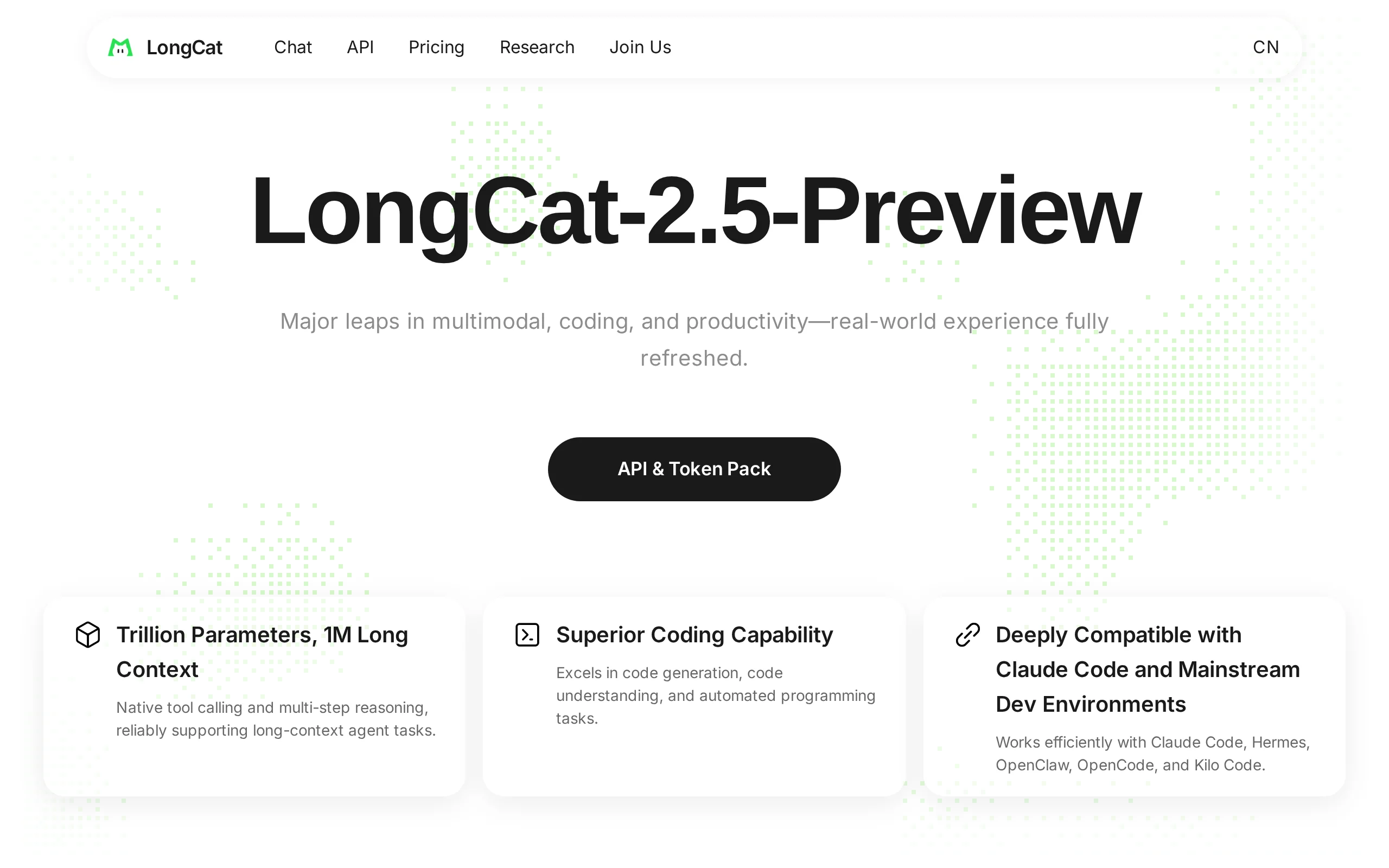
In-Depth Review of Longcat-2.5-preview: Meituan's Next-Generation Multimodal Long-Range Agent Model
LongCat-2.5-preview is Meituan's latest next-generation large model. Building upon the 1.6T total parameters, approximately 48B active parameters, and native 1M token context of LongCat-2.0, it marks ...
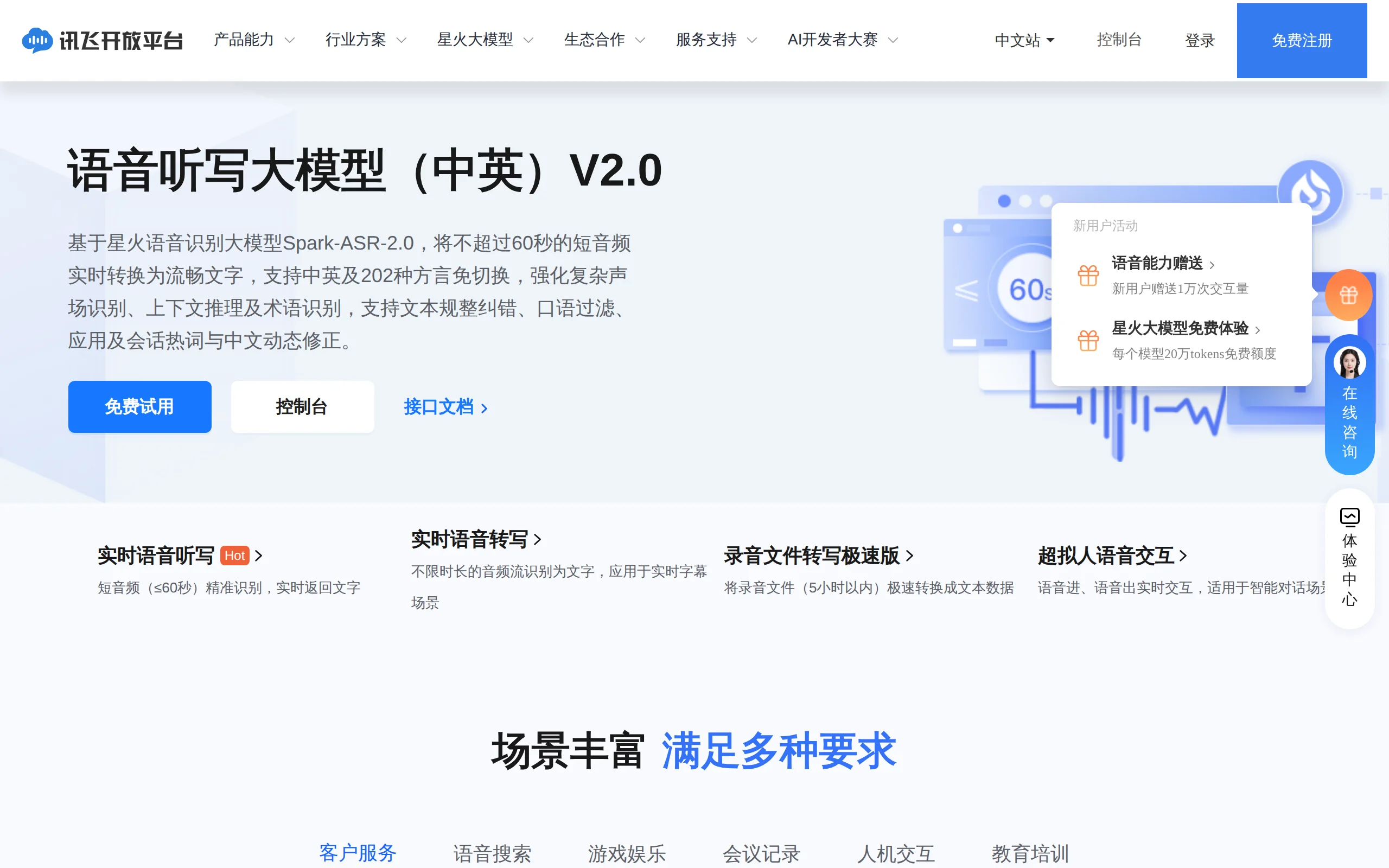
In-Depth Review of Spark-ASR-2.0: A New Paradigm in Speech Recognition with Non-Autoregressive Architecture
Spark-ASR-2.0 is the latest generation speech recognition large model launched by iFLYTEK based on its proprietary Spark-Audio speech foundation model. This model continues the non-autoregressive para...
Step Code – In-Depth Review of StepFun's Open-Source Terminal Programming Agent
Step Code is an open-source terminal programming agent launched by StepFun, licensed under the MIT License, which allows developers to complete the full workflow of code writing, debugging, execution,...
Xiaomi MiMo-V2.6 – Xiaomi's Open-Source Multimodal Model Series
Xiaomi MiMo-V2.6 is a series of fully multimodal models released and open-sourced by Xiaomi, comprising two native full-modal models: Pro and Flash. It is centered on large-scale Agentic reinforcement...
© All Rights Reserved. Some content on this site is partially generated by AI with human review.