
Chronicles-OCR – Cross-Temporal Visual Perception Benchmark for Chinese Script Evolution
Executive Summary:
Chronicles-OCR is the first industry benchmark to cover the full evolutionary trajectory of Chinese script "seven-style transformation" (七体之变)—jointly released by Tencent Hunyuan, the Institute of Inf...
1. What Is Chronicles-OCR
Chronicles-OCR is the first industry benchmark to cover the full evolutionary trajectory of Chinese script "seven-style transformation" (七体之变)—jointly released by Tencent Hunyuan, the Institute of Information Engineering (Chinese Academy of Sciences), Anyang Normal University, Nankai University, and the Palace Museum. The suite contains 2,800 high-quality images spanning oracle bone, bronze, seal, clerical, regular, running, and cursive scripts. Through stage-adaptive annotation and four evaluation tasks, it systematically measures how well vision–language models (VLLMs) perceive and generalize across millennia of character shape change.
Technical positioning and domain: Chronicles-OCR is a computer-vision × NLP evaluation benchmark focused on cross-temporal perception of VLLMs in historical document analysis. Unlike benchmarks limited to modern scans or a single ancient script, it extends evaluation across the entire Han character evolution timeline—filling a systematic gap in temporal robustness testing.
R&D background: Built by Tencent Hunyuan with CAS-IEE, Anyang Normal University's Oracle Bone Inscriptions Lab, Nankai, and the Palace Museum. Motivation: today's VLLMs often fail catastrophically on oracle and bronze scripts, yet no standardized cross-era benchmark existed to diagnose whether failures come from localization, decipherment, or layout understanding.
Core value: Chronicles-OCR offers a standardized, reproducible framework for temporal robustness of multimodal models. It exposes where frontier models break on fine-grained spatial grounding and semantic decoding of ancient glyphs, while stage-adaptive labels avoid forcing one annotation schema across incompatible historical stages.
Technical characteristics: Stage-adaptive labeling—character-level boxes plus modern-character mappings for early scripts; sequence-level layout and reading order for mature scripts. A visual referring mechanism (colored boxes highlighting targets) decouples decipherment from spatial search, pinpointing whether a model cannot see the glyph or cannot read it.
2. Key Features
Seven-script full coverage: Oracle, bronze, seal, clerical, regular, running, and cursive—400 images each—from Shang dynasty materials through near-modern handwriting, ensuring every major morphological phase appears in evaluation—not just Song-regular prints.
Stage-adaptive annotation: Early scripts get per-glyph bounding boxes with modern Han mappings; mature scripts get line/sequence layout with reading order. One-size-fits-all OCR boxes would erase stroke topology information critical for paleography metrics.
Four core tasks: Cross-period character grounding, fine-grained ancient character recognition, ancient text parsing, and script classification—together forming a capability matrix instead of a single accuracy number that hides grounding failures.
Visual referring mechanism: Color boxes mark the target glyph so the model only outputs the modern reading—localization is scored separately. This prevents models from gaming aggregate OCR scores via lucky full-page guesses.
Expert multi-pass labeling: Paleography PhDs and graduate annotators cross-check script tags, boxes, and transcripts under academic review—reducing label noise that would otherwise dominate small-set variance.
Authoritative provenance: Oracle data from Anyang's dedicated lab; bronze/seal from philology teams; regular/running/cursive from Palace Museum handwriting recognition test sets—each subset reflects real institutional collections, not synthetic font renders alone.
Robustness diagnostics: Compare model curves across eras to see where modern-document pretraining fails to transfer—guiding data collection and architectural choices (e.g., higher-resolution crops for seal script).
3. How to Use
Environment requirements: GPU workstation recommended—NVIDIA A100 32 GB+ VRAM, Linux (Ubuntu 20.04+), Python 3.8+, PyTorch. CPU-only smoke tests are possible but impractical at VLLM scale.
Clone the repository: Visit
https://github.com/VirtualLUOUCAS/Chronicles-OCRfor data, paper, and eval scripts. Read README first for directory layout, license, and citation format.Download the dataset: Fetch all 2,800 images (400 per script) plus JSON/XML annotations with script class, boxes, and modern mappings. Verify checksums if provided to avoid partial mirrors.
Understand label schemas: Early-stage samples =
{bbox, modern_char}per glyph; mature-stage samples = sequence layout + reading order + transcript. Mixing schemas when writing dataloaders silently tanks metrics.Pick evaluation tasks: Start with one task—e.g., visual referring recognition—before running the full quad. Each task defines prompt templates and metric scripts in the repo.
Prepare candidate VLLMs: Deploy models with image→text capability (GPT-4V class, Gemini Pro Vision, Qwen-VL, InternVL, etc.). Pin model weights and decoding params for reproducibility.
Run inference: Feed images per task spec; store raw outputs (boxes as normalized coords or JSON, transcripts as UTF-8 strings). Log failures/timeouts—ancient scripts can trigger long CoT on some LMs.
Execute official eval: Use bundled scripts to compute IoU for grounding, NED for transcription, accuracy for script ID, etc. Compare against published baselines in the paper appendix.
4. Pros and Cons
| Pros |
|---|
| First cross-temporal Han benchmark: Full seven-script timeline in one suite—unprecedented temporal span for VLLM OCR research with clear academic novelty. |
| Stage-adaptive labels: Respects paleographic reality—early single-glyph grounding vs. mature line OCR—yielding sharper failure attribution. |
| Trusted sources & cross-review: Anyang oracle lab + Palace Museum scripts + multi-level QA—high label fidelity vs. crowdsourced ancient OCR sets. |
| Referring decoupling: Separates find vs. read errors—actionable for model designers (better crops vs. better lexicons). |
5. Comparison with Similar Tools
| Dimension | Chronicles-OCR | AncientDoc |
|---|---|---|
| Publishers | Tencent Hunyuan, CAS-IEE, Anyang Normal, Nankai, Palace Museum | ByteDance, Beijing Jiaotong Univ., et al. |
| Scale | 2,800 balanced images, 7×400 | ~3,000 pages, 100+ books |
| Coverage | Seven scripts, morphological evolution | 14 ancient doc genres (classics, medicine, astronomy…) |
| Time span | ~3,000 years (Shang → modern) | Warring States–Qing pages |
| Tasks | Grounding, ancient OCR, parsing, script ID | Page OCR, vernacular translation, multi-type QA |
| Annotation | Stage-adaptive glyph vs. sequence | Page text + QA/translation pairs |
| Target models | VLLMs | VLMs |
| Novelty | Temporal evolution + referring eval | Multi-task ancient doc bench |
Selection guidance: Studying script evolution & VLLM temporal robustness → Chronicles-OCR. End-to-end ancient book digitization with QA/translation → AncientDoc's larger page corpus and task breadth. Structural/zero-shot character analysis → ACCID radical annotations.
6. Editor's Take
Chronicles-OCR is the benchmark paleography-aware multimodal evaluation needed but rarely built: it respects that oracle boxes ≠ Tang manuscript lines, and it refuses to let models hide weak grounding behind chain-of-thought bluffing. The Palace Museum + Anyang provenance gives institutional credibility rare in synthetic ancient OCR sets.
Practitioners should not expect SOTA ImageNet gains from fine-tuning on 400 oracle images—value is diagnostic. Teams shipping cultural-heritage OCR should treat sub-70 IoU on bronze as a product risk flag, not a leaderboard vanity metric.
Audience: VLLM researchers, digital humanities engineers, museum digitization vendors, and NLP groups probing long-tail visual generalization.
Outlook: Extensions to other extinct scripts and synthetic hard-negative augmentation could make this the "ImageNet of temporal OCR"—if the consortium keeps curating expert labels.
— Indispensable for Han evolution studies; size and task weight keep it from a perfect five for general OCR teams.
7. Application Scenarios
Ancient character recognition R&D: Train/eval models assisting epigraphers on partially deciphered oracle/bronze forms—human-in-the-loop verification, not autonomous publication claims.
Classics digitization: High-precision OCR on clerical/regular/running/cursive rubbings and manuscripts for searchable archives linked to catalog metadata.
Script evolution research: Quantify how accuracy cliffs align with historical reforms (clerical regularization, running simplification)—supporting linguistics papers with reproducible VLLM curves.
Model shopping for heritage vendors: Standardized PinchBench-style comparisons between Qwen-VL, GPT-4V, Gemini before procurement for museum SaaS.
Artifact text extraction: Bronze inscriptions, bamboo slips, silk manuscripts—bootstrap transliteration pipelines for archaeology field reports.
Public education: Interactive demos showing model failures on oracle vs. regular script—museum exhibits explaining AI limits in cultural AI literacy programs.
8. FAQ
Q: Can I fine-tune on Chronicles-OCR alone?
A: Possible for ablations, but 400 images/script is small—risk severe overfit. Use as held-out eval; combine with larger general ancient corpora (AncientDoc pages, etc.) for training if you need production-grade decoders.
Q: What do annotation files look like?
A: Early scripts: per-glyph pixel bboxes + Unicode modern mapping. Mature scripts: ordered polylines or line boxes + full transcript. Formats are JSON/XML as documented in the repo—do not assume COCO-only layouts.
Q: Which models should I benchmark first?
A: Any VLLM accepting image prompts: GPT-4V, Gemini Pro Vision, Qwen-VL-Max, InternVL2, LLaVA-NeXT variants. Report model version, prompt template, and temperature—ancient OCR is prompt-sensitive.
Q: How is this different from AncientDoc?
A: Chronicles-OCR = temporal morphology of Han characters across seven scripts. AncientDoc = document-level tasks (OCR + translation + QA) on printed/copied books. Complementary, not redundant.
Q: How to read a bad oracle score?
A: Low IoU with decent referring accuracy → localization/preprocessing issue. Low accuracy even with colored boxes → decipherment/lexicon gap. Compare both before blaming "the VLLM is bad at Chinese."
Q: Custom tasks allowed?
A: Yes—repo is open. Fork eval harness, add tasks (e.g., radical prediction), reuse annotation parsers, cite arXiv:2605.11960v1.
Q: Licensing and citation?
A: Follow LICENSE in GitHub; academic use requires citing arXiv:2605.11960v1. Commercial redistribution of Palace Museum subsets may carry additional institutional terms—read README carefully.
9. Project Links
- GitHub repository: https://github.com/VirtualLUOUCAS/Chronicles-OCR
Related AI Model Articles
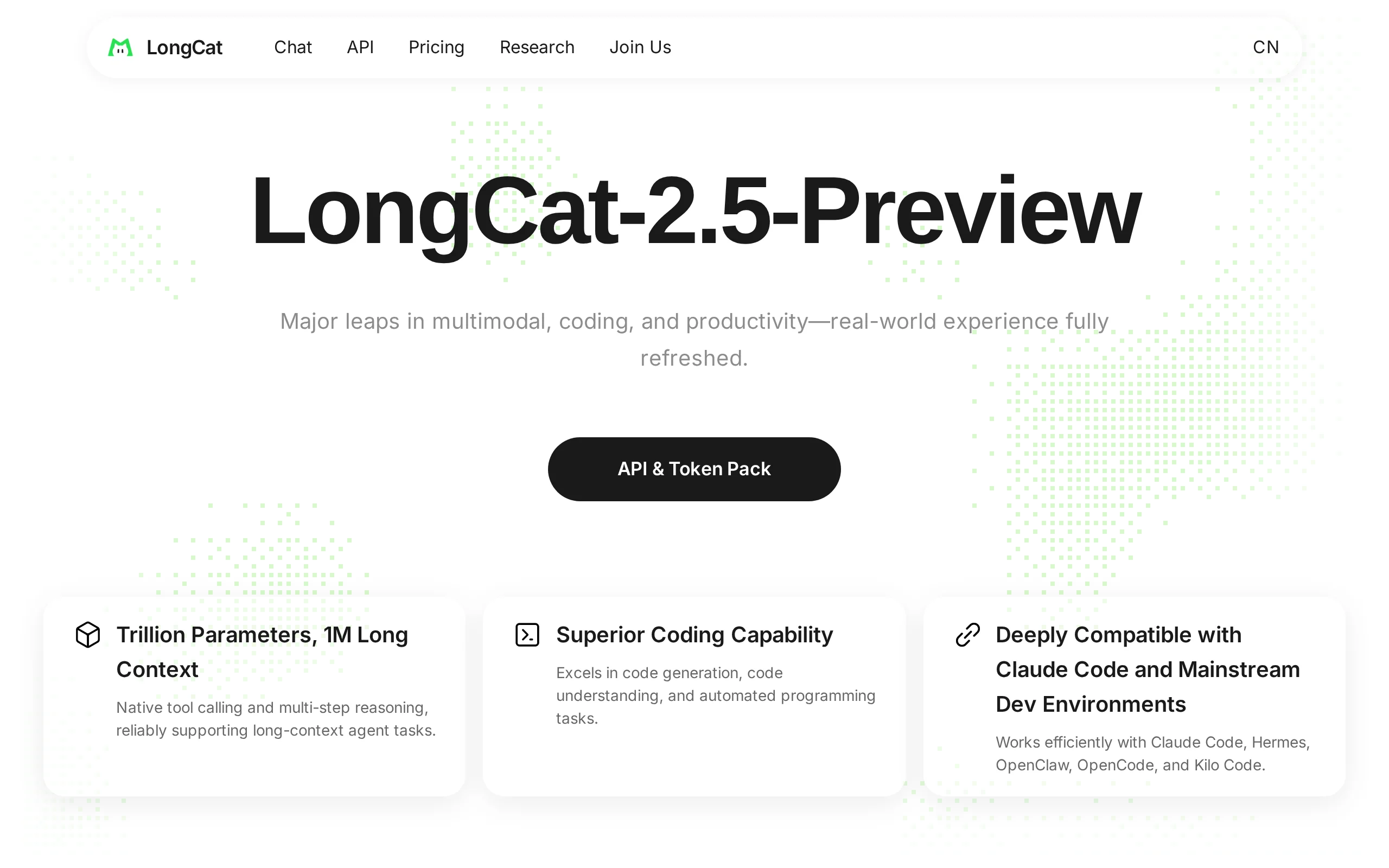
In-Depth Review of Longcat-2.5-preview: Meituan's Next-Generation Multimodal Long-Range Agent Model
LongCat-2.5-preview is Meituan's latest next-generation large model. Building upon the 1.6T total parameters, approximately 48B active parameters, and native 1M token context of LongCat-2.0, it marks ...
Xiaomi MiMo-V2.6 – Xiaomi's Open-Source Multimodal Model Series
Xiaomi MiMo-V2.6 is a series of fully multimodal models released and open-sourced by Xiaomi, comprising two native full-modal models: Pro and Flash. It is centered on large-scale Agentic reinforcement...
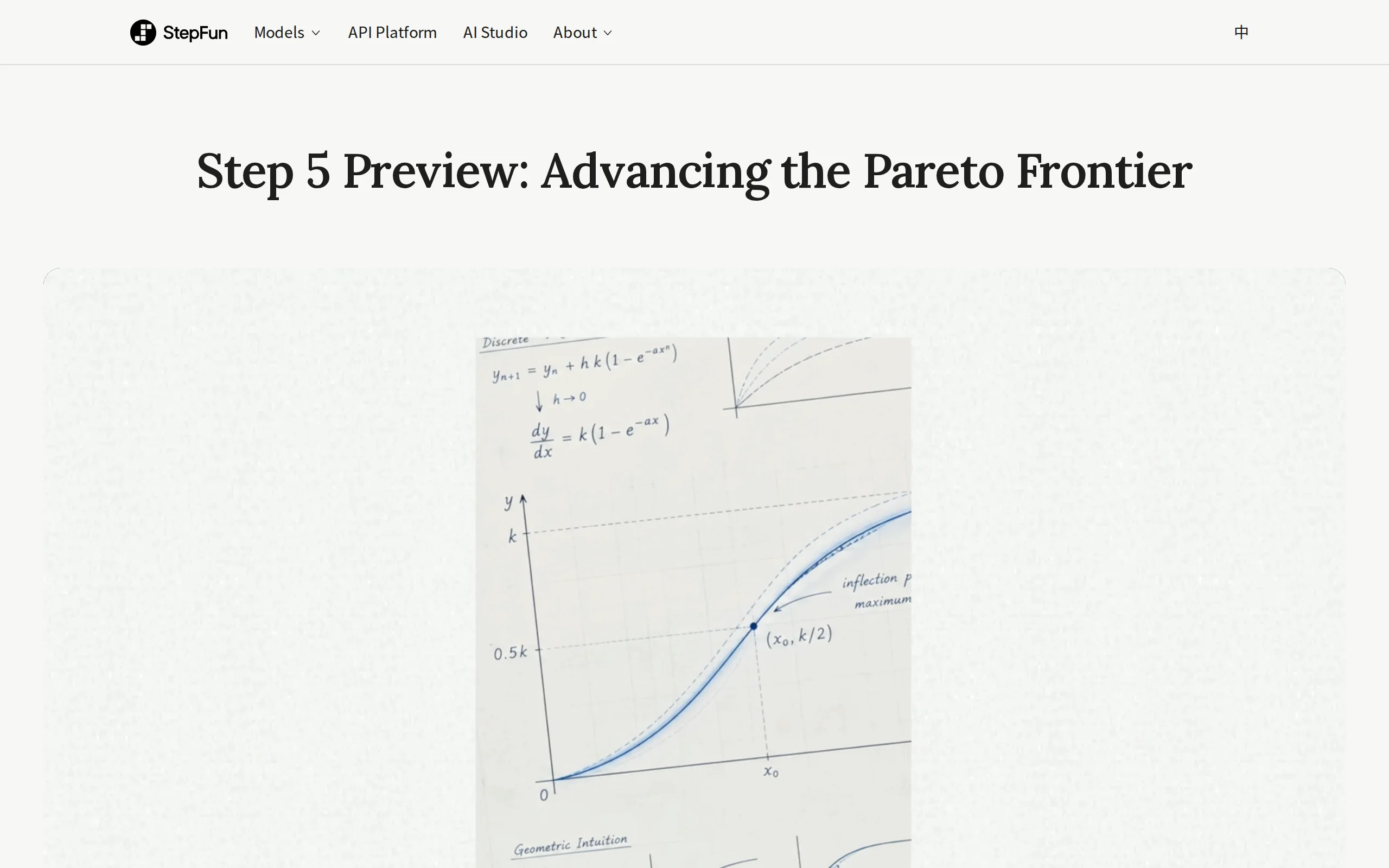
In-Depth Review of Step 5 Preview: A 600B Sparse MoE Flagship with 1M Token Context and 1/8 Cost Advantage
Step 5 Preview is a new-generation flagship foundation model launched by StepFun, designed for real-world Agentic tasks. Based on a sparse MoE architecture, the model has a total of 600B parameters bu...
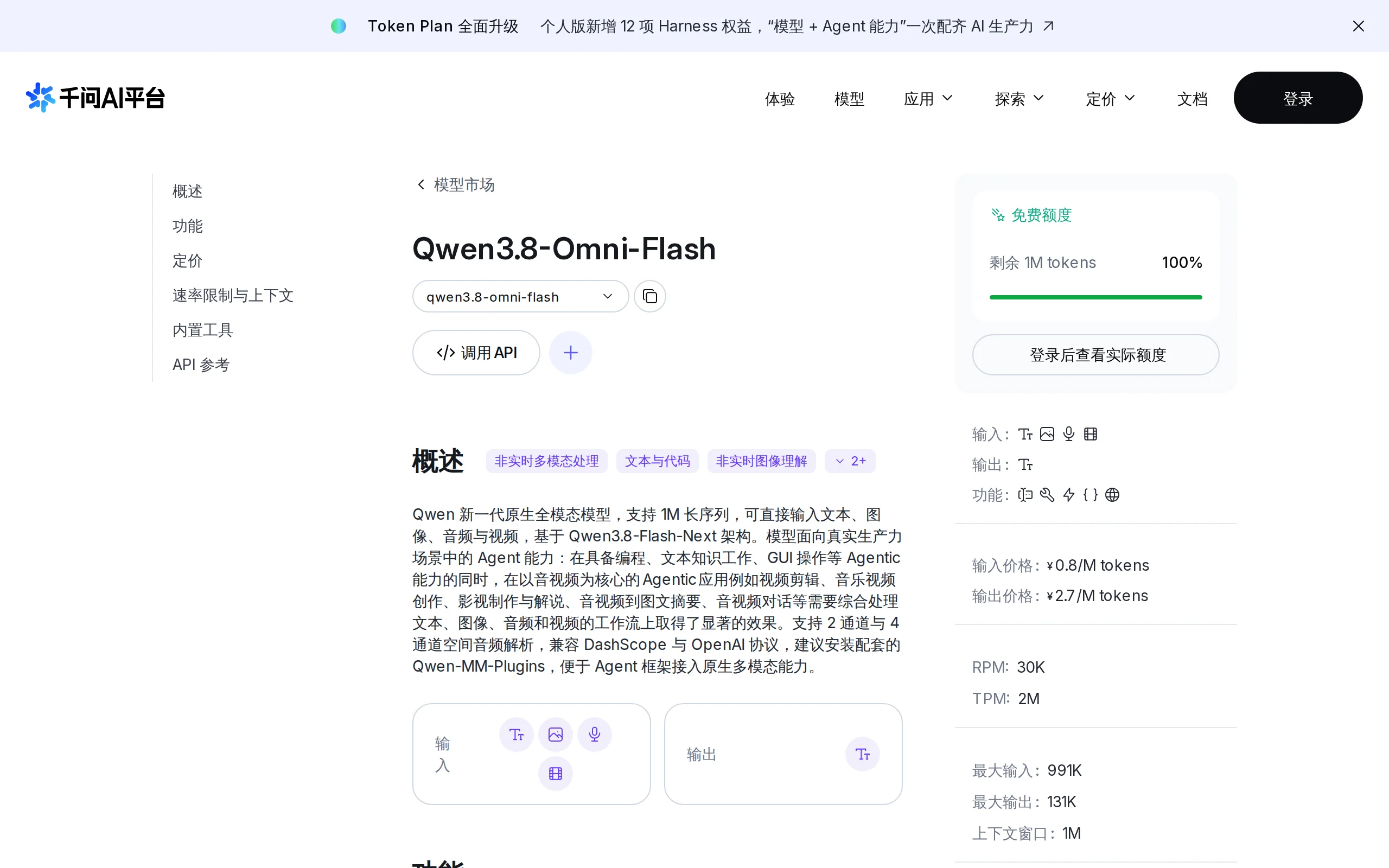
Qwen3.8-Omni-Flash – A Native Multimodal Model Launched by Alibaba Qwen
Qwen3.8-Omni-Flash is a native multimodal model launched by Alibaba Qwen. It jointly models four modalities—text, image, audio, and video—within a single architecture, supporting a context length of u...
© All Rights Reserved. Some content on this site is partially generated by AI with human review.