
Shieldstral – Mistral AI's Open-Source Multimodal Content Safety Classification Model

Executive Summary:
Shieldstral is an open-source 3B parameter multimodal content safety classification model launched by Mistral AI, built upon the Ministral-3B foundation. This model redefines traditional fixed-categor...
1. What is Shieldstral
Shieldstral is an open-source 3B parameter multimodal content safety classification model launched by Mistral AI, built upon the Ministral-3B foundation. This model redefines traditional fixed-category content moderation as a binary question-answering task, enabling real-time definition of moderation policies through natural language queries, without the need for retraining to adapt to different scenarios. The model achieves an average F1 score of 84.9% on text safety benchmarks and 83.8% on multimodal safety benchmarks, both of which are currently state-of-the-art. It can be deployed on a single 16GB GPU, supports 12 languages, and balances performance, flexibility, and deployment cost-effectiveness.
Image source: Official article
Image source: official article
Technical positioning and domain: Shieldstral belongs to the intersection of natural language processing and computer vision, focusing on content safety moderation and multimodal harmful content detection. Its unique positioning lies in transforming the traditional fixed classification system into a configurable binary question-answering task. By using a structured input with three fields (Instruction, Query, Document), it enables policy-adaptive moderation, significantly distinguishing it from conventional fixed-category classifiers. The model is suitable for scenarios requiring dynamic adjustment of moderation standards, such as social platform content risk control, AI dialogue safety protection, advertising compliance, and online education filtering, filling the gap in lightweight, customizable multimodal safety models.
Development background: Developed by the Mistral AI team, Shieldstral is built on its self-developed Ministral-3B base model, using large-scale contrastive training and synthetic data augmentation techniques. Mistral AI has deep experience in the open-source large model domain, with previous models such as Mistral 7B and Mixtral 8x7B widely recognized for their performance and efficiency. The motivation behind Shieldstral's development stems from real-world pain points in content moderation scenarios, including frequent policy changes, mixed multimodal content, and high deployment costs. It aims to provide a safety moderation solution that can adapt to different policies without retraining and can run on consumer-grade GPUs.
Core value: It addresses the core issue of traditional content moderation models requiring retraining for new scenarios and being difficult to dynamically adjust policies. By defining moderation standards in real-time through natural language queries, operational personnel can directly describe compliance requirements in text, and the model responds immediately, significantly reducing the time and human cost of content safety policy iteration. Additionally, its unified multimodal detection capability allows a single model to process text, images, and mixed text-image content simultaneously, avoiding the complexity and latency introduced by cascading multiple models. Its lightweight deployment feature (single 16GB GPU) further lowers the threshold for private deployment by small and medium-sized enterprises.
2. Key Features
Policy-Adaptive Moderation: Input security policies in the form of natural language questions to enable real-time customized moderation across different scenarios. Operations personnel can simply modify the question description in the Query field to switch moderation standards, without the need to retrain the model, significantly improving policy iteration efficiency.
Unified Multimodal Detection: A single interface handles the safety evaluation of plain text, images, and mixed text-image content. The model includes built-in visual and text encoders that can integrate multimodal information for comprehensive judgment, avoiding the cumbersome process of separately invoking text and image moderation models in traditional approaches.
Fine-Grained Violation Identification: Supports detection ranging from coarse-grained binary judgment (violation/compliant) to a detailed safety classification with 73 leaf categories. Users can select the classification granularity based on business needs—for example, enabling all 73 categories in strict mode or using only binary judgment in fast screening mode, flexibly balancing accuracy and efficiency.
Calibrated Safety Scoring: Outputs a continuous safety score in the 0–1 range using softmax normalization, with a default threshold of 0.5 for violation determination. This score has probabilistic significance, allowing operations personnel to adjust the threshold based on risk preferences and providing a basis for prioritizing manual reviews.
Lightweight Edge Deployment: A 3B parameter scale can perform efficient inference on a single 16GB NVIDIA GPU (such as the RTX 4090), with inference latency in the millisecond range, meeting the requirements of real-time moderation scenarios. Compared to similar 7B models that require 24GB+ GPU, deployment costs are significantly reduced.
Multilingual Support: Covers 12 languages, including English, Chinese, French, German, Spanish, Arabic, and others, to meet global content moderation needs. The model has undergone comparative training across multiple languages, resulting in minimal performance degradation in non-English scenarios.
3. How to Use
Environment Requirements and Deployment: A server equipped with a single 16GB NVIDIA GPU (such as RTX 4090, A10, A100, etc.) is required. It is recommended to use Linux (Ubuntu 22.04+) as the operating system. Install Python 3.10+ and PyTorch 2.0+. Load the model using the HuggingFace Transformers library. It is recommended to use the vLLM or Text Generation Inference framework to optimize inference performance.
Define Review Scenario and Strictness: Specify the evaluation scenario, domain context, and strictness criteria in the
<Instruct>field. For example:You are a content moderator for a social media platform. Strictness: high. Focus on hate speech, violence, and harassment.This field provides context to the model and influences the bias of subsequent judgments.Write Secure Queries: Construct binary yes/no questions in the
<Query>field, with the question clearly pointing to a specific safety category. For example:Does the content contain hate speech targeting a protected group?orIs there any depiction of physical violence in the image?Queries can include multiple conditions, but it is recommended to evaluate one dimension at a time to maintain clarity.Input Content for Review: Enter text, image URL, or a combination of text and images into the
<Document>field. For images, convert them to base64 encoding or provide an accessible URL. The model will automatically extract image features and fuse them with text. When submitting, ensure the input is formatted using the model's accompanying tokenizer.Obtain and Interpret Results: After the model outputs logits, they are normalized via softmax to produce two values (the probabilities of yes and no), where the yes probability represents the safety score. By default, a violation is determined if the score exceeds 0.5. Thresholds can be adjusted based on business needs—for example, set to 0.3 in strict mode or 0.7 in lenient mode. The output format is JSON, containing the score and judgment result.
Notes: Ensure that the input text does not exceed the model's maximum context length (default 8192 tokens). For long documents, segment them for processing. It is recommended that image resolution does not exceed 1024×1024, as higher resolutions may affect inference speed. The model weights file is approximately 6GB in size and needs to be downloaded on the first load; it is advisable to pre-cache it.
4. Pros and Cons Analysis
| Pros |
|---|
| Flexible and Adaptive Strategy: Define review criteria in real-time through natural language queries, adapting to new scenarios without retraining, significantly reducing the cost of strategy iteration. |
| Superior Performance Among Peers: The 3B parameter model achieves SOTA results on both text and multimodal safety benchmarks, with a multimodal F1 score of 83.8%, surpassing OmniGuard (77.6%) with a 7B parameter scale. |
| Hardware-Friendly Deployment: Can run on a single 16GB GPU, supporting consumer-grade GPUs such as the RTX 4090, significantly lowering the threshold for enterprise private deployment. |
| Highly Interpretable Decision-Making: Outputs calibrated continuous safety scores rather than black-box classification labels, allowing operations personnel to adjust judgment strictness based on score thresholds, facilitating manual review and compliance audits. |
| Permissive Open-Source License: Uses the Apache 2.0 license, with full open-sourcing of code and model weights, supporting both commercial and academic use without additional restrictions. |
5. Comparative Analysis with Similar Tools
| Dimension | Shieldstral (3B) | OmniGuard (7B) | Llama Guard 3 (8B) |
|---|---|---|---|
| Parameter Scale | 3 billion | 7 billion | 8 billion |
| Open Source License | Fully open-sourced under Apache 2.0 | Commercial-oriented, not fully open-sourced | Fully open-sourced under Apache 2.0 |
| Policy Adaptability | Supports real-time definition of review policies via natural language queries | Fixed classification system, requires retraining for adjustments | Fixed classification system, no support for dynamic policies |
| Multimodal Support | Text, image, text-image hybrid | Text, image, text-image hybrid | Only text |
| Multimodal F1 | 83.8% (SOTA) | 77.6% | N/A (only text) |
| Deployment Threshold | Single 16GB GPU | Requires higher computational power (recommended 24GB+) | Recommended 24GB+ GPU (for 8B model) |
| Language Support | 12 languages | Specific number not disclosed | 11 languages (based on Llama 3) |
Selection Recommendations: For scenarios requiring highly flexible policy customization and multimodal review capabilities (such as social platforms and AI dialogue safety), Shieldstral is currently the optimal choice. Its natural language query adaptability mechanism allows operations teams to adjust review standards without requiring machine learning expertise, and its single-card deployment cost is significantly lower than similar 7B models. If the primary focus is on reviewing English text and policies are relatively fixed, Llama Guard 3, as a mature open-source solution from Meta, offers broad community support and a rich set of tools, making it suitable for teams with established classification needs. For enterprises aiming to minimize operational burdens and quickly integrate review capabilities, the OpenAI Moderation API is ready-to-use, with the broadest language coverage. However, it lacks customization and data privacy controls, and long-term usage costs may exceed those of self-hosted solutions. Although OmniGuard has a larger parameter scale, its multimodal performance is inferior to Shieldstral, and its open source license is less favorable. It is recommended to consider OmniGuard only when higher parameter redundancy is required.
6. Editor's Summary
Shieldstral stands out in terms of technological innovation, with its core contribution being the transformation of content moderation from a fixed multi-classification task into a configurable binary question-and-answer task. This design fundamentally addresses the issue of rigid strategies in traditional moderation models. Through structured input with three fields and large-scale contrastive training, the model achieves performance that surpasses 7B models while operating with only 3B parameters, validating the effectiveness of the "externalized strategy" approach. The use of synthetic data augmentation and the combined LoRA+SLERP technique in training also highlights Mistral AI's engineering expertise in efficient fine-tuning.
In terms of practical value, Shieldstral significantly reduces the deployment and operational costs of content security moderation. It can run on a single 16GB GPU, enabling small and medium-sized enterprises to have private moderation capabilities and avoid the leakage of sensitive data. The ability to define strategies using natural language allows non-technical operations personnel to directly participate in setting moderation standards, shortening the strategy iteration cycle. Unified multi-modal detection reduces system complexity, allowing it to directly replace multiple independent moderation modules in scenarios such as social platforms and AI conversations.
The target audience primarily includes: content security operations teams, platform providers requiring flexible adjustments to moderation policies, AI application developers looking to embed a security filtering layer into their products, and research institutions exploring explainable safety classification methods. For teams pursuing top-tier performance, domain-specific fine-tuning based on Shieldstral is a viable option, and its Apache 2.0 license facilitates this process.
In terms of future development potential, Shieldstral's architecture offers strong scalability. In the future, it can support more fine-grained categories, additional modalities (such as audio and video), or be further compressed for edge devices through model distillation. However, the current version's performance on non-English languages such as Chinese still requires more community validation, and the documentation and toolchain need further refinement. Overall, Shieldstral represents a promising open-source alternative in the field of content security, particularly suitable for teams seeking a balance between flexibility and cost.
7. Application Scenarios
Social Platform Content Moderation: Real-time review of user-posted text and image content, dynamically adapting to the compliance standards of different communities. Operations personnel can set review criteria for different sections via natural language in the backend (e.g., strict for the news section, lenient for the entertainment section), and the model takes effect immediately without requiring retraining.
AI Dialogue Security Protection: Detect jailbreak attacks in user prompts and harmful, biased responses in model outputs. Can be integrated into the inference process of chatbots to assign safety scores to both input and output, triggering interception or replacement responses if scores exceed predefined thresholds.
Advertising and Marketing Compliance: Automatically screen for non-compliant text and image elements in advertising materials to ensure legal content across platforms. Supports simultaneous analysis of ad copy and visuals, identifying false advertising, discriminatory content, and inappropriate imagery, thereby reducing the workload of manual reviews.
Online Education Content Filtering: Identify inappropriate information in course materials and interactions to protect the learning environment of minors. Supports multi-modal review of presentation text, teaching images, and discussion forum posts, filtering out violent, pornographic, or bullying content, while retaining audit logs for compliance checks.
Corporate Document Security Audit: Automate the detection of sensitive information and non-compliant content in internal multi-language documents. Supports text extraction from formats such as PDF and Word, combined with image review capabilities to scan for non-compliant text and images in documents, suitable for compliance management in multinational corporations.
8. FAQ
Q: Is Shieldstral completely free for commercial use?
A: Yes, the model is licensed under Apache 2.0, with the code and weights fully open-sourced. It allows for commercial use, modification, and redistribution without requiring additional authorization.
Q: What hardware configuration is required to deploy Shieldstral?
A: The minimum requirement is a single NVIDIA GPU with 16GB of VRAM (such as RTX 4090, A10, A100, etc.). It is recommended to use a GPU with 24GB of VRAM for faster inference speeds. CPU inference is not recommended due to high latency.
Q: Which languages are supported? How effective is it for Chinese?
A: The official claim is that it supports 12 languages, including English, Chinese, French, German, Spanish, Arabic, and others. However, the official benchmarks are primarily based on English, and specific F1 scores for Chinese scenarios have not been independently published. It is recommended that users test it on Chinese datasets themselves.
Q: How can I customize the moderation policies?
A: This can be achieved by modifying the <Instruct> and <Query> fields in the input. <Instruct> describes the moderation scenario and strictness, while <Query> is used to write binary safety questions. For example, changing the Query from "Does it contain hate speech?" to "Does it contain violent content?" will switch the moderation dimension.
Q: How are images input during multimodal moderation?
A: Images must be input in the form of base64 encoding or a publicly accessible URL within the <Document> field. The model uses a visual encoder internally to extract features, which are then fused with text features. It is recommended that image resolution does not exceed 1024×1024.
Q: What are the advantages of Shieldstral compared to OpenAI Moderation API?
A: Shieldstral is fully open-source and can be self-deployed, keeping data within the server for stronger privacy protection. It supports real-time definition of policies using natural language, offering much greater flexibility than OpenAI's fixed categories. Additionally, there are no API call costs, making long-term usage costs controllable.
Q: How should the model's output scores be interpreted?
A: The output consists of two probability values (yes and no). The yes probability represents the safety score (ranging from 0 to 1). The default threshold is 0.5, and if the score is greater than 0.5, it is classified as violating. The closer the score is to 1, the higher the confidence in the violation. The threshold can be adjusted according to business needs.
9. Project Links
- Project Website (Official Release Page): https://mistral.ai/news/shieldstral/
- HuggingFace Model Repository: https://huggingface.co/mistralai/Shieldstral-1.0-3B
- arXiv Technical Paper: https://arxiv.org/pdf/2607.25857
Related AI Model Articles
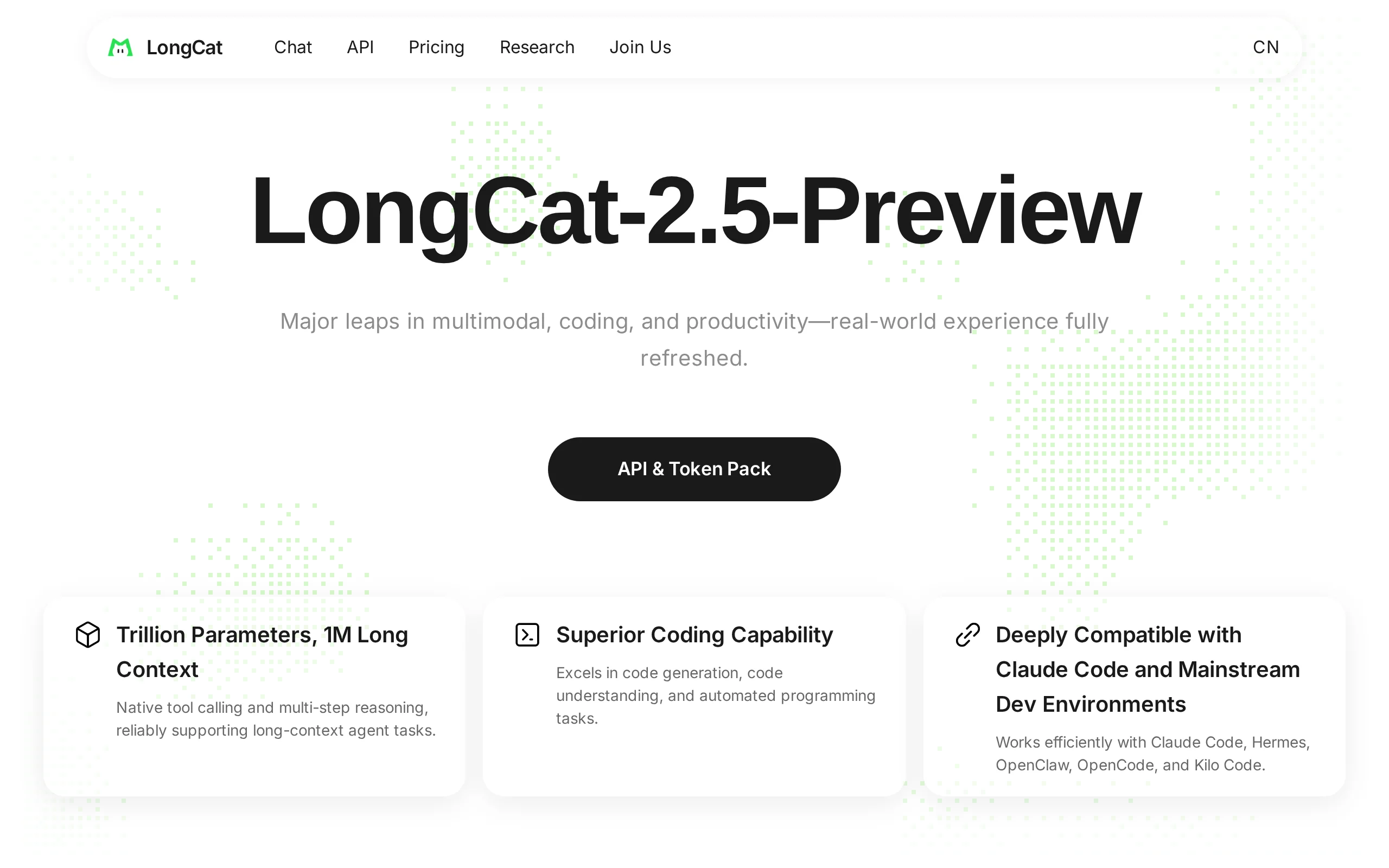
In-Depth Review of Longcat-2.5-preview: Meituan's Next-Generation Multimodal Long-Range Agent Model
LongCat-2.5-preview is Meituan's latest next-generation large model. Building upon the 1.6T total parameters, approximately 48B active parameters, and native 1M token context of LongCat-2.0, it marks ...
Xiaomi MiMo-V2.6 – Xiaomi's Open-Source Multimodal Model Series
Xiaomi MiMo-V2.6 is a series of fully multimodal models released and open-sourced by Xiaomi, comprising two native full-modal models: Pro and Flash. It is centered on large-scale Agentic reinforcement...
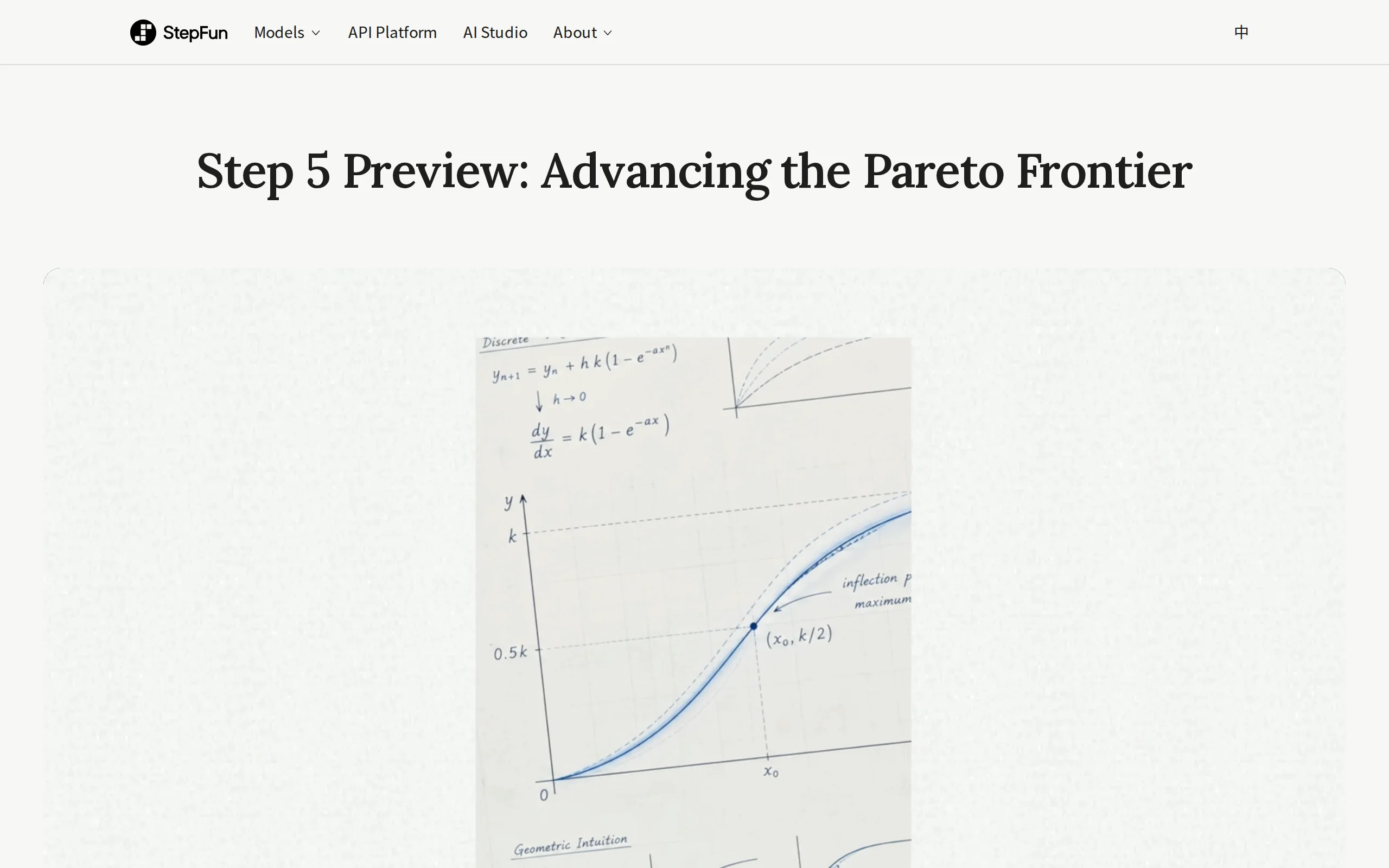
In-Depth Review of Step 5 Preview: A 600B Sparse MoE Flagship with 1M Token Context and 1/8 Cost Advantage
Step 5 Preview is a new-generation flagship foundation model launched by StepFun, designed for real-world Agentic tasks. Based on a sparse MoE architecture, the model has a total of 600B parameters bu...
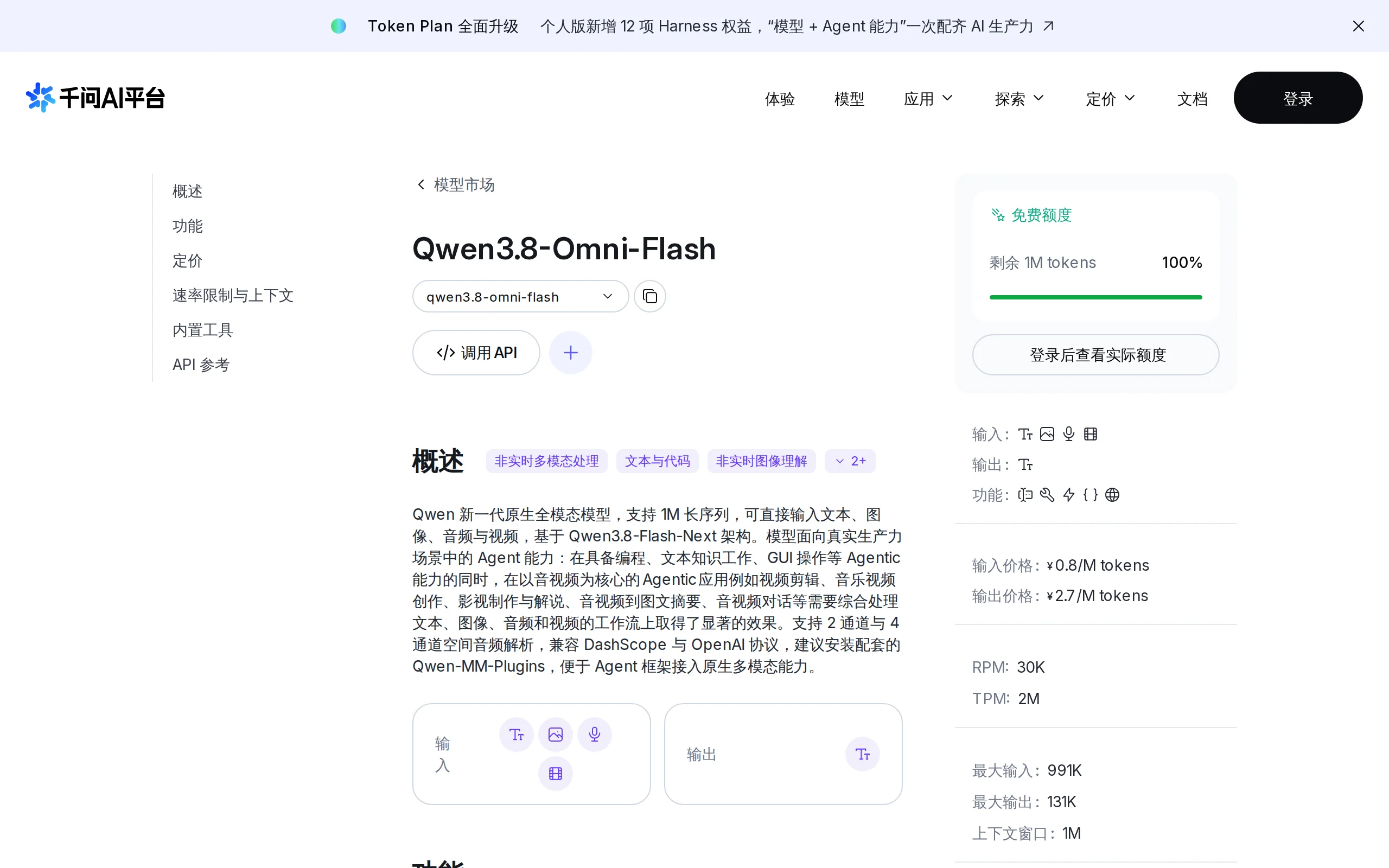
Qwen3.8-Omni-Flash – A Native Multimodal Model Launched by Alibaba Qwen
Qwen3.8-Omni-Flash is a native multimodal model launched by Alibaba Qwen. It jointly models four modalities—text, image, audio, and video—within a single architecture, supporting a context length of u...
© All Rights Reserved. Some content on this site is partially generated by AI with human review.