
SenseNova-Vision – SenseTime's Open-Source Unified Vision Large Model for Understanding and Generation
Executive Summary:
SenseNova-Vision is an open-source unified vision large model developed by SenseTime, capable of both understanding and generating visual content. Its core innovation lies in natively integrating clas...
1. What is SenseNova-Vision
SenseNova-Vision is an open-source unified vision large model developed by SenseTime, capable of both understanding and generating visual content. Its core innovation lies in natively integrating classical visual tasks such as object detection, image segmentation, depth prediction, and 3D reconstruction into the model's foundation, without requiring task-specific heads or architectural modifications. Based on the Unified Multimodal Generation (UMM) framework, SenseNova-Vision can define any visual task through natural language instructions, and output text-based symbolic records, image-based dense predictions, or mixed formats. SenseNova-Vision exhibits zero-shot generalization capabilities, effectively handling extreme scenarios such as cross-domain game scenes and mirror reflections, achieving professional-level performance across four major task categories: structured perception, dense geometry, segmentation, and multi-view 3D.
Technical Positioning and Domain: This model belongs to the intersection of computer vision and multimodal large models, positioned as a "unified understanding and generation" vision foundation model. Unlike the traditional "expert model packaging" paradigm, this model unifies tasks such as detection, segmentation, and depth estimation within a single generative framework, breaking down architectural fragmentation between different visual tasks and offering a new paradigm for visual AI.
Development Background: Developed by the OpenSenseNova team at SenseTime. With deep expertise in computer vision, SenseTime has experience across multiple domains, including facial recognition, autonomous driving, and medical imaging. The motivation behind creating SenseNova-Vision was to address the issue of "task fragmentation" in current visual models—where each task requires an independently trained specialized model, lacking a unified base representation. This model aims to unify structured perception (e.g., detection, OCR) and dense prediction (e.g., depth, segmentation) within a single generative framework, leveraging the reasoning capabilities of large language models to enhance visual tasks.
Core Value: It resolves the fundamental limitations of traditional visual models in task definition, architectural adaptation, and generalization capabilities. Specific values include: (1) New visual tasks can be defined using natural language instructions, without the need for retraining or modifying the model architecture, significantly lowering the development threshold for visual tasks; (2) It natively unifies structured perception (symbolic output) and dense prediction (image output), breaking down the barriers between these two output paradigms; (3) It possesses zero-shot cross-domain generalization capabilities, demonstrating robust performance on extreme scenarios such as game scenes and mirror reflections that are not present in the training set, thereby enhancing the model's robustness in practical applications.
Technical Features: It employs the Unified Multimodal Generation (UMM) architecture, where the text and image output spaces are natively unified, eliminating the need for task-specific heads or architectural changes. The model has "language programmability," allowing natural language instructions to define task categories, output formats, color regions, and other composite conditions. Additionally, the team has constructed the SenseNova-Vision Corpus (50 million examples), converting heterogeneous visual annotations into instruction-response pairs, thereby enabling high-quality data from the visual domain to "feed back" into the large model foundation, further strengthening the model's understanding and generation capabilities.
2. Key Features
Structured Perception (Symbolic Tasks): A single model supports symbolic recording tasks such as object detection, OCR text recognition, keypoint detection, and GUI element localization, outputting coordinates and labels in text format. This capability enables the model to perform "visual telepathy," precisely extracting structured information from images through language instructions, making it suitable for applications such as automated annotation and UI automation testing.
Image Segmentation (Ultra-Dense Scenes): Covers various subtasks including semantic segmentation, instance segmentation, panoptic segmentation, interactive segmentation, reasoning segmentation, and GCG segmentation. In ultra-dense scenes with highly overlapping and color-similar objects (e.g., crowded fish schools, supermarket shelf products), it can achieve "surgical-level" precision in individual object separation, significantly outperforming traditional segmentation models in ultra-dense scenarios.
Dense Geometric Prediction: Natively outputs pixel-aligned spatial prediction results such as depth maps and surface normal maps, using conditional image generation instead of traditional regression heads. This means the model can understand spatial geometric structures and generate continuous, smooth dense predictions, applicable to applications requiring precise spatial information such as 3D scene reconstruction, indoor navigation, and AR mapping.
Multi-View 3D Reconstruction: Achieves 3D reconstruction and camera pose estimation based on multiple input images, supporting point cloud and pose parameter outputs. This feature integrates multi-view geometric reasoning into the generative framework, enabling the conversion from 2D images to 3D structures without the need for additional 3D-specific modules, providing a lightweight solution for scenarios such as autonomous driving, robotics, and digital twins.
Zero-Shot Cross-Domain Generalization: Demonstrates strong cross-domain adaptability for scenarios such as game screens, mirror reflections, and extreme lighting conditions that are outside the training set. The model's language reasoning and visual perception capabilities are intertwined, allowing it to simultaneously output normals, segmentation masks, and keypoint coordinates without targeted fine-tuning, significantly reducing adaptation costs for real-world deployment.
Language-Programmable Task Definition: Users can define entirely new visual tasks using natural language instructions, supporting combined conditions such as category, color, and region. For example, inputting "Please detect all red circular objects in the image and output their center coordinates and radii" allows the model to automatically understand and execute the task without any code changes or model retraining, greatly enhancing the flexibility and scalability of visual tasks.
3. How to Use
Environment Setup: Clone the GitHub repository (
git clone (link to be updated after official release)), and ensure you have Python 3.8+ and CUDA 11.7+ environments installed. Download the pre-trained model weights. It is recommended to use NVIDIA A100 or V100 GPUs, with a minimum VRAM requirement of 24GB.Model Loading: Load the model based on the Bagel UMM architecture. In the code, import the model class via
from model import SenseNovaVision, and usemodel.load_pretrained(weights_path)to load the pre-trained weights. The model supports FP16 mixed-precision inference, which can reduce VRAM usage by approximately 40%.Task Execution: Prepare the input image (supporting JPG and PNG formats), and write the task instruction in natural language. Execute the inference by calling the
model.infer(image_path, instruction)method. Example instructions include: "Detect all faces in the image and output bounding boxes", "Generate a depth map and save it as PNG", "Extract text from the image and output the text".Result Processing: Parse the output based on its type. For text-based outputs (e.g., coordinates, labels), directly use Python's string parsing libraries to extract the data. For image-based outputs (e.g., depth maps, normals, segmentation masks), perform post-processing using OpenCV or PIL libraries. Users can flexibly adjust task definitions by modifying the natural language instructions, without needing to change the code.
Best Practices: In ultra-dense segmentation scenarios, it is recommended to use the
--resolution 1024parameter to increase input resolution. For zero-shot generalization, perform simple histogram equalization preprocessing on the image to improve performance under extreme lighting conditions. The model supports batch inference; it is recommended to combine multiple task instructions into a single batch to improve throughput.
4. Pros and Cons Analysis
| Pros |
|---|
| Native Unified Architecture: Integrates classical visual tasks such as detection, segmentation, depth estimation, and 3D reconstruction natively into the large model foundation, without requiring task-specific heads or architectural modifications. This completely breaks the fragmented model of "expert models packaged and encapsulated." |
| Strong Zero-Shot Generalization Ability: Demonstrates robust cross-domain adaptability for extreme scenarios such as game visuals and mirror reflections outside the training set, capable of simultaneously outputting normals, segmentation, and key points without targeted retraining. |
| Language Programmability: New visual tasks can be defined using natural language instructions, supporting combined conditions such as category, color, and region, greatly enhancing the flexibility and scalability of visual tasks. |
| Complete Open-Source Ecosystem: The model and the 50 million example SenseNova-Vision Corpus are fully open-sourced, supporting academic reproduction, secondary development, and cross-domain visual task research. |
5. Comparative Analysis with Similar Tools
| Comparison Dimension | SenseNova-Vision | Vision Banana |
|---|---|---|
| Core Architecture | Unified Multimodal Generation (UMM), natively unified text and image output spaces | Unified on the image generation side, with unification limited to the image side |
| Task Coverage | Detection, OCR, keypoint, segmentation, depth, normal, 3D, pose | Primarily dense prediction, struggles with structured symbolic tasks |
| Output Space | Three native modalities: text, image, and text-image hybrid | Primarily image output, lacks symbolic recording capabilities |
| Language Control | Tasks, format, and regions defined via natural language instructions, supports complex reasoning | Supports language conditioning, but lacks complex reasoning and open instruction-following |
| Zero-shot Generalization | Strong performance in extreme scenarios such as cross-domain games and mirror reflections | Relies on image generation priors, with moderate generalization capability |
| Open Source License | Fully open source (MIT License), with code, model, and dataset all available | Partially open source, model weights are open but dataset is not public |
Selection Recommendations: If you need to perform multiple visual tasks—such as detection, segmentation, depth estimation, and 3D reconstruction—within a single model, and require strong zero-shot generalization capabilities, SenseNova-Vision is the best choice. Its unified architecture and language programmability make it particularly suitable for R&D scenarios where new tasks need to be flexibly defined. If the primary requirement is image segmentation and high real-time performance is needed, SAM provides a more lightweight solution and faster inference speed. Vision Banana is suitable for scenarios requiring dense prediction (such as depth and normals) but not structured symbolic output. Its unification on the image generation side may be more efficient for specific tasks.
6. Editor's Summary
SenseNova-Vision demonstrates significant breakthroughs in technological innovation. Its core contribution lies in proposing a "unified understanding and generation" visual model paradigm, integrating traditionally separate tasks—such as object detection, image segmentation, depth prediction, and 3D reconstruction—into a single generative framework. This design not only eliminates architectural redundancy caused by task-specific heads, but more importantly enables "knowledge sharing" between visual tasks—language reasoning capabilities can enhance visual perception, and visual data can, in turn, improve the model's understanding abilities. From a technical implementation perspective, the Unified Multimodal Generation (UMM) architecture and a 50-million example instruction-response dataset represent two major innovations. The former addresses the issue of heterogeneous output spaces, while the latter provides a high-quality foundation for training data.
In terms of practical value, SenseNova-Vision's zero-shot generalization capability and language programmability significantly reduce the development threshold for visual tasks. Users no longer need to train multiple specialized models; instead, they can define new tasks using natural language instructions. This has direct application value in scenarios such as automated annotation, UI testing, and digital content creation. Its ultra-dense segmentation capability offers precision that traditional models struggle to achieve in industrial quality inspection and smart warehousing applications.
This model is primarily suitable for the following groups: computer vision researchers (for exploring unified visual paradigms), AI application developers (who require flexible definition of visual tasks), digital content creators (who need zero-shot parsing of game scenes, etc.), and engineers in the industrial automation field (who require high-precision segmentation and spatial understanding). In the future, as inference speed is optimized and Chinese support is further improved, SenseNova-Vision is expected to find applications in more scenarios with high real-time requirements. Its design philosophy of a unified architecture may also influence the development direction of subsequent visual models.
7. Application Scenarios
Digital Content Creation: Zero-shot parsing of unknown game visuals, simultaneously outputting normal vectors, instance segmentation, and character key points, directly integrated into film visual effects, game development, and virtual reality workflows. Creators no longer need to train dedicated models for each new game or scene, significantly enhancing content production efficiency.
Industrial Warehouse Quality Inspection: Super-dense segmentation capabilities accurately separate overlapping fish schools, densely packed shelf items, and other individual objects, providing new solutions for industrial counting, defect detection, and smart warehousing. In scenarios such as food processing and pharmaceutical sorting, it enables high-precision individual identification and quantity statistics.
Autonomous Driving and Robotics: Filters mirror reflections and restores real spatial geometry, improving the reliability of indoor navigation, AR mapping, and environmental understanding in autonomous driving. The model simultaneously outputs depth maps, normal vectors, and semantic segmentation, providing multi-modal fusion input for environmental perception.
Research and Open Source Ecosystem: The model and its 50 million example dataset are fully open-sourced, supporting academic reproduction, secondary development, and cross-domain visual task research. Researchers can explore new ways to define visual tasks based on this model, or use it as a baseline model for comparative experiments.
8. FAQ
Q: What hardware requirements does SenseNova-Vision have?
A: It is recommended to use NVIDIA A100 or V100 GPUs with a memory requirement of no less than 24GB. Consumer-grade GPUs such as the RTX 3090 (24GB memory) can run the model, but the inference speed will be slower. It supports FP16 mixed-precision inference, which can reduce memory usage by approximately 40%.
Q: What output formats does the model support?
A: The model supports three native output modalities: text format (symbolic records such as coordinates and labels), image format (dense predictions such as depth maps, normals, and segmentation masks), and mixed text-image format (simultaneously outputting text and images). Users can specify the output format using natural language instructions.
Q: How can a new visual task be defined?
A: A new visual task can be defined using natural language instructions without modifying the model code or retraining. For example, inputting "Detect all red circular objects in the image and output their center coordinates and radii" will be automatically understood and executed by the model. It supports combined conditions such as category, color, and region.
Q: How is the model's support for Chinese?
A: The model is primarily optimized for English visual instructions, and there is a noticeable difference in the accuracy of understanding and task execution for Chinese natural language instructions. It is recommended to use English instructions first, or to preprocess Chinese instructions with translation.
Q: What is the model's inference speed?
A: Based on a generative architecture, single inference takes longer, especially with high-resolution inputs and complex task scenarios. On an A100 GPU, the inference time for a single task with a 512x512 resolution image is approximately 200-500 milliseconds. For scenarios requiring high real-time performance, it is recommended to use a dedicated lightweight model.
9. Project Links
- GitHub Repository: https://github.com/OpenSenseNova/SenseNova-Vision
- HuggingFace Model Library: https://huggingface.co/collections/sensenova/sensenova-vision
- arXiv Technical Paper: https://arxiv.org/pdf/2607.06560
Related AI Model Articles
Xiaomi MiMo-V2.6 – Xiaomi's Open-Source Multimodal Model Series
Xiaomi MiMo-V2.6 is a series of fully multimodal models released and open-sourced by Xiaomi, comprising two native full-modal models: Pro and Flash. It is centered on large-scale Agentic reinforcement...
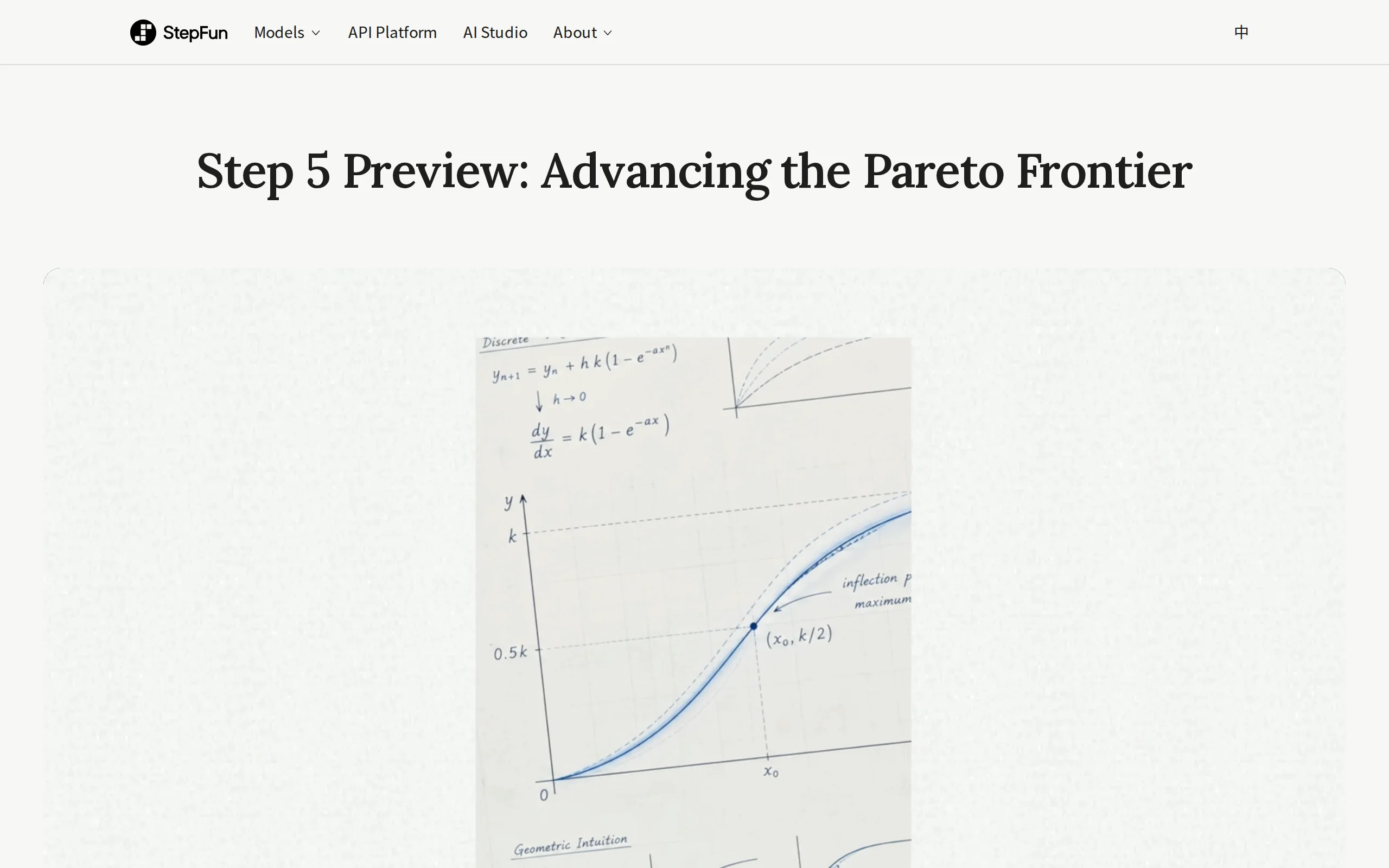
In-Depth Review of Step 5 Preview: A 600B Sparse MoE Flagship with 1M Token Context and 1/8 Cost Advantage
Step 5 Preview is a new-generation flagship foundation model launched by StepFun, designed for real-world Agentic tasks. Based on a sparse MoE architecture, the model has a total of 600B parameters bu...
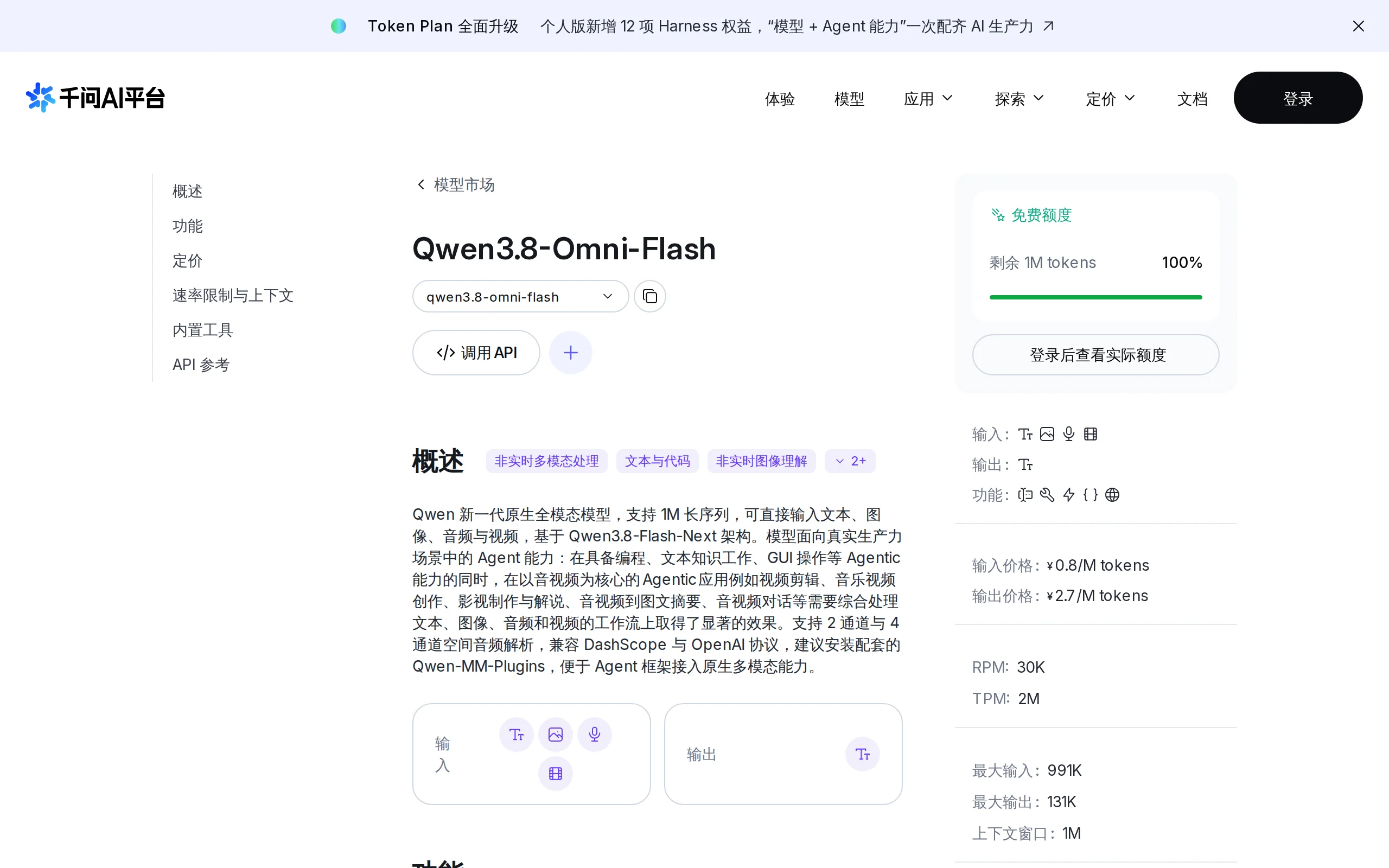
Qwen3.8-Omni-Flash – A Native Multimodal Model Launched by Alibaba Qwen
Qwen3.8-Omni-Flash is a native multimodal model launched by Alibaba Qwen. It jointly models four modalities—text, image, audio, and video—within a single architecture, supporting a context length of u...
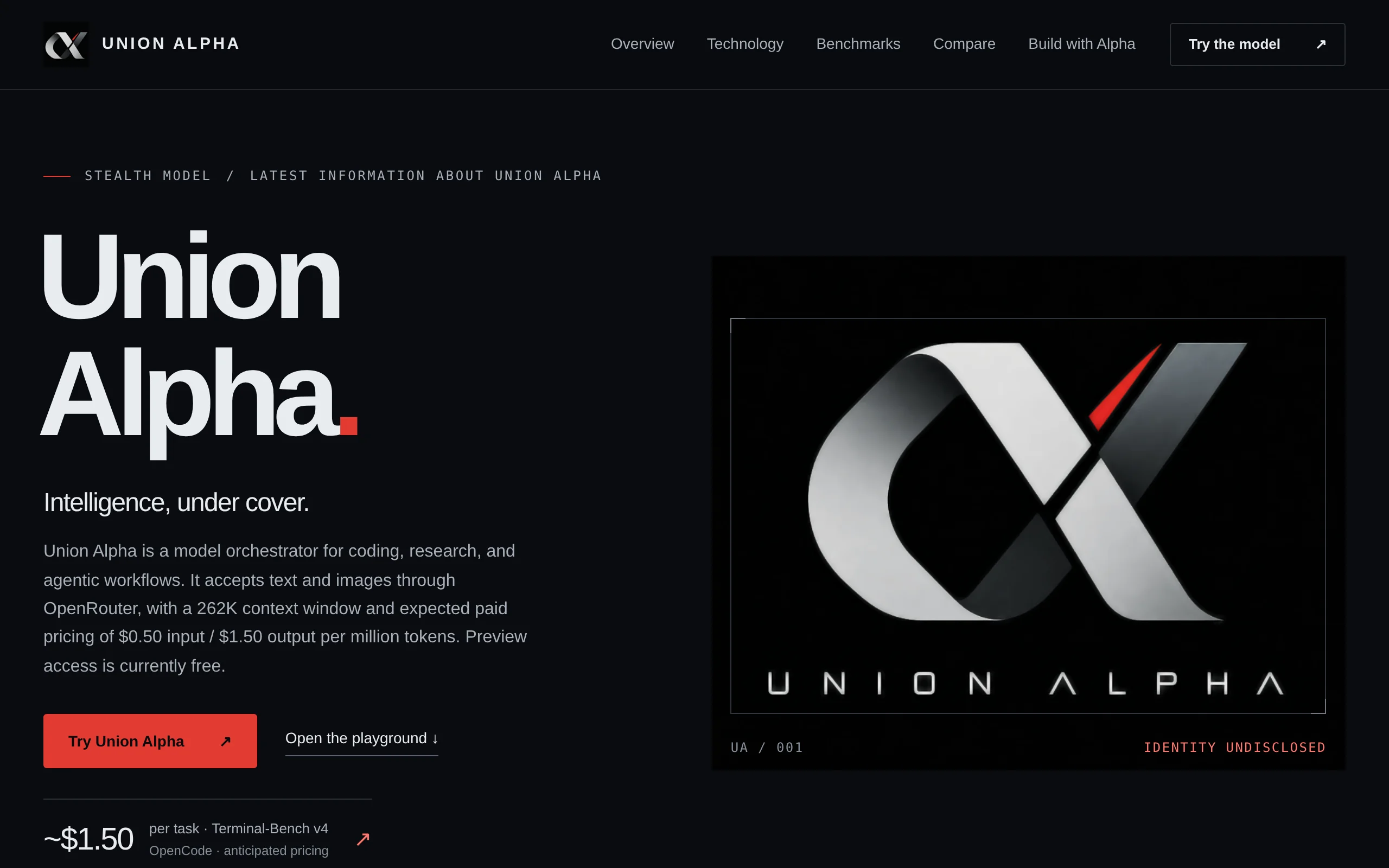
Union Alpha – A Mysterious Multimodal Large Model with Unlimited Free Access for a Limited Time
Union Alpha is a multimodal large language model released in "stealth" mode, recently launched on mainstream AI service platforms such as OpenRouter, Cline, and OpenCode. The model supports dual-modal...
© All Rights Reserved. Some content on this site is partially generated by AI with human review.