
SenseNova U1.5-Lite-Preview – A Lightweight Multimodal Model Open-Sourced by SenseTime
Executive Summary:
SenseNova U1.5-Lite-Preview is the preview version of a lightweight, native unified multimodal model open-sourced by SenseTime, developed iteratively based on the NEO-Unify architecture. With only 8B-...
1. What is SenseNova U1.5-Lite-Preview
SenseNova U1.5-Lite-Preview is the preview version of a lightweight, native unified multimodal model open-sourced by SenseTime, developed iteratively based on the NEO-Unify architecture. With only 8B-MoT parameters, it seamlessly integrates visual understanding, reasoning, generation, and editing. The model natively supports 4K image generation, featuring detailed local textures, realistic world qualities, Chinese and English text generation, and complex layout capabilities. It has been optimized for precise instruction-following with ultra-long natural language and structured visual commands, and is accompanied by the Prompt Enhance Skill to reduce the barriers to complex content creation.
Technical Positioning and Domain: Belongs to the intersection of multimodal generation and understanding, positioned as a lightweight unified multimodal foundation model. Compared to traditional separated architectures, this model achieves native unification of visual understanding, reasoning, generation, and editing within a single framework, providing the community with low-cost, high-controllability foundational capabilities for visual creation.
Development Background: Developed by SenseTime based on its NEO-Unify architecture and released as an open-source preview version of the SenseNova series. With deep expertise in computer vision and deep learning, SenseTime aims to promote the technical validation and community application of unified multimodal models, reducing the threshold for accessing high-performance visual generation models.
Core Value: Achieves 4K ultra-high-definition image generation and detailed texture rendering with only 8B parameters, addressing the bottlenecks of traditional diffusion models in terms of resolution, text rendering, and instruction-following. The model supports Chinese and English text and complex layouts, and has the capability for continuous iterative editing, offering high-controllability solutions for scenarios such as commercial design and concept visualization.
Technical Features: Utilizes the NEO-Unify unified architecture, trained end-to-end from pixels and language to establish a native mapping from linguistic descriptions to visual structures. The 8B-MoT hybrid token design expands the boundaries of multimodal capabilities while maintaining lightweight efficiency, and optimizes the execution of ultra-long context visual instructions, enabling multi-constraint, hierarchical generation control.
2. Key Features
4K Native Generation: The model directly outputs 4K resolution images without requiring post-processing for super-resolution. The end-to-end generation ensures consistency in overall composition and local details, maintaining clear textures even after scaling, making it suitable for large-format commercial materials and narrative scrolls.
Refined Visual Quality: Through the joint modeling of pixel-level semantics using the NEO-Unify architecture, the model can present realistic material textures, lighting layers, and local details. Its performance on materials such as metal, fabric, and skin approaches photographic quality, significantly enhancing visual realism.
Chinese and English Text Generation: The model has been specifically optimized for rendering Chinese and English text, accurately generating textual content in complex layouts, including font styles, alignment, and text deformation. It demonstrates strong stability in scenarios requiring precise text, such as brand posters and infographics.
Image Editing and Iteration: Supports sustainable iterative editing based on natural language instructions. Users can upload an image and add modification descriptions, and the model will perform local adjustments, style transfer, or element replacement while maintaining overall consistency, enabling multi-round interactive creation.
Prompt Enhance Skill: An experimental auxiliary feature that automatically expands brief ideas (e.g., "a cat in the garden") into complete creation plans that include subject, layout, style, and text constraints. It lowers the barrier for users to write instructions, especially benefiting non-professional creators.
Long Context Instruction Following: The model is optimized to understand ultra-long natural language and structured visual instructions, enabling it to stably execute complex generation tasks with multiple constraints and hierarchical descriptions. It maintains high precision even when the instruction length exceeds 500 words.
3. How to Use
Obtain the model and deployment environment: Visit the GitHub repository to review the technical documentation and inference code, or download the 8B-MoT model weights and configuration files from Hugging Face. Deployment requires Python 3.8+, PyTorch 2.0+, and a CUDA 11.8+ environment. It is recommended to use an NVIDIA GPU with at least 16GB of VRAM. Configure dependencies and load the weights according to the documentation to complete model initialization.
Basic image generation: Directly input a natural language description (supporting both Chinese and English), and the model can natively generate 4K images. For example, inputting "a tawny cat sleeping in the sunlight, 4K, photographic style" will yield high-quality results without the need for complex templates. Generation time depends on the hardware configuration and typically completes within tens of seconds.
Complex creation instructions and Prompt Enhance: Provide complete creation requirements that include subject, layout, style, text, and constraints. For example, "place the title text 'Summer' on the left, and a beach background on the right, with an overall warm color palette." The model will execute generation according to the specified visual structure. You can also call the Prompt Enhance Skill to automatically expand a brief idea into a full plan before submitting it to the model, simplifying the workflow.
Image editing and iteration: Upload an existing image and add natural language editing instructions, such as "change the background to a night sky while keeping the subject unchanged." The model will perform sustainable iterative edits while maintaining overall consistency, supporting multiple rounds of modifications. Each edit can be based on the result of the previous round for continued adjustments, enabling fine-grained control.
4. Pros and Cons Analysis
| Pros |
|---|
| Lightweight Unified Architecture: Achieves a unified system for understanding, generating, and editing with just 8B-MoT parameters, reducing deployment costs and memory usage, and enabling inference on consumer-grade GPUs (e.g., RTX 3090). |
| 4K Ultra-HD Native Generation: Outputs 4K resolution images without post-processing, with superior detail and consistency compared to most models with similar parameter counts, offering a clear advantage for large-scale creation. |
| Strong Instruction-Following Capability: Even without specialized formatting training, the model can stably execute long and complex visual instructions, including multi-constraint and hierarchical descriptions, highlighting its practicality. |
| Accurate Chinese and English Text Rendering: The model demonstrates significantly higher accuracy in text generation within complex layouts compared to similar open-source models, making it well-suited for text-intensive scenarios in commercial design. |
5. Comparative Analysis with Similar Tools
| Dimension | SenseNova U1.5-Lite-Preview | Emu3 (Zhuyuan Institute of Research) | Janus (DeepSeek) |
|---|---|---|---|
| Architecture Approach | NEO-Unify end-to-end native unified multimodal, integrating understanding, reasoning, generation, and editing | Native unified multimodal, unified image understanding and generation under autoregressive framework | Unified multimodal understanding and generation, based on autoregressive architecture |
| Open Source Scale | 8B-MoT lightweight open source, available for community preview | Provides multiple size open source versions (e.g., 8B), with complete training code and data pipeline | Open sources 7B and 1.3B versions, with model weights and inference code available |
| Resolution Support | Native support for 4K image generation, with strong emphasis on detail and consistency | Supports high-resolution generation, primarily focusing on standard sizes and video frame generation | Supports 384x384 or higher resolution, but not reaching native 4K level |
| Core Capabilities | Super-long instruction following, 4K ultra HD, Chinese and English text rendering, and sustainable iterative editing | Image understanding, text-to-image generation, video prediction, emphasizing multimodal unification | Unified image understanding and generation, supporting visual question answering and text-to-image |
| Text and Layout | Specifically optimized for Chinese and English text generation and complex layout, with high stability | Text generation capability exists, but layout control and long-text accuracy are relatively limited | General text generation capability, with unstable support for complex layouts |
| Positioning | Lightweight unified multimodal base model preview, focusing on visual creation and editing | Open-source unified multimodal base model, focusing on research validation and unified multimodal paradigm | Open-source unified multimodal model, balancing understanding and generation, emphasizing efficiency |
Selection Recommendations: For commercial design scenarios requiring 4K ultra HD output, precise Chinese and English text rendering, and complex instruction control, SenseNova U1.5-Lite-Preview is the optimal choice, with its lightweight design also facilitating local deployment. If the research goal is to validate the unified multimodal paradigm or requires a complete training process, Emu3 offers more comprehensive open-source resources. For lightweight and efficient models that also require understanding and generation capabilities, Janus achieves a good balance with 7B parameters, though its high-resolution generation is limited. As an early exploration, Chameleon is more suitable for academic comparative studies, with relatively lower practical application value.
6. Editor's Summary
SenseNova U1.5-Lite-Preview demonstrates clear technological innovation in the field of unified multimodal models. Its NEO-Unify architecture achieves native mapping from pixels to language, avoiding the semantic gap caused by the separation of traditional diffusion models and understanding models. The lightweight design of 8B-MoT validates the scalability of the unified architecture. In terms of practical value, the model natively supports 4K resolution, precise rendering of Chinese and English text, and sustainable iterative editing—capabilities that directly address high-frequency needs such as commercial design and concept visualization. Additionally, its open-source and free nature lowers the barrier to entry. The target users include graphic designers, brand marketers, professionals in architectural and product visualization, as well as AI researchers and developers interested in unified multimodal technology. As a preview version, the model still has room for improvement in terms of stability and documentation completeness, but its core capabilities already offer strong usability. In the future, with community contributions and iterative updates, this model has the potential to make a significant impact in the lightweight unified multimodal domain, driving more practical applications to be realized.
7. Application Scenarios
Commercial Brand Visual Design: Rapidly generate posters, infographics, and brand promotional materials that include precise Chinese and English text, complex layouts, and specified visual styles. The model's high instruction-following capability ensures that text placement, font styles, and overall composition meet commercial requirements, reducing the cost of repeated revisions.
Ultra-Wide Narrative Scrolls: Create ultra-wide continuous narrative content such as historical timelines, cultural scrolls, and game scenes using 4K ultra-high-definition resolution. A large amount of text and icon details remain clear and stable even when zoomed in, making it suitable for digital exhibitions, educational publishing, and similar scenarios.
Architectural and Product Concept Visualization: Generate highly realistic architectural exterior renderings, interior space concept visuals, and product display images. The model can accurately depict real material textures (such as wood, metal, and glass), light and shadow layers, and spatial atmosphere, helping designers quickly iterate through visual concepts.
Photographic-Grade Portraits and Close-Ups: Produce portraits, facial close-ups, and character-themed works with fine skin textures, natural lighting, and realistic material qualities. It supports complex compositions and style specifications (such as cinematic feel, vintage color tones), suitable for character design, promotional materials, and more.
Retro and Collage Art Creation: Support stylized visual creations such as retro journals, collage posters, and natural history guides with multi-element integration. The model accurately renders paper textures, stamps, handwritten text, and other details, providing artists with a high-degree-of-freedom generation tool.
8. FAQ
Q: Is SenseNova U1.5-Lite-Preview fully open source and free?
A: Yes, the model uses an open source license, and its weights and inference code are publicly released on GitHub and Hugging Face. It can be used free of charge for academic research and commercial purposes, but you must comply with the relevant license terms.
Q: What hardware configuration is required to run this model?
A: It is recommended to use an NVIDIA GPU with ≥ 16GB VRAM (such as RTX 3090/4090, A100, etc.). The operating system should be Linux or Windows, and you need to install Python 3.8+, PyTorch 2.0+, and CUDA 11.8+. When generating 4K images, VRAM usage is high, and models with low VRAM may not be able to run.
Q: Does the model support Chinese input and Chinese text generation?
A: Yes. The model has been specifically optimized for both Chinese and English, and it generates Chinese text accurately. Its performance in handling Chinese layout in complex formats is outstanding compared to similar open source models.
Q: How can I use the Prompt Enhance Skill feature?
A: This feature is currently experimental. For specific usage, refer to the inference code examples in the GitHub repository. Typically, you add specific parameters or call auxiliary functions when inputting prompts. The official documentation is still being improved.
Q: Can the model be used for video generation or video editing?
A: No. The current version only supports static image generation and editing, and does not support video or dynamic content. SenseTime may have other products that cover video generation scenarios.
Q: Compared to the SenseNova service on SenseTime's cloud platform, what are the limitations of the open source version?
A: The open source version is a lightweight preview with fewer parameters. The cloud service may offer larger models, higher concurrency, and more features (such as video processing). However, the open source version can be fully deployed locally, offering greater advantages in data privacy and customization.
9. Project Links
- GitHub Repository (technical documentation and inference code): https://github.com/OpenSenseNova/SenseNova-U1/blob/main/docs/u1.5_preview.md
- Hugging Face Model Library (weights and configuration files): https://huggingface.co/sensenova/SenseNova-U1.5-8B-MoT-Preview
Related AI Model Articles
Xiaomi MiMo-V2.6 – Xiaomi's Open-Source Multimodal Model Series
Xiaomi MiMo-V2.6 is a series of fully multimodal models released and open-sourced by Xiaomi, comprising two native full-modal models: Pro and Flash. It is centered on large-scale Agentic reinforcement...
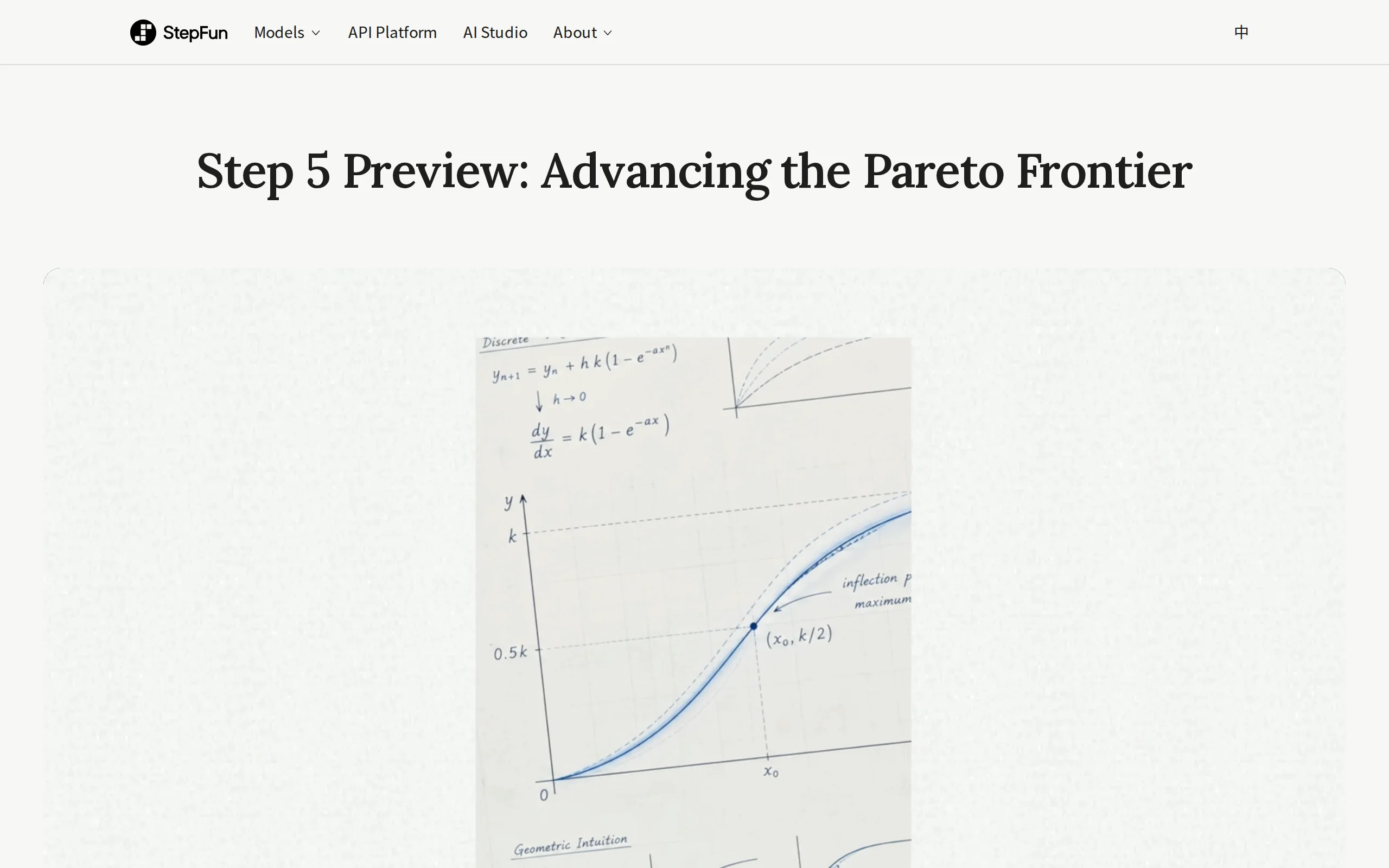
In-Depth Review of Step 5 Preview: A 600B Sparse MoE Flagship with 1M Token Context and 1/8 Cost Advantage
Step 5 Preview is a new-generation flagship foundation model launched by StepFun, designed for real-world Agentic tasks. Based on a sparse MoE architecture, the model has a total of 600B parameters bu...
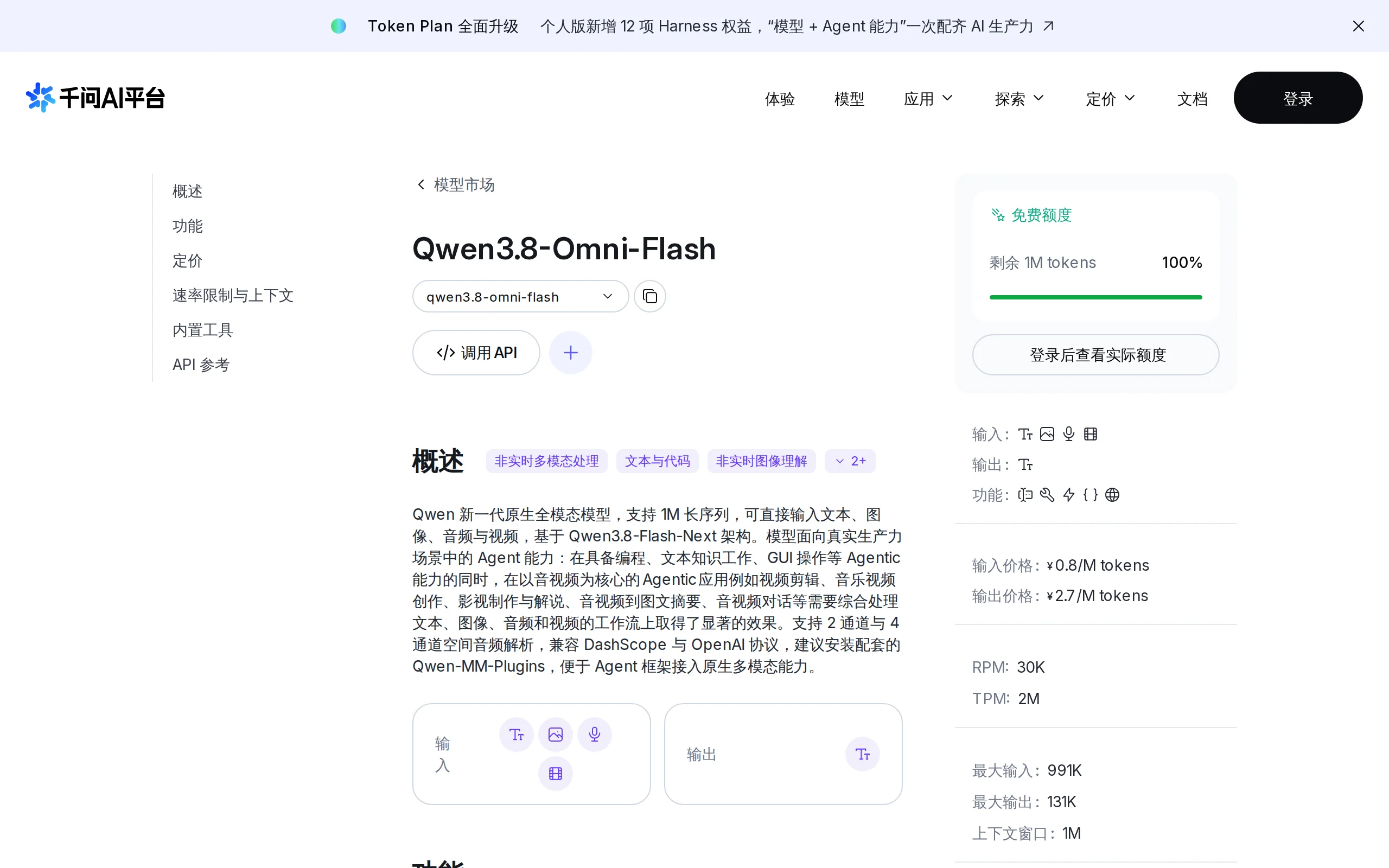
Qwen3.8-Omni-Flash – A Native Multimodal Model Launched by Alibaba Qwen
Qwen3.8-Omni-Flash is a native multimodal model launched by Alibaba Qwen. It jointly models four modalities—text, image, audio, and video—within a single architecture, supporting a context length of u...
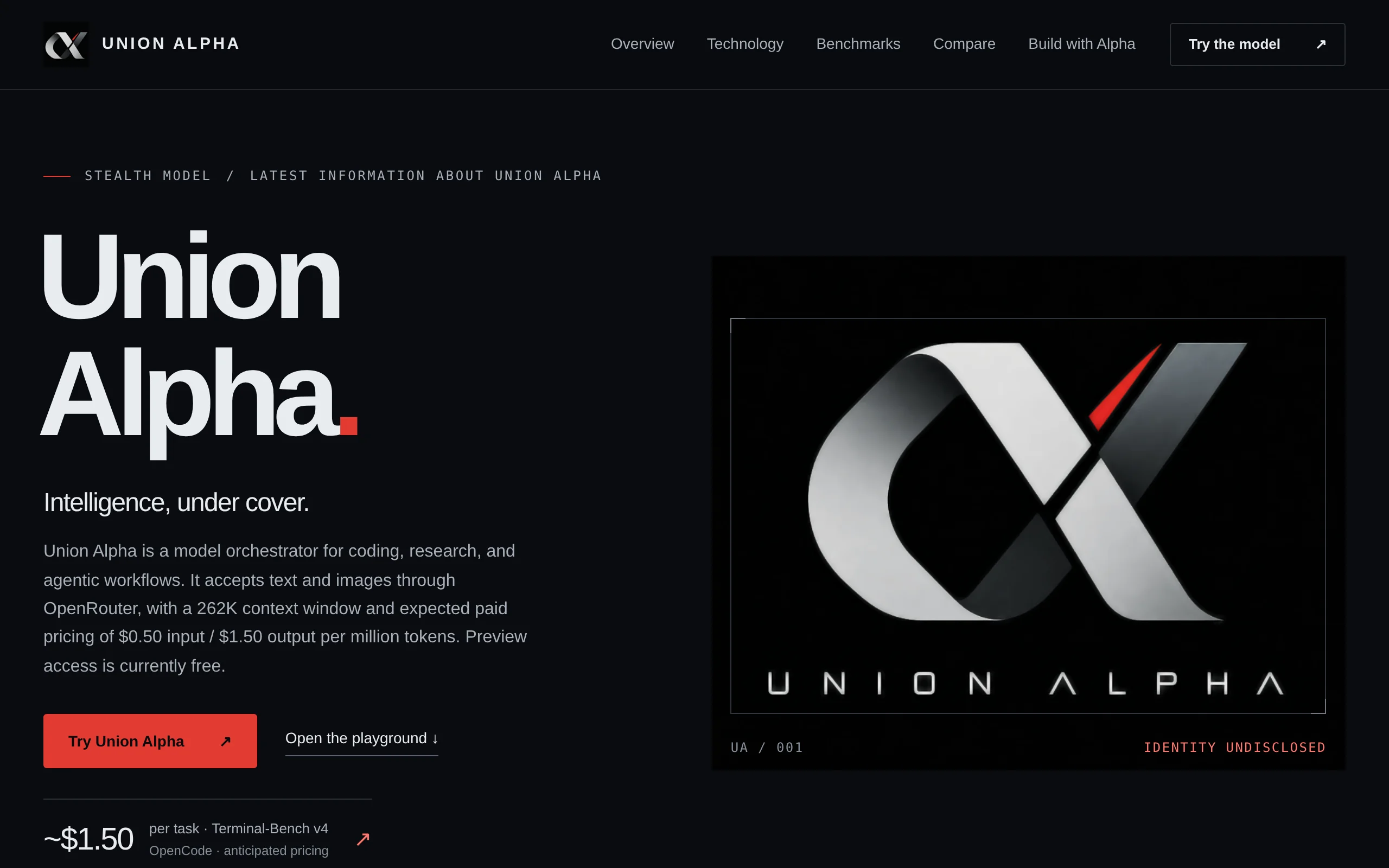
Union Alpha – A Mysterious Multimodal Large Model with Unlimited Free Access for a Limited Time
Union Alpha is a multimodal large language model released in "stealth" mode, recently launched on mainstream AI service platforms such as OpenRouter, Cline, and OpenCode. The model supports dual-modal...
© All Rights Reserved. Some content on this site is partially generated by AI with human review.