
Reasonix – Open-Source Terminal Coding Agent Built for DeepSeek
Executive Summary:
Reasonix is an open-source terminal coding agent designed specifically for DeepSeek models. Built around DeepSeek's byte-stable prefix-cache mechanism, it uses an append-only runtime loop achieving 99.82% cache hit rate in testing—compressing long-session input cost to roughly 20% of uncached usage. It connects directly to the DeepSeek API through fixed prefixes, append-only logs, tool-call repair, and smart cost switching—helping developers run long coding tasks at very low cost for refactors, batch edits, and continuous integration.
1. What Is Reasonix
Reasonix is an open-source terminal coding agent designed specifically for DeepSeek models. Built around DeepSeek's byte-stable prefix-cache mechanism, it uses an append-only runtime loop achieving 99.82% cache hit rate in testing—compressing long-session input cost to roughly 20% of uncached usage. It connects directly to the DeepSeek API through fixed prefixes, append-only logs, tool-call repair, and smart cost switching—helping developers run long coding tasks at very low cost for refactors, batch edits, and continuous integration.
Technical positioning and domain: Reasonix sits at the intersection of NLP and AI agents as a DeepSeek-native terminal coding assistant. Unlike generic frameworks, every layer—from cache partitioning to tool repair—is tuned for DeepSeek API behavior.
Development background: Led by open-source developer esengine, designed around DeepSeek V4 prefix-cache (byte-level cache reuse). Motivation: existing coding agents (e.g., Claude Code) on DeepSeek suffer low cache utilization, unstable tool calls, and cost explosion as context grows.
Core value: Addresses three long-session pain points on DeepSeek: cache-first loops cutting input token cost to ~20%; 4-round tool-call repair for common JSON malformation, truncation, and duplicates; three-tier cost control (default flash, manual/auto pro switch).
Technical characteristics: Append-only runtime—old context fixed, new messages appended only—maximizing prefix-cache reuse. Markdown skill system and user memory injection; QQ remote channel; Tauri native desktop client (pre-release).
2. Key Features
Cache-first session loop: Context split into Immutable Prefix, Append-Only Log, and Volatile Scratch so each request's byte prefix matches prior requests, activating DeepSeek auto prefix cache. Tested 99.82% hit rate on 435M input tokens/day.
Tool-call repair: Before execution, 4 internal repair rounds handle JSON that disappears in final messages, malformed params, duplicates, and truncation—improving long-session tool stability on DeepSeek.
Smart cost control: Default low-cost v4-flash;
/protemporarily upgrades a turn to v4-pro then reverts; auto-switch remaining work to v4-pro when failures hit a threshold.Skills and memory: Markdown Skills with inline (embedded) and subagent modes. User knowledge injected as prefix memory—user, project, and feedback scopes.
QQ remote channel: Extend sessions to QQ for mobile commands and results—monitor long tasks away from the desk.
Desktop support: Tauri GUI (pre-release) with multi-tab UI showing file I/O, cost, and cache hit rate for users who prefer visuals over pure CLI.
3. How to Use
Environment: Node.js ≥ 22 and a valid DeepSeek API key. Windows, macOS, Linux—no Python or Docker required.
Install:
npm install -g reasonix, thenreasonix codein your project. Orcd my-project && npx reasonix codewithout global install.Configure key: First run prompts for DeepSeek API key, saved to
~/.reasonix/config.json. Change withreasonix config set apiKey <new-key>.Start session: Default
codemode includes filesystem ops, shell tools, and SEARCH/REPLACE review. Natural language like "add error handling in src/utils.ts" starts tasks. Usereasonix chatfor chat-only.Advanced:
/profor hard tasks;/skill newfor custom Markdown skills;reasonix doctorfor health checks;/memoryto view/edit injected memory.Watch cost: The session shows cache hit rate and token use. Keep long jobs on v4-flash; only
/proafter repeated failures so overnight runs do not sit on the expensive model.Remote monitor: Enable the QQ channel if you leave the desk. The Tauri GUI is still prerelease—prefer
reasonix codein production.Troubleshoot: If
reasonix doctorfails, confirm Node ≥22 and the key in~/.reasonix/config.json. Repeated tool-call failures belong in a GitHub issue with recent logs.
4. Pros and Cons
| Pros |
|---|
| Extreme cost control: 99.82% cache hits; long-session input ~20% of uncached cost; with DeepSeek V4 pricing, massive daily tokens for ~$12. |
| Deep native optimization: Cache, repair, and cost layers tuned to byte-stable prefix-cache—not comparable to generic frameworks. |
| Long-session stability: Append-only avoids linear cost growth—run for hours or days. |
| Open and extensible: MIT license; custom Skills, memory, MCP extension. |
5. Comparison with Similar Tools
| Dimension | Reasonix | Claude Code | OpenAI Codex CLI |
|---|---|---|---|
| Backend model | DeepSeek V4 only | Claude (Sonnet/Opus) | GPT-4o / GPT-4 Turbo |
| Cost strategy | Cache-first, ~20% cost | Pay-per-use, no cache opt | Per-token, no cache opt |
| Cache mechanism | Engineered byte prefix-cache | N/A (Anthropic) | None |
| Tool repair | 4-round auto repair | Basic, no dedicated repair | Basic, occasional format errors |
| Long-session cost | Very low, long runs OK | Linear with context | Linear with context |
| License | MIT open source | Closed | Closed (partial CLI OSS) |
| Remote channel | QQ support | No | No |
| Skills/memory | Markdown Skills + multi-scope memory | Built-in skills, no external import | No dedicated skills |
Selection advice: DeepSeek-heavy, cost-sensitive developers should choose Reasonix—cache and repair materially cut long-run spend. Claude/GPT shops may prefer Claude Code or Codex CLI at higher cost. IDE-focused users may prefer Cursor's UI but lack remote channel and cache optimization. Budget-tight DeepSeek users have few alternatives as efficient as Reasonix.
6. Editor's Review
Reasonix is highly targeted: not a generic agent but DeepSeek prefix-cache engineering with ~100% cache hits—a rare achievement. It amplifies DeepSeek V4's low pricing so indie devs can afford hundreds of millions of tokens. Tool repair adds latency but fixes DeepSeek tool instability in long sessions.
Audience: heavy DeepSeek API users, CLI workflows, long coding runs. Future upside if multi-model plugins and desktop mature. Active community; MIT enables forks.
Rating: ★★★★☆ (4.5/5) — deductions for model lock-in and immature desktop; core value is hard to replace.
7. Use Cases
Long coding runs: Hours/days of refactors and batch edits—append-only loop prevents linear cost growth.
High-frequency API calls: CI/CD and automation with repeated DeepSeek interactions—cache makes repeats nearly free.
Cost-sensitive development: v4-flash + cache keeps daily massive token bills around $10 vs alternatives.
Remote collaboration: QQ channel for mobile commands while agents run overnight.
8. FAQ
Q: How is cache hit rate achieved?
A: Immutable Prefix (system + tools + examples, fixed), Append-Only Log (history appended monotonically), Volatile Scratch (per-turn draft, not uploaded as-is)—matching byte prefixes turn-to-turn for DeepSeek auto prefix cache. Tested 99.82%.
Q: How to switch model versions?
A: /pro temporarily uses v4-pro for current turn then reverts to v4-flash. Auto pro on failure threshold. Or reasonix code --model deepseek-chat at startup.
Q: How to write Skills?
A: Markdown format; inline or subagent modes. /skill new "code review" and follow prompts. Files in ~/.reasonix/skills/ with import/export.
Q: Support GPT or Claude?
A: DeepSeek V4 only—tightly coupled to prefix-cache and API behavior. Community discusses extensions; no timeline.
Q: When is desktop GA?
A: Tauri pre-release via reasonix gui. GA in development—themes, history, plugin market planned. Prefer terminal for production.
9. Project Links
Related AI Model Articles
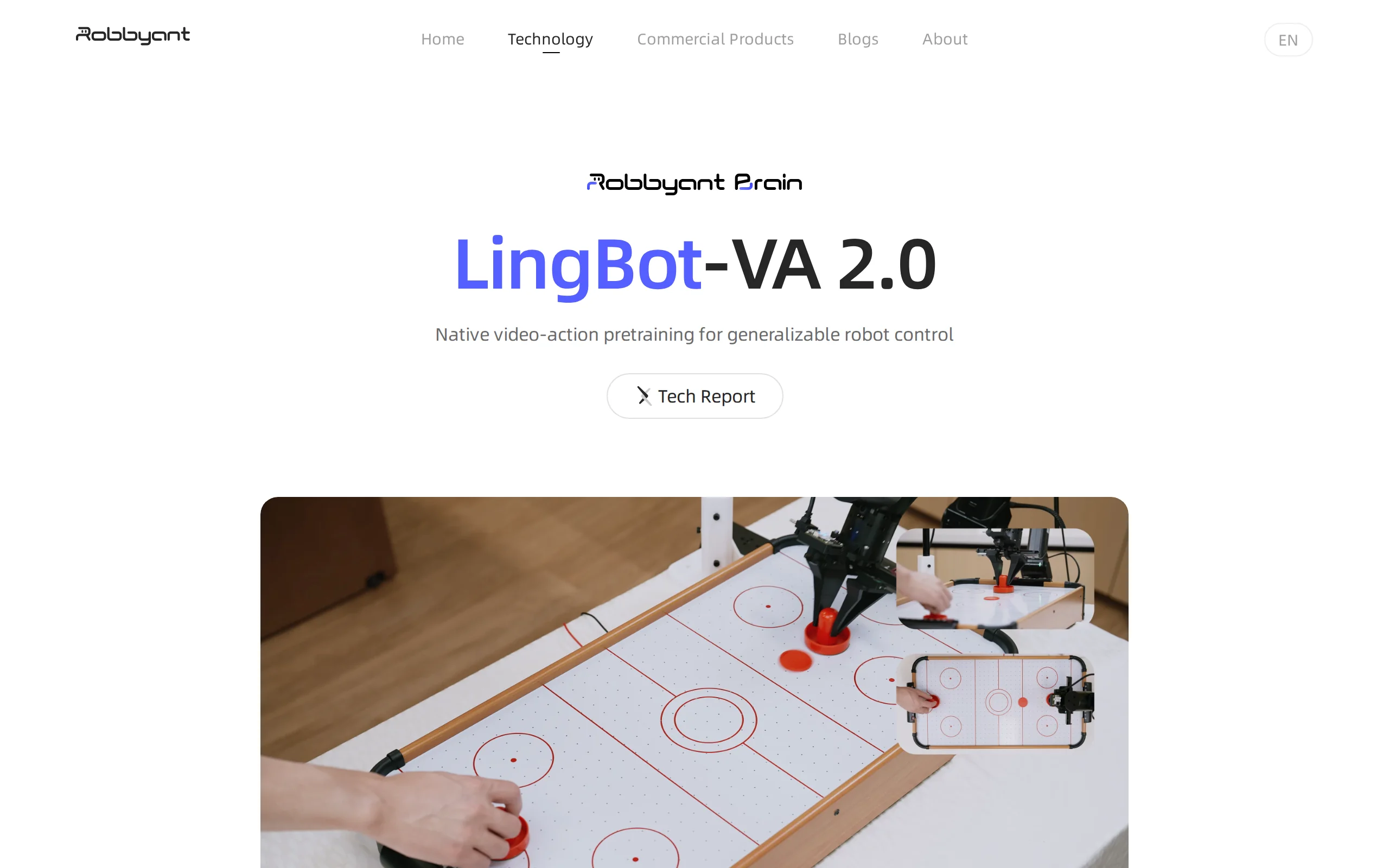
LingBot-VA 2.0 – AntWorld's Native World Action Model for Embodied Intelligence
LingBot-VA 2.0 is AntWorld's industry-first native world action model for embodied intelligence, pre-trained from scratch based on an autoregressive architecture, enabling robots to possess general-pu...
KAT-Coder-Pro V2.5 – Kwai's Agentic Coding Model
KAT-Coder-Pro V2.5 is the flagship Agentic Coding model introduced by KwaiKAT, focusing on long-range engineering capabilities and general Agentic abilities. By leveraging its self-developed AutoBuild...
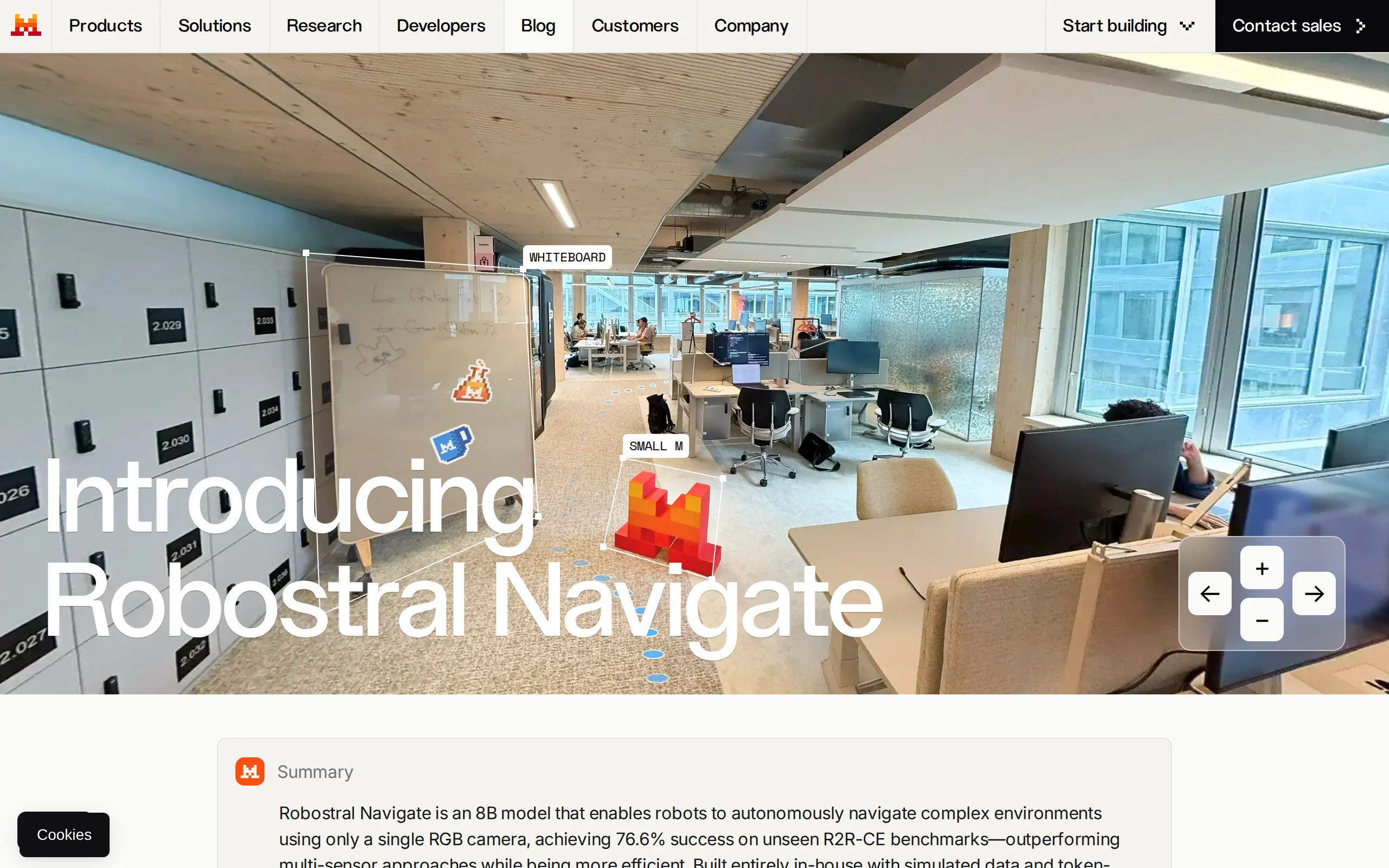
Robostral Navigate – Mistral AI's Embodied Intelligence Navigation Model
Robostral Navigate is Mistral AI's first embodied intelligence navigation model. Its core innovation lies in enabling robots to achieve autonomous navigation in complex environments using only a stand...
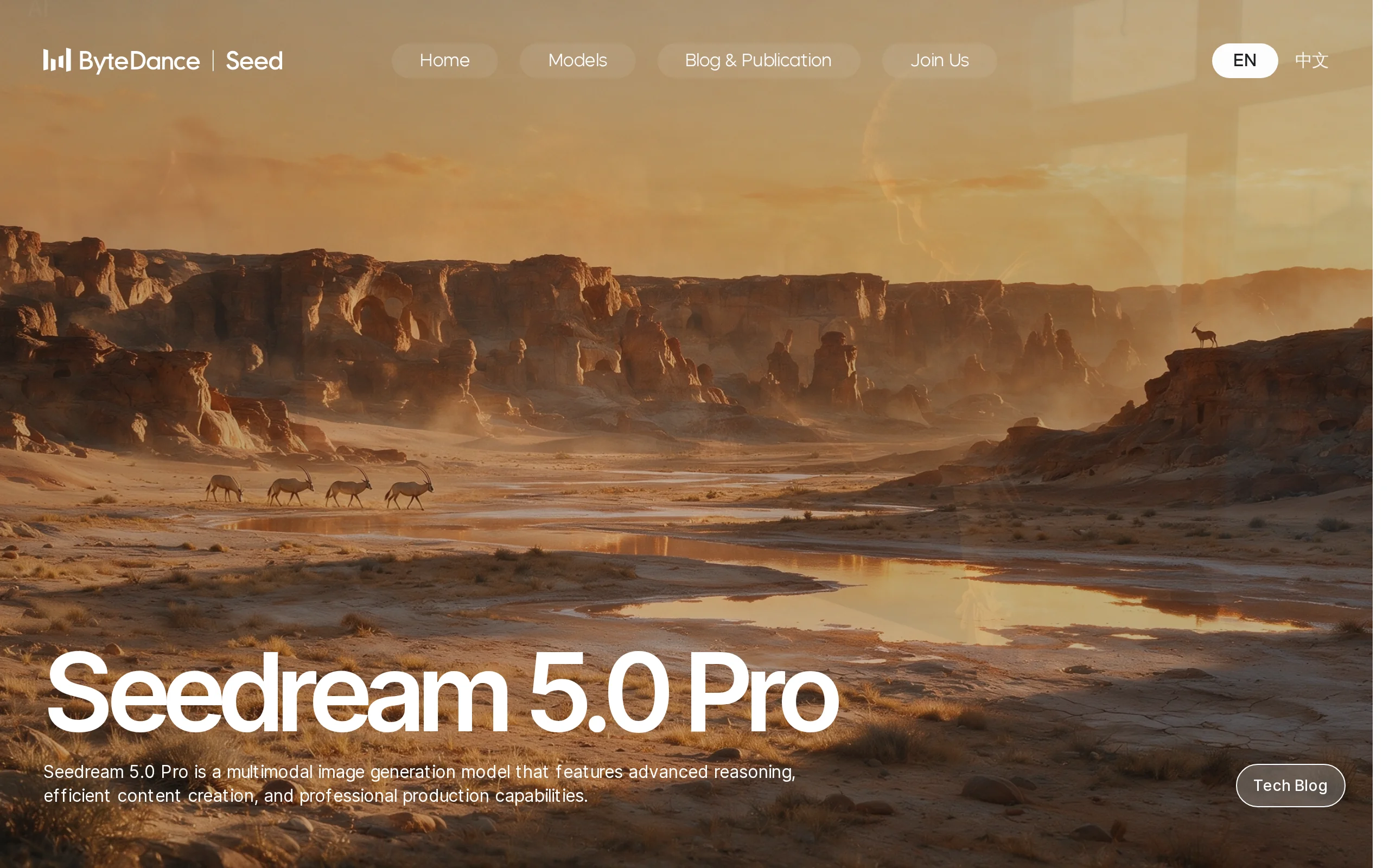
Seedream 5.0 Pro – A Multimodal Image Creation Model Launched by ByteDance
Seedream 5.0 Pro is a multimodal image creation model introduced by ByteDance's Seed team, specifically designed for complex professional scenarios. This model has achieved a comprehensive upgrade in ...
© All Rights Reserved. Some content on this site is partially generated by AI with human review.