
KAT-Coder-Pro V2.5 – Kwai's Agentic Coding Model

Executive Summary:
KAT-Coder-Pro V2.5 is the flagship Agentic Coding model introduced by KwaiKAT, focusing on long-range engineering capabilities and general Agentic abilities. By leveraging its self-developed AutoBuild...
1. What is KAT-Coder-Pro V2.5
KAT-Coder-Pro V2.5 is the flagship Agentic Coding model introduced by KwaiKAT, focusing on long-range engineering capabilities and general Agentic abilities. By leveraging its self-developed AutoBuilder, the model has increased the success rate of building real-world repository environments from 16.5% to 57.2%, accumulating over 100,000 runnable repositories. It also features the KwaiClawEnv general Agentic training framework, combining multi-framework reinforcement learning with MOPD multi-expert fusion technology. The model achieved a score of 65.2 on SWE-Bench Pro and 94.2 on PinchBench, and is now fully deployed on the StreamLake platform. Positioned as an enterprise-level full-stack coding agent, it aims to achieve a fully automated engineering loop, from vague issue descriptions to passing tests, addressing shortcomings in real-world repository environment construction and long-range task stability in existing models.
Image source: Official article
Image source: official article
Technical positioning and domain: KAT-Coder-Pro V2.5 belongs to the Agentic Coding model domain, focusing on automated software engineering (ASE), especially long-range repository-level tasks. Unlike conventional code completion models, it can understand natural language problem descriptions, locate, modify, and verify code across multiple files, achieving end-to-end delivery. It represents a cutting-edge direction in the field of AI coding.
Development background: Developed by the KwaiKAT team, this model is built upon Kwai's technical expertise in short video and AI domains. The motivation for its development stems from current challenges in coding models, including low success rates in building real-world repository environments (less than 20%), lack of a general Agentic training framework, and difficulties in multi-framework adaptation. The goal is to create an intelligent coding assistant capable of handling complex engineering tasks and to advance Agentic Coding from laboratory settings to industrial-scale applications.
Core value: It addresses key issues with existing models, such as low success rates in real-world repository environment construction, poor long-range task stability, and challenges in cross-framework adaptation. Through the AutoBuilder environment construction pipeline and data flywheel strategy, the success rate of environment building has been raised to 57.2%, with over 100,000 runnable repositories accumulated for training. Additionally, multi-framework reinforcement learning enables the model to be framework-agnostic, ensuring stable operation across different Agent protocols and significantly reducing enterprise integration costs.
Technical features: Core technologies include the self-developed AutoBuilder automated environment construction pipeline, the KwaiClawEnv three-tier training framework, asymmetric PPO and hierarchical reward mechanisms, and MOPD multi-expert fusion technology. These ensure that existing capabilities such as front-end aesthetics are not compromised when enhancing long-range engineering and Agentic abilities. The model demonstrates leading performance on multiple benchmarks, particularly showcasing strong engineering capabilities on PinchBench (94.2) and SWE-Bench Pro (65.2). It also supports terminal command execution and front-end page generation, achieving a fusion of multi-modal capabilities.
2. Key Features
Long-range Repository Engineering: The model can understand natural language issues, locate the root cause in cross-file code repositories, modify multiple sections of code, and run tests to validate the changes, achieving an end-to-end closed-loop from problem description to code delivery. This capability is trained in real-world repository environments built by AutoBuilder, ensuring the model's reliability in complex engineering scenarios.
General Agentic Workflow: Supports complex, multi-turn tasks such as data analysis, cross-system integration, batch document processing, and report generation, with an average capacity to handle over 10 rounds of tool interactions. Through the KwaiClawEnv general training framework, the model has learned to autonomously schedule and combine tools in a dynamic tool pool, completing highly customized task workflows.
Terminal and Front-end Capabilities: The model is not only skilled in backend code modifications but can also directly execute terminal commands (e.g., compile, test, deploy) and generate aesthetically pleasing front-end pages. Users can complete full-stack development tasks without switching between multiple models, significantly improving development efficiency.
Multi-framework Compatibility: Compatible with various Agent interaction protocols (e.g., mini-swe-agent, Claude Code, Codex, OpenClaw), the model possesses general problem-solving capabilities across tools and platforms. This feature stems from multi-framework reinforcement learning training, enabling the model to operate independently of specific interaction frameworks and exhibit strong generalization and transfer capabilities.
Automated Environment Construction (AutoBuilder): The self-developed automated pipeline enables the model to act as an "environment setup engineer," analyzing repository structures, generating configuration scripts, and validating test execution in isolated sandboxes. This has increased the success rate of real-world repository environment construction from 16.5% to 57.2%. Over 100,000 executable and verifiable environments covering 12 programming languages have been accumulated, providing a high-quality data foundation for training and inference.
Data Flywheel and Failure Trajectory Utilization: By identifying high-value failure trajectories that are "just one step away from success" through full-process behavior filtering, and re-executing them with targeted prompts, approximately 20% of failed attempts are converted into complete, reproducible, and verifiable training data. This mechanism enables the model to learn error correction and backtracking, significantly improving task completion rates.
Asymmetric PPO and Hierarchical Rewards: The model employs an asymmetric PPO architecture, where it only observes real environment information during execution, preventing information leakage during training. A three-tier reward mechanism is designed—core task score, standard behavioral constraints, and failure trajectory incentives—to encourage exploration while correcting non-standard behaviors, making the training process more stable and efficient.
MOPD Multi-expert Fusion: Through multi-expert fusion technology, the model ensures that existing capabilities such as front-end aesthetics are not compromised when new long-range engineering and Agentic capabilities are added. The model achieves capability growth without loss during expansion, avoiding the catastrophic forgetting problem commonly encountered in traditional fine-tuning approaches.
3. How to Use
Environment Requirements and Prerequisites: To use KAT-Coder-Pro V2.5, access to the StreamLake platform is required, with no need for local model deployment. Users must register for a StreamLake account and have a valid API KEY. In terms of hardware, the user side only requires a stable internet connection, as inference computation is handled by Kuaishou's cloud cluster. It is recommended to use a development environment that supports HTTPS requests.
Apply for API Permissions: Access the KAT-Coder product page on the StreamLake platform (link to be updated after official release) to apply for an API KEY. Once the application is approved, the platform will provide a unique authentication key for subsequent API calls. It is recommended that enterprise users apply in advance to obtain higher concurrency quotas.
Review Integration Documentation: Read the official developer tool integration guide to understand API specifications, authentication methods, request formats, and return data models. The documentation provides detailed information on REST API endpoints, parameter descriptions, error codes, and rate-limiting strategies. Developers should carefully review this to avoid calling errors.
Integrate into Development Environment: Integrate the API into IDE plugins such as VS Code or JetBrains, or directly into your own CI/CD pipeline. Kuaishou provides an official SDK (supporting Python, Java, Go, etc.) to simplify the integration process. It is recommended to use the plugin form within the IDE to trigger model capabilities directly during coding.
Submit Engineering Tasks: Describe issues or workflow requirements in natural language to trigger the model to automatically analyze, modify, and verify within the repository. Task descriptions should be as clear as possible and include specific context (such as repository paths, steps to reproduce the issue, and expected output) to achieve more accurate results. The model supports both single-round tasks and multi-round conversational tasks.
Acceptance and Iteration: Review the patches, test reports, and deliverables generated by the model, and optimize the task description based on feedback to achieve more accurate results. The platform provides task history and result comparison features, which facilitate team collaboration and review. It is recommended to first validate important tasks on a small scale before applying them in bulk.
Best Practices: For complex cross-file modifications, it is advisable to describe the task in steps, first letting the model identify the issue, then gradually guiding the modifications. For data analysis tasks, providing data source connection information and output format requirements can significantly improve the quality of results. Note: The model is currently optimized for English repositories. While Chinese issue descriptions are supported, it is recommended to use English keywords in conjunction.
4. Pros and Cons Analysis
| Pros |
|---|
| End-to-end engineering loop: The model not only generates code snippets but can also complete the full long-term task from a vague issue to passing tests, covering the entire process of localization, modification, and verification, significantly reducing manual intervention. |
| Training in real environments: AutoBuilder increases the warehouse environment construction success rate to 57.2%. The model is trained using real-world data from over 100,000 actual warehouses, resulting in significantly better generalization capabilities and engineering practicality compared to models trained only on synthetic data. |
| Framework independence: Through multi-framework RL training, the model does not rely on specific Agent interaction protocols and can seamlessly integrate with existing toolchains (such as VS Code, JetBrains, CI/CD pipelines), reducing migration costs. |
| Capability lossless expansion: The MOPD fusion mechanism ensures that when new long-term engineering and Agentic capabilities are added, existing front-end aesthetics and other capabilities are not compromised, achieving capability stacking rather than replacement, making it suitable for teams requiring versatile capabilities. |
| High benchmark scores: Achieves leading results in authoritative evaluations such as SWE-Bench Pro (65.2 points) and PinchBench (94.2 points), particularly demonstrating stable performance in complex multi-turn interaction tasks, verifying its engineering reliability. |
5. Comparative Analysis with Similar Tools
| Dimension | KAT-Coder-Pro V2.5 | Claude Opus 4.8 | Devin (Cognition AI) |
|---|---|---|---|
| Core Positioning | Flagship Agentic Coding model of KwaiKAT from Kuaishou, focusing on end-to-end engineering closed-loop | Flagship version of Anthropic's general-purpose large model, with coding capabilities as part of its multimodal general abilities | Autonomous AI software engineer, focused on independently completing software development tasks |
| SWE-Bench Pro | 65.2 points | 69.2 points | Not disclosed (early version achieved ~13.86%) |
| PinchBench | 94.2 points | 93.5 points | Not disclosed |
| Environment Construction Capability | Self-developed AutoBuilder, success rate of 57.2%, with over 100,000 real-world repositories | No disclosed automated environment construction system, relies on user's local environment | Built-in sandbox environment, but success rate not disclosed |
| Framework Compatibility | Multi-framework RL training, compatible with mini-swe-agent, Claude Code, Codex, OpenClaw, etc. | Only supports Anthropic's own API and standard tool calling | Self-developed Agent framework, closed ecosystem |
| Deployment Method | Cloud API (StreamLake platform), does not support local deployment | Cloud API, supports partial private deployment in certain regions | Cloud SaaS platform |
| Open Source License | Closed-source commercial product (API service) | Closed-source commercial product | Closed-source commercial product |
| Multimodal Capabilities | Supports terminal commands and front-end page generation, but primarily focuses on code | Native multimodal (text, image, code) | Focuses on code and command line |
Selection Recommendations: For enterprises pursuing end-to-end engineering automation and aiming to quickly integrate into existing CI/CD workflows, KAT-Coder-Pro V2.5 is the optimal choice. Its real-environment training and framework independence significantly reduce deployment costs. If the team prioritizes general-purpose multimodal capabilities (such as simultaneous image understanding and code generation), Claude Opus 4.8 offers a more balanced solution. However, KAT-Coder-Pro excels in long-term stability for extended repository engineering tasks.
For research teams seeking autonomous control over data security and customized development, SWE-Agent's open-source nature provides a flexible foundation, though it requires self-building environments and model training, resulting in higher engineering costs. Devin, as a pioneer of the fully autonomous AI engineer concept, lacks detailed data disclosure on environment construction and benchmark scores, and its closed ecosystem limits customization potential. Overall, KAT-Coder-Pro achieves a good balance between engineering implementation and practical performance, particularly suitable for enterprise scenarios requiring high success rates in repository construction and stable complex workflows.
6. Editor's Take
KAT-Coder-Pro V2.5 demonstrates solid engineering thinking in terms of technological innovation. AutoBuilder has increased the success rate of constructing real-world repository environments from 16.5% to 57.2%, a breakthrough that directly addresses the long-standing issue in Agentic Coding of "disconnection between training and deployment environments," enabling the model to learn and reason under near-real conditions. Another standout feature is the data flywheel and failure trajectory utilization mechanism, which converts approximately 20% of failed attempts into effective training data. This not only improves data utilization but also enables the model to develop error-correction capabilities, a feature relatively uncommon in other coding models.
In terms of practical value, this model truly achieves an end-to-end closed-loop from issue to delivery. Its high scores on SWE-Bench Pro and PinchBench validate its stability in long-range tasks and complex workflows. Particularly notable is its framework-agnostic design, which allows enterprises to integrate it without changing their existing toolchain, thereby reducing the barrier to adoption. However, the model is currently only available via API through the StreamLake platform, which imposes certain limitations for data-sensitive enterprises and offline development scenarios. If a private deployment version is introduced in the future, it would significantly enhance its market competitiveness.
In terms of target users, KAT-Coder-Pro V2.5 is most suitable for development teams in mid-to-large enterprises, especially those that frequently handle cross-file code modifications, automated bug fixes, and complex data analysis tasks. For independent developers and small teams, the pay-per-use API pricing model offers a flexible option, though they should carefully weigh the cost-benefit trade-off.
The future development potential of this model is promising. As AutoBuilder continues to accumulate more real-world repository environments and multi-framework reinforcement learning is further optimized, there is still room for improvement in the model's long-range engineering capabilities. Meanwhile, support for Chinese and expansion of the context window will be key to unlocking broader market opportunities. Overall, KAT-Coder-Pro V2.5 represents a significant advancement in the engineering direction of current Agentic Coding models. It earns a recommendation score of four and a half stars (4.5/5), with deductions mainly due to closed-source deployment restrictions and the completeness of its documentation.
7. Application Scenarios
Automated Bug Fixing: After receiving a GitHub issue, the model automatically identifies the root cause in large code repositories, generates patches, and runs regression tests. Teams can integrate the model into their CI/CD pipelines, allowing it to automatically trigger the repair process when new issues are created. Once reviewed by humans, the fixes can be merged, significantly reducing the bug fixing cycle.
Data Analysis Report Generation: The model reads raw data from multiple platforms (such as databases, CSV files, and API interfaces), automatically performs data cleaning, statistical analysis, and generates Markdown business briefs with charts and graphs. It supports multi-round interactions, enabling users to gradually adjust the analysis dimensions. The final output can be directly used for presentations.
Cross-System Data Integration: The model calls multiple internal APIs and databases to automatically complete data extraction, transformation, loading (ETL), and error handling. It can generate and execute Python scripts or SQL queries to consolidate data from different systems into a unified format, suitable for data warehouse construction and automated reporting.
Bulk Document Processing: The model can perform batch summarization, format conversion, key information extraction, and structured archiving on large volumes of technical documents or contracts. It supports long-text understanding and multi-round processing, allowing users to describe processing rules in natural language to achieve automated management of document libraries, ideal for knowledge management scenarios.
Rapid Frontend Prototype Generation: Based on product requirement descriptions, the model automatically generates HTML/CSS pages that comply with design standards and supports iterative optimization. It understands component-based design principles and can produce responsive layout code while maintaining visual aesthetics, making it suitable for quickly validating product concepts or building internal tool interfaces.
8. FAQ
Q: Is KAT-Coder-Pro V2.5 free to use?
A: This model is provided via the StreamLake platform as an API service. For specific pricing models, please refer to the official quotes from the platform. Usually, a free trial quota is available, but large-scale commercial use requires payment based on the number of calls. It is recommended that enterprise users contact sales for a customized solution.
Q: Which programming languages does the model support?
A: AutoBuilder has accumulated repository environments covering 12 programming languages, including mainstream languages such as Python, JavaScript, TypeScript, Java, Go, C++, and Rust. The model performs best in the Python and JavaScript ecosystems, with ongoing optimization for support in other languages.
Q: How is the safety of code modifications ensured?
A: All patches and code modifications generated by the model must be manually reviewed before being merged. The platform provides a detailed modification comparison view and test execution reports to help developers quickly assess the impact of changes. Additionally, standard behavioral constraints in the tiered reward mechanism also reduce the probability of generating unsafe code.
Q: Compared to Claude Opus 4.8, what are the unique advantages of KAT-Coder-Pro?
A: KAT-Coder-Pro focuses on long-range repository engineering and Agentic workflows, showing clear advantages in real environment construction and framework independence. Claude Opus 4.8 has slightly better general multimodal capabilities and performance on some benchmarks (such as SWE-Bench Pro), but lacks a dedicated engineering closed-loop design. The choice depends on specific needs: if code engineering is the core focus, KAT-Coder-Pro is more suitable; if multimodal general capabilities are required, Claude Opus 4.8 is more balanced.
Q: Does the model support private deployment?
A: Currently, only the StreamLake cloud API service is available, and local private deployment is not supported. For enterprises with data security or offline requirements, it is recommended to follow Kuaishou's future private deployment solutions or use the platform's data isolation features to meet compliance requirements.
Q: How can the model's performance on Chinese tasks be improved?
A: The model is primarily optimized for English, and while it supports Chinese issue descriptions, the results are slightly less effective. It is recommended to use a mix of English keywords (such as technical terms and function names) when working on Chinese tasks, and to provide as clear a context and examples as possible. The Kuaishou team states that they are strengthening support for Chinese, and future versions will see improvements.
Q: What are the rate-limiting strategies when calling the API?
A: The platform sets different request rate limits based on user level (such as number of requests per minute and total number of requests per day). Exceeding these limits will result in a 429 status code. Enterprise users can apply for increased quotas. It is recommended to reasonably control the concurrency level when submitting tasks to avoid triggering rate limits.
9. Project Links
- Product Website (StreamLake Platform): https://streamlake.com/product/kat-coder
- arXiv Technical Paper: https://arxiv.org/pdf/2607.05471
Related AI Model Articles
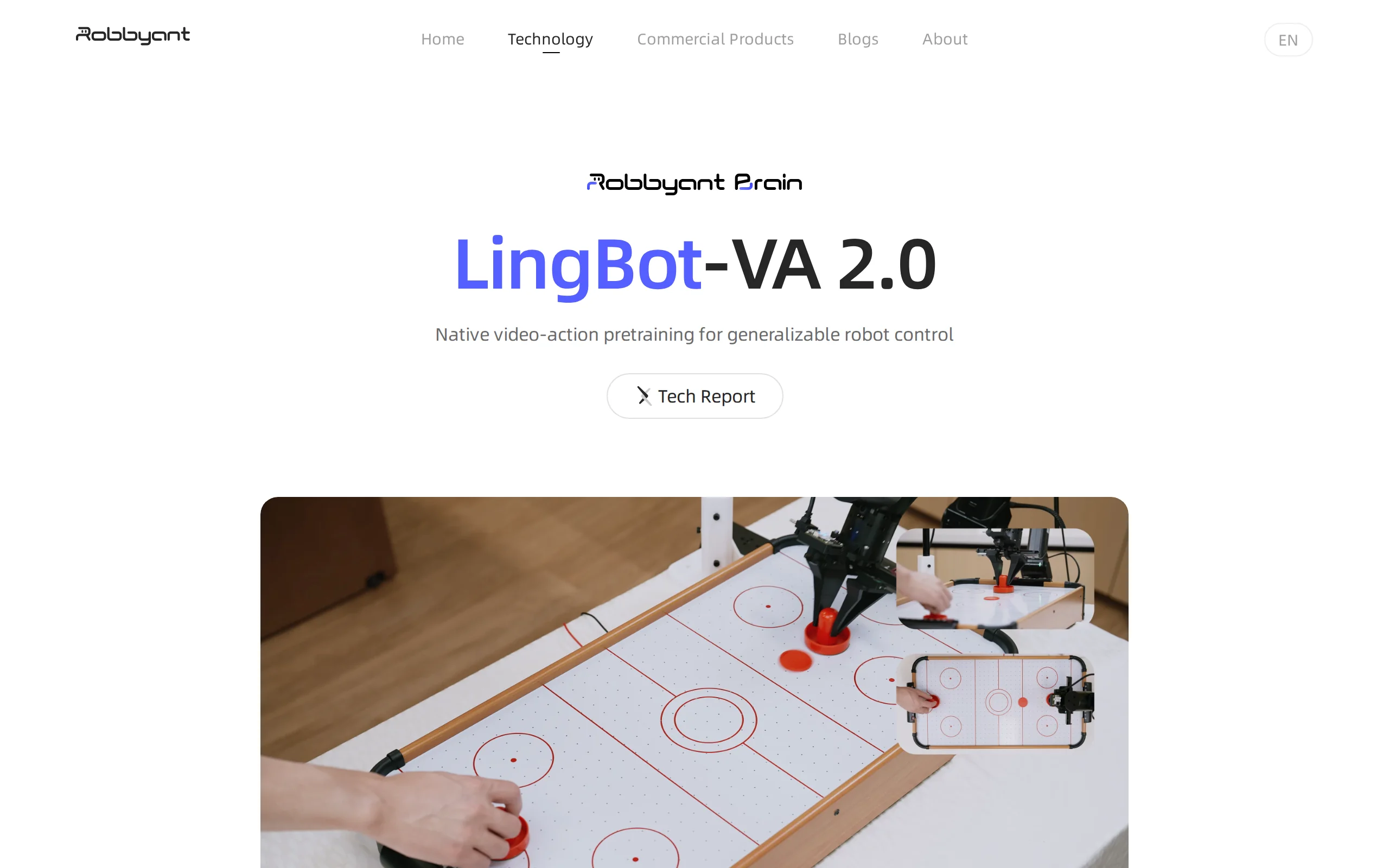
LingBot-VA 2.0 – AntWorld's Native World Action Model for Embodied Intelligence
LingBot-VA 2.0 is AntWorld's industry-first native world action model for embodied intelligence, pre-trained from scratch based on an autoregressive architecture, enabling robots to possess general-pu...
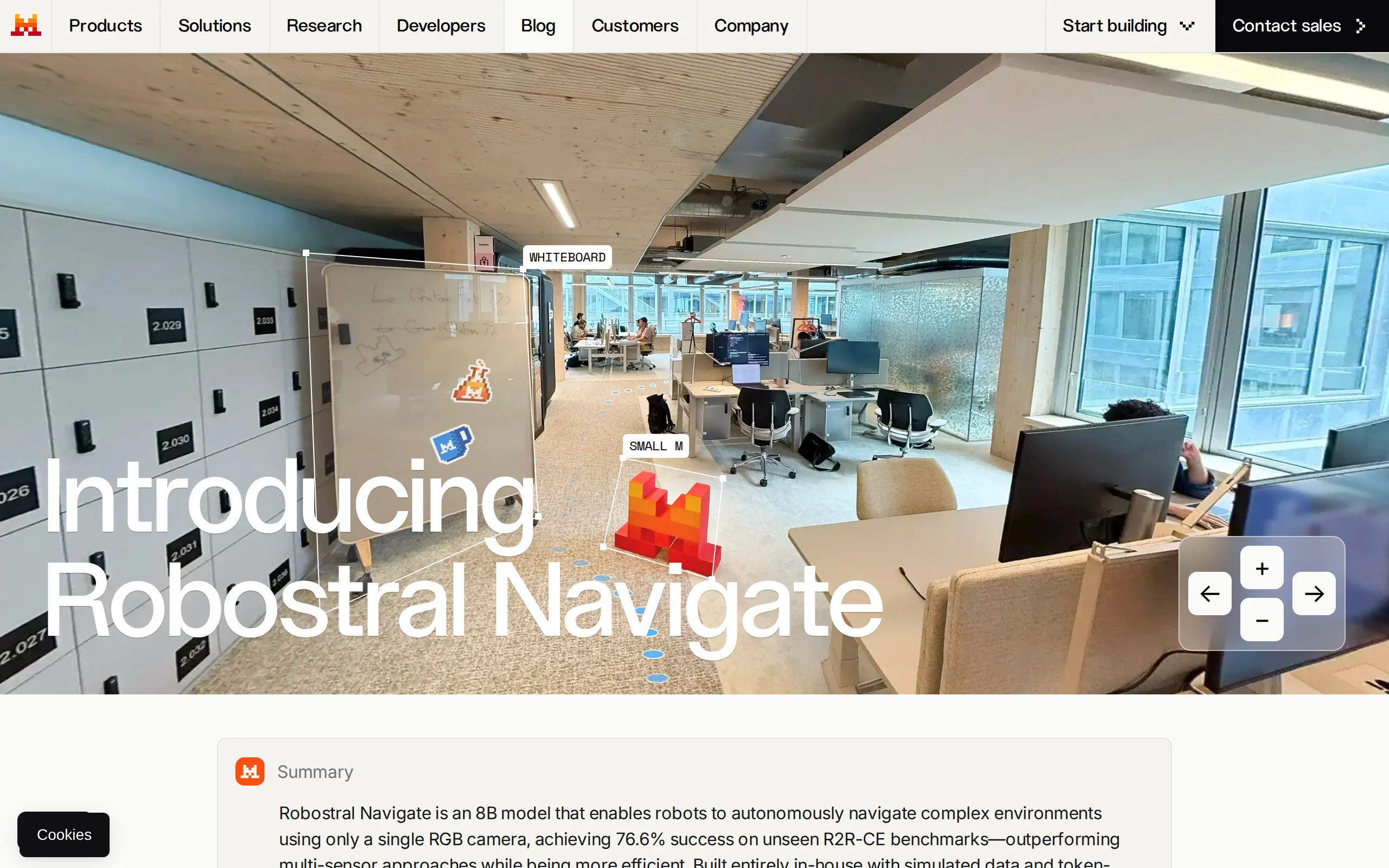
Robostral Navigate – Mistral AI's Embodied Intelligence Navigation Model
Robostral Navigate is Mistral AI's first embodied intelligence navigation model. Its core innovation lies in enabling robots to achieve autonomous navigation in complex environments using only a stand...
Seedream 5.0 Pro – A Multimodal Image Creation Model Launched by ByteDance
Seedream 5.0 Pro is a multimodal image creation model introduced by ByteDance's Seed team, specifically designed for complex professional scenarios. This model has achieved a comprehensive upgrade in ...
Grok 4.5 – The Flagship Large Language Model Launched by SpaceXAI
Grok 4.5 is a new-generation flagship large language model launched by SpaceXAI (formerly xAI), built upon the V9 architecture with 1.5 trillion parameters. During its supplementary training phase, it...
© All Rights Reserved. Some content on this site is partially generated by AI with human review.