
MiniMax M3 – MiniMax's Next-Generation AI Model
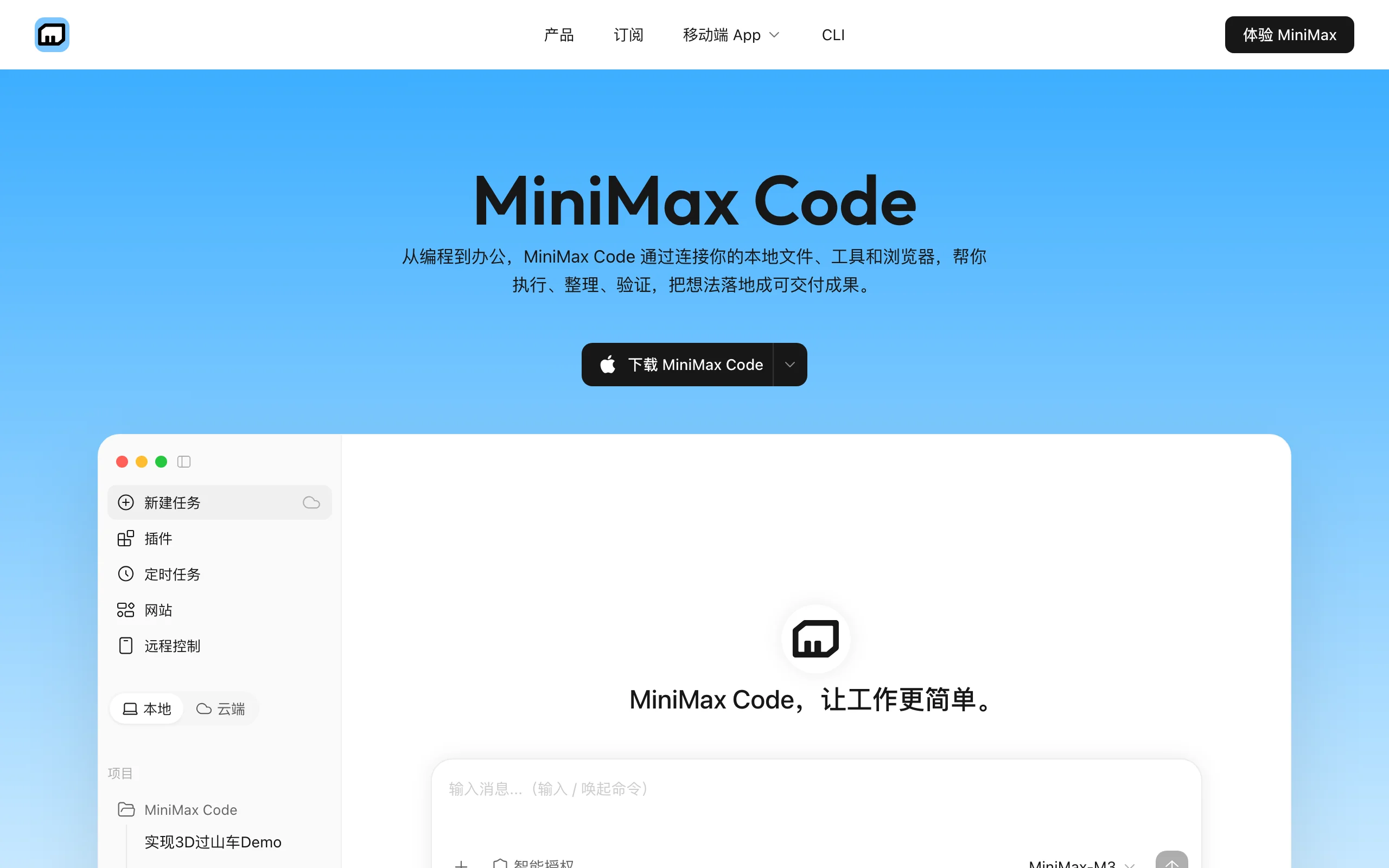
Executive Summary:
MiniMax M3 is MiniMax's next-gen model with MSA sparse attention and MoE—leading programming, agent, and long-context workloads. 196B total parameters, ~11B active per forward pass, up to 1M token con...
1. What Is MiniMax M3
MiniMax M3 is MiniMax's next-gen model with MSA sparse attention and MoE—leading programming, agent, and long-context workloads. 196B total parameters, ~11B active per forward pass, up to 1M token context with ~20× efficiency vs. dense attention at scale. It beats GPT-5.5 on SWE-Bench Pro, natively accepts image and video, and can simulate desktop interaction— a shift from text-only to multimodal, active agents.
Image source: Official article
Technical positioning and domain: General LLM and multimodal agent stack—coding, automation, long-document analysis, desktop ops—MSA + MoE links code generation to GUI control, rare in open ecosystems today.
Development background: Leading Chinese AI startup in NLP/multimodal; M3 targets exponential cost of million-token dense attention—MSA indexing + MoE activation as the fix.
Core value: (1) Long context at ~1/20 compute of traditional models at 1M tokens; (2) End-to-end coding delivery via autonomous agents; (3) Multimodal + desktop control like a human operator.
Technical characteristics: MSA sparse attention filters KV blocks efficiently; MoE keeps 196B capacity at ~11B active (~6 experts); native vision/video and desktop action simulation close the perception-action loop.
2. Key Features
Programming and agents: SWE-Bench Pro ahead of GPT-5.5—task decomposition, tools, multi-step reasoning, runnable code with test/debug/refactor loops.
1M ultra-long context: API up to 1M tokens (512K+ practical)—whole reports, manuals, medical records for summary, QA, cross-doc compare.
Native multimodal: Image/video inputs for charts, formulas, screenshots; desktop simulation (click, type) for full agent loops.
Efficient MoE: 196B total, ~11B active—speed and deploy efficiency vs. dense giants.
Open ecosystem: GitHub and MiniMax Code/API access—community can extend and optimize.
Fast inference: MSA ~9.7× prefill and ~15.6× decode speedups cited—usable on strong GPUs vs. naive long-context models.
3. How to Use
Environment: NVIDIA A100 80GB+ recommended; Linux/Windows; Python 3.10+, CUDA 12.1+, PyTorch 2.1+.
Online (MiniMax Code): https://agent.minimaxi.com/download — no deploy needed for quick eval.
API: Register at https://api.minimaxi.com for REST integration with vision/video/agent endpoints.
Local deploy: Clone https://github.com/MiniMax-AI,
pip install -r requirements.txt,python serve.py --model_path /path/to/model.Key config: 512K context often balances cost;
--sparse_attention Truefor MSA; desktop ops need OpenCV + PyAutoGUI.Notes: First load 30–60 min; batch for throughput; stream very long docs; allow OS automation permissions for desktop mode.
4. Pros and Cons
| Pros |
|---|
| Top coding/agents: SWE-Bench Pro beats GPT-5.5; end-to-end delivery and automation. |
| Ultra-long context efficiency: 1M tokens at ~1/20 compute; large prefill/decode gains. |
| Multimodal + desktop: Charts, video, GUI actions—broader agent surface. |
| Fully open: Weights and code for commercial and research use. |
5. Comparison with Similar Tools
| Dimension | MiniMax M3 | GPT-5.5 | Claude 3.5 Sonnet |
|---|---|---|---|
| Architecture | MSA sparse + MoE 196B/11B active | Dense (undisclosed) | Dense (undisclosed) |
| Coding | SWE-Bench Pro > GPT-5.5, E2E delivery | Strong, more interactive rounds | Strong code, weaker autonomy |
| Context | 1M tokens, ~1/20 compute | 1M, higher cost | 200K |
| Multimodal | Image/video/desktop | Image (multimodal SKU) | Image only |
| License | Open | Closed API | Closed API |
| Deploy | Local + API | API only | API only |
| Community | Growing open | Mature closed | Active closed |
Selection advice: Max coding + agent autonomy + desktop—M3. Mature multimodal API ecosystem—GPT-5.5. Chinese/budget code—DeepSeek-Coder-V2. Compliance-heavy code understanding—Claude 3.5 Sonnet.
6. Editor's Take
M3 pushes coding agents forward—MSA + MoE is strong engineering for million-token workloads while keeping activation modest. SWE-Bench Pro vs. GPT-5.5 validates the path.
Ready for test automation, refactor, doc mining, and RPA-style desktop flows; open weights help SMBs. Learning curve remains for casual users.
Expect better Chinese, long-context stability, and richer multimodal tooling as the community grows.
— Docs and Chinese gaps; core capability top-tier.
7. Use Cases
Smart software development: NL requirements → code, tests, debug; Git/Docker tool calls end-to-end. Teams report shorter prototype cycles because M3 can hold entire service modules in context while proposing coordinated edits across repositories, reducing the back-and-forth typical of smaller-context assistants.
Ultra-long document analysis: Finance/legal/research corpora with chart/formula understanding. Analysts can ask follow-up questions over the same loaded corpus without re-uploading, which preserves cross-section references (footnotes, annex tables, prior-year comparisons) that chunk-and-summarize workflows often lose.
Desktop automation: Form fill, scrape, repetitive office tasks via screen understanding + input simulation.
Multimodal research/education: Paper figures, experiment plots, tutoring with long memory.
Customer service digital workers: Long-context dialogue plus optional desktop actions on legacy UIs.
8. FAQ
Q: Free?
A: Open weights free on GitHub; API is usage-based per MiniMax pricing; local needs your hardware.
Q: Hardware?
A: A100 80GB+ ideal; 4090 possible slowly; API avoids local GPU.
Q: Chinese support?
A: Supported but English-optimized; for CN-heavy workloads consider DeepSeek-Coder-V2 etc.
Q: Enable 1M context?
A: API max_tokens=1000000 or serve --max_context_length 1000000 with sufficient RAM/VRAM; stability may drop at extremes.
Q: Desktop operations?
A: Enable via API/local; model emits click/type actions—allow OS automation and install PyAutoGUI.
Q: vs. GPT-5.5?
A: M3 leads coding/agents and long-context efficiency; native multimodal/desktop; GPT-5.5 stronger closed ecosystem.
9. Project Links
- GitHub: https://github.com/MiniMax-AI/MiniMax-M3
- MiniMax Code: https://agent.minimaxi.com/download
- API platform: https://api.minimaxi.com
- Hugging Face weights: https://huggingface.co/MiniMaxAI/MiniMax-M3-196B
Related AI Model Articles
OpenMuse – CopilotKit Open-Source Personal AI Assistant
OpenMuse is an open-source personal AI assistant project developed by the CopilotKit team. Its core design philosophy is "giving an Agent a computer" — by combining a persistent browser, optional Linu...
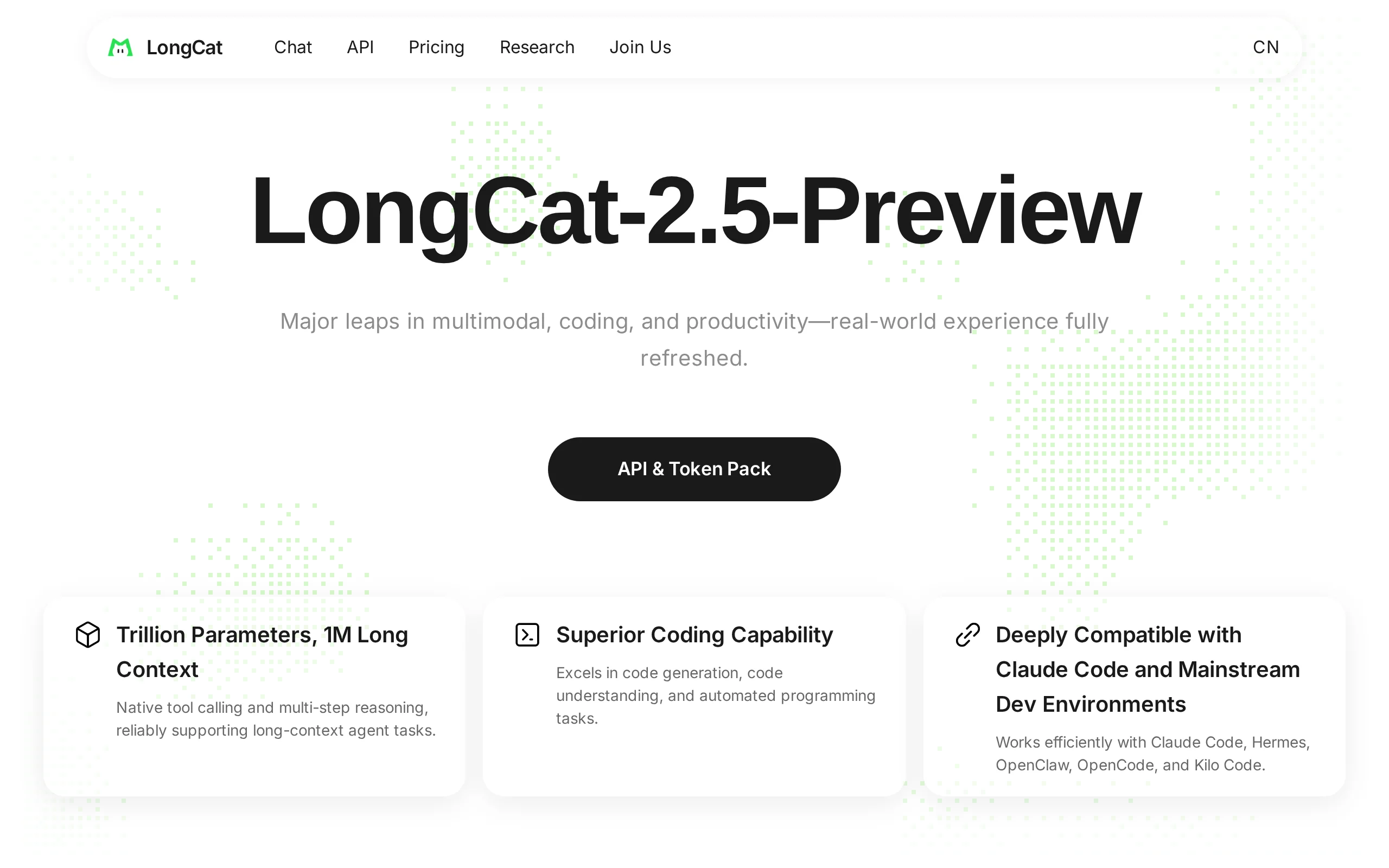
In-Depth Review of Longcat-2.5-preview: Meituan's Next-Generation Multimodal Long-Range Agent Model
LongCat-2.5-preview is Meituan's latest next-generation large model. Building upon the 1.6T total parameters, approximately 48B active parameters, and native 1M token context of LongCat-2.0, it marks ...
Review of DeepSeek Harness Desktop: How the Official GUI Client Lowers the Bar for Agent Usage
DeepSeek Harness Desktop is the official graphical client launched by DeepSeek, designed to provide a visual interface for the originally command-line-based DeepSeek Harness framework. After users log...
Step Code – In-Depth Review of StepFun's Open-Source Terminal Programming Agent
Step Code is an open-source terminal programming agent launched by StepFun, licensed under the MIT License, which allows developers to complete the full workflow of code writing, debugging, execution,...
© All Rights Reserved. Some content on this site is partially generated by AI with human review.