
img2threejs – Open-Source AI Skill for Converting Single Images into Three.js 3D Models
Executive Summary:
img2threejs is an open-source AI Skill developed by developer hoainho, capable of automatically converting a single reference image into an interactive Three.js 3D model. This tool deeply analyzes the...
1. What is img2threejs
img2threejs is an open-source AI Skill developed by developer hoainho, capable of automatically converting a single reference image into an interactive Three.js 3D model. This tool deeply analyzes the silhouette, proportions, material, and surface details of the image to generate a structured modeling specification document. It then reconstructs the object using basic Three.js geometry and procedural textures, ultimately outputting a pure code model. The entire process does not require importing external mesh files, and the model can be directly embedded in web pages with version control, providing a fully automated path from image to 3D code for Web front-end developers.
Technical Positioning and Domain: Belongs to the field of AI-assisted 3D content generation, combining object recognition from computer vision with procedural modeling techniques. It is positioned as a lightweight 3D modeling solution for front-end developers and technical creators. It fills the gap in the automatic generation of pure code 3D models, offering a differentiated approach from mainstream end-to-end mesh generation tools.
Development Background: Developed by individual contributor hoainho within the Three.js ecosystem, with the goal of reducing the technical barriers to 3D content creation. Traditional 3D modeling relies on professional software such as Blender and Maya, and the resulting binary files are difficult to manage in version control or review in code. img2threejs aims to allow developers to create 3D assets using a familiar JavaScript workflow.
Core Value: Addresses the pain points of complex traditional 3D modeling workflows, reliance on professional software, and difficulties in collaboration due to binary files. By providing pure code output, it enables models to be readable, editable, and managed with Git, significantly improving team collaboration efficiency and development iteration speed. It also allows 3D models to be integrated into CI/CD pipelines just like regular code.
Technical Features: Utilizes a "specification-first" approach combined with a "phased quality gate" mechanism, first analyzing the image to generate a structured specification, then progressively building the model and conducting visual comparison scoring at each stage to ensure output quality. The procedural material system supports dynamic surface details such as lines, grain, bump, welds, and rivets, generating noise and roughness maps dynamically based on model size to ensure visual consistency across different scaling levels.
2. Key Features
Specification-First Mechanism: Before generating the model, AI performs a deep analysis of the image, extracting information such as object outlines, proportions, component divisions, and material properties to create a structured modeling specification document. This mechanism ensures that subsequent code generation has a clear blueprint, reducing the modeling failure rate from the source and avoiding repeated corrections caused by blind generation.
Phased Quality Gates: The model generation process proceeds layer by layer, from outline → structure → material → lighting. After completing each phase, the system captures a real browser rendering screenshot and compares it visually with the reference image, assigning a score. Only if the score meets the threshold will the system proceed to the next phase. If it does not meet the standard, the system automatically determines whether to refine the specification, rewrite the code, or request additional reference images from the user, ensuring the final output quality.
Procedural Material System: Supports dynamically generated surface noise, roughness maps, ambient occlusion, panel lines, repeating patterns, and wear and tear effects based on the model's dimensions. It also provides adjustable parameters such as polishing, grain, bump, weld seams, and rivets, ensuring visual consistency across different scaling levels without the need for additional texture images.
Pure Code Output: The final model is entirely composed of Three.js code, with no binary mesh files involved. Developers can directly adjust dimensions, colors, material parameters, and interaction logic within the code, facilitating version control, code reviews, and further development. The model can be forked and merged just like regular code.
Single Image to 3D Model: Users only need to provide a single reference image, and the AI automatically completes object recognition, 3D reconstruction, and material mapping to generate an interactive 3D model. This significantly reduces the time and skill requirements for 3D content creation, allowing users to generate their first model in about 10 minutes after installation.
Animation and Interaction Expansion: The generated models come with standardized parent-child hierarchy structures and rotation control nodes, enabling developers to easily expand complex interactions and animations such as mechanical unfolding, particle effects, and physics-based collisions without needing to rebuild the model. The consistent naming and hierarchy conventions make subsequent development highly predictable.
3. How to Use
Environment Setup: Ensure that Node.js (recommended version v16+) and the npm package manager are installed on your system. Clone the project to your local machine by running
git clone (link to be updated after official release)from the terminal.Install Dependencies: Navigate to the project directory
cd img2threejs, and runnpm installto install all required dependency packages, including Three.js and image processing libraries. The installation process typically takes only a few dozen seconds.Prepare Reference Image: Place a single image of the target object (recommended to be a front-facing image with a simple background and even lighting, in PNG or JPG format, with a resolution of no less than 512×512) into the
inputfolder within the project. You can add multiple images sequentially if you wish to try them.Start Generation: Run
npm startor the specified startup command in the project's README. The AI will automatically analyze the image and generate the modeling specifications, then build the code model in stages. Progress and visual inspection results will be displayed in the terminal, and a preview screenshot will be generated after each stage is completed.Iterative Optimization: Review the preview screenshots generated at each stage. If the system indicates that the quality is not up to standard, you can adjust the specification description, add more reference images, or modify the input image, and then re-run the generation command. The number of iterations depends on the desired level of precision.
Export and Use: The final model code is saved in the
outputdirectory, usually as one or more.jsfiles. You can directly copy these files into a web project and use<script>tags to import and instantiate the 3D scene. The model will then be interactively displayed in the browser.
4. Pros and Cons Analysis
| Pros |
|---|
| Zero external dependencies: All code is generated internally, without the need for modeling software like Blender. The model can be directly embedded in web pages and managed via Git, reducing collaboration and version management costs for teams. |
| Quality gatekeeping assurance: A multi-stage visual inspection mechanism ensures the generated model is highly consistent with the reference image. Automatic corrections reduce rework costs and improve generation success rates. |
| Highly extensible: The generated models come with standardized naming and hierarchical structures, making it easier to add animations, physics, and interactive logic afterward. This is ideal for technical creators looking to perform secondary development. |
| Quick to get started: From installation to generating the first model takes about 10 minutes, significantly lowering the barrier to 3D content creation and making it suitable for rapid prototyping and validation. |
5. Comparative Analysis with Similar Tools
| Comparison Dimension | img2threejs | Tripo3D |
|---|---|---|
| Output Form | Pure Three.js code, directly embeddable in web pages and manageable via Git | Exports standard 3D mesh files (GLB/OBJ), requiring additional loading and rendering |
| Generation Logic | First analyzes the image to generate a structured specification, then builds code in stages, allowing for layer-by-layer correction | End-to-end neural network directly infers and generates 3D mesh, fast but with low controllability |
| Editability | Parameters, materials, and geometry are fully code-based, editable line by line with high flexibility | Requires importing into tools like Blender for secondary editing, limiting flexibility |
| Target Users | Front-end developers, technically-oriented creators, and users requiring programmatic control | Designers, artists, and users seeking zero-code rapid generation |
| Animation Extension | Natively supports parent-child hierarchy and rotation nodes, making it easy to expand interactivity and animations | Requires manual skeleton binding or importing into a game engine to handle animation logic |
| Open Source License | Open source (specific license details in the repository's LICENSE file) | Commercial product, API usage requires payment |
6. Editor's Summary
img2threejs introduces a unique "code generation" paradigm in the field of AI-assisted 3D modeling, offering a striking contrast to the mainstream end-to-end mesh generation approach. Its technological innovation lies in the "specification-first" and "phased quality gatekeeping" mechanisms, which not only enhance the controllability and quality of the generated results but also make the model generation process interpretable and debuggable, holding significant value in practical development. In terms of practical utility, img2threejs greatly reduces the barrier for Web front-end developers to enter 3D content creation, enabling 3D models to be version-controlled, code-reviewed, and integrated continuously, just like regular code. This aligns closely with modern Web development workflows. The tool is particularly suitable for front-end developers, technically inclined creative professionals, and teams requiring programmatic control over 3D assets. For designers or non-technical users, the learning curve is relatively steep, requiring a certain foundation in JavaScript and Three.js. In terms of future development potential, if the project continues to expand support for multi-image input, complex geometric combinations, optimizes its material system, and builds an active community ecosystem, it has the potential to become a crucial infrastructure for programmatic 3D modeling on the Web. Overall, img2threejs is a directionally clear and conceptually novel open-source project, offering irreplaceable advantages in specific scenarios.
7. Application Scenarios
E-commerce 3D Display: Convert product images into 360° rotatable and zoomable 3D preview models that can be embedded directly into product detail pages. This replaces traditional static images, increasing user browsing time and purchase conversion rates. The model code can be embedded directly into the product detail page, eliminating the need to load additional 3D files and significantly improving loading speed.
Game Prototype Development: Quickly generate hierarchical Three.js assets such as props, weapons, or vehicles from concept art, directly integrating them into game engines for playtesting. Procedural materials allow for easy iteration and adjustment of appearance, while parent-child hierarchies facilitate the attachment of animation scripts, accelerating the transition from concept to playable prototype.
Interactive Educational Materials: Convert images of mechanical structures, spacecraft, or architectural models into interactive, disassemblable, and annotatable 3D teaching models. Students can use a mouse to explore internal structures, enhancing classroom immersion and depth of understanding. The model code can be embedded directly into web-based courseware, eliminating the need for additional software installation.
Marketing Page Effects: Generate 3D visual focal points for brand activity landing pages, featuring effects such as particle flames, dynamic unfolding, or rotating displays. These replace traditional static banners, capturing user attention and improving brand recall. The pure code model makes it easy to integrate with frontend animation libraries, enabling rich interactive effects.
Open Source Project Assets: Generate pure code 3D models and manage them alongside repository versions to avoid collaboration conflicts and repository bloat caused by binary mesh files. Community contributors can directly modify model code through Pull Requests, reducing the maintenance cost of 3D assets.
8. FAQ
Q: What hardware and software requirements does img2threejs have?
A: You need a computer that can run Node.js (Windows/macOS/Linux are all supported), and no dedicated GPU is required. It is recommended to use a computer with a good CPU performance (such as Intel i5 or higher) and at least 8GB of memory. Software-wise, you need to install Node.js (v14+) and npm.
Q: What image formats are supported? Are there any size or content requirements?
A: It supports common formats such as PNG, JPG, JPEG, and WEBP. It is recommended to use images with a resolution of no less than 512×512, where the main object is clear, the background is simple, and the lighting is even. Avoid complex occlusions or perspective distortions to achieve the best modeling results.
Q: How long does it take to generate a model?
A: The generation time depends on the complexity of the image and the number of iterations during the phased validation process. Simple objects (such as combinations of cubes) take about 1-2 minutes, while complex objects (with multiple components and materials) may require 3-5 minutes or longer. Each iteration adjustment increases the time.
Q: Can the generated models be used in commercial projects?
A: The project uses an open-source license (see the LICENSE file in the repository for details), which typically allows commercial use, but may require retaining copyright notices or adhering to other terms. It is recommended to carefully read the license content before use.
Q: How can I adjust the material color or size of the generated model?
A: All material parameters (color, roughness, metallic, etc.) and geometric dimensions in the model code are defined as variables. Simply modify the corresponding values directly. Parameters for procedural textures can also be adjusted in the code without needing to regenerate the model.
Q: Does it support inputting multiple images to improve model accuracy?
A: The current version only supports single-image input. Future versions may support multi-view input, but currently, users can improve results through iterative optimization (such as adding reference image descriptions or adjusting specifications).
9. Project Links
- GitHub repository: https://github.com/hoainho/img2threejs
Related AI Model Articles
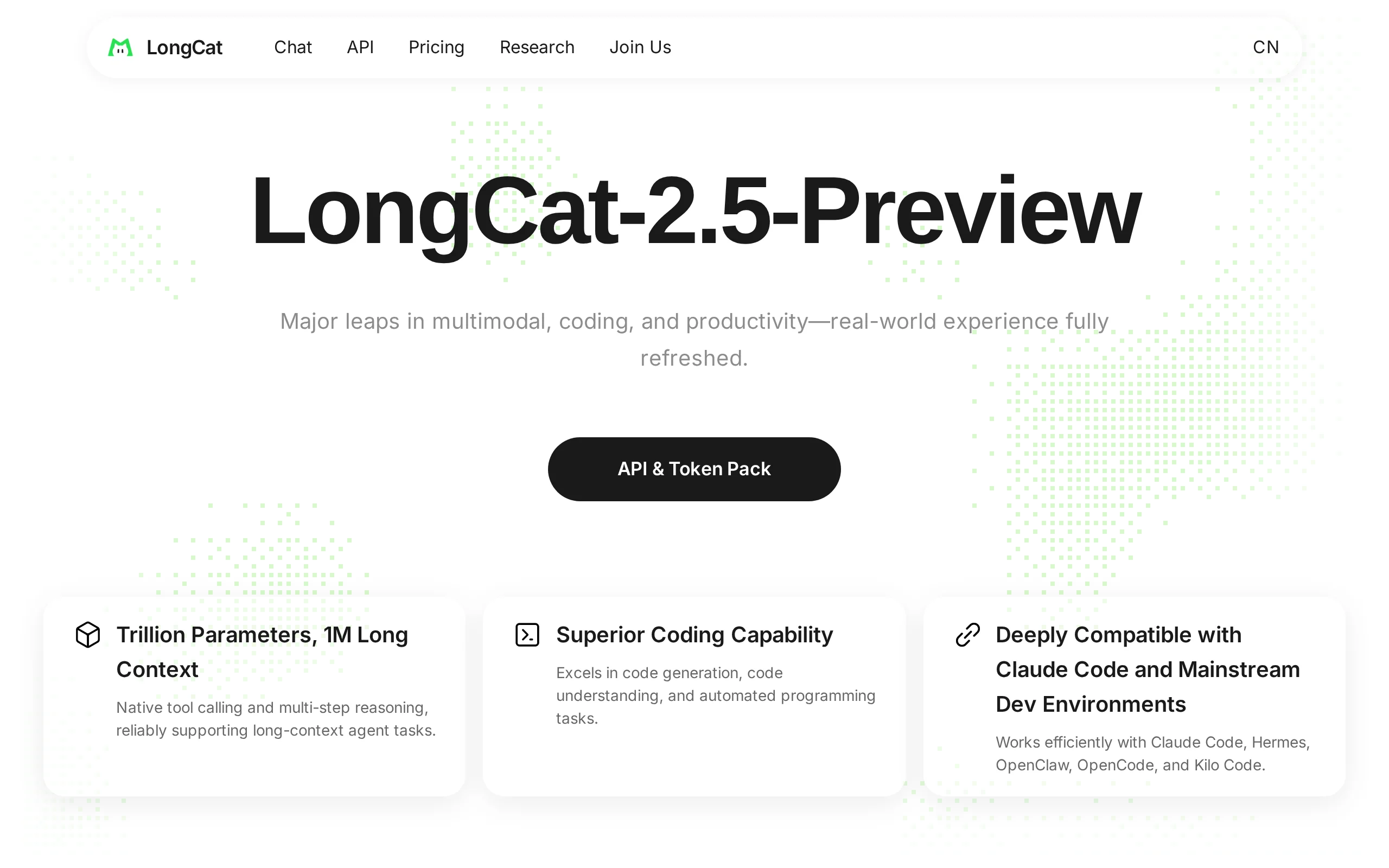
In-Depth Review of Longcat-2.5-preview: Meituan's Next-Generation Multimodal Long-Range Agent Model
LongCat-2.5-preview is Meituan's latest next-generation large model. Building upon the 1.6T total parameters, approximately 48B active parameters, and native 1M token context of LongCat-2.0, it marks ...

In-Depth Review of Spark-ASR-2.0: A New Paradigm in Speech Recognition with Non-Autoregressive Architecture
Spark-ASR-2.0 is the latest generation speech recognition large model launched by iFLYTEK based on its proprietary Spark-Audio speech foundation model. This model continues the non-autoregressive para...
Step Code – In-Depth Review of StepFun's Open-Source Terminal Programming Agent
Step Code is an open-source terminal programming agent launched by StepFun, licensed under the MIT License, which allows developers to complete the full workflow of code writing, debugging, execution,...
Xiaomi MiMo-V2.6 – Xiaomi's Open-Source Multimodal Model Series
Xiaomi MiMo-V2.6 is a series of fully multimodal models released and open-sourced by Xiaomi, comprising two native full-modal models: Pro and Flash. It is centered on large-scale Agentic reinforcement...
© All Rights Reserved. Some content on this site is partially generated by AI with human review.