
In-Depth Review of Hy4 preview Lightweight Version: Tencent HunYuan's Ultimate Quantization Compression Practice
Executive Summary:
The Hy4 preview Lightweight Version is a quantized compression variant of the flagship open-source large model Hy4 preview, developed by Tencent HunYuan. By employing its proprietary Sherry 1.25-bit s...
1. What is Hy4 preview Lightweight Version
The Hy4 preview Lightweight Version is a quantized compression variant of the flagship open-source large model Hy4 preview, developed by Tencent HunYuan. By employing its proprietary Sherry 1.25-bit sparse ternary quantization and MIX-STQ1_0 per-layer mixed precision technology, the model's weight, originally as large as 1.5TB, is compressed down to approximately 214GB. This version significantly reduces the hardware deployment threshold while maintaining core capabilities such as long-text understanding, code generation, and scientific reasoning. It also supports cross-local-network joint inference across multiple heterogeneous devices, enabling ordinary developers and small to medium-sized teams to run most of the flagship model's features locally. This breaks the limitation that super-large models can only be deployed on high-end clusters.
Technical Positioning and Domain: Belongs to the field of efficient compression and lightweight deployment of large language models (LLM), with core research directions focusing on low-bit quantization, mixed precision allocation, and distributed inference. The model is positioned to bridge the gap between consumer-grade and professional-grade hardware, addressing the industry pain point of the difficulty in local deployment caused by the large size of flagship MoE models. It fills the technical gap for low-cost private deployment of ultra-large-scale models.
Development Background: The model was developed by the Tencent HunYuan Large Model team, based on its long-term technical accumulation in MoE (Mixture of Experts) architecture, sparse quantization, and inference engines. The motivation for development stemmed from the original Hy4 preview's 1.5TB size, which imposes extremely high demands on hardware resources. Most developers and enterprises find it difficult to afford the procurement and maintenance costs of multi-GPU A100/H100 clusters. Therefore, the team turned to model compression techniques to explore feasible paths for significantly reducing the model's size without a significant sacrifice in performance.
Core Value: Solves the practical challenge of flagship open-source large models being "capable but unrunnable." By compressing the model to about 14% of its original size, it can be run on a single server with 80GB GPU memory and 64GB system memory. Furthermore, the configuration requirements for individual machines can be further reduced through cross-device concatenation. This technology brings capabilities such as long-text understanding and code generation—previously exclusive to high-end clusters—into the reach of ordinary developers, directly promoting the democratization of AI technology and private deployment within enterprises.
Technical Features: The core innovation lies in combining sparse ternary quantization (Sherry) with an average of 1.25 bits per weight and the MIX-STQ1_0 mixed precision strategy that allocates precision based on layer sensitivity, achieving a good balance between compression ratio and quality loss. Additionally, the model natively supports heterogeneous distributed inference based on prima.cpp, allowing multiple devices with different configurations to collaborate in computation. This is a rare differentiating capability among similar quantization solutions.
2. Key Features
Code Generation and Engineering Problem Solving: The model achieves a score of 81.3% in the SWE-Bench multilingual code evaluation, capable of handling programming tasks ranging from function completion to complex engineering problem resolution. For developers, its code generation capabilities surpass most general-purpose assistant models, enabling use in real-world projects for bug localization, patch generation, and cross-file refactoring, demonstrating practical value in private code assistance scenarios.
Long-Context Precise Retrieval: Supports contextual understanding and key information extraction from ultra-long documents, accurately locating detailed content within lengthy texts during multi-turn conversations. Testing shows its long-text comprehension is nearly on par with the original BF16 version, indicating minimal disruption to the attention mechanism and long-range dependency modeling during compression. This makes it suitable for question-answering and summarization tasks involving hundreds-of-page documents such as legal contracts and academic papers.
Intelligent Office Document Processing: Offers long-document summarization, structured information extraction, and standard question-answering capabilities, applicable to scenarios like report organization, email categorization, and meeting minutes generation in daily office work. The practical value of this feature lies in embedding large models into enterprise knowledge base systems, enabling natural language queries on internal documents without the need to upload data to public cloud services.
Scientific Reasoning and Mathematical Computation: Possesses the ability to perform mathematical derivation, formula computation, and scientific problem-solving, maintaining stable performance in scenarios requiring logical deduction and numerical calculation. The model sustains good accuracy when handling multi-step reasoning and symbolic computation, with only a slight decline compared to the original version, making it sufficient for cost-sensitive reasoning applications such as scientific research support and educational tutoring.
External Tool Calling and Agent Orchestration: Connects to external tools and APIs via protocols such as MCP (Model Context Protocol), enabling automated task execution and complex workflow orchestration. The model performs exceptionally well in tool calling evaluations and can serve as the reasoning core for Agent systems, integrating multiple external services such as database queries, network requests, and office software operations to complete automated processes like data scraping and report generation.
Runnable Game Generation: Based on natural language instructions, the model can generate executable game programs that include graphical interfaces and interactive logic, such as the official NEON DRIFT example. This capability demonstrates the model's strong understanding and generation abilities for structured code and UI frameworks, making it applicable for scenarios like prototype validation, teaching demonstrations, and creative tools, representing an extension of its coding abilities into the entertainment domain.
Heterogeneous Device Joint Inference: Through prima.cpp, the model enables device scheduling across local networks, splitting the MoE layer into multiple shards and distributing them across machines with different configurations (such as a laptop with RTX 4090 and a server with A4000) for collaborative execution. This feature hides communication latency by overlapping computation and weight loading, allowing a 214GB model to achieve usable inference speeds in a heterogeneous environment with a combined 144GB of GPU memory and system memory, establishing a distributed inference solution that does not require a homogeneous high-end cluster.
3. How to Use
Environment Requirements and Prerequisites: For single-machine operation, it is recommended to use a GPU with at least 80GB of VRAM (such as NVIDIA A100, RTX A6000, or RTX 4090) and a system memory of 64GB or more. If using a heterogeneous collaborative inference approach, all participating devices must be on the same local network, and the combined VRAM and memory should be no less than 144GB. The recommended operating system is Linux (Ubuntu 20.04 or higher) or Windows 10/11, which must support NVIDIA drivers with CUDA 12.x or higher.
Model Acquisition: Download the quantized GGUF format model file from the official Hugging Face repository AngelSlim/Hy4-preview-GGUF to your local machine. This repository contains the full weights processed with Sherry quantization and MIX-STQ1_0 mixed-precision techniques. After downloading, verify the file integrity and ensure the size is approximately 214GB with no missing shards.
Inference Framework Setup: Obtain a version of llama.cpp that supports the STQ1_0 inference kernel (either build from the official source code or obtain a precompiled package that includes this kernel). When building, enable SIMD optimization instruction sets (such as AVX2/AVX512) to fully leverage the compatibility advantages of Sherry quantization with SIMD. Confirm that llama.cpp has been correctly compiled and can load the custom quantized format.
Local Inference Execution: Load the 214GB model file using llama.cpp, specifying parameters such as context length, batch size, and the number of GPU layers via the command line. It is recommended to assign as many layers as possible to the GPU to improve speed, with the remaining layers executed via memory offloading. After launching, you can test and invoke the model using an OpenAI-compatible API or a local interactive interface to verify whether core functions such as code generation and long-text Q&A are operating normally.
Heterogeneous Distributed Deployment: If you need cross-device collaborative inference, install and configure the prima.cpp distributed runtime. On the main control node, define the roles and communication network of each participating device (such as a laptop with RTX 4090 or a server with A4000). Split the model's MoE layers according to the VRAM capacity of each device and assign an execution plan. After launching, monitor the load on each node and network transmission, and optimize overall throughput by adjusting the sharding granularity and batch size.
Performance Verification and Optimization: Run the official recommended benchmark test suite (such as long-text retrieval and code generation examples) to compare the output quality before and after compression. If the speed is unsatisfactory, prioritize adjusting the context length, reducing the batch size, or increasing the memory offloading ratio. If the accuracy is abnormal, consider replacing the precision level of sensitive layers or recalibrating.
4. Pros and Cons Analysis
| Pros |
|---|
| Extreme Compression Lowers Barriers: Compresses a 1.5TB model down to approximately 214GB, reducing the size by 86%. A single GPU with 80GB VRAM is sufficient for deployment, significantly lowering the hardware requirements for running flagship models locally. |
| Good Control of Quality Loss: MIX-STQ1_0 allocates precision based on layer sensitivity, resulting in overall error rates lower than uniform quantization baselines. Long-text understanding and multi-round retrieval are almost lossless, with only minor performance drops in code and mathematical tasks. |
| Heterogeneous Joint Inference Capability: Natively supports collaborative operation across multiple devices with different configurations over a local network, eliminating the need to purchase homogeneous high-end clusters. It can effectively utilize idle hardware resources to build a distributed inference environment. |
| Innovative Technical Approach: Sherry's sparse ternary quantization achieves a storage efficiency of 1.25 bits per weight and naturally supports SIMD acceleration, providing speed advantages among low-bit quantization schemes. The open-source strategy also facilitates community verification and improvement. |
5. Comparative Analysis with Similar Tools
| Comparison Dimension | Hy4 preview Lightweight Edition | DeepSeek-V4 | Kimi K2 |
|---|---|---|---|
| Publisher | Tencent Hunyuan | DeepSeek | Moonshot AI |
| Model Architecture | MoE, total parameters near 1.5T | MoE, total parameters 1.6T (activated ~32B) | MoE, total parameters over 1T |
| Lightweight Model Size | 214GB (MIX-STQ1_0 quantization) | Official FP8 ~300GB+, Community INT4 ~200GB | Community quantization ~hundreds of GB (no official lightweight version) |
| Core Compression Technology | Self-developed Sherry 1.25bit sparse ternary quantization + layer-wise mixed precision | Official native FP8 training, community relies on standard GGUF/Q4_K_M | No official compression scheme, relies on community uniform quantization |
| SWE-Bench Multilingual | 81.3% | ~82.6% (original version) | Specific score not disclosed |
| Long Context Retrieval | Almost identical to BF16 original version, minimal loss | 128K context, excellent performance | Supports ultra-long context, performance pending third-party verification |
| Minimum Deployment Threshold | Single machine with 80GB VRAM + 64GB RAM, or heterogeneous joint deployment | Full FP8 requires multiple A100/H100 cards, single card requires significant offloading | Requires multiple high-end GPU cards or hundreds of GB of RAM |
| Heterogeneous Joint Inference | Native support (prima.cpp cross-device cross-LAN scheduling) | No official support, requires self-built distributed framework | No official support |
| Open Source License | Open source, weights publicly available | Open source, weights publicly available | Open source, weights publicly available |
Selection Recommendations: If the primary goal of the enterprise is to privately deploy a large-scale MoE model under limited budget, and to utilize existing devices with various configurations, then the Hy4 preview Lightweight Edition is currently one of the few options that natively supports heterogeneous joint inference. Its compressed size and quality control also achieve a good balance. For teams with better hardware conditions and access to a multi-card A100/H100 cluster, the official FP8 version of DeepSeek-V4 still holds certain advantages in terms of precision retention and overall performance, and its community ecosystem is more mature.
If the deployment target is lightweight applications and fast response, with no high demand for parameter scale, the community INT4 quantized version of Qwen2.5-72B can run on a single card, offering the lowest deployment difficulty and being suitable for quick deployment in small and medium-sized businesses. Although Kimi K2 also employs a large MoE architecture, it lacks official support for quantization compression and heterogeneous inference, resulting in higher technical costs for self-modification. It is more suitable for teams with strong in-house capabilities in distributed systems.
6. Editor's Summary
The Hy4 preview lightweight version demonstrates Tencent HunYuan's substantive exploration in the field of model compression from a technical perspective. Sherry's sparse ternary quantization maps groups of four weights to {-1, 0, +1}, while forcibly retaining one zero value, requiring only 5 bits of encoding per group and achieving an average storage efficiency of 1.25 bits per weight. This design approach breaks free from the constraints of traditional low-bit quantization and achieves a good balance between compression ratio and SIMD acceleration. The MIX-STQ1_0 per-layer mixed-precision strategy is also worth noting, as it abandons the "one-size-fits-all" uniform quantization method. Instead, it evaluates sensitivity layer by layer based on a calibration set and dynamically assigns precision, resulting in an average of 1.78 bits per weight for routing expert weights, with overall error even lower than the uniform quantization baseline. This indicates that modeling based on layer sensitivity is an effective path for precision preservation.
In terms of practical value, this model reduces the deployment threshold of flagship-level MoE models from multi-GPU high-end clusters to a single professional workstation. It also incorporates idle heterogeneous devices into the available inference resource pool, directly benefiting small and medium enterprises in private deployment and AI application innovation. Its 81.3% performance on the SWE-Bench multilingual benchmark ensures the usability of its code generation capabilities, and its nearly lossless long-text retrieval ability makes it a strong candidate for enterprise knowledge base Q&A systems. The target user group for this model is clearly defined: developers with a certain level of technical expertise, AI application entrepreneurs, and mid-sized enterprises wishing to use large models without transmitting data outside the internal network.
From the perspective of potential for development, although the heterogeneous joint inference capability of this solution still has room for improvement in terms of ecosystem maturity and usability, it represents a shift from "hardware stacking" to "solving problems with software." As distributed scheduling frameworks like prima.cpp continue to evolve, and more inference frameworks become compatible with the STQ1_0 kernel, such quantized and compressed models are expected to be deployed in more practical business scenarios. At the same time, this open-source practice provides other large model teams with reusable compression ideas, offering reference value for promoting efficient deployment across the industry.
7. Application Scenarios
Private Code Development Assistant: Enterprises can deploy the model within their internal network environment, integrating it as a programming Copilot into their internal code repositories. With its 81.3% capability across multiple languages on the SWE-Bench, the model can assist developers with code reviews, bug detection, and patch generation, enhancing R&D efficiency while ensuring that code assets remain secure and do not leak outside the organization. This scenario requires high data privacy, and the model's localized nature perfectly meets this need.
Intelligent Q&A System for Long Documents: Leveraging the model's near-lossless long-context retrieval capability, build Q&A and summarization services for professional documents such as legal contracts, academic paper libraries, and annual reports of listed companies, which can be hundreds of pages long. Users can pose complex questions in natural language, such as "Find the clauses regarding penalty fees in the contract" or "Compare the changes in R&D investment over the past three years in the financial reports," and the system can accurately locate and extract key information, replacing the tedious manual process of reviewing documents.
Low-Cost AI Service Setup Across Devices: In office environments, connect idle RTX 4090 laptops with servers equipped with A4000 GPUs via a local network to jointly run a 214GB model. Each device performs computations on different layers according to its GPU memory capacity, eliminating the need to purchase a homogeneous high-end GPU cluster, and enabling the team to access AI services such as conversation, writing, and code assistance internally, maximizing the utilization of existing hardware resources.
Automated Tool Orchestration Agent: The model connects external APIs and databases using the MCP protocol to build automated workflows. For example, regularly fetching industry data, generating analysis reports, updating knowledge base entries, or executing scheduled report deliveries. The model's leading performance in tool calling enables it to reliably handle multi-step Agent tasks, reducing the need for manual intervention.
Research Computing Assistant for Inference: Research institutions can use the model as an auxiliary tool for mathematical derivation and scientific computation, supporting tasks such as formula solving, preliminary analysis of experimental data, and logical validation of academic papers. It can run on a laboratory server equipped with a single 80GB GPU, eliminating the need to queue for cloud computing resources, making it ideal for frequent inference-based computational needs within research teams.
8. FAQ
Q: How much core capability is lost in the lightweight version compared to the 1.5TB original version?
A: According to official evaluations, the lightweight version performs almost equally to the BF16 original version in long-text understanding and multi-turn retrieval, with minimal loss. There is a slight decline in code generation (SWE-Bench 81.3%) and mathematical reasoning capabilities, but it remains usable. The extent of capability loss varies by task type. Daily productivity scenarios (document processing, code assistance, tool calling) are largely unaffected, while high-difficulty competition-level mathematics or complex engineering reconstruction tasks may show some differences.
Q: What is the minimum hardware configuration required to run this model?
A: The minimum requirement for single-machine operation is an 80GB GPU memory (such as NVIDIA RTX A6000 or A100) and 64GB or more system memory, with some layers needing to be executed via memory offloading. If using a heterogeneous collaborative inference mode, the combined GPU and system memory across multiple devices should be no less than 144GB, and all devices must be on the same local network, using prima.cpp to form a network and perform collaborative computation. Ordinary consumer-grade GPUs (such as RTX 3060 12GB) cannot run this model independently.
Q: Are there any special requirements for the inference framework?
A: The model uses a proprietary STQ1_0 quantization format and must be loaded and run using a llama.cpp version that supports this inference kernel. Loading it directly using conventional GGUF inference frameworks may result in errors or incorrect outputs. Additionally, for heterogeneous distributed deployment, the prima.cpp runtime must be installed. The branch of the framework that currently supports STQ1_0 is open source, and SIMD optimization (AVX2/AVX512) must be enabled during the build process to achieve optimal inference performance.
Q: How can multiple devices be connected for heterogeneous collaborative inference?
A: First, ensure that all devices are on the same local network and have the prima.cpp runtime installed. Then, the main control node defines each device's role (such as a laptop with a 4090 GPU and a server with an A4000 GPU), splits the model's MoE layers based on GPU memory capacity, and assigns an execution plan. The system hides cross-device communication latency by overlapping computation and weight loading. Users can optimize overall performance by adjusting the sharding granularity and batch processing parameters in the configuration file.
Q: Can this model be used for commercial purposes? What is the open-source license?
A: The lightweight version of Hy4 preview follows the open-source license of Tencent HunYuan. The model weights have been publicly released on Hugging Face and allow for commercial use. Specific license terms are outlined in the LICENSE file provided in the official repository. It is recommended to carefully review this document before commercial use, especially the clauses regarding the release of model derivatives and the use of model names.
Q: Does quantization compression lead to hallucinations or unstable outputs from the model?
A: Mixed-precision quantization mainly affects the numerical precision of the model and does not directly amplify hallucination issues. Evaluation results show that MIX-STQ1_0 maintains higher precision in sensitive layers, resulting in overall error rates lower than the uniform quantization baseline. Therefore, the output stability of the lightweight version is only slightly different from the original version. If users encounter unstable outputs in specific tasks, they can improve the situation by adjusting sampling parameters (such as reducing temperature) or recalibrating the precision of sensitive layers.
9. Project Links
- Hugging Face Model Library: https://huggingface.co/AngelSlim/Hy4-preview-GGUF
Related AI Model Articles
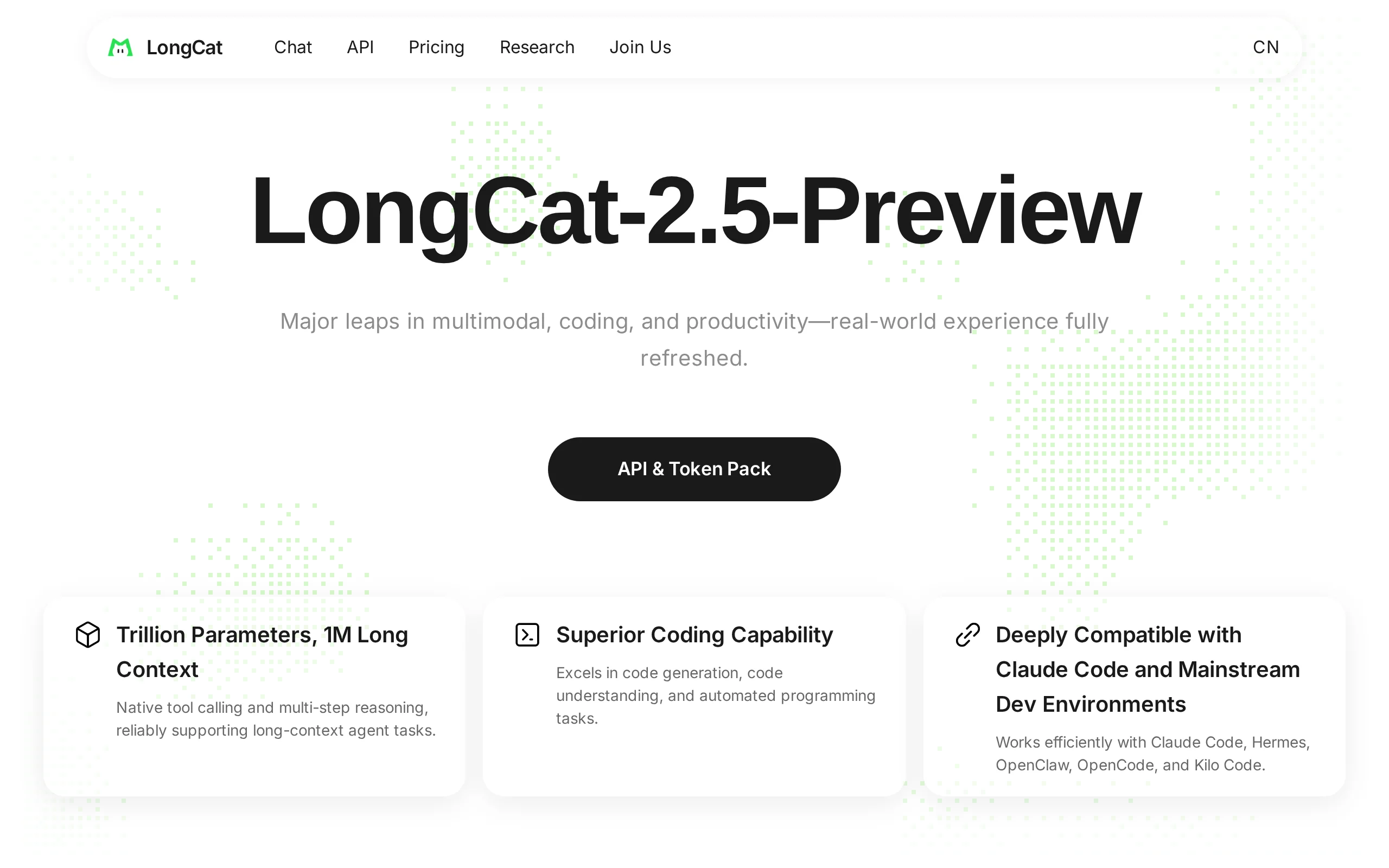
In-Depth Review of Longcat-2.5-preview: Meituan's Next-Generation Multimodal Long-Range Agent Model
LongCat-2.5-preview is Meituan's latest next-generation large model. Building upon the 1.6T total parameters, approximately 48B active parameters, and native 1M token context of LongCat-2.0, it marks ...
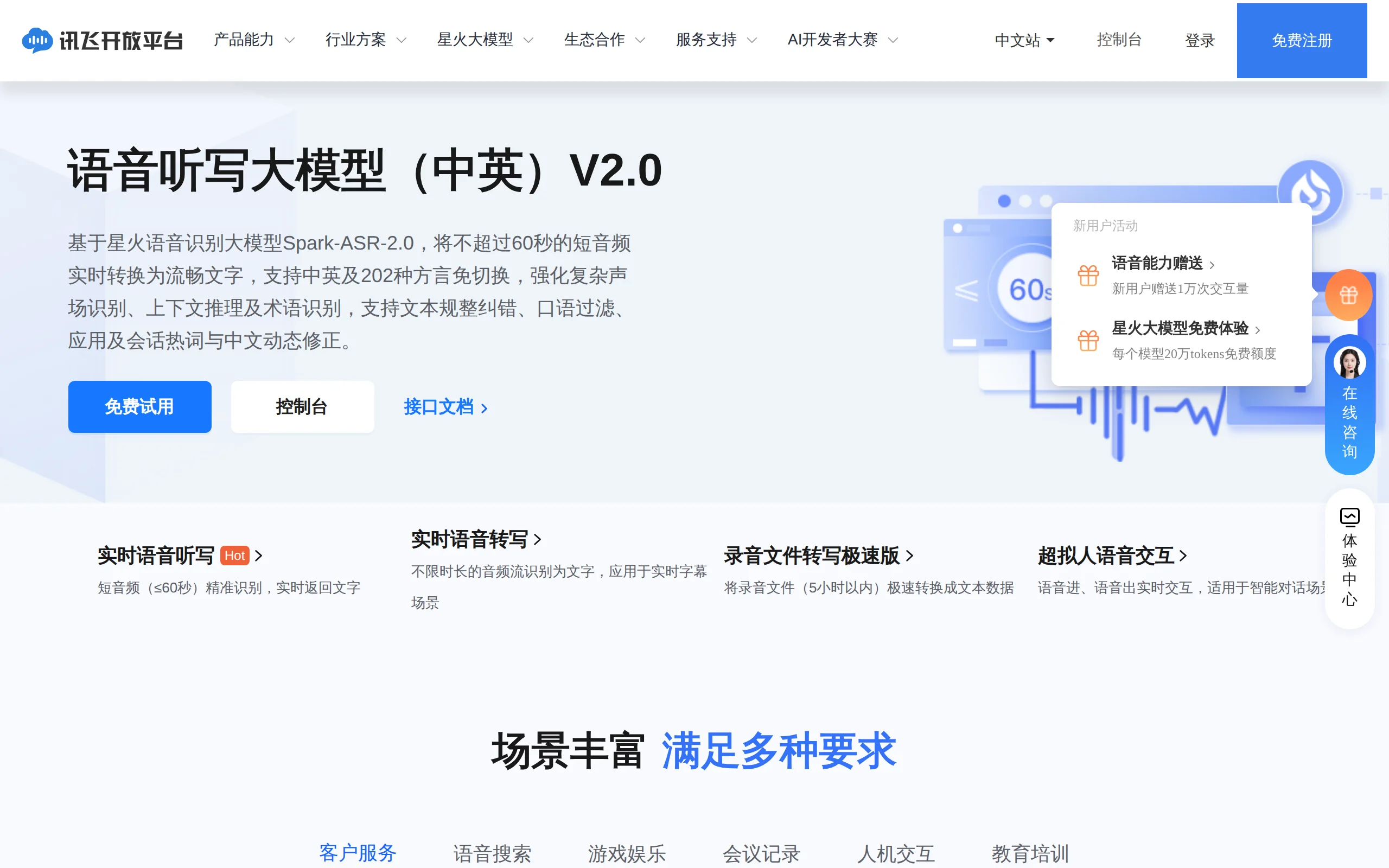
In-Depth Review of Spark-ASR-2.0: A New Paradigm in Speech Recognition with Non-Autoregressive Architecture
Spark-ASR-2.0 is the latest generation speech recognition large model launched by iFLYTEK based on its proprietary Spark-Audio speech foundation model. This model continues the non-autoregressive para...

Step Code – In-Depth Review of StepFun's Open-Source Terminal Programming Agent
Step Code is an open-source terminal programming agent launched by StepFun, licensed under the MIT License, which allows developers to complete the full workflow of code writing, debugging, execution,...
Xiaomi MiMo-V2.6 – Xiaomi's Open-Source Multimodal Model Series
Xiaomi MiMo-V2.6 is a series of fully multimodal models released and open-sourced by Xiaomi, comprising two native full-modal models: Pro and Flash. It is centered on large-scale Agentic reinforcement...
© All Rights Reserved. Some content on this site is partially generated by AI with human review.