
GLM-5.3-Flash – Zhipu AI's Open-Source Native Multimodal Model, Also Known as Ox Alpha
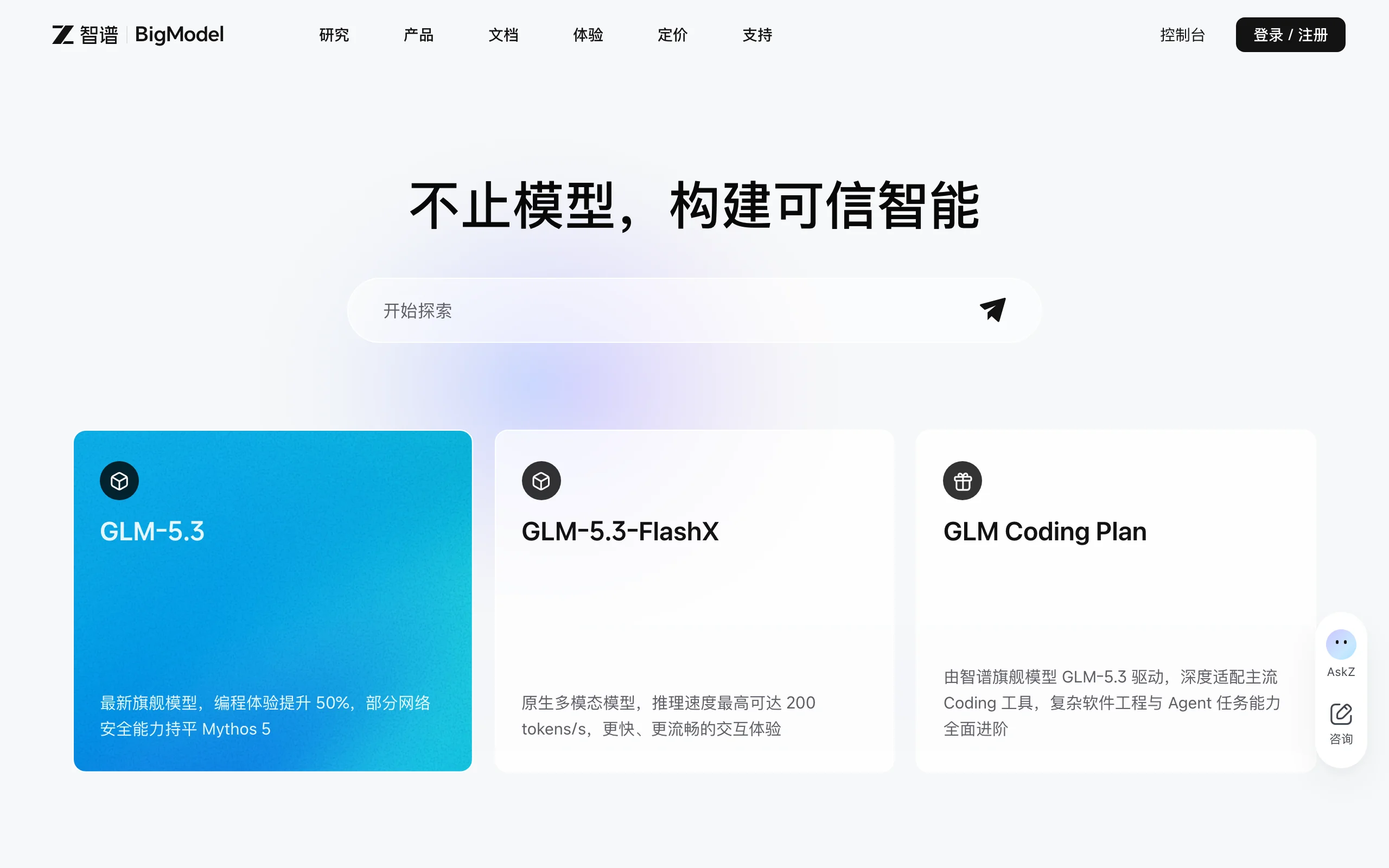
Executive Summary:
GLM-5.3-Flash (also known as Ox Alpha) is the latest open-source large model launched by Zhipu AI, with a total of 320B (32 billion) parameters and only 18B (1.8 billion) activated parameters. It is t...
1. What is GLM-5.3-Flash
GLM-5.3-Flash (also known as Ox Alpha) is the latest open-source large model launched by Zhipu AI, with a total of 320B (32 billion) parameters and only 18B (1.8 billion) activated parameters. It is the first native multimodal model in the GLM-5 series. The model's overall intelligence index reaches 57 points, matching that of Claude Opus 4.8, while its pricing is only one-fortieth of the latter. It employs a hybrid architecture of sparse and linear attention, along with manifold-constrained hyper-connections, supporting visual encoding, code generation, and professional document processing. It achieves large-scale, efficient deployment on domestic chip clusters for the first time, with end-to-end performance improved by three times.
Image source: Official article
Technical Positioning and Domain: GLM-5.3-Flash belongs to the intersection of large language models and multimodal understanding, and is positioned as a high-cost-performance open-source multimodal foundational model. Unlike most models on the market that have "visual capabilities as an add-on," it natively integrates visual encoding into the Transformer architecture, enabling the model to autonomously determine when it needs to "observe" and use visual feedback to guide programming and actions. This design gives it a differentiated advantage in tasks requiring visual perception, such as code generation, professional document processing, and Agent collaboration.
Development Background: This model was developed by Zhipu AI's research team and represents the latest achievement in the continuous iteration of the GLM series. Zhipu AI has deep technical expertise in the large model domain, having previously released multiple generations of products, including GLM-4.5 and GLM-5.2. The motivation behind the development of GLM-5.3-Flash is clear: to maintain a high level of intelligence while significantly reducing inference costs through architectural innovation, and to overcome the bottleneck of large-scale deployment on domestic chips, promoting the democratization of cutting-edge intelligence.
Core Value: The model addresses the core contradiction in the current large model domain: the difficulty of achieving both high performance and low cost. With an overall intelligence index of 57 points comparable to Claude Opus 4.8, its pricing is only one-fortieth of the latter. At the same time, it has for the first time validated the feasibility of large-scale deployment on domestic chip clusters, achieving end-to-end performance three times higher than the baseline, reaching efficiency comparable to mainstream NVIDIA GPUs. This has practical significance for reducing the threshold for enterprise AI applications and promoting the development of domestic computing power ecosystems.
Technical Features: The model uses a hybrid architecture of linear attention and sparse attention, combined with manifold-constrained hyper-connections (mHC) technology. With a total parameter count comparable to GLM-4.5, it reduces the activated parameters from 32B to 18B and the number of layers from 92 to 45, achieving performance that surpasses GLM-5.2 with fewer computational resources. The attention computation and KV cache are reduced by 3.01 times and 4.44 times respectively compared to GLM-5.3, significantly lowering service costs while maintaining precise long-context capabilities.
2. Key Features
Native Multimodal Understanding: GLM-5.3-Flash is the first native multimodal model in the GLM-5 series, supporting joint understanding and generation of text and images. Unlike approaches that concatenate visual capabilities using external tools, the visual module is directly integrated into the model's main architecture, resulting in more natural multimodal semantic alignment and more stable performance on tasks involving mixed text and images.
Visual Encoding and Autonomous Observation: The model natively integrates visual capabilities into its architecture, enabling it to autonomously determine when to "observe" image inputs and use visual feedback to guide programming and actions. This capability is especially useful in scenarios such as web development, game debugging, and 3D scene construction, allowing the model to make judgments and corrections based on actual rendered results rather than relying solely on textual descriptions.
Code Generation and Iteration: Supports tasks such as front-end development, game development, and 3D simulation. The model can self-inspect and iteratively improve its code based on rendering and interaction feedback. Compared to conventional one-time code generation methods, its "generate-validate-correct" closed-loop mechanism significantly enhances code executability and completeness.
Professional Document Processing: Deeply optimized for Office document formats such as PPTX, PDF, DOCX, and XLSX, the model possesses aesthetic judgment and self-validation capabilities. It can understand the layout structure, visual hierarchy, and content logic of documents, producing output formats that are ready for direct delivery and applicable to office automation scenarios.
Financial and Legal Work: Covers professional scenarios such as financial research report generation, modeling analysis, contract review, and legal document drafting. The model has been specifically optimized for terminology systems, document standards, and output formats in specialized fields, providing traceable data sources and content that complies with practical legal and financial norms.
Agent Collaboration: Through the Browser Use Agent and Computer Use Agent, the model can collaborate across code editors, browsers, and graphical interfaces to complete complex cross-application task workflows. This capability transforms GLM-5.3-Flash from a mere conversational model into a foundational intelligent agent capable of executing multi-step tasks.
Outstanding Cost-Performance Ratio: With a comprehensive intelligence score of 57, it matches Claude Opus, while its pricing is only 1/40th of that model. During limited-time discounts, it is priced at just 1/20th of GLM-5.3. This pricing strategy significantly reduces the barrier to entry for high-performance multimodal models, making it affordable for small and medium-sized teams as well as individual developers to access cutting-edge model inference capabilities.
3. How to Use
BigModel API Integration: Visit the BigModel open platform (link to be updated after official release) and obtain an API Key to call the
glm-5.3-flashinterface according to the documentation. This method is suitable for developers who need to integrate the model into their own applications or services, supporting RESTful API calls and offering flexible control over request parameters and concurrency.Z.ai API Integration: Access the Z.ai API documentation center (link to be updated after official release) and obtain an API Key to integrate the model. The Z.ai platform provides an integration method complementary to BigModel, allowing users to choose the appropriate access point based on their network environment and business needs.
Z.ai Online Chat Experience: Directly visit the Z.ai website, log in, and start a multimodal conversation. This is the fastest way to get started, requiring no coding, and is ideal for non-technical users such as product managers, designers, and researchers to quickly evaluate the model's capabilities.
Using the ZhiPu Qingyan App: Download the ZhiPu Qingyan App and log in. Select the GLM-5.3-Flash model from the list of models to use it. The mobile version supports image and text understanding, creative content generation, and knowledge-based Q&A, making it convenient for users to access multimodal features anytime, anywhere.
ZCode Code Collaboration: Enter the ZCode platform, enable the GLM-5.3-Flash model, and let the Agent assist in completing development tasks within the code editor. The model can autonomously iterate on code based on visual feedback, making it suitable for scenarios such as front-end development, game development, and 3D scene construction.
AutoClaw Document Processing: Visit the AutoClaw official website and upload documents to let the model automatically handle office and professional document tasks. This method is optimized for formats such as PPTX, PDF, DOCX, and XLSX, making it suitable for office environments requiring batch document processing.
Open-Source Local Deployment: Download the model weights from HuggingFace and load and run them on a local server according to the instructions. Local deployment is suitable for enterprise users with strict data privacy requirements, allowing full control over the model's runtime environment. Before deployment, ensure the server has sufficient GPU memory and computational resources.
GLM Coding Plan Experience: Go to https://bigmodel.cn/glm-coding to apply for a limited-time experience card and freely test the model's capabilities. This plan offers developers a time-limited free quota, serving as a low-threshold method to evaluate the model's code generation capabilities.
4. Pros and Cons Analysis
| Pros |
|---|
| Outstanding Cost-Performance Ratio: With a comprehensive intelligence score of 57, it matches Claude Opus 4.8, but at just 1/40 of its price. During limited-time discounts, it is only 1/20 the cost of GLM-5.3, significantly lowering the barrier to entry for high-performance multimodal models. |
| Native Multimodal Architecture: Visual encoding is natively integrated into the model's main body, rather than being externally concatenated, leading to more natural multimodal semantic alignment. It performs stably on图文混合 tasks and possesses the ability to autonomously determine when to "observe." |
| Efficient Sparse Architecture: The hybrid design of linear and sparse attention reduces attention computation by 3.01 times and KV cache by 4.44 times compared to GLM-5.3, significantly lowering the cost of processing long contexts. Server-side inference efficiency is outstanding. |
| Large-Scale Domestic Chip Deployment: First large-scale deployment using domestic chip clusters, with a dedicated inference engine built on SGLang and an EPD separated architecture. End-to-end performance is 3 times better than the baseline, achieving efficiency comparable to mainstream NVIDIA GPUs. |
| Comprehensive Improvement Over Previous Generation: With a total parameter count of 320B and 18B activation parameters, it outperforms GLM-5.2—despite having double the parameter count—in multiple benchmark tests, validating the effectiveness of manifold-constrained hyper-connection technology in improving scaling efficiency. |
| Optimized Professional Workflows: Deeply optimized for scenarios such as financial research reports, contract reviews, and Office document processing, with outputs directly deliverable. Its aesthetic judgment and self-validation capabilities reduce post-processing costs by human labor. |
5. Comparative Analysis with Similar Tools
| Dimension | GLM-5.3-Flash | Claude Opus 4.8 | GLM-5.3 |
|---|---|---|---|
| Total Parameters | 320B | Not disclosed | Approximately 355B |
| Activated Parameters | 18B | Not disclosed | 32B |
| Model Layers | 45 layers | Not disclosed | 92 layers |
| Intelligence Index | 57 points | 57 points | Approximately 60+ |
| Multimodal Capabilities | Native visual encoding, supports joint understanding of text and images | Multimodal, mature visual capabilities | Multimodal |
| Open Source Status | Open source, weights downloadable | Closed source, only API access | Closed source, only API access |
| Pricing Level | Extremely low (1/40 of Opus 4.8) | Premium pricing | Mid-range pricing (10~20 times that of Flash) |
| Attention Architecture | Sparse + linear hybrid attention | Standard Transformer | Standard Transformer |
| Long Context Support | 1M | 200K+ | 1M |
| Deployment on Domestic Chips | Verified, end-to-end performance improved by 3x | Not supported | Not supported |
| Core Positioning | Pioneering intelligent democratization, open-source multimodal | Top-tier closed-source model, enterprise-grade services | Previous generation flagship model |
Selection Recommendations: For teams seeking the highest cost-performance ratio and requiring open-source weights for private deployment, GLM-5.3-Flash is currently a strong candidate worth serious evaluation. It matches Claude Opus 4.8 with a 57-point intelligence index, but at only 1/40 of the cost, and has already been validated for deployment on domestic chip clusters, offering clear advantages in cost-sensitive business scenarios. Particularly for users in sectors such as finance, law, and government services, where data privacy is strictly regulated and local deployment is necessary, the open-source weights provide full control over data.
For teams prioritizing mature enterprise-grade service ecosystems, stability, and technical support, Claude Opus 4.8 remains a reliable choice. However, its premium pricing and closed-source nature limit the economic feasibility of large-scale applications. GLM-5.3, as the previous flagship model, still holds advantages in complex reasoning tasks and is suitable for scenarios requiring larger activated parameter scales, though it comes with higher calling costs. Qwen3.8-Flash, as a multimodal MoE model from Alibaba's Tongyi series, is ideal for teams with existing technical expertise within the Tongyi ecosystem. Specific performance metrics will require further evaluation once more details are officially released.
6. Editor's Summary
GLM-5.3-Flash provides a noteworthy architectural example in terms of technological innovation. It does not follow the conventional expansion path of the standard Transformer, but instead achieves a significant improvement in parameter efficiency through the combination of three core technologies: a hybrid architecture of sparse and linear attention, manifold-constrained hyper-connections (mHC), and the IndexPool index compression technique. The attention computation volume is reduced by 3.01 times compared to GLM-5.3, and the KV cache is reduced by 4.44 times, indicating that the architectural optimizations are not mere marketing rhetoric, but substantive improvements supported by clear technical metrics. More importantly, its large-scale deployment verification on domestic chip clusters is worth noting—through the EPD separated architecture and W8A8 quantization techniques, end-to-end performance is improved by 3 times compared to the baseline, reaching a level comparable to mainstream NVIDIA GPUs. This has a demonstrative significance for the development of the domestic computing power ecosystem.
In terms of practical value, GLM-5.3-Flash combines the 57-point intelligence index with a pricing model that is 1/40th of Opus 4.8, bringing the cost of calling high-performance multimodal models into a new range. Its native visual encoding capabilities, code generation and iteration feedback loop, and optimized handling of professional documents make it suitable for direct deployment in practical business scenarios such as development assistance, office automation, and finance and legal fields. The open-source strategy further reduces the usage threshold, allowing enterprises to deploy it privately based on weights and avoid data compliance risks.
In terms of target users, this model is suitable for the following categories: startup teams and small-to-medium developers who need low-cost access to high-performance multimodal capabilities; enterprise users with strict data privacy requirements who need local deployment; research institutions and government departments focused on domestic computing power ecosystems; and academic teams interested in conducting technical research on large model architectures. For users seeking ultimate complex reasoning capabilities and relying on a mature commercial service ecosystem, the closed-source flagship model remains a more reliable choice.
GLM-5.3-Flash demonstrates a technological path that balances "high performance + low cost + domestic deployment." As the hybrid attention architecture ecosystem matures and domestic chip platforms continue to optimize, these high-parameter-efficiency models are expected to replace traditional dense Transformer solutions in more industry scenarios, driving the application of large models from "being usable" toward "affordable and scalable deployment."
7. Application Scenarios
Frontend and Game Development: Developers can enable GLM-5.3-Flash in ZCode, allowing the Agent to autonomously iterate code based on visual feedback. The model can view rendering results, identify interface issues, and automatically correct them, generating executable web pages, games, and 3D scenes, significantly reducing manual debugging time.
Financial Professional Work: Covers the entire process of financial research, report generation, modeling, and analysis. The model can automatically organize data, generate structured research reports, and provide traceable data sources, assisting analysts in quickly completing information collection and drafting initial reports, thereby improving research efficiency.
Legal Practice Handling: Supports contract clause review, annotation revisions, and drafting legal letters and litigation documents that comply with practical standards. Law firms and legal departments can use this model for preliminary screening of contract risk points, allowing human effort to focus on high-value judgment tasks.
Office Document Automation: Handles document formats such as PPTX, PDF, DOCX, and XLSX, with capabilities in aesthetic judgment and layout optimization. Users can upload documents via AutoClaw to obtain polished, visually clear final files that meet formatting standards, suitable for creating presentation materials and bid documents in office scenarios.
Agent Collaborative Office Work: Through Browser Use Agent and Computer Use Agent, the model can automatically coordinate operations across browsers, code editors, and graphical interfaces, completing cross-application tasks such as data collection, information organization, and report generation, ideal for complex office scenarios requiring multi-system integration.
Daily Multimodal Conversations: Engage in image and text understanding, creative generation, and knowledge-based Q&A within the Z.ai and Zhipu Qingyan App. Regular users can experience multimodal interaction without writing any code, suitable for daily needs such as study assistance, creative inspiration, and life advice.
8. FAQ
Q: What is the difference between GLM-5.3-Flash and GLM-5.3?
A: They serve different purposes. GLM-5.3 is the previous flagship model, with a total parameter count of approximately 355B, 32B activated parameters, 92 layers, and an intelligence score of around 60+; GLM-5.3-Flash has a total parameter count of 320B, only 18B activated parameters, 45 layers, and an intelligence score of 57. Flash achieves near-flagship performance with fewer computational resources through a hybrid attention architecture and manifold-constrained super connection technology, while also significantly reducing pricing and being the first native multimodal model in the GLM-5 series.
Q: How can I obtain API access to GLM-5.3-Flash?
A: There are two official methods: one is to visit the BigModel open platform (docs.bigmodel.cn), register an account, and obtain an API Key to call the glm-5.3-flash interface according to the documentation; the other is to access the Z.ai API documentation center (docs.z.ai), register, and obtain an API Key to integrate. Both methods provide standard RESTful APIs, and developers can choose based on their network environment and business needs.
Q: Where can the model weights be downloaded?
A: The model weights are open-sourced and can be downloaded by searching for "GLM-5.3-Flash" on the HuggingFace platform. After downloading, you must load and run the model on a local server according to the official instruction documentation. Before local deployment, ensure that the server's hardware configuration meets the requirements, including GPU memory, video memory, and computational resources.
Q: What hardware configuration is required for local deployment?
A: The official documentation has not yet published detailed minimum hardware requirements, but considering the model's total parameters of 320B and activated parameters of 18B, it is recommended to use a server with multiple high-performance GPUs (such as NVIDIA A100/A800 level or domestic chips with equivalent computational power). The actual required video memory depends on the optimization level of the inference framework and quantization strategy. Please refer to the specific instructions in the official deployment documentation.
Q: How does GLM-5.3-Flash compare to Claude Opus 4.8?
A: Both models have a combined intelligence score of 57, placing them in the same tier in terms of overall intelligence. The main differences are: GLM-5.3-Flash is open-sourced and priced at just 1/40 of Opus 4.8, and supports deployment on domestic chips; Claude Opus 4.8 is closed-source and more expensive, but has a more mature enterprise-level service ecosystem and third-party integrations. The choice depends on the trade-off between cost, open-source requirements, and ecosystem dependency.
Q: Which domestic chips does the model support?
A: The official team has stated that they have completed deployment verification using a large-scale domestic chip cluster, but specific chip models (such as Ascend, Cambricon, and Hygon) have not been listed individually in public materials. The team has built a dedicated inference engine based on SGLang, using technologies such as EPD separated architecture, ReplaySSM, and W8A8 quantization to adapt to the memory and bandwidth characteristics of domestic chips. For the specific list of supported chips, please consult the official technical documentation.
9. Project Links
- Product Official Website: https://bigmodel.cn (Zhipu AI Open Platform, providing model introductions, pricing information, and API access entry)
- Official Experience Portal: https://z.ai (Z.ai Online Chat, log in to directly experience the multimodal conversation capabilities of GLM-5.3-Flash)
- GLM Coding Plan: https://bigmodel.cn/glm-coding (apply for a limited experience card to freely test the model's capabilities)
- HuggingFace: https://huggingface.co (search for "GLM-5.3-Flash" to download open-source model weights for local deployment)
Related AI Model Articles
Xiaomi MiMo-V2.6 – Xiaomi's Open-Source Multimodal Model Series
Xiaomi MiMo-V2.6 is a series of fully multimodal models released and open-sourced by Xiaomi, comprising two native full-modal models: Pro and Flash. It is centered on large-scale Agentic reinforcement...
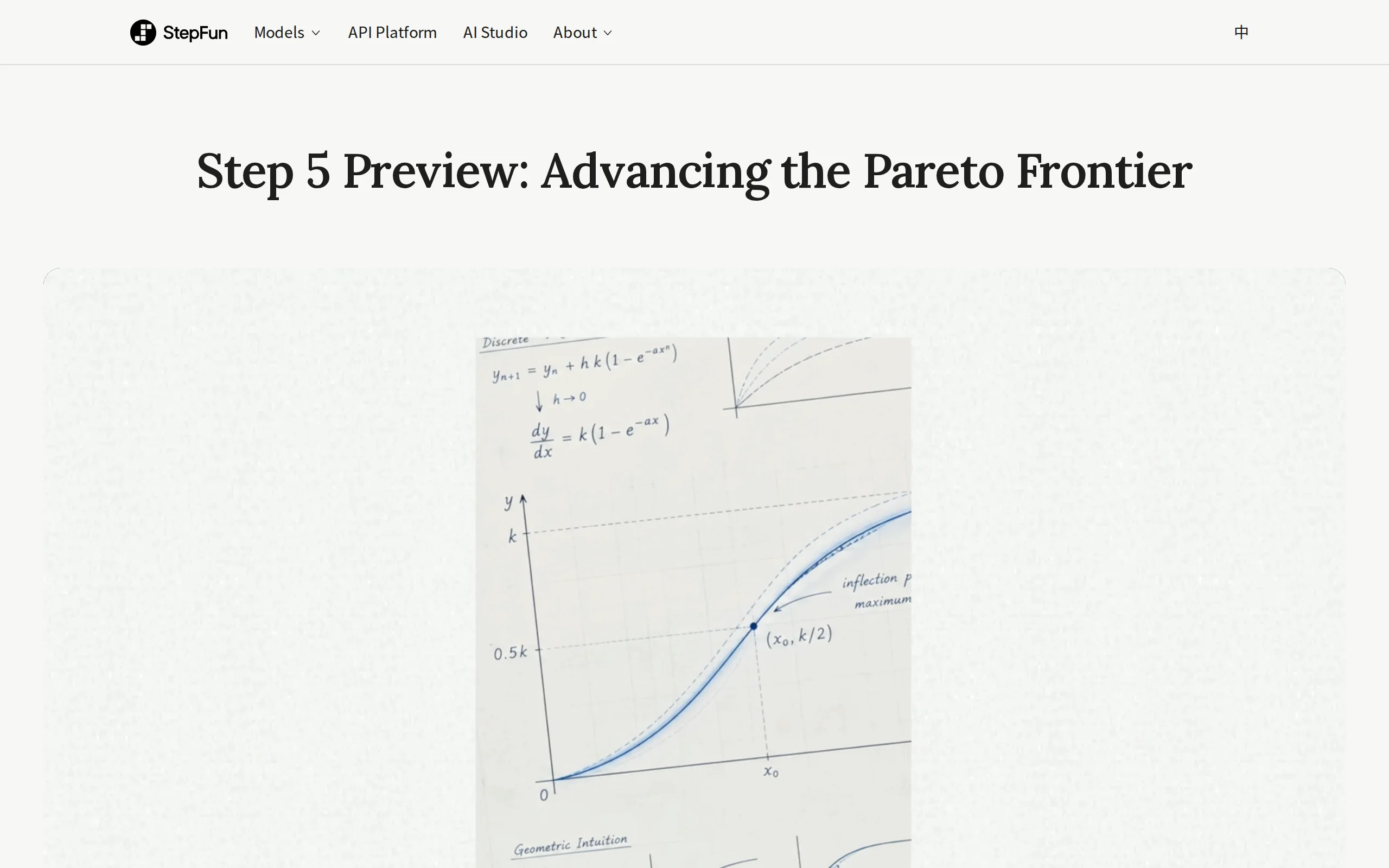
In-Depth Review of Step 5 Preview: A 600B Sparse MoE Flagship with 1M Token Context and 1/8 Cost Advantage
Step 5 Preview is a new-generation flagship foundation model launched by StepFun, designed for real-world Agentic tasks. Based on a sparse MoE architecture, the model has a total of 600B parameters bu...
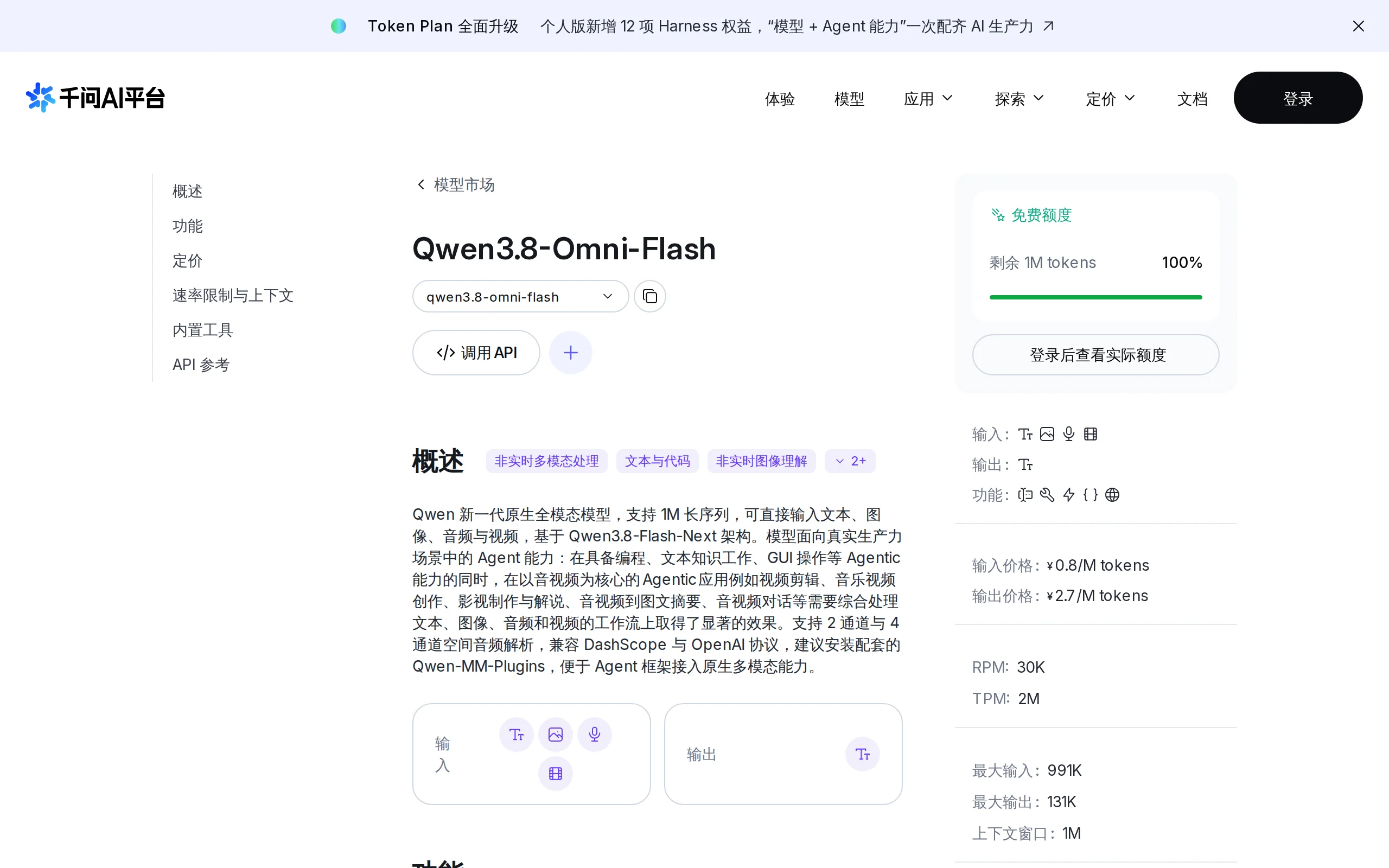
Qwen3.8-Omni-Flash – A Native Multimodal Model Launched by Alibaba Qwen
Qwen3.8-Omni-Flash is a native multimodal model launched by Alibaba Qwen. It jointly models four modalities—text, image, audio, and video—within a single architecture, supporting a context length of u...
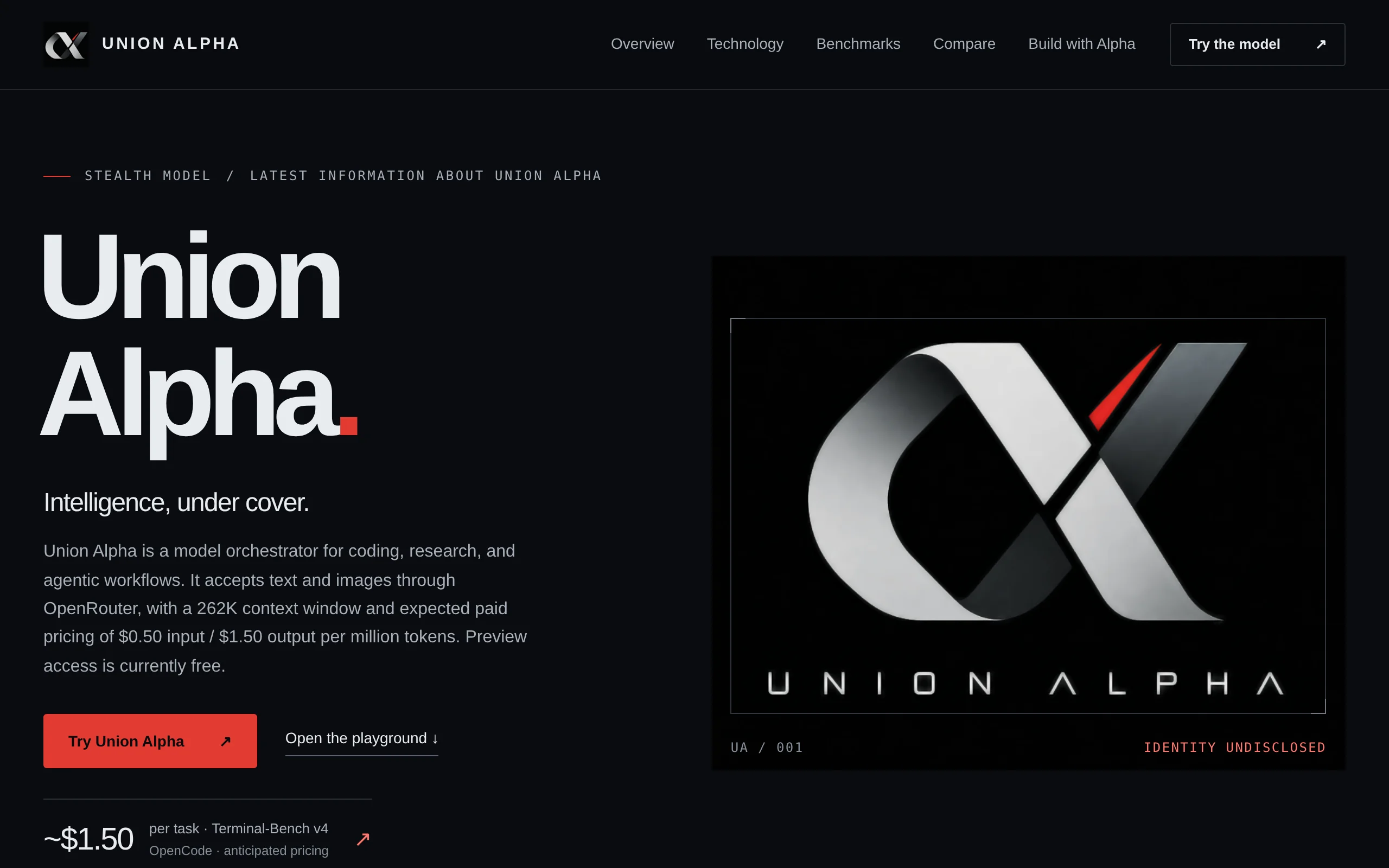
Union Alpha – A Mysterious Multimodal Large Model with Unlimited Free Access for a Limited Time
Union Alpha is a multimodal large language model released in "stealth" mode, recently launched on mainstream AI service platforms such as OpenRouter, Cline, and OpenCode. The model supports dual-modal...
© All Rights Reserved. Some content on this site is partially generated by AI with human review.