
DeerFlow 2.0 – ByteDance's Open Super-Agent Framework
Executive Summary:
DeerFlow 2.0 is ByteDance's open-source super-agent framework built for long-running, multi-step tasks that exceed what a single chat completion can reliably finish. Architecturally it combines a lead...
1. What Is DeerFlow 2.0
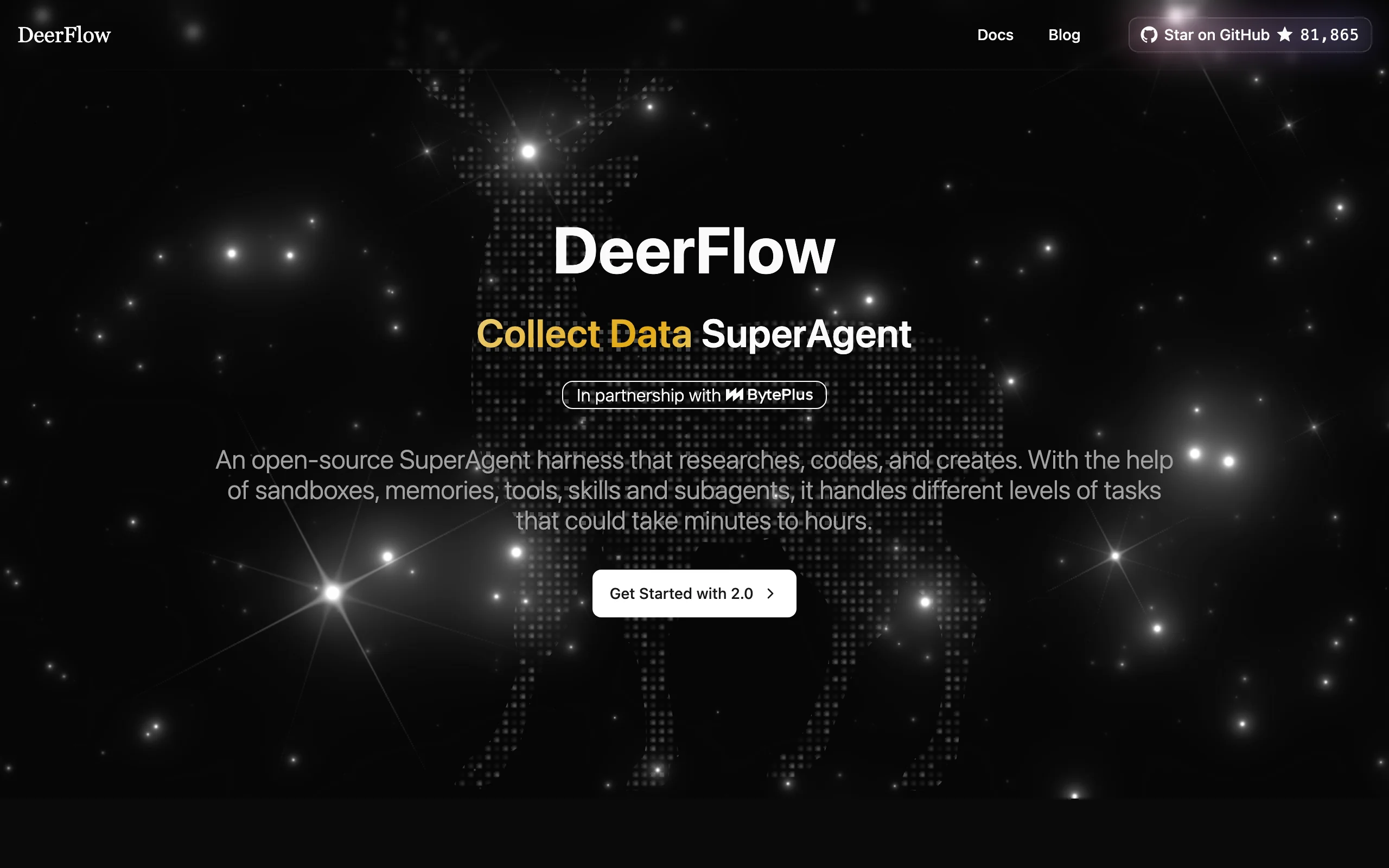
DeerFlow 2.0 is ByteDance's open-source super-agent framework built for long-running, multi-step tasks that exceed what a single chat completion can reliably finish. Architecturally it combines a lead agent, an eleven-layer middleware chain, and dynamically spawned sub-agents orchestrated through LangGraph, so planning, tool use, and parallel workstreams stay coordinated instead of collapsing into one overloaded context window. The runtime ships with more than ten plug-in skills—deep research, data analysis, audio/video creation, slide decks, and more—and executes untrusted code inside isolated sandboxes (local, Docker, or Kubernetes). It also integrates natively with Feishu (Lark), Telegram, and Slack, so teams can drive agents from IM without exposing a public IP on a laptop. Version 2.0 reframes the project from a research-only assistant into a general agent runtime that can run from minutes to hours and deliver websites, presentations, comics, and analytic reports in one session.
Image source: Official article
Technical positioning and domain: DeerFlow 2.0 is an agent orchestration platform—not a single foundation model—focused on multi-agent collaboration, durable task execution, and extensible skills. It targets builders who need a self-hosted or private-cloud runtime that decomposes complex goals into subtasks, calls tools safely, and preserves state across long horizons.
Development background: Maintained by ByteDance engineers with deep experience in agents and multimodal systems, DeerFlow 2.0 represents a deliberate upgrade from a narrower research tool to a broader platform. The MIT-licensed release is meant to compete with closed enterprise agent stacks by giving developers full visibility into middleware, sandbox boundaries, and skill registration.
Core value: Traditional agent frameworks often choke on task decomposition, unsafe code execution, and context overflow on hour-long jobs. DeerFlow addresses this with explicit lead/sub-agent roles, plug-in skills, sandbox isolation, and context engineering (summarization, externalized intermediates, subtask throttling) so complex workflows remain debuggable and recoverable.
Technical characteristics:
- Multi-agent coordination: A lead agent plans and delegates; sub-agents execute in parallel where dependencies allow.
- Plug-in skill system: Built-in modules plus MCP and Python hooks for custom capabilities.
- Tiered sandbox execution: Local, Docker, and Kubernetes modes backed by ByteDance AIO Sandbox for per-task isolation.
2. Key Features
Agent architecture: A lead agent owns global planning while dynamic sub-agents handle parallel subtasks—research crawls, code generation, chart building—without serializing everything through one model call. LangGraph provides the state machine and checkpointing semantics so failures can retry at the subtask level instead of restarting the entire run.
Plug-in skill library: More than ten skills ship out of the box, including deep research, data analysis, PPT generation, and web design. Teams extend the stack via MCP servers and Python functions, registering new tools without forking core orchestration code—important when every organization has bespoke internal APIs.
Isolated sandbox execution: Each task can run inside ByteDance AIO Sandbox containers with local, Docker, or Kubernetes backends. That separation limits filesystem and network blast radius when agents execute generated code, install packages, or scrape the web—non-negotiable for enterprise pilots.
Context engineering: Long jobs trigger automatic summarization, external storage of bulky intermediate artifacts, and rate limits on noisy subtasks so the lead agent retains headroom for decisions instead of drowning in raw tool logs. This is how DeerFlow stretches beyond naive "dump everything into the prompt" patterns.
Long-term memory: User profiles, preferences, and accumulated facts persist across sessions on local storage under operator control—no mandatory cloud memory vendor. Useful for recurring research assistants, personalized reporting, or team bots that should remember project conventions.
IM channel integration: First-class Feishu, Telegram, and Slack adapters let users issue commands from chat apps, including setups that avoid requiring a home-lab public IP—handy for internal ops bots and mobile-triggered workflows.
Multi-model compatibility: Configure OpenAI, Gemini, DeepSeek, Doubao Seed, and other providers through a unified YAML interface, swapping models per role (planner vs coder vs summarizer) to balance cost, latency, and reasoning quality.
3. How to Use
- Prerequisites: Install Python 3.12+, Node.js 22+, plus
pnpmanduvfor frontend/backend package management as documented upstream. - Clone the repository: Run
git clone https://github.com/bytedance/deer-flow.git, thencd deer-flow. - Generate configuration: Execute
make configto scaffoldconfig.yamland.envfrom templates. - Configure models: Edit
config.yamlto register providers (GPT-4 class, Gemini, DeepSeek, Doubao, etc.) with model names, API types, and environment variable keys for secrets. - Set API keys: Populate
.envwith values such asOPENAI_API_KEY=your-keyfor each enabled provider. - Choose deployment mode:
- Docker: Run
make docker-initto pull sandbox images, thenmake docker-startto bring up services. - Local dev: Run
make checkfor dependency validation,make installto install packages, thenmake devto start the stack.
- Docker: Run
- Open the UI: Browse to
http://localhost:2026, submit a task prompt, and monitor agent steps in the web console. - Enable IM bots (optional): Turn on Feishu, Telegram, or Slack sections in
config.yamlwith app IDs, secrets, and webhook settings so chat commands route into the same runtime.
4. Pros and Cons
| Pros |
|---|
| Multi-agent orchestration: Lead plus dynamic sub-agents with LangGraph state management decompose complex goals efficiently and recover from partial failures better than monolithic agent loops. |
| Extensible skills: Ten-plus built-ins plus MCP/Python extension points let teams map DeerFlow to internal CRMs, data warehouses, and custom scrapers without waiting on vendor roadmaps. |
| Sandbox isolation: Local/Docker/K8s paths with AIO Sandbox reduce risk when agents run arbitrary code—critical for security reviews in regulated industries. |
| IM-native operations: Feishu, Telegram, and Slack hooks support command-driven agents for ops and exec users who will never open a localhost UI. |
5. Comparison with Similar Tools
| Dimension | DeerFlow 2.0 | JVS Claw (Alibaba) |
|---|---|---|
| Vendor | ByteDance | Alibaba Cloud |
| License | MIT (fully open source) | Closed source |
| Core architecture | Lead agent + 11-layer middleware + dynamic sub-agents | OpenClaw-based wrapper |
| Deployment | Docker / local / K8s, self-hosted | Invite-only cloud |
| Sandbox | ByteDance AIO Sandbox, three tiers | Inherits OpenClaw sandbox |
| Skill extension | Plug-in Skill system, custom MCP/Python | Preset + custom extensions |
| IM integration | Native Feishu, Telegram, Slack | No native IM at launch |
| Memory | Long-term local memory | OpenClaw memory inheritance |
Selection tips:
- Complex multi-hour tasks: DeerFlow's explicit sub-agent graph and skill registry suit research, analytics, and full-stack generation pipelines that outgrow single-agent chat UIs.
- IM-first teams: If Feishu or Slack is already the command center, DeerFlow's native adapters beat bolting a closed cloud agent through brittle webhooks.
- Open-source control: MIT licensing and self-hosting appeal to organizations that must audit sandbox boundaries, model routing, and data residency—areas where closed Claw variants offer less transparency.
6. Editor's Take
DeerFlow 2.0 is one of the more ambitious open agent runtimes to land from a hyperscaler lab: it is not just a prompt wrapper but a structured runtime with middleware, sandboxes, and skills you can actually inspect. The jump from "research demo" to "generate a deployable site + deck + memo" is credible when you feed it well-scoped goals and adequate GPU/API budget. Weak spots mirror the category—documentation depth, Chinese-language polish on every skill, and the ever-present context ceiling—but Feishu integration and local memory are meaningful differentiators for East Asian enterprise teams evaluating self-hosted agents. Treat it as infrastructure: assign an owner to harden Docker/K8s profiles, lock down sandbox egress, and curate which skills are enabled per tenant. For MIT-licensed, multi-agent orchestration with IM hooks, DeerFlow 2.0 earns a strong recommendation among 2026 options.
Best for: Engineering-led organizations, internal platform teams, and research groups that need auditable agent runtimes rather than a hosted black box.
Future outlook: Expect richer multimodal skills, tighter observability, and community middleware as ByteDance and contributors iterate on the 2.x line.
Rating: ★★★★☆ (4/5)
7. Use Cases
- Deep research: Aggregate multi-source web and document evidence into structured reports for competitive intelligence, academic literature surveys, or market landscaping—work that spans dozens of tool calls and benefits from sub-agent parallelism.
- Web development: One-shot generation of deliverable marketing sites—from layout and copy to frontend code—such as sports league landing pages or interactive 3D weather microsites, with sandboxed build steps to catch runtime errors early.
- Content creation: Turn technical briefs into child-friendly educational comics, or batch-produce slide decks, podcast outlines, and short video scripts where templated skills accelerate repetitive format work.
- Data analytics: Automate cleaning, visualization, and narrative BI summaries over CSV/warehouse exports, letting analysts focus on judgment calls while agents handle repeatable matplotlib/plotly boilerplate and first-draft commentary.
8. FAQ
Q: Which large language models does DeerFlow 2.0 support?
A: The unified configuration layer supports mainstream providers including OpenAI, Google Gemini, DeepSeek, and ByteDance Doubao Seed among others. You declare models in config.yaml with API type and secret env vars, and you can assign different models to different agent roles— for example, a stronger planner model and a faster coder model—to optimize cost and latency without forking the codebase.
Q: How do I add a custom skill module?
A: Implement capabilities as MCP tools or Python-callable functions, then register them following the skill extension guide in the official repository. Skills should declare input schemas, timeout behavior, and whether they require sandbox execution so the lead agent can schedule them safely alongside built-ins like research or slide generation.
Q: How does the sandbox work?
A: DeerFlow offers local, Docker, and Kubernetes execution modes. For risky operations it spins up isolated environments via ByteDance AIO Sandbox so each task gets its own container boundary— limiting cross-task file access and providing a choke point for network policies. Operators choose the tier that matches their security/compliance posture; production deployments typically disable naive local mode except for trusted dev machines.
Q: How do I integrate Feishu (Lark)?
A: Enable the Feishu section in config.yaml, supply your app's ID, secret, and event subscription settings per Feishu bot documentation, then restart the DeerFlow service. Users can issue commands from approved Feishu chats; messages route into the same agent graph as the web UI, which helps internal teams adopt agents without training everyone on localhost URLs.
Q: How is long-term memory implemented?
A: DeerFlow persists user profiles, preferences, and distilled knowledge across sessions in local storage controlled by the deployer— not on a mandatory vendor cloud. Back up these stores as part of your ops playbook; treat them as sensitive because they may contain research notes, credentials metadata, or proprietary summaries generated during prior runs.
Q: Can DeerFlow run fully air-gapped?
A: Self-hosted Docker/K8s deployments can keep data and memory on-prem, but most skills still call external LLM APIs unless you point configuration to private model endpoints. Plan network egress rules accordingly: block what you must, allow only approved model gateways, and run sandboxes without broad internet if your policy requires it.
9. Project Links
- GitHub repository: https://github.com/bytedance/deer-flow
- Project website: https://deerflow.tech
Related AI Model Articles
OpenMuse – CopilotKit Open-Source Personal AI Assistant
OpenMuse is an open-source personal AI assistant project developed by the CopilotKit team. Its core design philosophy is "giving an Agent a computer" — by combining a persistent browser, optional Linu...
T3PO – NetEase Youdao's Open-Source Streaming Simultaneous Interpretation Model
T3PO (simulTaneous Translation via pareTo Policy Optimization) is an open-source streaming simultaneous interpretation model developed by NetEase Youdao. Its core focus is on dynamically balancing tra...
In-Depth Review of Longcat-2.5-preview: Meituan's Next-Generation Multimodal Long-Range Agent Model
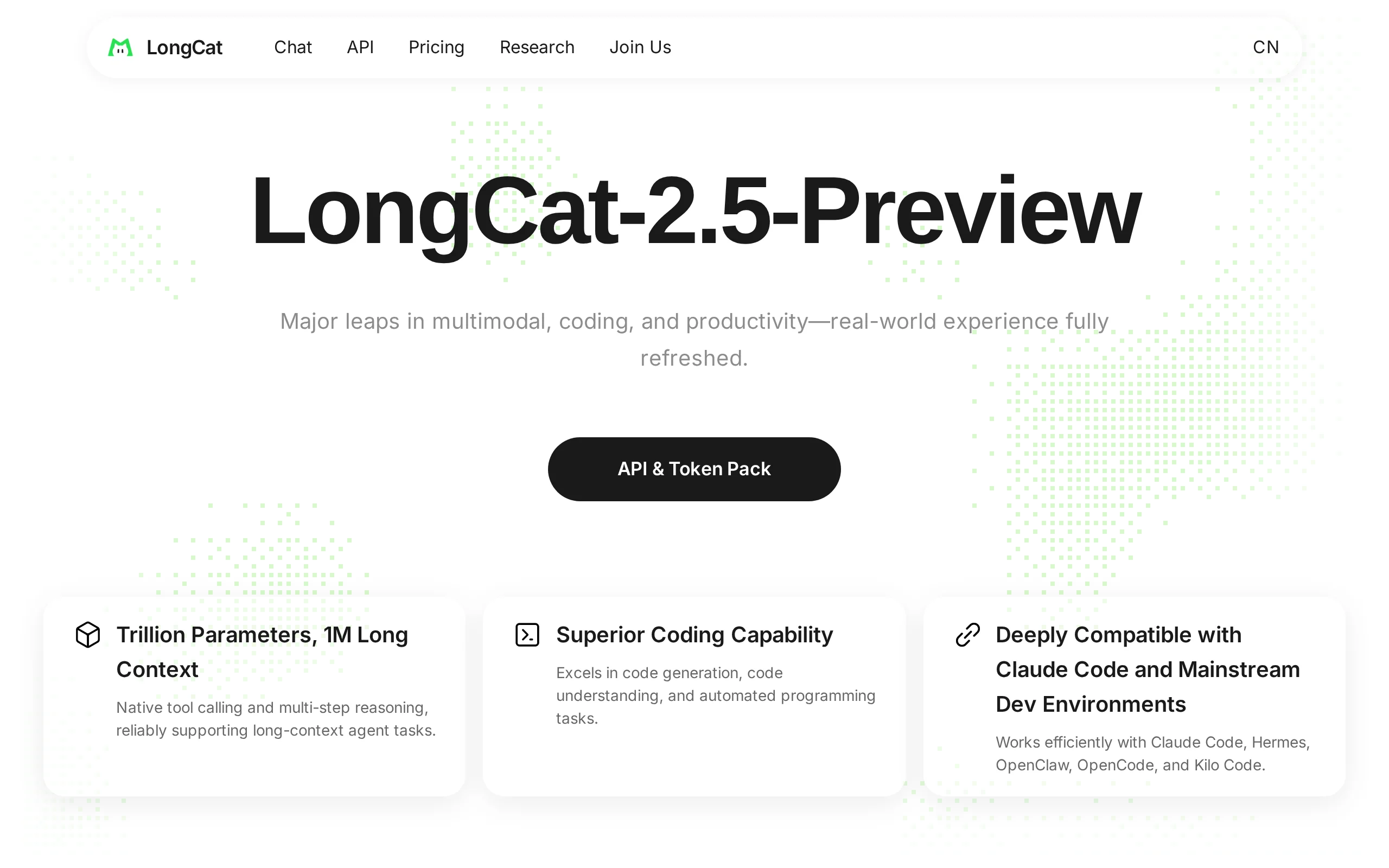
LongCat-2.5-preview is Meituan's latest next-generation large model. Building upon the 1.6T total parameters, approximately 48B active parameters, and native 1M token context of LongCat-2.0, it marks ...
Review of DeepSeek Harness Desktop: How the Official GUI Client Lowers the Bar for Agent Usage
DeepSeek Harness Desktop is the official graphical client launched by DeepSeek, designed to provide a visual interface for the originally command-line-based DeepSeek Harness framework. After users log...
© All Rights Reserved. Some content on this site is partially generated by AI with human review.