
Vidu S2 – Shengshu Tech's Real-Time Interactive and Video Editing Model
Executive Summary:
Vidu S2 is a real-time video generation and editing model launched by Shengshu Tech, available for open experience upon release. The model consists of two core components: S2-Editing supports real-tim...
1. What is Vidu S2
Vidu S2 is a real-time video generation and editing model launched by Shengshu Tech, available for open experience upon release. The model consists of two core components: S2-Editing supports real-time style modification of live video streams, virtual outfit changes, character and background replacements, relying on frame-aligned sparse attention technology to ensure seamless visuals even in high-speed motion scenarios; S2-Avatar achieves real-time interaction with digital humans at 720P resolution and 25-42FPS, supporting the insertion of reference images and outfit changes at any time, and also features full-body motion tracking capabilities. The model introduces a proprietary SRF training technique to address drift issues in long-duration generation, and also offers a Spatial video conversion feature tailored for VR applications, exploring content generation pathways for immersive devices.
Technical Positioning and Domain: Vidu S2 belongs to the video generation and real-time interaction technology direction within the field of generative artificial intelligence. It focuses on real-time editing of streaming video and digital human interaction scenarios. Its unique position in the industry lies in advancing video generation from offline, one-time generation to a real-time, editable streaming state, while covering both editing and interaction application dimensions, forming a complete real-time video content production pipeline.
Development Background: This model was developed by Shengshu Tech, a company that has already accumulated technical expertise in the video generation domain with its previous Vidu product series. The release of Vidu S2 continues its research trajectory in multimodal generation models, shifting the focus from generation quality to real-time performance and interactivity, with the goal of addressing the real-time response and dynamic editing demands that video generation faces when entering actual commercial applications.
Core Value: Vidu S2 resolves the rigid limitations in traditional video generation, where content "cannot be modified after generation" and "cannot be intervened during the generation process." Through frame alignment and self-correction training mechanisms, it enables the ability to change styles, outfits, and characters at any time during the playback of a video stream, while maintaining continuous motion trajectories and preventing visual tearing. This capability compresses the original video material production process—from shooting, editing, and post-production—into a single-step operation of real-time generation and immediate modification, effectively reducing the costs of scene setup, shooting, and post-production.
Technical Features: The core technical advantages of Vidu S2 are reflected in three aspects: high real-time output capability (streaming generation at 720P resolution and 25-42FPS), the world's first SRF self-correction training framework (eliminating drift in long-duration generation), and the frame-aligned sparse attention mechanism (ensuring editing stability in high-speed motion scenarios). These technologies collectively support its ability to balance real-time performance with generation quality.
2. Key Features
S2-Editing Real-time Video Stream Editing: For a video stream currently being played, users can input a single text instruction and optionally upload a reference image to perform real-time style transfer, virtual try-on, character replacement, and background swapping. This feature relies on frame-aligned sparse attention technology, ensuring that each frame after editing strictly aligns with the original video's content at the same moment. In high-speed motion scenarios, motion trajectories remain consistent and the画面 does not tear, making it suitable for production scenarios with high real-time requirements such as e-commerce live streaming and short video secondary creation.
S2-Avatar Real-time Interactive Generation: Outputs a digital human character in 720P resolution with a frame rate of 25-42FPS in a streaming manner, supporting real-time dialogue interaction between users and the character. During the interaction, the character maintains consistency in identity features and state information, breaking through the limitations of traditional digital humans that only support head movements while speaking. It supports full-body performance actions, providing a real-time interactive digital human solution for scenarios such as virtual anchors, online education, and customer service.
One-click Real-time Outfit Change: Without interrupting the video stream, users can upload an image of clothing, and the character can instantly change into it while maintaining action continuity and uninterrupted emotional expression. This feature solves the previous issue where outfit changes in video generation required re-rendering the entire video, offering an interactive method that closely resembles real-life shopping guidance for scenarios like e-commerce virtual try-on and live-streamed product promotion.
Full-body Motion Following: Supports complete limb performance actions corresponding to instructions such as solo dancing and 2D/3D animation. It can generate full-body motion sequences, including movements of all limbs. This distinguishes it from most digital humans on the market, which typically only support upper-body speaking actions, enabling Vidu S2 to meet more complex motion generation needs such as talent performances, animation character control, and virtual idol shows.
Vidu S2-Spatial Spatial Video: Through algorithms, single-eye real-time video is converted into synchronized left and right eye views, simulating binocular disparity under single-camera input conditions. This allows the generated video to maintain temporal continuity while also ensuring spatial perception consistency. This feature is aimed at immersive display devices such as VR, providing a real-time generation pathway for spatial video content without requiring specialized binocular capture equipment.
Dynamic Reference and State Memory: At any point during the video generation process, users can insert new reference images or elements, and the model will respond instantly, integrating the new elements into the current frame while continuously retaining the state information of previously generated content. This mechanism enables coherent interactions with a cause-and-effect relationship, allowing the character to "accept" new requirements introduced midway through and maintain consistent behavioral logic.
Multi-style Material Generation: Based on a single real-shot original video, users can batch generate various stylized materials such as cyberpunk, ink wash, and anime. This feature is designed around the production concept of "one original video, multiple materials," suitable for marketing scenarios requiring a large number of stylized video materials such as short drama overseas distribution, game ad campaigns, and brand promotions, significantly reducing the time and financial investment required for material production.
3. How to Use
Accessing and using Vidu S2 is divided into two paths: web-based experience and API integration. The overall process is designed to be low-threshold and easy to get started with.
Platform Access: Users can directly access the real-time experience entry on the Vidu official website via a browser ((link to be updated after the official release).
Experience Process: After entering the platform, users can choose to upload a raw video or use the demo materials provided by the platform. During video playback, they can input text instructions and optionally upload a reference image (such as a photo of the target clothing or person) to view the editing results in real time. For the S2-Avatar interactive feature, users can directly converse with the digital avatar and upload images at any time to request it to display new items or perform outfit changes.
API Integration: If developers wish to integrate Vidu S2 capabilities into their own applications, they can visit platform.vidu.com/vidu-stream/doc to review the API documentation. This document provides model invocation methods, parameter configuration instructions, and sample code, supporting the embedding of real-time editing and digital avatar interaction capabilities into third-party platforms or business workflows.
Parameter Configuration and Optimization: Developers can adjust the resolution and frame rate parameters based on the application scenario, balancing between image quality and response speed. For example, in live streaming scenarios, frame rate smoothness can be prioritized, while in short video production scenarios, the focus can be on resolution output quality. It is recommended to perform scenario-specific optimization on the frame alignment threshold and reference image weight to achieve better editing stability and style fidelity.
Notes: The real-time editing feature relies on frame alignment parameter settings for stability in high-speed motion scenarios. It is advised to conduct small-scale testing and adaptation for the target video type before formal use. For long-term generation tasks, the SRF self-correction mechanism can automatically maintain character consistency, but for extremely complex scene changes, it is still recommended to periodically check the generated results.
4. Pros and Cons Analysis
| Pros |
|---|
| Real-time streaming output: The streaming generation specifications of 720P and 25-42FPS cover the requirements of real-time live streaming and interactive scenarios. The editing and interaction process does not interrupt the video stream, achieving an "edit while generating" effect in practical applications. |
| Comprehensive editing capabilities: The four real-time editing directions—style, clothing, character, and background—cover the main commercial scenarios such as e-commerce, live streaming, and marketing. A single original video can be transformed into multiple stylistic materials, significantly reducing the costs of reshoots and post-production. |
| Dynamic reference and state memory mechanism: New reference elements can be inserted at any time during the generation process, while the model maintains state consistency. This capability is rare among similar real-time video models, enabling interactive content with coherent cause-and-effect logic and breaking away from the static setup mode of traditional digital humans. |
| Balanced benchmark performance: S2-Avatar achieved the best results in nine evaluations on the StreamAV-Bench, while S2-Editing leads in key dimensions such as instruction execution, appearance restoration, and motion retention. Technical metrics are supported by relatively complete evaluation data. |
| Forward-looking spatial video capabilities: Real-time conversion of monocular video into stereoscopic spatial imagery provides a low-cost technical pathway for VR content production, offering a first-mover advantage in light of the growing industry demand for spatial video. |
5. Comparative Analysis with Similar Tools
| Dimension | Vidu S2 | HeyGen | D-ID |
|---|---|---|---|
| Core Architecture | Real-time video dual-model: S2-Editing video stream editing + S2-Avatar mutual generation, employing frame-aligned sparse attention and SRF self-correcting training | Digital human video generation platform based on pre-trained avatars and speech synthesis, without real-time video stream editing capability | Real-time conversational digital human platform, focusing on facial expression and speech synchronization, based on image animation technology |
| Real-time Specifications | 720P, 25-42FPS streaming output, uninterrupted video stream throughout editing and interaction | Primarily real-time conversational digital human, output is oriented toward oral presentation and dialogue scenarios, not full real-time video stream generation | Real-time facial animation and speech dialogue, output resolution and frame rate are limited by the platform |
| Dynamic Intervention Capability | Insert reference images or perform costume changes at any moment during generation, the model "accepts" new elements and remembers the state | Once the character's appearance is set, it remains fixed throughout the generation process, with no ability to modify or insert new elements mid-generation | Supports conversational interaction, but cannot replace avatars or introduce new visual references during generation |
| Action Performance | Supports full-body actions such as solo dance, 2D/3D animation, covering complete physical performance | Focuses mainly on upper-body actions for oral presentation and explanation, limited support for full-body actions | Primarily driven by head and facial expressions, with limited full-body action generation |
| Long-term Generation Stability | SRF self-correcting training mechanism, the model corrects its own generation history, demonstrating good anti-drift performance in benchmark tests | Long-term streaming generation identity drift is a common industry issue, with no dedicated solution provided by the official team | Conversation-based interaction is the main focus, with limited application scenarios for long-term continuous generation |
| Editing Capabilities | Real-time style change, costume change, avatar change, and background change, covering four major editing directions | No real-time video stream editing capability | No real-time video stream editing capability |
| Openness | Open web experience upon release, providing API documentation for developers to integrate | Provides API integration and third-party integration solutions | Provides API and enterprise deployment solutions |
| Target Scenario Focus | Real-time live streaming, e-commerce guidance, virtual try-on, content replication production, VR space video | Marketing video production, multilingual content localization, virtual presenters | Customer service, online education, real-time conversational interaction |
Selection Recommendations: From a technical perspective, Vidu S2's differentiating features in the current market are two-fold: first, the real-time editing capability during video stream playback, and second, the dynamic reference mechanism that allows inserting new elements during generation. These two capabilities are not effectively addressed by platforms such as HeyGen, D-ID, and Synthesia. For commercial scenarios requiring immediate response and dynamic adjustment, such as live-streamed sales, virtual try-on, and real-time marketing interactions, Vidu S2's feature set aligns well, making it suitable for businesses transitioning from "pre-recorded videos" to "real-time video interaction" models.
In contrast, HeyGen and Synthesia have mature processes for standardized batch video generation and multilingual localized templated outputs, making them ideal for content production needs that do not require real-time interaction, such as corporate promotional videos and training courses. D-ID is more suitable for scenarios where conversational interaction is the core, such as intelligent customer service and virtual receptionists. It should be noted that as a new product, Vidu S2's ecosystem is still in its early stages. For projects requiring deep customization or complex workflow integration, teams should evaluate their own development capabilities to compensate for the temporary lack of documentation and community resources.
6. Editor's Summary
Vidu S2 demonstrates a clear problem-oriented approach in its technical path selection. The frame-aligned sparse attention mechanism it relies on for real-time video editing directly addresses the stability issues that often arise in real-time image modification during high-speed motion scenarios within the industry. Meanwhile, the SRF training technique directly targets the common challenges of identity drift and content collapse in long-term streaming generation. These two technological innovations do not simply involve stacking parameters or scaling up data size, but instead provide targeted solutions at the level of the generation mechanism, with their technical approach validated by benchmark results on datasets such as StreamAV-Bench.
In terms of practical value, Vidu S2 advances video generation from offline production to a real-time, editable, and interactive form, which holds significant implications for commercial scenarios that are sensitive to timeliness, such as e-commerce, live streaming, and marketing. Original video materials can be instantly transformed into multiple stylistic versions, characters can showcase new products with immediate costume changes, and backgrounds can be switched to any scene with a single click. These capabilities directly reduce video production cycles and lower the costs of set design and filming. Additionally, the spatial video conversion feature provides a low-threshold real-time pathway for VR content creation, which is strategically important given the rising demand for immersive content in the industry.
This product is suitable for three types of users: first, live-streaming e-commerce operations teams, who can leverage real-time editing and costume-changing capabilities to create interactive shopping experiences; second, short video and marketing content creators, who can enhance material production efficiency using multi-style transformation; and third, VR/space video content developers, who can achieve spatialized output using the Spatial function with single-eye video input. For developers working on digital human applications, the full-body motion tracking and dynamic reference mechanism of S2-Avatar also offer richer interactive dimensions compared to traditional "talking head" digital humans.
The future development potential of Vidu S2 will depend on the depth of its customization for vertical industries and the speed at which its developer ecosystem matures. While the product currently has comprehensive data support for general scenarios, industry-specific solutions, a more complete set of developer tools, and richer third-party integrations will be key to its transition from technical leadership to market-wide adoption.
7. Application Scenarios
E-commerce Live Streaming Sales: During live streams, hosts or digital avatar characters can present products such as perfumes and clothing in real-time based on fan requests, or showcase fitting effects through one-click outfit changes. This scenario fully utilizes S2-Avatar's real-time interactivity and dynamic reference capabilities, replicating an interaction experience close to that of a real-life salesperson, thereby enhancing audience engagement and conversion rates in live streaming rooms.
Virtual Try-On and Fashion Purchase Decisions: Before purchasing clothing, consumers can upload their own photos or select platform digital avatar models to view how the clothing fits on their body in real-time under dynamic movements. Unlike static image try-ons, this scenario demonstrates the visual effects of clothing during actions such as walking and turning, providing consumers with more intuitive decision-making support and helping to reduce return rates caused by discrepancies between "buyer's show" and "seller's show."
IP Character Commercialization and Virtual Idol Operations: IP characters such as brand virtual idols and game protagonists can "drop in" to live streams or brand events in real-time digital avatar form, performing tasks like product promotion, interaction, and performances that would otherwise be executed by real people. With full-body motion following capabilities, virtual idols can perform body movements at a talent show level, no longer limited to voice-over explanations, thus enhancing fan immersion and the commercial monetization efficiency of the IP.
Cross-border E-commerce and Scenario-based Marketing: Using S2-Editing's real-time background replacement feature, live streams selling down jackets can instantly switch the background to a snowy mountain scene, while beauty product live streams can switch to a Parisian runway style, without the need for real physical sets. This scenario reduces traditional marketing costs that require real scene setups to nearly zero, providing small and medium-sized merchants with scenario-based marketing methods previously out of reach.
Short Video Content Diversification Production: A single real-shot original video can be batch-processed into multiple styles such as cyberpunk, ink wash, and anime through style editing, meeting needs like short drama content for overseas markets, multi-version ad materials for game user acquisition, and series-based promotional content for brand sales events. The core value of this scenario lies in achieving multiple styled final outputs with the cost of just one original shot, significantly improving content production efficiency.
VR and Immersive Device Content Creation: Leveraging Vidu S2-Spatial's spatial video conversion capabilities, creators can convert single-eye ordinary videos into spatial videos with binocular disparity in real-time, suitable for content delivery on VR headsets and other immersive devices. This scenario provides an alternative path for spatial video content creation without the need for specialized binocular shooting equipment, reducing hardware barriers for VR content production and is ideal for content areas such as virtual tourism, immersive performance recordings, and spatial interaction applications.
8. FAQ
Q: What is the core difference between Vidu S2 and previous Vidu series models?
A: Previous Vidu series models focused on single-shot video generation, where users input prompts and then wait for the model to generate a complete video clip in one go, with no ability to intervene during the process. Vidu S2 shifts its focus to real-time streaming generation, continuously outputting video during the generation process. Users can intervene at any time to make modifications or interact, and it also adds real-time switching capabilities for style, clothing, characters, and background. This marks a product paradigm shift from "offline single-shot generation" to "online real-time generation."
Q: How does S2-Editing ensure seamless visuals in high-speed motion scenarios?
A: This relies on the frame-aligned sparse attention mechanism. During real-time editing, each frame of the newly generated content must be strictly aligned with the original video's content at the same moment, locking the position and posture of moving objects to ensure that motion trajectories remain consistent after changing clothes or characters. The sparse attention design controls computational costs, enabling this alignment process to be completed within real-time generation constraints. The SRF training technique reduces long-term drift caused by accumulated errors from the training phase onward.
Q: How is the dynamic reference mechanism in S2-Avatar different from traditional digital human image customization?
A: Traditional digital human platforms typically set the character's appearance before generation, and the image remains fixed and unchangeable during the generation process. S2-Avatar allows users to upload new reference images at any moment during the generation process, and the model responds instantly, integrating new elements into the current frame while preserving previous character state information. This means that characters can change clothes or hold new items midway through an interaction, with continuous behavior and emotional expressions, achieving an interactive experience with coherent cause-and-effect logic.
Q: What access methods does Vidu S2 support? Are there any hardware requirements?
A: Vidu S2 currently offers two access methods: regular users can directly use the web-based experience portal via a browser; developers can integrate the model's capabilities into their own applications using the official API documentation (platform.vidu.com/vidu-stream/doc). The official documentation does not provide full hardware configuration details. Considering its real-time output specifications of 720P and 25-42FPS, it is recommended to deploy in an environment with a high-performance GPU to ensure smooth generation. Specific configuration requirements will be officially announced.
Q: Does Vidu S2 support real-time conversion for spatial video? Is a specialized device required for filming?
A: Vidu S2-Spatial can convert monocular real-time video into synchronized left and right eye views. It works with video input from a standard monocular camera, without requiring specialized binocular filming equipment. The algorithm simulates binocular disparity to generate spatial depth information, ensuring that the output video maintains spatial perception consistency while preserving temporal continuity. This provides directly usable content for immersive devices such as VR.
9. Project Links
- Vidu Official Website: https://www.vidu.com
- Official Real-time Experience Entry: https://vidu.com/vidu-stream
- API Documentation and Developer Platform: https://platform.vidu.com/vidu-stream/doc
Related AI Model Articles

Kimu: In-Depth Review of the Open-Source AI Video Editor from the trykimu Team
Kimu (officially named Kimu Studio) is an open-source AI video editor developed by the trykimu team. Its core concept lies in describing requirements through natural language, allowing AI to automatic...
Qwen-Audio-3.1: A Full-Stack Evaluation of the Qwen Audio Large Model Series
Qwen-Audio-3.1 is a series of large audio models launched by Alibaba's Qwen. It consists of five models: ASR speech recognition, ASR-Next audio understanding, TTS speech synthesis, TTS-Next audio crea...
Qwen3.8-LiveTranslate – A Real-Time Simultaneous Interpretation Model Launched by Alibaba Tongyi
Qwen3.8-LiveTranslate is a real-time simultaneous interpretation large model launched by the Tongyi Qianwen team at Alibaba. Based on the Interleave single-stream architecture, it processes audio and ...
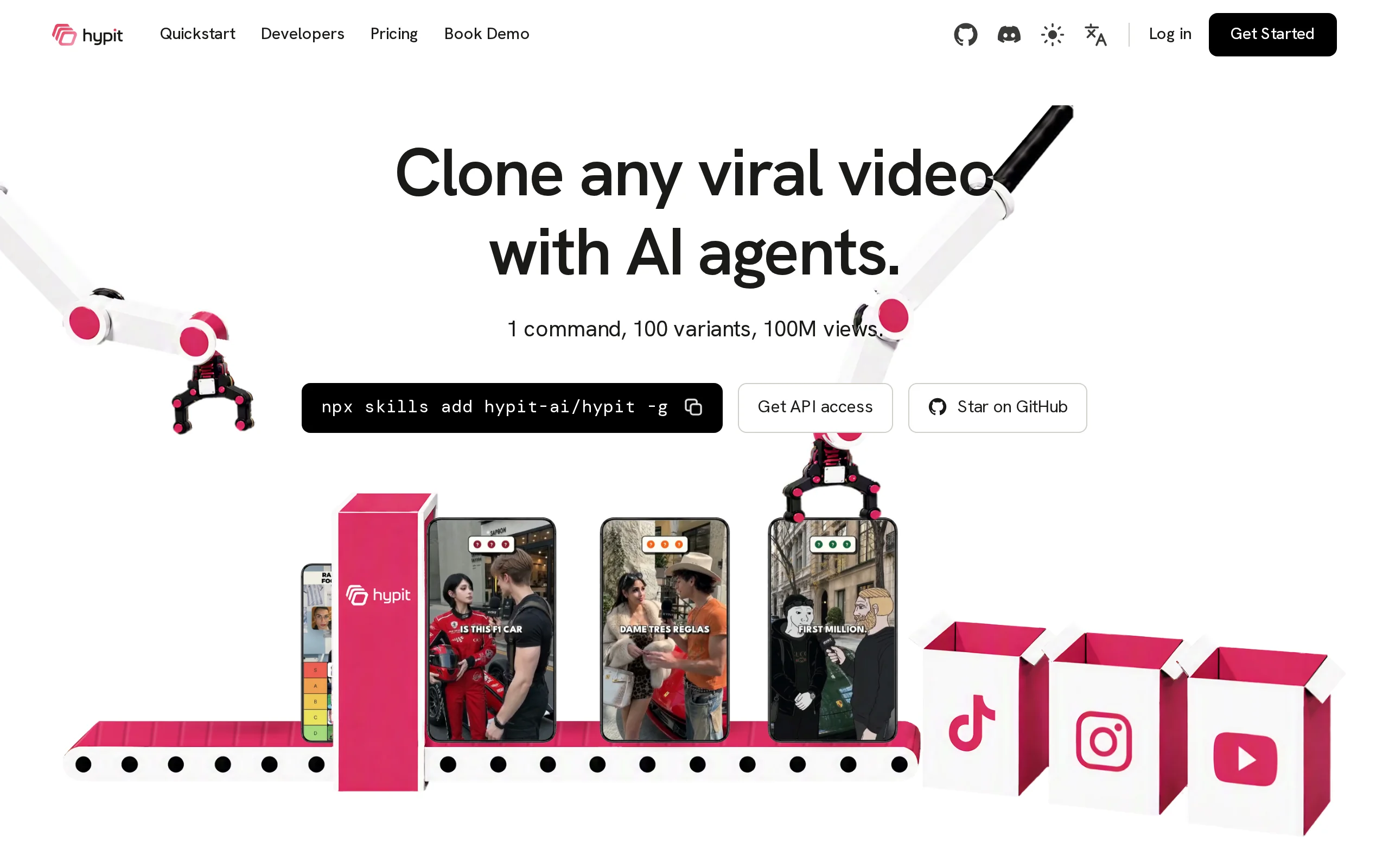
Hypit – Open-Source AI Video Generation Tool, Automatically Replicates Viral Videos
Hypit is an open-source AI video generation tool, centered on the methodology of "Provide an Agent with a viral video, and it will automatically replicate the entire workflow." It breaks down viral vi...
© All Rights Reserved. Some content on this site is partially generated by AI with human review.