
SenseNova U1 Pro – SenseTime's Flagship Image Creation Model

Executive Summary:
SenseNova U1 Pro is SenseTime's flagship image creation model, with a core positioning of natively unifying understanding, generation, and action. This model supports native 8K resolution output and p...
1. What is SenseNova U1 Pro
SenseNova U1 Pro is SenseTime's flagship image creation model, with a core positioning of natively unifying understanding, generation, and action. This model supports native 8K resolution output and possesses the capability for interleaved text-image reasoning, enabling it to sequentially complete the entire workflow from sketching, refining, coloring, checking, to adjusting, centered around a target. It is aimed at professional scenarios that can be directly delivered, such as infographics, film storyboards, and commercial design. Through an end-to-end unified architecture, it integrates image understanding, content planning, information organization, multi-modal generation, quality checking, and final delivery into a single process, rather than the traditional stage-wise concatenation. This allows it to demonstrate significant advantages in complex layouts and multi-element coordination control.
Image source: Official article
Image source: official article
Technical Positioning and Domain: Belongs to the field of computer vision and multi-modal generation, focusing on high-resolution image generation and complex layout design. Its unique positioning lies in integrating the traditional design workflow (sketching, refining, coloring, checking, adjusting) that previously required multiple tools into a single model, enabling end-to-end delivery from requirement to final product, rather than merely generating "visually appealing" images. This makes it directly applicable in professional design scenarios such as infographics, posters, and storyboards, filling the gap in AI image generation tools for production-level outputs.
Development Background: Developed by SenseTime, leveraging its deep expertise in computer vision, deep learning, and large-scale AI infrastructure. SenseTime has long been committed to research in multi-modal large models and generative AI, with the SenseNova series being its core AI platform. The release of U1 Pro marks SenseTime's strategic upgrade in the image generation domain from "generative AI" to "design automation," aiming to address the rigid demands of professional design for high resolution, precise layout, and multi-round iteration. It reflects SenseTime's forward-looking layout in integrating AI with the creative industry.
Core Value: Addresses three major pain points of traditional AI image generation tools in professional design scenarios: insufficient resolution (requiring post-processing scaling that leads to blurriness), weak layout capabilities (difficulty in precisely controlling text and layout), and fragmented workflows (requiring multiple tools to complete different stages). Through native 8K output, interleaved text-image reasoning, and an end-to-end unified architecture, U1 Pro allows users to obtain production-level images directly suitable for commercial use, significantly reducing the workload of manual retouching and post-processing, improving design efficiency, and lowering the threshold for professional design.
Technical Features: Key technologies include the native unified architecture (integrating understanding, planning, generation, checking, and delivery into one), interleaved text-image reasoning (autonomously completing the entire design workflow), 8K high-fidelity generation (maintaining clarity of text and details at ultra-high resolution), and multi-constraint collaborative optimization (simultaneously handling complex requirements such as layout, characters, materials, and styles while maintaining consistency). These features enable it to surpass similar models in complex layouts and multi-element coordination, providing an end-to-end automated solution for professional design scenarios.
2. Key Features
Native 8K Image Generation: Supports native output at up to 8K resolution (7680×4320), maintaining text clarity, compositional合理性, and rich detail in ultra-large formats without the need for post-processing upscaling. This eliminates the traditional step of performing super-resolution enhancement after AI-generated images, avoiding structural distortion and artifacts that often result from such processes. It is particularly suitable for large-format printing, outdoor advertising, and high-end display needs.
Text-Image Interleaved Thinking: The model possesses continuous reasoning chain capabilities, enabling it to autonomously complete the full workflow from sketch conceptualization, refinement, coloring, to quality inspection and localized adjustments during the generation process. Users only need to provide a target description, and the model will proceed step-by-step like a professional designer, achieving an automated process of "self-drafting, designing, and checking work," significantly reducing the need for manual iterations.
Complex Layout Design: Supports the one-time generation of complex layouts such as long horizontal scrolls, infographics, movie posters, and academic posters. The model can handle multi-layer nested layouts, text-image integration, and multi-column structures simultaneously, ensuring overall visual harmony and clear information hierarchy. It directly outputs production-ready design drafts, eliminating the need for manual layout adjustments.
Multi-Element Collaborative Control: Capable of handling multiple sets of requirements simultaneously, including characters, materials, styles, text, and layout. During the generation process, a collaborative optimization mechanism ensures that all elements do not conflict with each other and maintain a unified style. For example, when generating a poster with a specific character, a specific material background, and multiple text segments, all elements will precisely align with the user's intent, avoiding common issues such as element conflicts and style drift.
High-Precision Text Rendering: At 8K resolution, the model can accurately render text as small as 10px, supporting multiple languages (including Chinese, English, Japanese, etc.) and complex typographic elements (such as formulas, superscripts, subscripts, and multi-line alignment). This ensures that text in generated infographics and posters is clear and readable, without the need for post-processing font replacement, meeting professional publishing and printing standards.
Production-Ready Output Delivery: The generated results can be directly used in formal scenarios such as commercial promotion, academic presentations, and film storyboarding, without requiring additional manual post-processing. The model takes into account technical requirements for printing and online distribution, such as color space, bleed lines, and resolution, achieving seamless integration from concept to delivery and shortening project timelines.
End-to-End Unified Architecture: The model employs a native unified core that integrates understanding, generation, and action. It combines image understanding, content planning, information organization, multi-modal generation, inspection and correction, and final delivery into an end-to-end workflow, rather than the traditional stage-by-stage拼接 approach. This architecture minimizes information loss during intermediate steps, enhances overall generation quality and efficiency, and lays the technical foundation for design automation.
3. How to Use
Current Status and Channels to Follow: As of now, SenseNova U1 Pro has not yet provided a public online experience entry or registration channel, and users cannot use it directly. It is recommended to follow the SenseTime official website (sensetime.com) and the SenseNova platform (sensenova.cn) for the latest updates on availability. Enterprise users can submit a collaboration application via SenseTime to gain priority access for trial.
Expected Integration Method (API): The model is expected to be made available through the SenseNova platform via RESTful API. Users will need to register for a SenseNova account, create an application, and obtain an API Key. The API endpoints, request parameter formats, and response structures can be referenced from the documentation of existing SenseNova models (e.g., SenseNova-SI), ensuring a consistent interface style.
Example of a Generation Request (Hypothetical): When calling the generation API, the request body should include parameters such as prompt (descriptive text), resolution (e.g., "8K"), and style (e.g., "infographic"). The model will return a JSON response containing the generated image URL or Base64-encoded data. Developers can integrate this API into their own applications, workflows, or design tools.
Result Processing and Optimization: After generating an image, post-processing such as cropping and color adjustment can be performed as needed. If the model supports local re-painting in the future, specific areas can be modified. It is recommended to use professional image software (e.g., Adobe Photoshop) for the final adjustments to ensure compliance with specific output requirements.
Best Practices: To achieve high-quality results, prompts should provide detailed descriptions of layout, element positions, color styles, and textual content. For complex designs, generate a low-resolution sketch first to confirm the composition, then upgrade to 8K for the final generation. Be careful to avoid contradictory requirements in the prompt and maintain clarity and consistency in the instructions.
4. Pros and Cons Analysis
| Pros |
|---|
| Native 8K Output: Supports native generation of ultra-high resolution content, eliminating the need for post-processing upscaling. It maintains clarity of text, composition, and details in large formats, making it suitable for professional printing and display needs, significantly enhancing output quality. |
| Image-Text Interleaved Reasoning: Capable of autonomously completing the entire process from sketching, refining, coloring, checking, to adjusting. Users only need to provide a target description to obtain a finished-level output, greatly reducing manual intervention and iteration costs. |
| Multi-Constraint Collaborative Optimization: Can simultaneously handle complex requirements such as layout, characters, materials, style, and text while maintaining overall consistency, avoiding conflicts among multiple elements, suitable for high-complexity design tasks, and improving consistency. |
| Finished-Level Delivery: The generated results can be directly used in commercial promotion, academic presentations, and other formal scenarios, reducing the need for manual post-processing and improving the efficiency from concept to delivery, shortening project timelines. |
5. Comparative Analysis with Similar Tools
| Comparison Dimension | SenseNova U1 Pro | Qwen-Image-3.0 | DALL-E 3 | Midjourney |
|---|---|---|---|---|
| Core Architecture | Native integration of understanding, generation, and action in a unified end-to-end process | Third-generation image generation base model, focused on practical transformation | Diffusion model, emphasizing creativity and style diversity | Diffusion model, emphasizing artistic aesthetics and community-driven development |
| Resolution Output | Native 8K output (7680×4320), no need for upscaling | High resolution, supports 10px small text rendering, native 8K not explicitly stated | Maximum 1792×1792 (square), does not support ultra-high resolution | Maximum 2048×2048 (v6), does not support native 8K |
| Text Rendering | Clear text at 8K resolution, supports multiple languages, precise layout | Accurate 10px small text rendering, supports LaTeX formulas and 12 languages | Average, prone to text errors with complex layouts | Weak, not suitable for detailed text or layout |
| Workflow Mode | Autonomous full workflow (sketching - refinement - coloring - inspection - adjustment) | Integrated image generation and editing, can be migrated to restoration, PPT conversion, etc. | Single generation, no built-in iterative workflow | Single generation, supports image-to-image and variations, no autonomous design process |
| Complex Layouts | Professional-grade layouts such as long scrolls, infographics, movie posters | High-density information layouts such as multi-layered UI, 3x3 grids, newspapers | Average, requires multiple attempts and prompt techniques | Weak, not suitable for infographics or multi-column design |
| Final Output Delivery | Direct commercial use, no post-processing required | Mostly used for creative inspiration and content operations, commercial use requires manual adjustments | Suitable for creative concepts and social media, commercial use requires post-processing and authorization | Suitable for artistic creation and concept design, commercial use requires authorization and post-processing |
| Community Ecosystem | Not yet established, officially led | Alibaba Cloud ecosystem, active Chinese community, rich documentation | OpenAI ecosystem, wide user base, many third-party tools | Massive Discord community, rich resources, diverse styles |
| Deployment Method | Cloud API (planned) | Cloud API (Alibaba Cloud) | Cloud API (OpenAI) | Cloud service (Discord/Web) |
Selection Recommendations:
For professional users seeking ultra-high resolution, complex layouts, and production-ready output, SenseNova U1 Pro is an ideal choice, though it is not yet available. Qwen-Image-3.0 excels in text rendering and complex layout capabilities and is already accessible via Alibaba Cloud, making it suitable for Chinese content creators, academic researchers, and scenarios requiring high-density information layouts, such as infographics, exams, and newspapers.
For users with needs for artistic creativity and style diversity, Midjourney and DALL-E 3 remain the top choices. Midjourney's community ecosystem and aesthetic style are unmatched, making it ideal for concept design, illustration, and artistic creation. DALL-E 3 performs well in natural language understanding and creative generation, suitable for rapid prototyping and brainstorming. However, both have shortcomings in precise layout and ultra-high resolution, requiring integration with post-processing tools.
For developers requiring open-source, customizable, and local deployment options, Stable Diffusion 3 offers the greatest flexibility. However, it requires self-optimization of text rendering and layout capabilities, making it suitable for enterprises and research institutions with technical teams. Specific features can be achieved through fine-tuning and plugins.
6. Editor's Summary
SenseNova U1 Pro represents a significant direction in the evolution of AI image generation from "generative creative tools" to "design automation systems." Its core innovation lies in integrating understanding, planning, generation, verification, and delivery into a single workflow, breaking the traditional paradigm of piecing together multiple tools. This architecture not only enhances the consistency of generation quality but also significantly reduces the cost of manual post-processing, making it particularly suitable for scenarios with high demands on precision and efficiency, such as infographics, commercial design, and film storyboarding. Compared to similar models, U1 Pro has established a clear technical advantage in its native 8K resolution and interleaved text-image reasoning, addressing long-standing issues in the industry such as text blurriness and layout instability.
In terms of practical value, U1 Pro's native 8K output and production-grade delivery capabilities enable AI-generated images to truly possess the potential for direct commercial use, not just as creative assets. For professional designers and content creators, this means a significant leap in efficiency from concept to final product. However, the model is not yet publicly available, and its ecosystem and pricing remain unclear, which limits its immediate impact. SenseTime needs to open its API and build a community ecosystem as soon as possible to attract developers and enterprise users.
The primary target users are professional designers, advertising creatives, film storyboard artists, and academic researchers who require high-quality, high-resolution design outputs. For general creators, the learning curve may be steep, but once mastered, the efficiency gains are substantial. In terms of future development potential, if SenseTime can quickly open up access and improve documentation, U1 Pro has the potential to establish a foothold in the professional design field. At the same time, as multimodal large models continue to advance, end-to-end design automation may become the industry standard, and U1 Pro is well-positioned with an early-mover advantage in this trend. However, it should be noted that its diversity in artistic styles and creative freedom may not yet match mature products like Midjourney, requiring a clear differentiation strategy and a focus on high-precision, high-complexity professional scenarios.
7. Application Scenarios
Infographics and Data Visualization: The model can generate high-precision information long images containing a large amount of text, charts, and visual elements, meeting the needs of data visualization and science communication. Users only need to provide data and layout requirements, and the model can output a finished-level infographic in one go, eliminating the need for manual typesetting and icon drawing, significantly improving production efficiency. It is suitable for news media, market reports, and educational materials.
Film Storyboarding and Poster Design: The model can directly generate movie posters, concept storyboards, and visual assets suitable for theatrical promotion. Film production teams can quickly generate multiple versions of storyboard sketches or official posters by describing scenes, characters, and atmospheres, accelerating the pre-visualization development process and achieving finished-level delivery, thereby shortening the production cycle.
Academic Posters and Conference Presentations: Supports the creation of academic presentation posters with complex layouts, formulas, and charts. Researchers can input paper abstracts, chart data, and layout requirements, and the model will automatically generate posters that comply with academic standards, ensuring clear text and accurate charts, aiding in scientific conferences and academic exchanges, and enhancing presentation effectiveness.
Commercial Brand Visual Design: The model's output can be directly used for printing and online advertising, such as product posters, social media covers, and ad banners. Brand teams can rapidly iterate design concepts and generate visual content in various sizes and styles while maintaining brand consistency, shortening the design cycle and reducing outsourcing costs.
Urban Planning and Architectural Visualization: Can generate large-scale city aerial views and visual presentation images for planning proposals. Urban planners and architects can obtain high-fidelity visual renderings by describing regional functions, architectural styles, and landscape elements, which can be used for proposal presentations and public exhibitions, improving communication efficiency and supporting decision-making.
8. FAQ
Q: When will SenseNova U1 Pro be available for use?
A: The official has not yet announced the specific release date. Users can follow the SenseTime official website (sensetime.com) and the SenseNova platform (sensenova.cn) for the latest updates. It is expected to be gradually opened to enterprise users via API, while individual users may need to wait for future plans.
Q: Does the model support Chinese text generation?
A: Yes, the model supports multilingual text rendering, including Chinese. Chinese characters are clearly visible and accurately formatted at native 8K resolution, meeting the design requirements for Chinese content such as infographics and posters. It supports simplified Chinese, traditional Chinese, and mixed formatting.
Q: What are the hardware requirements?
A: Since the model runs in the cloud, no high-performance GPU is required on the user end. However, if a local deployment version is provided in the future, native 8K generation will require strong computational power. It is recommended to use an NVIDIA A100 or equivalent GPU with at least 40GB of VRAM. Regular consumer-grade GPUs may not be able to run it smoothly.
Q: What are the advantages of SenseNova U1 Pro compared to Midjourney?
A: The core advantage lies in its end-to-end delivery capability and interleaved image-text reasoning. While Midjourney excels in artistic styles and creative diversity, it is relatively weaker in precise layout, text rendering, and high-resolution output. U1 Pro is specifically designed for professional design scenarios and can directly generate commercial-grade images, reducing post-processing work. It is ideal for tasks requiring high precision and efficiency.
Q: Is the model open source? What is the pricing?
A: Currently, SenseNova U1 Pro is a closed-source commercial model, and there is no announced open-source plan. The pricing model has not been officially disclosed, but it is expected to use a pay-per-use or subscription-based approach. The exact pricing will be determined by the official release. Business users can inquire through enterprise collaboration channels, while individual users may be charged per use or based on resolution.
Q: What output formats and resolutions are supported?
A: The model is expected to support common image formats such as PNG, JPEG, and WebP. It can generate images at a maximum resolution of 8K (7680×4320), and lower resolutions (such as 4K, 2K) can also be generated as needed to save computational resources. Specific parameter ranges will be announced in the official API documentation, so please stay tuned for future updates.
9. Project Links
- Project Website: https://www.sensenova.cn/u1-pro
- SenseTime Official Website: https://www.sensetime.com
- SenseNova Platform: https://www.sensenova.cn
Related AI Model Articles
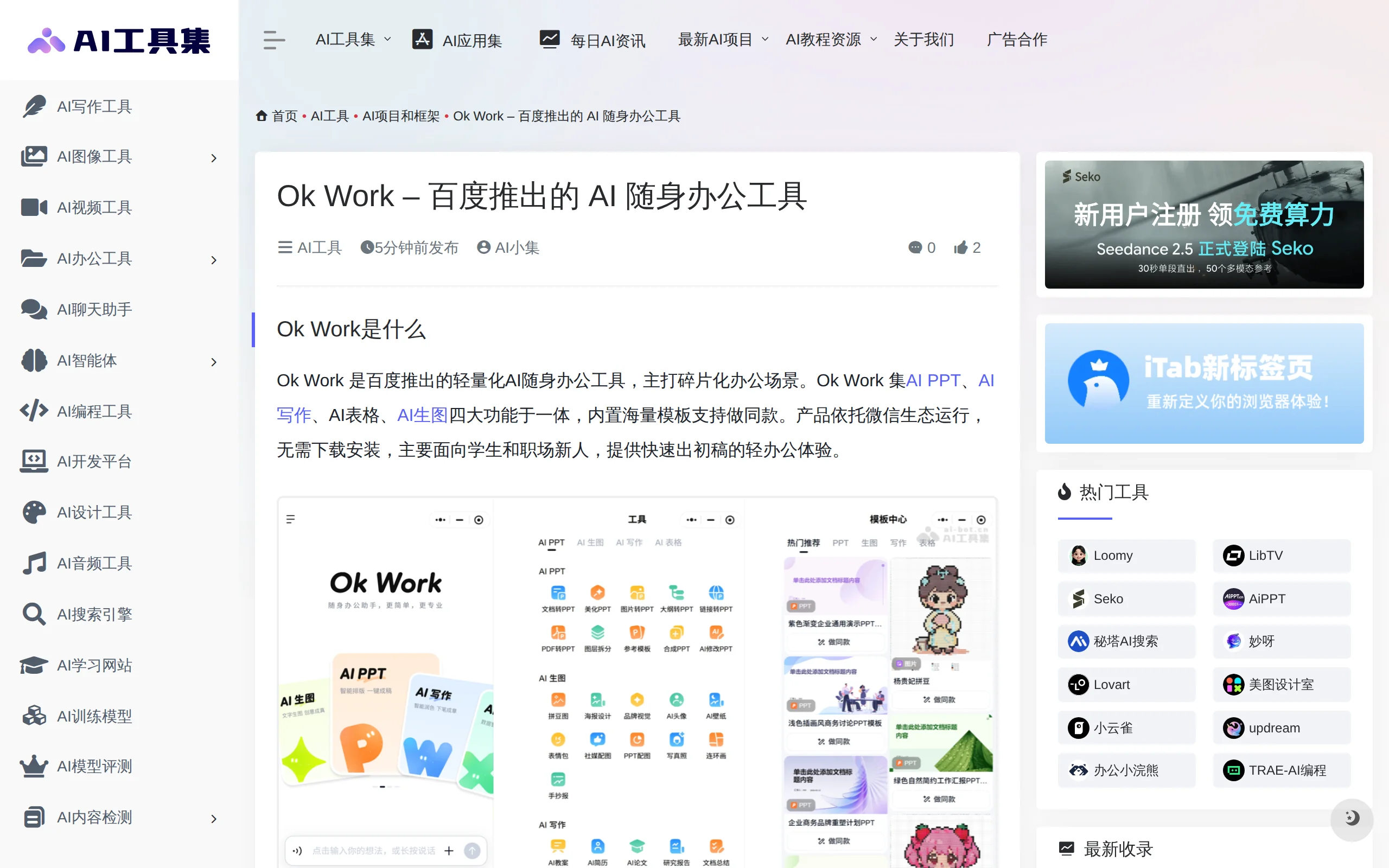
Ok Work – Baidu's AI On-the-Go Office Tool
Ok Work is Baidu's lightweight AI on-the-go office tool, running in the form of a WeChat Mini Program, targeting students and new professionals, and focusing on fragmented office scenarios. The produc...
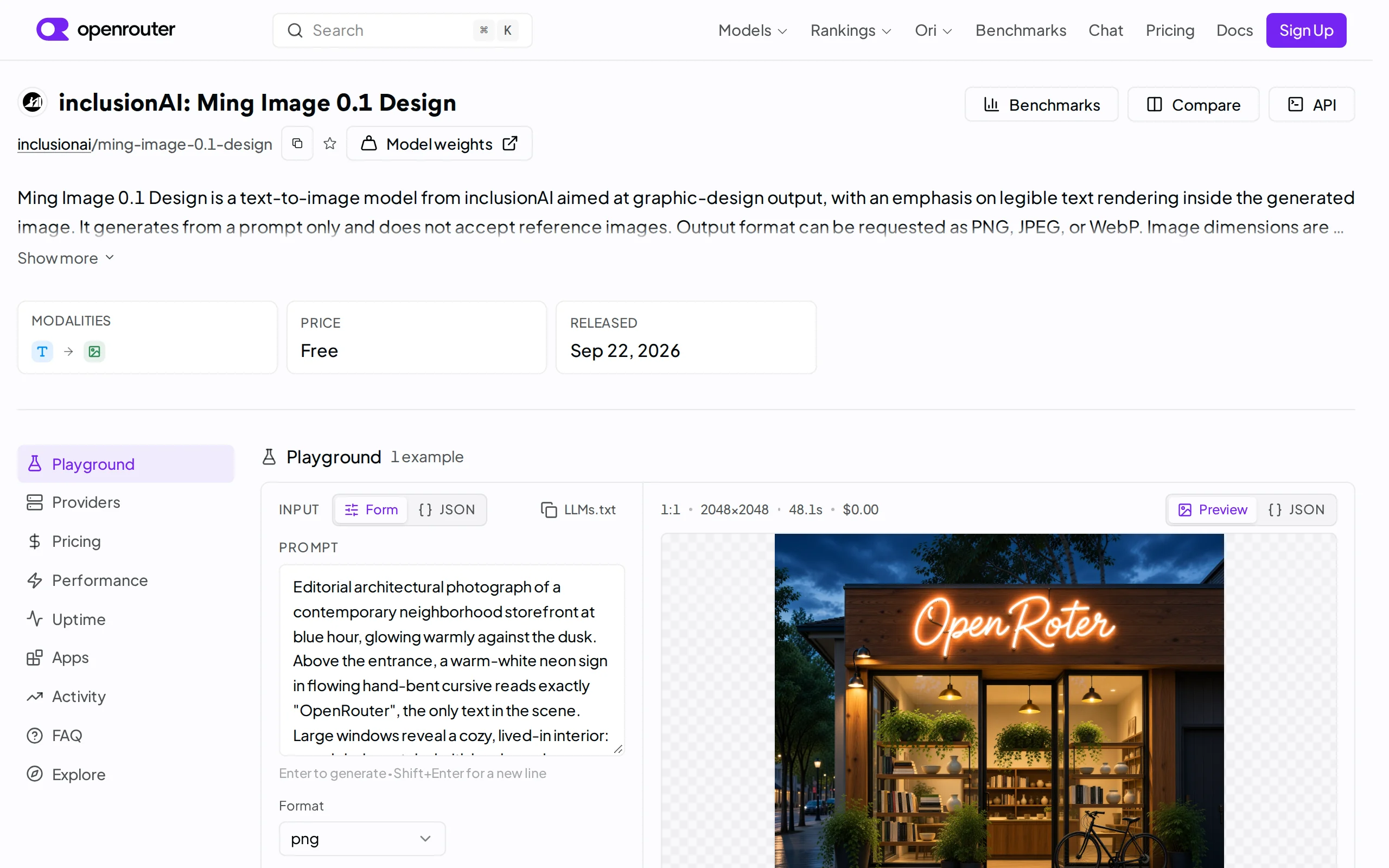
Ming-Image-0.1-Design: Ant Group Open-Sources 6B Parameter Image Generation Model, End-to-End Reimagining the Design Workflow
Ming-Image-0.1-Design is a 6B parameter image generation model open-sourced by Ant Group's InclusionAI team, specifically tailored for design scenarios. It supports 8K long, structured prompts and can...
Step Code – In-Depth Review of StepFun's Open-Source Terminal Programming Agent
Step Code is an open-source terminal programming agent launched by StepFun, licensed under the MIT License, which allows developers to complete the full workflow of code writing, debugging, execution,...
In-Depth Review of Claude Opus 5.5: A Revolution in Programming Efficiency and Safety for Anthropic's Flagship Model
Claude Opus 5.5 is the first flagship model in Anthropic's Claude 5.5 series, launched in June 2026. It is positioned as a high-end AI model designed for enterprise-level agent programming, complex kn...
© All Rights Reserved. Some content on this site is partially generated by AI with human review.