
OpenStory: Open Source AI Video Production Platform, Generate Style-Consistent Short Drama Videos with One Click

Executive Summary:
OpenStory is an open-source AI video production platform that specializes in converting scripts into style-consistent short drama videos with a single click. The platform can automatically split scene...
1. What is OpenStory
OpenStory is an open-source AI video production platform that specializes in converting scripts into style-consistent short drama videos with a single click. The platform can automatically split scenes, design shots, analyze emotional atmosphere, and invoke mature models such as Fal.ai to generate images, videos, and audio, while ensuring consistency in character appearance, scene layout, and visual style across different shots. OpenStory supports team collaboration and asset sharing, and is fully open-sourced under the MIT license, providing an industry-standard production pipeline from script to final output for independent creators and content teams.
Image source: Official article
Image source: official article
Technical positioning and domain: OpenStory belongs to the field of AI video generation and automated production. Its unique positioning lies in integrating fragmented AI generation capabilities into a complete industrial production pipeline. Unlike point-wise AI video generation tools, OpenStory covers the entire workflow from script parsing, storyboard design, visual generation, video rendering, to final compositing, aiming to address the industry pain points of fragmented processes and style drift in AI short drama production.
Development background: The project was initiated and maintained by the openstory.so team, relying on the open-source community ecosystem. It lowers the technical barriers of video generation by integrating third-party model services such as Fal.ai. Its design philosophy stems from a deep observation of the AI short drama production process—creators often spend a significant amount of time on prompt writing, storyboard design, and post-production editing, all of which can be fully automated.
Core value: OpenStory solves three key issues in AI video production: first, the consistency of characters and scenes across different shots, which has long been a technical challenge in AI video generation; second, the standardization of the production process, upgrading one-time, "small workshop"-style creation into a replicable and scalable production workflow; third, the reduction of operational barriers, enabling non-technical users to produce professional-level videos through automated prompt engineering.
Technical features: The platform employs a server-side automated architecture, with the entire process—from script parsing, prompt generation, to video rendering and MP4 export—handled on the server side. By maintaining a character library, scene library, and visual style library, and combining a unified prompt engineering strategy, it achieves visual consistency control across multiple shots and scenes. It offers flexible deployment options, supporting both local execution and edge deployment via Cloudflare Workers.
2. Key Features
Script Intelligence Parsing: After pasting the script, the platform automatically performs scene segmentation, camera angle recommendations, and plot continuity tracking. The system understands the narrative structure and emotional direction in the script, matching appropriate shot plans for each scene and eliminating the tedious process of manual storyboarding.
Style Consistency Control: Automatically maintains consistency in character appearance, scene layout, color lighting, and visual style throughout the entire video. This feature is achieved through a unified character description library and scene setting library, reusing consistent visual elements during each generation to effectively address the common issue of character drift in AI video generation.
AI Image Generation: Calls multiple image generation models via Fal.ai to produce high-quality static images for each scene. The platform automatically handles complex prompt writing, allowing users to obtain visually appropriate images without needing to understand the specific prompt requirements of each model.
Image-to-Video Conversion: Automatically converts generated static frames into video clips with dynamic effects. This feature gives the images a sense of motion and temporal dimension, making the final video not just a simple collage of static images, but a dynamic visual narrative with a clear rhythm.
Multi-Shot Rendering: Supports mainstream video generation models such as Seedance 2.0 and Kling 3.0, allowing multiple shots for an entire scene to be generated with a single operation. The platform schedules different models in parallel in the background, automatically matching the most suitable generation engine based on scene type and shot requirements.
Video Compositing and Export: The server automatically composites all video clips into a complete film and directly exports it as an MP4 file with audio and subtitles. This entire process is completed in the cloud, eliminating the need for users to download multiple clips and manually edit them, significantly shortening the time from generation to delivery.
Collaborative Workspace for Teams: Supports multiple users sharing character libraries, scene libraries, and visual style libraries, enabling unified management of media assets. Team members can reuse visual assets created by others, ensuring that content produced by different creators maintains a consistent style.
Automated Prompt Engineering: The platform automatically handles complex AI prompt engineering, including model selection, parameter optimization, and style description generation. Users only need to provide the script and style preferences, and the system will generate prompts compatible with each model, greatly reducing the need for specialized knowledge in prompt engineering.
3. How to Use
Environment Requirements: You need to install the Bun runtime (version 1.0 or higher is recommended) and Git. The operating system supports macOS, Linux, and Windows (WSL environment). Since both inference and rendering are performed in the cloud, no high-performance GPU is required locally; a standard development machine can run smoothly.
Clone the Project: Execute
git clone https://github.com/openstory-so/openstory.gitto clone the repository to your local machine, then usecd openstoryto navigate into the project directory.Install Dependencies: Run
bun installwithin the project directory. Bun will automatically install all required dependency packages. The installation process typically takes only a few dozen seconds, offering a significant performance advantage over npm and yarn.Start the Service: Execute the
bun devcommand. The system will automatically initialize the environment, migrate the database, and start the local development server. By default, the service runs on a local port; you can access the operation interface by visiting the corresponding address in your browser.Configure Keys: Run the
bun setupcommand. Enter theFAL_KEYandOPENROUTER_KEYAPI keys in the interactive prompts. These keys are used to call Fal.ai's image and video generation models, as well as OpenRouter's large language model services.Paste the Script: Paste a complete script or a one-sentence synopsis in the interface. The platform will automatically parse and split the scenes. The system will analyze the plot structure, character appearance order, and emotional changes to generate an initial storyboard proposal.
Select Style: Choose from the pre-set film style library, such as sci-fi, thriller, romantic comedy, or other style templates. You can also customize your own visual style. The selected style will directly impact the visual presentation of all subsequent scenes.
Generate and Export: After clicking the generate button, the platform automatically completes the prompt engineering, AI image generation, and dynamic video rendering. Once generation is complete, the server automatically assembles all segments and exports them as an MP4 video file with audio and subtitles.
Notes: API keys are sensitive information. Please keep them secure and avoid committing them to public repositories. The API usage consumed during the generation process is billed by the third-party platform. It is recommended to perform small-scale tests before formal production to estimate the cost.
4. Pros and Cons Analysis
| Pros |
|---|
| MIT fully open source: The code is completely open, supporting free deployment, secondary development, and commercial use, which lowers the usage threshold and cost, and also provides developers with high-quality learning references. |
| End-to-end automation: Completes the entire process from script parsing, storyboard design, to video rendering and MP4 export in one stop, eliminating the need for manual editing and significantly shortening the production cycle from concept to final output. |
| Consistent style assurance: Automatically maintains consistency in character appearance, scene layout, and visual style across different shots, addressing the core pain points of character drift and style inconsistency in AI video production. |
| Industrial pipeline design: Standardizes, replicates, and scales AI short film production, making it suitable for bulk content creation scenarios and providing efficient production tools for MCN agencies and content teams. |
| Flexible deployment options: Supports local deployment and edge deployment via Cloudflare Workers, ensuring data autonomy and control, making it suitable for teams and organizations with data security requirements. |
5. Comparative Analysis with Similar Tools
| Comparison Dimension | OpenStory | LTX Studio | Runway Gen-3 |
|---|---|---|---|
| Product Positioning | Open-source AI video production pipeline, focusing on the industrialized process from script to final output | AI video pre-production kit under Lightricks, emphasizing storyboard and concept visualization | Commercial AI video generation platform, targeting professional creative professionals |
| Open Source License | MIT fully open-source, allowing free deployment and secondary development | Closed-source commercial product, offering only SaaS services | Closed-source commercial product, subscription-based |
| Usage Cost | Free (requires self-provided Fal.ai/OpenRouter API Key) | Free version: 800 one-time credits; Paid version: $15–$125/month | Subscription-based, charged by package |
| Core Capabilities | Script parsing, automatic scene division, style consistency, image-to-video, server-side MP4 synthesis | Storyboard generation, shot control, character consistency, timeline editing, audio synchronization | Text/image-to-video generation, motion brush, multi-modal video editing |
| Deployment Method | Local or Cloudflare Workers edge deployment, with data self-controlled | Pure cloud-based SaaS, no private deployment option | Pure cloud-based SaaS, no private deployment solution |
| Model Support | Integrates multiple models via Fal.ai, including Seedance, Kling, FLUX, etc. | Built-in LTX-2.3, with support for partner models such as Veo, Kling, Seedance, etc. | Self-developed Gen-3 series models, with platform-unified control over model capabilities |
| Collaboration Features | Team workspace, shared asset library (in development) | Standard and Professional versions support real-time multi-person collaboration and approval | Paid version provides team workspace |
Selection Recommendations: For teams seeking data self-control, deep customization, and secondary development, OpenStory is a more suitable choice. Its MIT license allows for free modification and commercial deployment, and the local deployment option helps avoid data compliance risks associated with cloud-based SaaS. Additionally, for MCNs requiring mass production of content with consistent style, OpenStory's industrialized pipeline can significantly improve production efficiency.
For film pre-production teams requiring professional storyboard pre-production and precise shot control, LTX Studio has a stronger advantage in the depth of its pre-production features. Its built-in timeline editing and audio synchronization capabilities are well-suited for complex project planning. For creators who prioritize video generation quality itself and are not concerned about closed-source nature or subscription costs, Runway Gen-3 and Pika perform well in terms of generation quality and product maturity, making them ideal for quickly producing high-quality video clips.
6. Editor's Summary
OpenStory introduces a new product paradigm in the AI video production domain — it is no longer a single video generation tool, but rather integrates script parsing, visual generation, video rendering, and post-production compositing into a complete automated pipeline. This design addresses the core pain points in AI short-form video production: fragmented workflows leading to low efficiency, difficulties in maintaining consistency across characters and scenes, and the high professional barrier of prompt engineering. Through automated scene planning and a unified style control mechanism, OpenStory enables creators to focus on storytelling itself rather than technical details.
In terms of practical value, the MIT license-based open-source strategy reduces the cost of adoption, while the flexibility of local deployment and Cloudflare Workers edge deployment meets the needs of teams of different scales. For independent creators, it allows for the rapid transformation of scripts into visual samples, useful for creative validation and showcasing their work. For content teams, it provides a replicable, standardized production process, ideal for serialized and batch content creation.
The project is primarily suitable for three types of users: first, independent creators who want to explore AI video production at a low cost; second, MCN agencies and short video teams that require the mass production of content with consistent style; and third, technical teams that require data autonomy and wish to perform secondary development based on open-source code. OpenStory's architectural design also leaves room for future expansion. As community contributions grow and collaborative features improve, its value as an open-source infrastructure will become even more evident.
7. Application Scenarios
AI Short Film/Micro-Cinema Production: Independent creators can input a script to automatically generate consistent storyboards and final videos, significantly lowering the barrier to entry for short film production. The platform's automated scene segmentation and shot design enable a single person to complete what was previously a process requiring an entire production team.
Advertising Concept Preview: Advertising teams can quickly transform creative scripts into visual storyboards, showcasing shot designs and visual direction to clients at a very low cost. Conducting creative validation before formal filming reduces communication costs and the rate of reshoots.
Educational Training Videos: Educational institutions can script their course content and then batch generate teaching animations or scenario demonstration videos with consistent characters and scenes. A unified visual style helps establish brand recognition for the course, while the automated production process supports rapid updates and iterations of course content.
Social Media Content Mass Production: MCN agencies can use standardized pipelines to mass-produce series of consistent-style short videos, ensuring brand visual consistency. The same script framework can be quickly adapted to different style templates, enabling diverse content distribution.
Game/Animation Concept Validation: Independent developers can rapidly generate concept videos for characters and scenes to validate world-building and narrative pacing before committing to formal production. This low-cost concept validation method helps identify creative direction issues early in the project lifecycle, reducing resource waste during formal development.
8. FAQ
Q: Is OpenStory completely free?
A: The OpenStory software itself is fully open-source and free under the MIT license. However, users need to have their own API keys for Fal.ai and OpenRouter during use. The API costs incurred from calling third-party models are borne by the user. The actual usage cost depends on the number of videos generated and the pricing of the selected models.
Q: What are the hardware requirements?
A: Inference and rendering for OpenStory are performed in the cloud, while the local machine only runs orchestration services, a database, and a web interface. Therefore, hardware requirements are not high, and a regular office computer can run it smoothly. However, if users wish to deploy the underlying generation models locally, they will need a GPU with sufficient computational power, with specific configurations depending on the scale of the model being run.
Q: How is consistency across different shots ensured for characters?
A: The platform ensures consistency by automatically maintaining a character library, scene library, and visual style library. During each generation, the system reuses unified character appearance descriptions, scene layout settings, and visual style parameters. Combined with standardized prompt engineering strategies, this ensures that character appearances, environmental details, and lighting colors remain consistent across different shots.
Q: Which video generation models are supported?
A: OpenStory integrates several mainstream video generation models through the Fal.ai platform, including Seedance 2.0, Kling 3.0, FLUX, and others. Users can select different models during the generation process, and the platform will automatically match the most suitable generation engine based on the scene type and shot requirements.
Q: Can the generated content be used for commercial purposes?
A: OpenStory itself is licensed under the MIT license, and its code can be freely used for commercial purposes. However, the right to use the generated content commercially must also comply with the service terms of the models being called. Platforms such as Fal.ai have their own regulations regarding the use of generated content. It is recommended that users review the relevant service agreements before using the content commercially.
Q: When will team collaboration features be available?
A: Team workspaces and shared asset libraries are currently listed in the project Roadmap. The current version is primarily focused on individual use and local deployment. The specific release date will be announced by the official team. Developers can follow the Release and Roadmap updates in the project repository.
9. Project Links
- Project Website: https://openstory.so/
- GitHub Repository: https://github.com/openstory-so/openstory
Related AI Model Articles
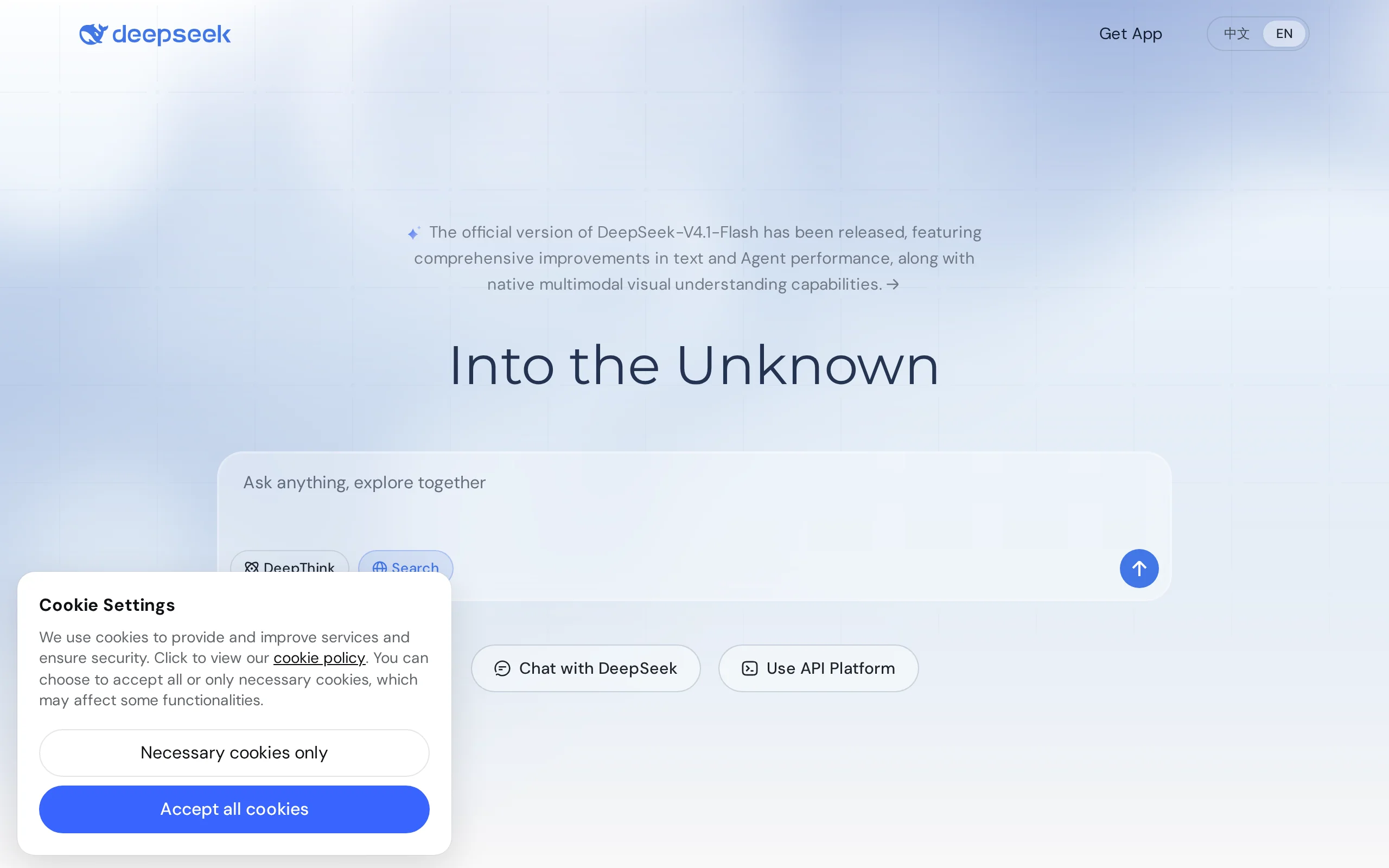
Review of DeepSeek Harness Desktop: How the Official GUI Client Lowers the Bar for Agent Usage
DeepSeek Harness Desktop is the official graphical client launched by DeepSeek, designed to provide a visual interface for the originally command-line-based DeepSeek Harness framework. After users log...
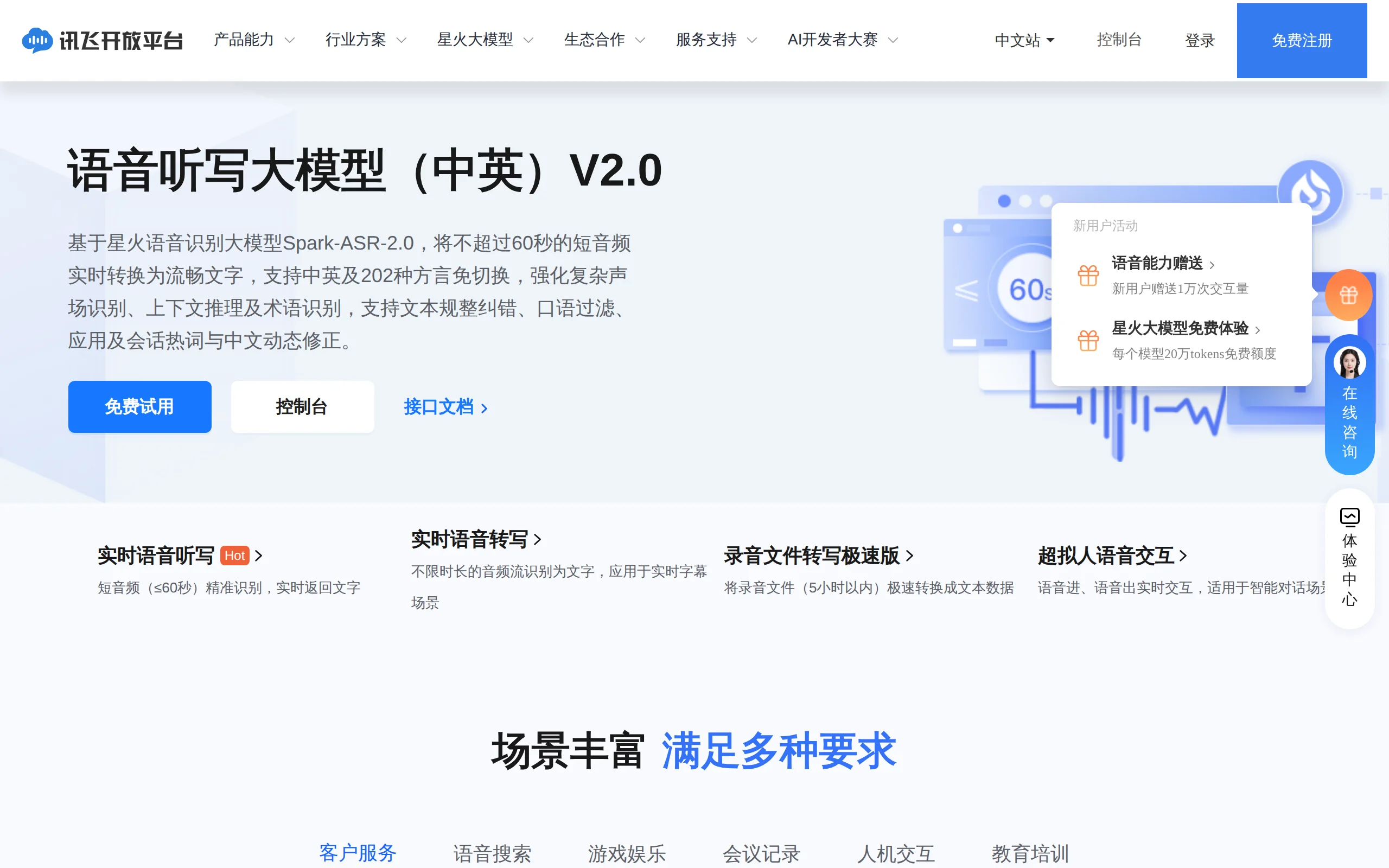
In-Depth Review of Spark-ASR-2.0: A New Paradigm in Speech Recognition with Non-Autoregressive Architecture
Spark-ASR-2.0 is the latest generation speech recognition large model launched by iFLYTEK based on its proprietary Spark-Audio speech foundation model. This model continues the non-autoregressive para...

Qwen-Audio-3.1: A Full-Stack Evaluation of the Qwen Audio Large Model Series
Qwen-Audio-3.1 is a series of large audio models launched by Alibaba's Qwen. It consists of five models: ASR speech recognition, ASR-Next audio understanding, TTS speech synthesis, TTS-Next audio crea...

Qwen3.8-LiveTranslate – A Real-Time Simultaneous Interpretation Model Launched by Alibaba Tongyi
Qwen3.8-LiveTranslate is a real-time simultaneous interpretation large model launched by the Tongyi Qianwen team at Alibaba. Based on the Interleave single-stream architecture, it processes audio and ...
© All Rights Reserved. Some content on this site is partially generated by AI with human review.