
IndexTTS-2.5: In-Depth Review of Bilibili's Open-Source Industrial-Grade Zero-Shot Voice Cloning Model
Executive Summary:
IndexTTS-2.5 is an industrial-grade zero-shot voice cloning model open-sourced by the Bilibili Index Speech team, with only 0.8B parameters. This model supports cross-lingual transfer across five lang...
1. What is IndexTTS-2.5
IndexTTS-2.5 is an industrial-grade zero-shot voice cloning model open-sourced by the Bilibili Index Speech team, with only 0.8B parameters. This model supports cross-lingual transfer across five languages: Chinese, English, Japanese, Spanish, and Arabic. It can synthesize speech in different languages while preserving the source speaker's voice characteristics. Through a restructured inference architecture, the model achieves a 2.28x improvement in inference speed, and integrates refined emotional control, speaking rate adjustment, and pronunciation intervention mechanisms, offering an efficient and flexible voice generation solution for content creation, localization dubbing, and other scenarios.
Technical Positioning and Domain: Belongs to the field of natural language processing and text-to-speech synthesis, focusing on zero-shot voice cloning and multilingual cross-lingual speech generation. Among open-source TTS models, IndexTTS-2.5 achieves industrial-grade synthesis quality and inference efficiency with a compact parameter size of 0.8B. It is positioned as a lightweight, highly controllable voice generation solution. Its unique three-stage pipeline architecture and semantic encoder-decoder compression technology give it a differentiated competitive edge in inference speed and functional richness.
Development Background: Developed by the Bilibili Index Speech team. Bilibili has deep experience in the video content ecosystem and AI technology applications. The motivation for developing this model stems from the demand of platform creators for efficient, personalized dubbing tools. The team has long been dedicated to speech synthesis technology, aiming to reduce the production barriers for high-quality speech content through open-sourcing and to promote technological innovation within the community.
Core Value: Addresses common issues in open-source voice cloning models, such as slow inference speed, weak cross-lingual transfer capabilities, and poor control over emotional and pronunciation aspects. By incorporating a three-stage pipeline, semantic encoder-decoder compression, and an upgraded Zipformer architecture, IndexTTS-2.5 provides superior synthesis quality and multidimensional control capabilities compared to most similar models, while maintaining its lightweight nature. The introduction of the GRPO reinforcement learning optimization strategy further enhances pronunciation accuracy and speech naturalness.
Technical Features: Employs a three-stage pipeline of "text → semantic tokens → mel-spectrogram → waveform," and combines a semantic encoder-decoder to compress the frame rate from 50Hz to 25Hz, significantly reducing computational load. The S2M module uses the Zipformer architecture instead of the traditional U-DiT, achieving stronger long-range dependency modeling with fewer parameters. The complete decoupling of voice and emotional features, along with multi-level emotional control interfaces, are key technical highlights that distinguish it from competitors.
2. Key Features
Zero-shot Voice Cloning: With just a 3 to 10-second reference audio, the model can accurately replicate the voice characteristics of any speaker without requiring additional training on the target speaker. This feature lowers the barrier to entry for voice cloning, making personalized voice generation accessible and practical for content creation, especially useful for hosts and character voice acting scenarios.
Five-language Cross-lingual Support: The model supports Chinese, English, Japanese, Spanish, and Arabic. Users can clone a voice in one language using a reference audio from another language, while maintaining a high degree of voice consistency across languages. This is highly valuable for internationalizing and localizing video content, particularly filling a gap in the open-source TTS domain for Arabic.
Fully Decoupled Voice and Emotion: Voice and emotion prompts can be specified independently. Users can separately control "who is speaking" and "how they are speaking," even combining emotion audio from one language with voice audio from another. This design is a first in the industry, offering unprecedented flexibility for creative expression.
Fine-grained Emotional Control: Four methods of emotional regulation are available: conveying emotion through an independent emotional reference audio, precisely specifying emotional intensity using an 8-dimensional emotional vector, enabling text-driven automatic emotional inference, and adjusting emotional intensity via the
emo_alphaparameter. This provides a refined toolset for character voice acting and audio content creation.Seamless Speaking Rate Adjustment: The
duration_factorparameter allows for arbitrary adjustment of synthesis speaking rate between 0.5x and 2.0x. This feature is highly practical for applications requiring synchronization with video pacing or specific scene speaking rate requirements, without significantly affecting voice consistency. It meets diverse needs, from slow-paced educational content to fast-paced narration.Precise Pronunciation Intervention: Supports pronunciation control at three levels: Chinese pinyin, English CMU phonemes, and Japanese kana. Users can directly insert pronunciation annotations into the text, effectively resolving issues with homonyms, heteronyms, and context-dependent pronunciation, ensuring accurate articulation of technical terms or specific vocabulary. This is crucial for educational and technical content.
Low Inference Latency and Lightweight Deployment: With only 0.8B parameters, the model achieves a 2.28x acceleration in inference through semantic encoder-decoder compression and Zipformer architecture upgrades. Under BF16 precision, the real-time factor (RTF) is as low as 0.20, meaning that synthesizing 10 seconds of speech takes approximately 2 seconds. This enables potential for real-time or near-real-time interaction, with low memory requirements and ease of deployment on consumer-grade GPUs.
3. How to Use
Environment Preparation and Project Cloning: Users must first install Git and the uv package manager. Use the command
git clone https://github.com/index-tts/index-tts.gitto download the official code repository to their local machine. It is recommended to run this in a Linux or macOS environment; for Windows systems, ensure Python 3.10 or higher is installed.Dependency Installation: After entering the project directory, run the command
uv sync --all-extras. uv will automatically create a virtual environment and install all required Python dependencies, including PyTorch and Transformers. The dependency installation process typically takes 5–10 minutes, depending on network conditions. No manual activation of the virtual environment is required after installation is complete.Model Weight Download: Use the
huggingface-cliormodelscopetool to download the model weights from the official repositoryIndexTeam/IndexTTS-2.5to the localcheckpointsdirectory. The model weights are approximately 2–3GB in size, so ensure there is sufficient disk space before downloading. It is recommended to use a domestic mirror source to accelerate the download.Launch Web Interface: Run
uv run webui.pyto start the Gradio interactive interface. Accesshttp://127.0.0.1:7860in your browser to perform operations such as speech synthesis, emotional control, and speech rate adjustment through an intuitive graphical interface. This interface is ideal for non-developers to quickly experience the model's features.Python Script Invocation: For developers who need to integrate the model into existing systems, import the
IndexTTS2class fromindextts.infer_v2_5and instantiate the model by passing in the configuration file path and model directory. By calling theinfermethod and providing a reference audio, target text, and language code, speech can be generated. This method is suitable for batch processing and automated pipelines.
| Advanced Parameter Configuration: During inference, the emo_audio_prompt parameter can be used to specify an emotional reference audio, or the emo_vector can be used to input an 8-dimensional emotional vector. The duration_factor can be set to a value between 0.5 and 2.0 to adjust the speech rate. Pronunciation intervention can be achieved by inserting annotations such as `<行|
4. Pros and Cons Analysis
| Pros |
|---|
| Compact and High Efficiency: The model has only 0.8B parameters, achieving a 2.28x acceleration in inference through semantic encoder-decoder compression and Zipformer architecture upgrades. Under BF16 precision, the real-time factor (RTF) is as low as 0.20, balancing lightweight design with high performance. |
| Five-language Cross-lingual Transfer: Supports five languages—Chinese, English, Japanese, Spanish, and Arabic. Users can use reference audio from any one language to clone speech in another, and achieve emotional cross-lingual transfer without requiring emotional training data in the target language. |
| Complete Decoupling of Voice and Emotion: Users can independently specify voice prompt audio and emotion prompt audio, which can even come from different languages. This allows for flexible injection of desired emotional styles while preserving the target speaker's voice characteristics. |
| Fine-grained Pronunciation Control: Supports three levels of pronunciation intervention—pinyin, CMU phonemes, and Japanese kana—effectively addressing homophones and heteronyms, meeting the needs of professional content creation. |
5. Comparative Analysis with Similar Tools
| Comparison Dimension | IndexTTS-2.5 | CosyVoice 3 | ChatTTS |
|---|---|---|---|
| Developer | Bilibili Index Speech Team | Alibaba | 2noise |
| Parameter Count | 0.8B | 0.5B / 1.5B | ~0.4B |
| Supported Languages | Chinese/English/Japanese/Spanish/Arabic (5 languages) | Chinese/English/Japanese/Korean (4 languages) | Chinese/English |
| Cross-lingual Transfer | ✅ Supported, retains emotion | ✅ Supported | ❌ Not supported |
| Voice-Emotion Decoupling | ✅ Fully decoupled | ❌ No public support for equivalent granularity | ❌ Not supported |
| Pronunciation Intervention | ✅ Pinyin/CMU/Kana | ✅ Partial support | ❌ Not supported |
| Inference Speed (RTF) | 0.20 (BF16) | 0.3x (BF16) | 0.2x (FP16) |
| Open Source License | Bilibili Model License | Apache 2.0 | CC BY-NC 4.0 |
For developers prioritizing the highest Chinese speaker similarity and a mature community ecosystem, CosyVoice 3 stands out with its superior Chinese SS metric (80.01) and Apache 2.0 license, making it more appealing for commercial applications. Its stability, validated through large-scale production environments, makes it ideal for professional voice-over scenarios with high requirements for voice quality.
For content creators requiring multilingual and cross-lingual voice synthesis, especially those working with Spanish and Arabic content, IndexTTS-2.5 is currently the most functional open-source option. Its voice and emotion decoupling capability provides greater creative flexibility, and its pronunciation intervention features give it a unique advantage in educational and technical content generation. If the deployment environment demands extreme inference speed and model size efficiency, FishSpeech 1.5 performs better with an RTF of 0.1. However, IndexTTS-2.5 excels in overall feature completeness. While ChatTTS is lightweight and user-friendly, its relatively limited functionality makes it more suitable for simple scenarios with minimal multilingual support and fine-grained control requirements.
6. Editor's Summary
IndexTTS-2.5 demonstrates a unique technical approach and practical value in the field of open-source voice cloning. Its core innovation lies in the clever integration of a three-stage pipeline with a semantic encoder-decoder, compressing the semantic Token frame rate from 50Hz to 25Hz, effectively halving the sequence length. This is the key to achieving a 2.28x acceleration in inference. Meanwhile, the introduction of the Zipformer architecture replaces the traditional U-DiT, achieving stronger long-range dependency modeling with fewer parameters, ensuring stable synthesis quality. The application of the GRPO reinforcement learning optimization strategy, using the word error rate of the frozen ASR model as a reward signal, continuously improves pronunciation accuracy and speech naturalness, showcasing the team's deep consideration in enhancing the model's practical effectiveness.
In terms of practical value, IndexTTS-2.5's support for Spanish and Arabic fills a gap in mainstream open-source TTS models. The complete decoupling of voice tone and emotion, along with multi-level emotional control from eight-dimensional emotional vectors to text-driven inference, provides unprecedented fine-grained control capabilities for audiobook content creation, game voice acting, and cross-language localization. Its ultra-low real-time factor of 0.20 makes it a viable option for deployment in real-time interactive scenarios.
This model is primarily aimed at content creators, AI voice acting developers, and multilingual localization teams. For users requiring an efficient, flexible, and emotionally expressive speech generation solution, IndexTTS-2.5 is a highly competitive choice. Its lightweight nature also enables deployment on edge devices. How future versions can further improve speaker similarity metrics and enhance robustness in handling complex accents and noisy environments will be crucial in determining whether it can occupy a more central position in this field. Overall, the release of IndexTTS-2.5 injects strong momentum into the open-source speech synthesis community, and its technical approach and functional design are worth close attention from the industry.
7. Application Scenarios
AI Dubbing and Audiobook Content Generation: Content creators only need to provide a reference audio clip of a host or character to quickly generate audiobooks, radio dramas, and podcast content in multiple languages and emotional styles. The decoupling of voice and emotion allows creators to inject different emotional expressions—such as happiness, anger, sadness, or joy—into the same character across different storylines, without the need for repeated recordings, greatly enhancing production efficiency.
Cross-language Video Localization: Film and short video teams can generate English, Japanese, Spanish, or Arabic dubbing directly from Chinese reference audio while preserving the original actor's voice. This significantly reduces dubbing costs for overseas releases and ensures global consistency in character voices, helping to maintain a unified brand image.
Game and Virtual Character Voice: Game developers can clone specific voices for NPCs or virtual idols and switch between different emotional states—such as happiness, anger, sadness, or joy—in real-time using emotion vectors. Combined with its low inference latency, this enables dynamic narrative voice and instant voice feedback during live interactions, enhancing immersion.
Real-time Voice Interaction and Digital Humans: With an ultra-low real-time rate of 0.20, IndexTTS-2.5 can be deployed in scenarios such as intelligent customer service, digital human live streaming, and real-time translation. The system can generate personalized voice responses with appropriate emotional tone based on user input or emotional state.
Education and Language Learning: Educational institutions can leverage the pronunciation intervention feature to generate示范 audio with standard pinyin, CMU phonemes, or Japanese kana annotations. After cloning a teacher's voice, they can create synchronized multilingual courses, providing students with a consistent and familiar auditory experience and improving learning outcomes.
8. FAQ
Q: Does IndexTTS-2.5 require a GPU to run?
A: Although the model has only 0.8B parameters, it is recommended to use an NVIDIA GPU for inference to achieve optimal performance (RTF 0.20). It can also run on a CPU, but the inference speed will be significantly slower, making it difficult to meet the requirements of real-time or near-real-time interactive scenarios.
Q: Are there any restrictions on commercial use of the model?
A: IndexTTS-2.5 uses the Bilibili Model License. This license allows non-commercial use, but commercial use requires careful review of the license terms. Unlike fully open licenses such as Apache 2.0, it may include restrictions on specific use cases or distribution methods.
Q: How can I resolve homonym errors in synthesized speech?
| A: IndexTTS-2.5 provides a pronunciation intervention feature. Users can directly insert pronunciation annotations into the input text, such as `<行|
Q: What are the available methods for emotional control in the model?
A: The model provides four methods for emotional control: 1) conveying emotion through an independent emotional reference audio; 2) using an eight-dimensional emotional vector to precisely specify the intensity of emotion; 3) enabling text-driven automatic emotional inference; 4) adjusting the emotional intensity via the emo_alpha parameter.
Q: When cloning across languages, must the reference audio's language match the target language?
A: No. One of the core advantages of IndexTTS-2.5 is its support for cross-lingual transfer. Users can use a Chinese reference audio to clone the voice of a target speaker, then generate speech in English, Japanese, Spanish, or Arabic while retaining the original voice characteristics.
Q: What is the length of the model's context window?
A: According to the paper and technical report, the model performs stably when processing long texts. For specific context window length recommendations, please refer to the official documentation. In practical use, the model maintains good coherence and voice consistency even with texts of several thousand characters.
9. Project Links
- GitHub Repository (Project Homepage): https://github.com/index-tts/index-tts (contains full code, documentation, and usage guide)
- Hugging Face Model Repository: https://huggingface.co/IndexTeam/IndexTTS-2.5 (model weights and configuration files)
- arXiv Technical Paper: https://arxiv.org/pdf/2601.03888 (detailed technical principles and evaluation data)
Related AI Model Articles
Review of DeepSeek Harness Desktop: How the Official GUI Client Lowers the Bar for Agent Usage
DeepSeek Harness Desktop is the official graphical client launched by DeepSeek, designed to provide a visual interface for the originally command-line-based DeepSeek Harness framework. After users log...
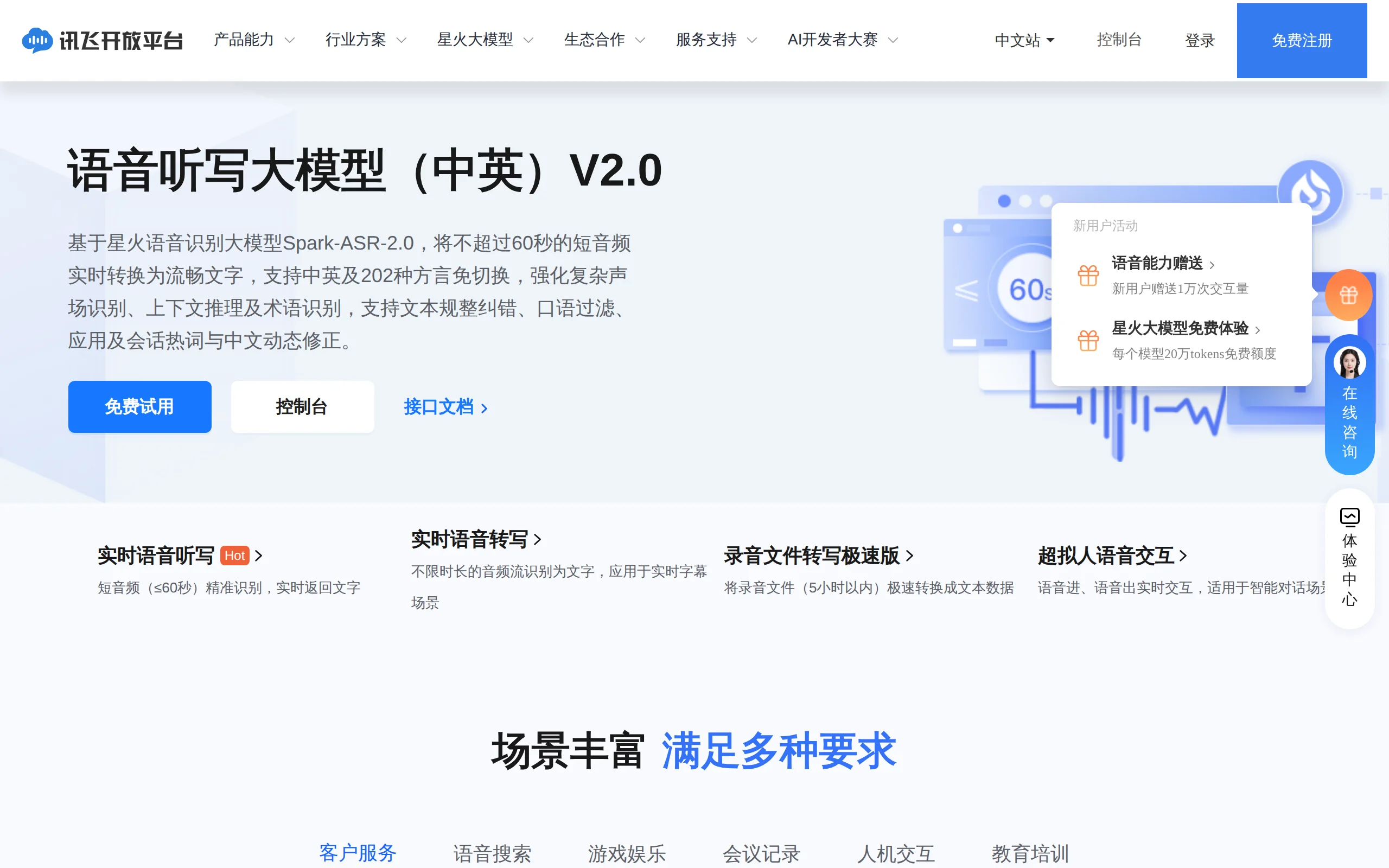
In-Depth Review of Spark-ASR-2.0: A New Paradigm in Speech Recognition with Non-Autoregressive Architecture
Spark-ASR-2.0 is the latest generation speech recognition large model launched by iFLYTEK based on its proprietary Spark-Audio speech foundation model. This model continues the non-autoregressive para...

Qwen-Audio-3.1: A Full-Stack Evaluation of the Qwen Audio Large Model Series
Qwen-Audio-3.1 is a series of large audio models launched by Alibaba's Qwen. It consists of five models: ASR speech recognition, ASR-Next audio understanding, TTS speech synthesis, TTS-Next audio crea...

Qwen3.8-LiveTranslate – A Real-Time Simultaneous Interpretation Model Launched by Alibaba Tongyi
Qwen3.8-LiveTranslate is a real-time simultaneous interpretation large model launched by the Tongyi Qianwen team at Alibaba. Based on the Interleave single-stream architecture, it processes audio and ...
© All Rights Reserved. Some content on this site is partially generated by AI with human review.