
GPT-Live – OpenAI's Next-Generation Voice Model

Executive Summary:
GPT-Live is OpenAI's new generation voice model, which employs a full-duplex native audio architecture, enabling true "simultaneous speaking and listening" interaction. The model can make multiple int...
1. What is GPT-Live
GPT-Live is OpenAI's new generation voice model, which employs a full-duplex native audio architecture, enabling true "simultaneous speaking and listening" interaction. The model can make multiple interaction decisions per second, including initiating speech, continuing to listen, pausing to wait, naturally interrupting, or calling tools, completely overturning the traditional turn-based voice interaction paradigm. GPT-Live innovatively decouples real-time voice interaction from deep cognitive tasks, with the frontend dedicated to maintaining conversational fluency. When encountering complex issues that require search, multi-step reasoning, or Agent execution, the model automatically delegates tasks to the backend GPT-5.5 for processing, achieving a collaborative mode of "chatting while computing." Currently, GPT-Live has become the default voice mode for ChatGPT, offering two versions: GPT-Live-1 (for paid users) and GPT-Live-1 mini (for free users), supporting iOS, Android, and web platforms, and also enabling visual card displays for weather, stock, and more.
Image source: Official article
Image source: official article
Technical Positioning and Domain: GPT-Live belongs to the domain of multimodal voice interaction models in natural language processing. Its core positioning is to replace traditional turn-based voice assistants, providing a real-time voice interaction experience that approaches human conversation. This model has achieved a paradigm shift in the voice interaction field, transitioning from "turn-based speaking" to "simultaneous speaking and listening," addressing long-standing core issues with voice assistants such as overlapping speech, silence, and response latency.
Development Background: GPT-Live was developed by OpenAI and represents the culmination of years of technical accumulation in the voice interaction domain. Previously, OpenAI's Advanced Voice Mode had initially achieved end-to-end voice interaction, but GPT-Live has introduced architectural-level innovation by adopting a full-duplex design and incorporating a frontend-backend task decoupling mechanism. This marks a shift in OpenAI's technical approach in the voice AI field from a cascaded architecture of "speech recognition + language model + speech synthesis" to an end-to-end unified modeling approach native to audio.
Core Value: GPT-Live solves the interaction rigidity problem of traditional voice assistants, allowing users to naturally interrupt, pause, and interject as they would in a conversation with a human. Its frontend-backend task decoupling design also addresses the core pain point of "complex tasks causing conversation interruptions" in voice interaction, enabling users to maintain continuous frontend conversations while complex reasoning runs in the background. Additionally, GPT-Live's multiple inference options (Instant/Medium/High) allow users to flexibly balance response speed and inference depth based on specific scenarios.
Technical Features: GPT-Live uses a full-duplex native audio architecture, directly modeling the mapping between acoustic features and semantic content, avoiding information loss caused by text transcription in traditional cascaded architectures. Its built-in high-frequency decision engine continuously judges interaction states based on real-time audio streams, maintaining silent waiting during user pauses for thought, inserting feedback sounds when needed, and instantly calling search or computational capabilities when tool requirements are detected, achieving millisecond-level response decisions.
2. Key Features
Full-duplex Continuous Conversation: The model employs a full-duplex architecture, enabling simultaneous voice input and output without the need for turn-taking. Users can naturally interrupt or interject while the model is speaking, and the model can remain silent and wait when the user pauses to think. This eliminates the issue of speaking over the user caused by traditional voice assistants' silence detection, making the conversation flow more natural and human-like.
Intelligent Decision Engine: The model includes a high-frequency decision engine that can make multiple judgments per second about the interaction state, such as when to start speaking, continue listening, pause and wait, naturally interject, or call a tool. This second-level response mechanism allows the conversation to dynamically adjust its interaction strategy based on real-time audio flow, achieving truly synchronized listening and speaking capabilities.
Decoupling of Front-end and Back-end Tasks: The system decouples real-time voice interaction from deep cognitive tasks. The front-end GPT-Live is responsible for maintaining conversation fluency, and when encountering complex issues that require search, multi-step reasoning, or Agent execution, it automatically delegates the task to the back-end GPT-5.5 for processing. Once the back-end completes its task, the results are seamlessly returned to the conversation, ensuring the front-end remains uninterrupted, thus achieving a "chat while computing" collaborative mode.
Visual Responses: In scenarios such as weather, stock, and sports, the model not only responds with voice but also automatically displays corresponding visual information cards on the screen. This multimodal output method of voice plus graphics makes information presentation more intuitive and efficient, allowing users to receive visual assistance without additional actions.
Multi-tier Reasoning Options: Three reasoning modes are available: Instant, Medium, and High. The Instant mode provides fast responses suitable for everyday Q&A, while the Medium and High modes activate the deep reasoning capabilities of GPT-5.5 Thinking, ideal for handling complex scientific questions or tasks requiring multi-step reasoning. Users can flexibly switch between response speed and reasoning depth based on their specific needs.
Background Noise Reduction and Sound Source Focus: The model supports background noise reduction, accurately identifying the user's voice within continuous audio streams and minimizing interference from environmental noise. Even in noisy environments such as commuting or office settings, it ensures the accuracy of voice recognition and interaction, thereby enhancing the user experience.
Multilingual Support: The model has been optimized for commonly used languages and supports natural multilingual conversations. Users can freely switch between different languages, and the model can understand and generate responses in the corresponding language. It should be noted that some less frequently used languages may exhibit non-native accents, but overall multilingual capabilities have significantly improved.
3. How to Use
Access Entry: Users can access GPT-Live via the official ChatGPT App (iOS/Android) or the web version (chatgpt.com). After entering, click the microphone icon at the bottom to start voice conversation mode, without the need to install additional plugins or configure the environment.
Select Inference Tier: Paid users (ChatGPT Plus/Pro) default to the GPT-Live-1 model and can switch between three tiers: Instant, Medium, and High. The Instant tier offers the fastest response and is suitable for everyday quick Q&A. The Medium and High tiers will activate GPT-5.5 Thinking for deep reasoning. Free users default to GPT-Live-1 mini and do not support tier switching.
Natural Conversation: Simply start speaking to begin the interaction. Users can naturally interrupt or interject while the model is speaking, or pause during its thinking process. When encountering questions that require searching or complex reasoning, the front-end conversation will continue smoothly, while the backend automatically invokes GPT-5.5 for processing. Users will not perceive the presence of background tasks.
View Visual Cards: When asking about weather, stocks, sports events, maps, and other content, the screen will automatically display corresponding visual information cards. These cards present data in a graphical format and update synchronously with the voice output, providing users with intuitive visual feedback without the need for additional clicks.
API Integration (Pending Launch): If developers wish to integrate GPT-Live into their own applications, they can visit the OpenAI website and fill out the GPT-Live API registration form (link to be updated after official release). The API is not yet officially open, and the exact launch time will be announced by OpenAI.
4. Pros and Cons Analysis
| Pros |
|---|
| Full-duplex native audio architecture: Utilizes a full-duplex design to enable true simultaneous speaking and listening, eliminating the stiffness of turn-taking conversations. It supports natural interruptions and pauses for thinking, providing an experience close to human-to-human interaction. |
| Decoupling of foreground and background tasks: The foreground maintains smooth conversation flow, while the background delegates complex tasks to GPT-5.5, achieving a collaborative mode of "chatting while computing" with seamless task processing. |
| Flexible inference tiers: Three adjustable tiers—Instant, Medium, and High—allow users to flexibly balance response speed and inference depth based on the scenario, accommodating both everyday Q&A and complex reasoning. |
| Enhanced visual output: Combines voice interaction with graphical cards, providing more intuitive information presentation in scenarios such as weather and stock, and improving user information acquisition efficiency through multimodal output. |
5. Comparative Analysis with Similar Tools
| Comparison Dimension | GPT-Live | Google Gemini Live |
|---|---|---|
| Core Architecture | Full-duplex native audio architecture, directly modeling acoustic features and semantic mapping | Full-duplex streaming architecture, real-time bidirectional interaction |
| Backend Inference | Clearly decoupled from GPT-5.5, complex tasks handled in the background without interrupting the foreground | Invokes Gemini 1.5 Pro for backend processing, deeply integrated with Google Search |
| Inference Tiers | Three adjustable tiers: Instant / Medium / High | No tier switching, uniform response mode |
| Visual Output | Native rich cards for weather, stock, maps, etc. | Relies on Google ecosystem (maps, YouTube, etc.), with strong cross-application integration |
| Multilingual Support | Optimized for high-frequency languages, some languages have non-native accents | Supports 40+ languages, with more mature translation and cross-lingual understanding |
| API Openness | Coming soon, developers can register via a form | Already open to developers, with lower integration barriers |
Selection Recommendations: For users seeking an ultra-natural conversational experience and advanced reasoning capabilities, GPT-Live's full-duplex architecture and decoupled front/back-end design provide the most human-like voice interaction experience available today, making it especially suitable for knowledge workers who need to handle complex tasks. Its multi-tier inference options allow users to flexibly adjust based on the scenario, balancing everyday Q&A with in-depth research. If users prioritize multilingual coverage and cross-application ecosystem integration, Google Gemini Live's support for 40+ languages and deep integration with services like Google Search, Maps, and YouTube offers greater advantages, particularly for multilingual users and scenarios requiring cross-application coordination. For users who are already deeply integrated into the Amazon ecosystem (e.g., Echo devices, Fire TV), Alexa+'s hardware integration and skill ecosystem remain irreplaceable choices, but its naturalness of voice interaction and reasoning capabilities are clearly inferior to GPT-Live.
6. Editor's Take
The launch of GPT-Live marks a significant paradigm shift in the field of voice interaction. From a technical perspective, its full-duplex native audio architecture and the decoupling mechanism between foreground and background tasks represent two milestone innovations. The full-duplex architecture addresses the long-standing issue of "turn-taking" rigidity in voice assistants, enabling natural conversational behaviors such as interruptions, pauses, and interjections. Meanwhile, the decoupling mechanism between foreground and background tasks cleverly separates the smoothness of real-time interaction from the complexity of deep reasoning, avoiding the awkwardness of conversation interruptions caused by complex tasks in traditional solutions. This "chat-while-compute" collaborative model technically unifies the "real-time" and "depth" aspects of voice interaction.
In terms of practical value, GPT-Live's most direct contribution is transforming voice assistants from "tools" into "conversation partners." Users no longer need to wait for silence detection, wait for the model to finish speaking, or wait for complex tasks to complete, as they would when operating a machine. Instead, they can interact naturally, just as they would with a real person. This experience enhancement holds significant value for scenarios such as hands-free assistants, real-time translation, and intelligent customer service. The design of multiple inference tiers is also commendable, allowing users to flexibly balance response speed and reasoning depth based on the context, reflecting a mature product design.
However, GPT-Live still has some limitations. The lack of an open API restricts third-party integration and enterprise-level applications. Its multilingual coverage still lags behind Google Gemini Live, and its complete reliance on the ChatGPT ecosystem affects its flexibility. In the future, as the API becomes available and the ecosystem expands, GPT-Live is expected to deliver value in more scenarios. Particularly, its decoupled foreground-background design provides an architectural foundation for the independent evolution of future voice models and reasoning models—cutting-edge model updates will not require retraining the voice system, leaving ample room for continuous iteration.
7. Application Scenarios
Real-time Translation and Language Learning: The full-duplex conversation supports natural spoken practice scenarios, allowing users to interrupt and correct pronunciation or grammar instantly while the model is speaking. The deep reasoning capabilities of the backend GPT-5.5 can analyze grammatical errors in real-time and provide correction suggestions, making it ideal for immersive spoken practice for language learners.
Intelligent Customer Service and Telecommunications Support: Maintains smooth dialogue during multi-turn complex tasks, ensuring uninterrupted front-end interaction while the backend handles tasks such as order information queries and troubleshooting. In the τ³-Voice Telecom evaluation, GPT-Live outperformed competitors in telecommunications scenarios, making it suitable for enterprises to deploy intelligent voice customer service systems.
Hands-free Daily Assistant: In hands-free scenarios such as commuting, cooking, or exercising, users can inquire about weather, stock, and event information through voice commands. Results are visually presented on screen via intuitive cards. Multiple reasoning levels allow for quick responses to everyday questions, while complex queries automatically trigger deep reasoning.
In-depth Research and Information Retrieval: When asking complex scientific questions (e.g., GPQA tests) or obscure information (e.g., BrowseComp tests), the backend GPT-5.5 performs deep reasoning while the frontend maintains interaction. Users can progressively ask follow-up questions and clarify their intent during the conversation, achieving a more natural research experience than traditional text-based search.
Children's Education and Bedtime Stories: The remastered nine distinctive voices support parental control features, making it suitable for storytelling and interactive learning with children. The full-duplex architecture allows children to interrupt and ask questions at any time, and the model can adjust the storytelling pace based on the child's reactions, enhancing educational interaction.
8. FAQ
Q: What is the difference between GPT-Live and previous voice modes in ChatGPT?
A: GPT-Live uses a full-duplex native audio architecture, enabling true simultaneous speaking and listening. Previous voice modes (including the advanced voice mode) were based on turn-based or half-duplex architectures, requiring users to wait for the model to finish speaking before responding. GPT-Live supports natural interruptions, pauses for thinking, and interjections, offering an experience closer to human conversation. Additionally, GPT-Live introduces a front/back-end task decoupling mechanism, delegating complex questions to the GPT-5.5 backend for processing while keeping the frontend conversation uninterrupted.
Q: Can free users use GPT-Live?
A: Yes. Free users default to the GPT-Live-1 mini model, which supports basic full-duplex conversation features. However, its reasoning capabilities and response quality are lower compared to the paid version. Free users cannot switch between the Instant, Medium, and High settings, nor can they use the GPT-5.5 backend for deep reasoning.
Q: Which languages does GPT-Live support?
A: GPT-Live has been optimized for commonly used languages, including English, Chinese, Japanese, Spanish, French, German, and others. It should be noted that some less frequently used languages may exhibit non-native accents, and overall multilingual support is still behind Google Gemini Live's 40+ language coverage.
Q: When will the GPT-Live API be available?
A: The GPT-Live API is not officially open yet. Developers can visit the OpenAI website to fill out the GPT-Live API registration form (link to be updated once officially released). Please refer to the official OpenAI announcement for the latest information.
Q: How does GPT-Live perform in noisy environments?
A: GPT-Live supports background noise reduction and sound source focusing, allowing it to accurately identify user speech within continuous audio streams and minimize interference from environmental noise. Even in noisy environments such as commuting or cafes, it can maintain good speech recognition and interaction performance. However, extremely noisy conditions may still affect recognition accuracy.
Q: What content does the GPT-Live visualization card support?
A: Currently, the visualization cards support content such as weather, stock prices, sports events, and maps. When users ask about these topics via voice, the corresponding graphical information will be automatically displayed on the screen and updated in sync with the voice output. In the future, OpenAI may expand the range of supported visualization card types.
9. Project Links
- Project Website: https://openai.com/zh-Hans-CN/index/introducing-gpt-live/
- API Registration Form: https://openai.com/form/gpt-live-1-in-the-api/
Related AI Model Articles
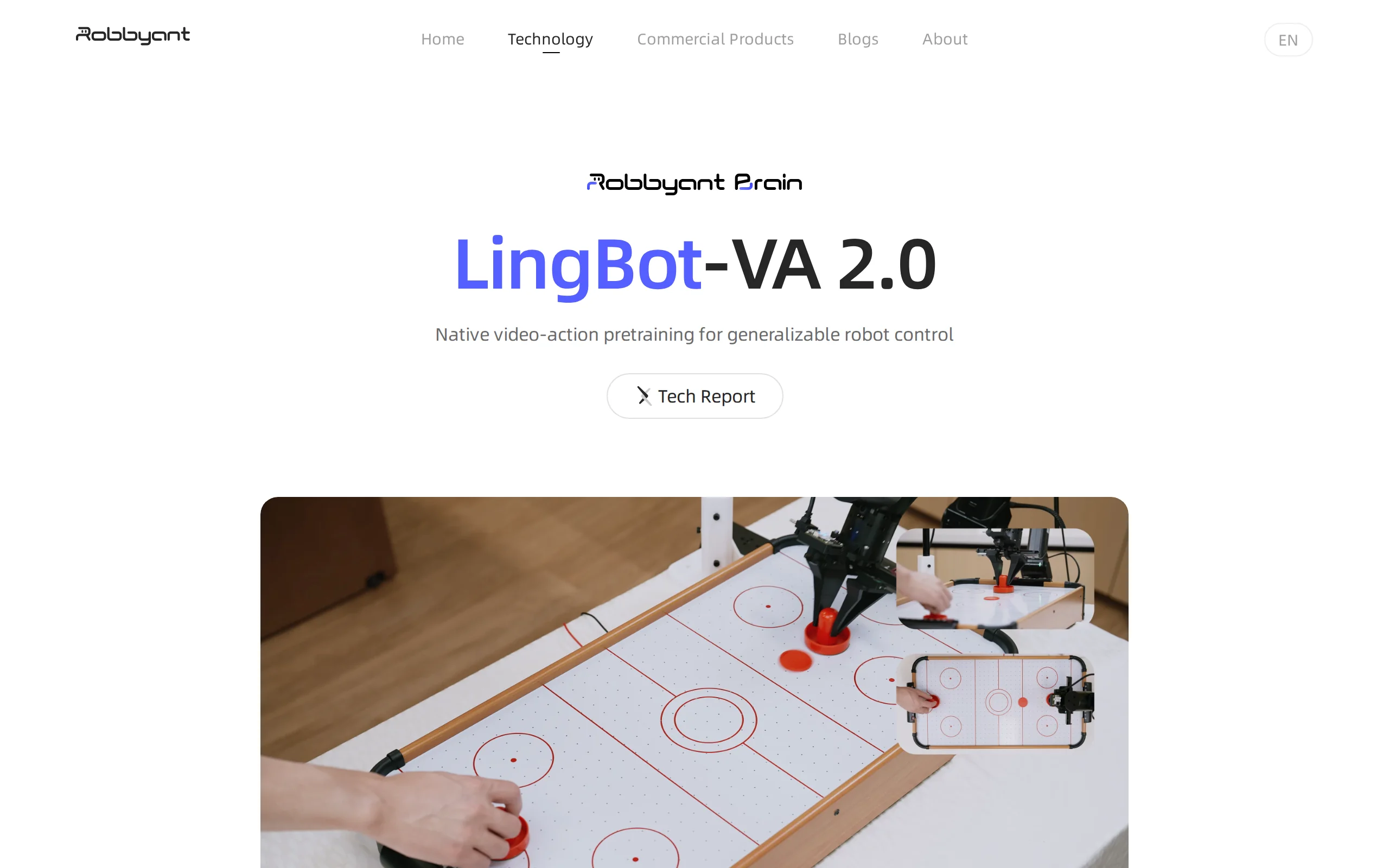
LingBot-VA 2.0 – AntWorld's Native World Action Model for Embodied Intelligence
LingBot-VA 2.0 is AntWorld's industry-first native world action model for embodied intelligence, pre-trained from scratch based on an autoregressive architecture, enabling robots to possess general-pu...
KAT-Coder-Pro V2.5 – Kwai's Agentic Coding Model
KAT-Coder-Pro V2.5 is the flagship Agentic Coding model introduced by KwaiKAT, focusing on long-range engineering capabilities and general Agentic abilities. By leveraging its self-developed AutoBuild...
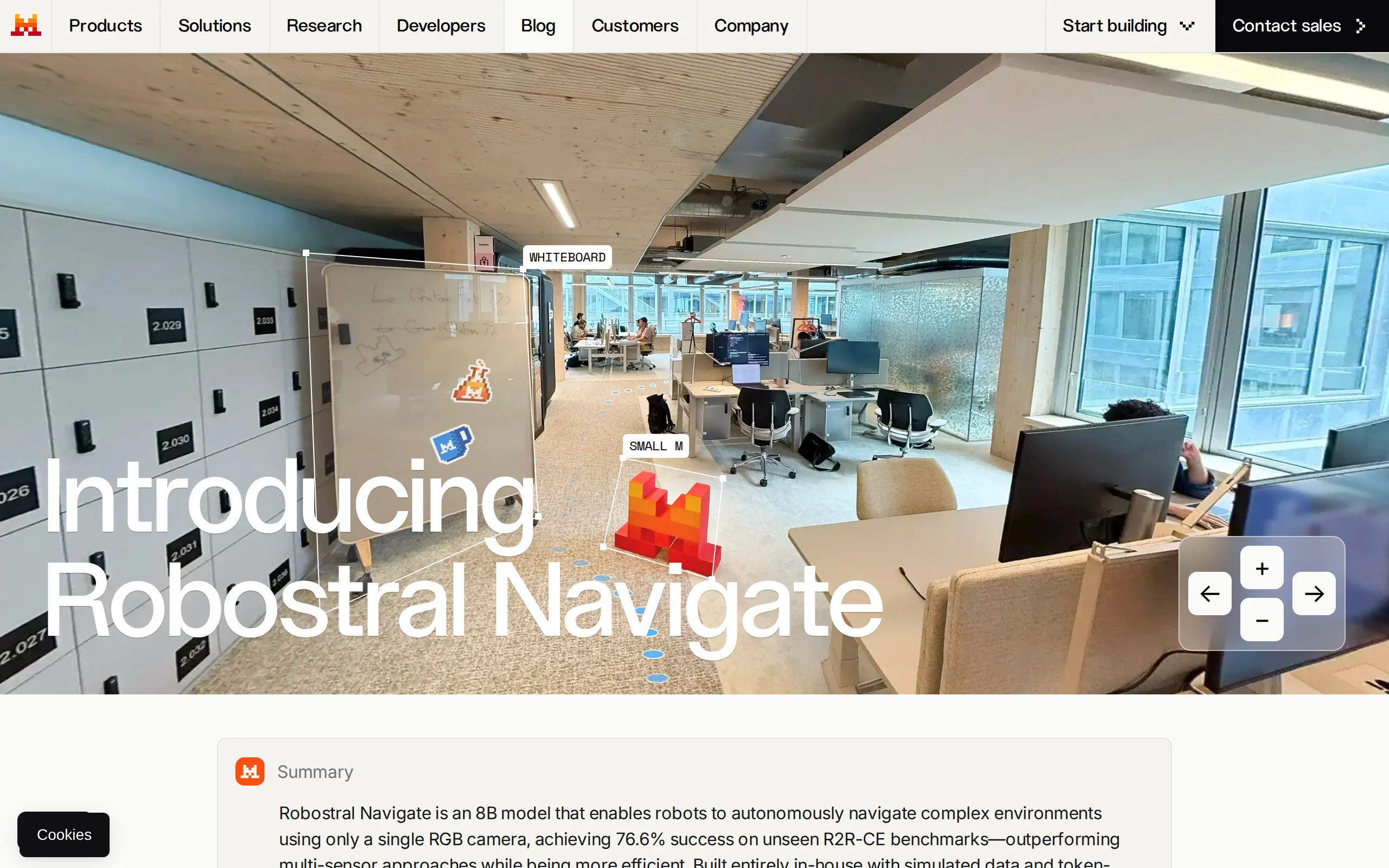
Robostral Navigate – Mistral AI's Embodied Intelligence Navigation Model
Robostral Navigate is Mistral AI's first embodied intelligence navigation model. Its core innovation lies in enabling robots to achieve autonomous navigation in complex environments using only a stand...

Seedream 5.0 Pro – A Multimodal Image Creation Model Launched by ByteDance
Seedream 5.0 Pro is a multimodal image creation model introduced by ByteDance's Seed team, specifically designed for complex professional scenarios. This model has achieved a comprehensive upgrade in ...
© All Rights Reserved. Some content on this site is partially generated by AI with human review.