
GPT-6 Luna: OpenAI's Cost Revolution and Capability Democratization in Lightweight Models
Executive Summary:
GPT-6 Luna is a lightweight AI model introduced by OpenAI, and it is a derivative version of GPT-6 Astra, alongside GPT-6 Sol. It is positioned for high-frequency, large-scale task scenarios. The mode...
1. What is GPT-6 Luna
GPT-6 Luna is a lightweight AI model introduced by OpenAI, and it is a derivative version of GPT-6 Astra, alongside GPT-6 Sol. It is positioned for high-frequency, large-scale task scenarios. The model's API pricing has been reduced to $0.1 per million input tokens and $0.5 per million output tokens, which is 50% cheaper than the previous generation, directly entering the price range of DeepSeek. In terms of performance, it achieved a 66.6% score on the programming test DeepSWE, approaching the medium-level performance of Claude Opus 5, but with task costs at only about 7% of that model. This model is suitable for high-frequency scenarios such as lightweight development, batch processing, and multi-Agent concurrency, reflecting OpenAI's strategic shift from pursuing peak performance to "capability scaling."
Technical Positioning and Domain: GPT-6 Luna belongs to the domain of lightweight large language models within natural language processing. Its core positioning is for high-frequency, large-scale inference tasks. Unlike flagship models that focus on peak performance for single tasks, Luna achieves significant reductions in computational cost and latency per call while maintaining a high level of capability through model distillation and inference infrastructure optimization. This makes it suitable for production environments requiring a large number of concurrent calls.
Development Background: This model was developed by OpenAI as one of the derivative versions of GPT-6 Astra, forming a product matrix with GPT-6 Sol that offers both high and low-end options. OpenAI's strategic intent in launching Luna is clear: to maintain technological leadership while lowering prices to capture the high-frequency calling market, particularly price-sensitive customer groups previously dominated by vendors like DeepSeek.
Core Value: GPT-6 Luna addresses the core contradiction in commercial deployment of large models: the trade-off between capability and cost. By leveraging Astra distillation technology, it compresses the capabilities of the flagship model into a lightweight architecture. At the same time, improvements in caching mechanisms and inference efficiency have brought API pricing down to $0.1 per million input tokens and $0.5 per million output tokens, a 50% reduction from the previous generation. This brings the marginal cost of large-scale AI application deployment close to zero, providing an economically viable technical solution for scenarios such as multi-Agent concurrency and batch processing.
Technical Features: The core technical advantages of GPT-6 Luna are reflected in three aspects: first, the distillation and downscaling of Astra capabilities, compressing the flagship model's inference, multimodal, and alignment capabilities into a lightweight version with higher throughput; second, optimized inference infrastructure, reducing service costs through improved caching mechanisms and passing the savings on to users; and third, a tiered inference strength design, supporting multiple levels of effort settings—low, medium, high, and highest—enabling dynamic trade-offs between cost and capability.
2. Key Features
Lightweight Programming: Achieved a 66.6% score in the DeepSWE v1.1 programming test, approaching the medium-level performance of Claude Opus 5, while reducing task cost by 93%. This feature targets high-frequency programming tasks such as code inspection, batch modifications, and simple function development, enabling development teams to attain near mid-to-high-level model programming capabilities at extremely low economic cost. It is especially suitable for automated maintenance of large-scale codebases.
Computer Operation: Outperformed GPT-5.6 Sol (medium) in the OSWorld 2.0 test, with a cost only one-tenth of that model. This capability allows Luna to efficiently perform RPA-like tasks such as web browsing and form filling, providing a high-cost-performance ratio model for computer automation. It significantly lowers the financial barriers for enterprises deploying automated workflows.
Professional Workflow: On high inference intensity settings, AutomationBench scores improved by 5.4 percentage points compared to GPT-5.6 Luna, while task cost decreased by 58%. This feature is tailored for business scenarios requiring stable output quality, enabling precise control over cost and quality by adjusting inference intensity. It allows enterprises to achieve output levels close to those of previous-generation mid-to-high-end models within budget constraints.
Factual Accuracy: At high inference intensity, Luna achieves the factual reliability level of GPT-5.6 Sol at approximately 1% of the cost. This characteristic is critical for applications requiring highly trustworthy outputs, such as medical consultations, legal document assistance, and financial analysis. It enables developers to avoid compromising between cost and accuracy.
Collaboration Style Optimization: Responses are more concise and clear, reducing the accumulation of technical jargon and redundant details, while explicitly stating what has been checked. This design enhances the human-machine collaboration experience, making model outputs easier to understand and verify. It is particularly suitable for team collaboration scenarios requiring quick reviews and decisions, reducing the cognitive load on users.
Tiered Inference Intensity: Offers multiple levels of effort settings—low, medium, high, and ultra—allowing users to flexibly adjust computational resources based on task difficulty. High inference intensity can approach the performance of the previous-generation Sol model, while low intensity further reduces costs, enabling a dynamic trade-off between cost and capability. This feature allows Luna to adapt to a wide range of tasks, from simple Q&A to complex reasoning, with a single model covering diverse application needs.
Prompt Caching Upgrade: The system now defaults to higher cache hit rates, with a 90% discount on input reading costs; supports dynamic adjustment of inference intensity and tool switches during conversations without disrupting cache reuse. It also introduces explicit breakpoints, allowing developers to precisely control the cache prefix boundaries. This feature is especially crucial for long-context Agent scenarios, significantly reducing the cost of repeated calls.
3. How to Use
GPT-6 Luna provides two primary usage methods: the ChatGPT Work / Codex interface for end users, and the API calling interface for developers. Here is the detailed usage guide:
Environment Requirements and Prerequisites: To use ChatGPT Work or Codex, confirm that your account is a Plus, Pro, Business, Enterprise, or Edu user. Free/Go users can only use Luna via the desktop application. For API calls, register for an OpenAI Developer Platform account and complete verification to obtain a valid API Key. It is recommended that developers be familiar with RESTful API calls and JSON data formats to properly construct requests.
ChatGPT Work / Codex Usage Process: Log in to the ChatGPT Work or Codex application, locate GPT-6 Luna in the model selector, and start using it by directly entering your task. Luna is suitable for high-frequency, lightweight daily tasks such as email drafting, document summarization, and code checking. For tasks requiring higher inference quality, adjust the inference intensity level in the settings to match the task's complexity.
API Calling Steps: Log in to the OpenAI Developer Platform, create an API Key in the console, and configure billing information. In your requests, set the model parameter to
gpt-6-luna, with billing based on 0.1 USD per million input tokens and 0.5 USD per million output tokens. Developers can adjust the inference intensity (low/medium/high/ultra-high) via API parameters to align with the complexity requirements of specific tasks.Cache Optimization Configuration: Monitor cache hit rates through the Prompt Caching Dashboard in the console, and design request prefixes reasonably to improve cache reuse rates. For long context Agent scenarios, use the explicit breakpoint feature to precisely control the boundaries of cache prefixes, avoiding unnecessary cache invalidation and further reducing calling costs.
Best Practices for Cost Control: Use low inference intensity for simple tasks to maximize cost efficiency, and switch to high inference intensity for complex tasks to ensure output quality. By leveraging the cache discount mechanism and placing static system prompts within the cache prefix, you can effectively reduce input costs for repeated calls. It is recommended that developers set up cost monitoring and alerts to track API expenses in real time.
4. Pros and Cons Analysis
| Pros |
|---|
| Superior Capability-to-Cost Ratio: DeepSWE programming test score reaches 66.6%, comparable to the medium-level performance of Claude Opus 5, but with 93% lower task cost, achieving an optimal balance between capability and cost. |
| Significant Price Advantage: Regular request pricing has entered the DeepSeek V4.1 Flash range and is even cheaper, with a fixed price that doesn't fluctuate based on peak or off-peak times, allowing enterprises to fully control their budgets. |
| Cache Mechanism Saves Costs: The improved Prompt Caching mechanism has a high hit rate, offering a 90% discount on cached input reads, further reducing costs in long-context Agent scenarios. |
| Ideal for Large-Scale Concurrency: The lightweight architecture offers high throughput, making it suitable for batch processing, lightweight development, and high-frequency tasks involving multiple Agent concurrency, with marginal costs approaching zero. |
5. Comparative Analysis with Similar Tools
| Comparison Dimension | GPT-6 Luna | DeepSeek V4.1 Flash | Claude Opus 5 |
|---|---|---|---|
| Input Cost | $0.10 / million tokens (approx. 0.7 CNY) | Off-peak: 1 CNY, Peak: 2 CNY | Higher, details to be confirmed by the official |
| Output Cost | $0.50 / million tokens (approx. 3.5 CNY) | Off-peak: 4 CNY, Peak: 8 CNY | Higher, details to be confirmed by the official |
| Cached Input Hits | 90% discount on cache reads | Off-peak as low as 0.02 CNY / million tokens | Supports caching, discount to be confirmed |
| Pricing Model | Fixed pricing, no peak/off-peak fluctuations | Time-based pricing with off-peak/peak rates | Fixed pricing |
| DeepSWE Score | 66.6% (max) | 74.2% | Approximately 70% (moderate intensity) |
| Context Window | Supports long context + cache optimization | 1 million token context | Long context support |
| Multimodal Capabilities | Inherit multimodal capabilities from Astra | Supports image and text understanding | Supports multimodal |
| Ecosystem Access | ChatGPT Work, Codex, full API suite | API + open platform | Claude platform + API |
Selection Recommendations: For cost-sensitive, large-scale applications requiring high-frequency tool calling, GPT-6 Luna is currently a highly competitive option. Its fixed low-cost model and cache discount mechanism make total cost of ownership manageable, especially suitable for scenarios involving multiple Agent concurrency, batch data processing, and lightweight programming automation. In comparison, while DeepSeek V4.1 Flash has a higher DeepSWE score, its time-based pricing model introduces cost uncertainty, and its ecosystem of tools is not as comprehensive as OpenAI's.
For complex reasoning tasks requiring top-tier performance, Claude Opus 5 remains a more suitable choice, although its high cost limits large-scale deployment. Developers should conduct a comprehensive evaluation based on task complexity, calling frequency, and budget constraints: prioritize Luna for high-frequency simple tasks, consider flagship models for low-frequency complex tasks, and use Luna's high-intensity inference mode for medium-frequency scenarios requiring a balance between performance and cost.
6. Editor's Summary
The launch of GPT-6 Luna marks a significant shift in OpenAI's product strategy, moving from a sole focus on model peak performance to a pragmatic approach of "capability scaling." Through Astra distillation technology, Luna compresses the core capabilities of the flagship model into a lightweight architecture, achieving a 66.6% score in the DeepSWE programming test, which is close to the medium-intensity level of Claude Opus 5, while reducing task costs to approximately 7% of that model. This decoupling of capability and cost makes Luna economically advantageous in high-frequency scenarios such as lightweight development, batch processing, and multi-Agent concurrency.
From a technological innovation perspective, Luna's low cost is not merely achieved by compressing model capabilities, but rather through systematic optimization of the inference infrastructure. The improved caching mechanism provides a 90% discount on input reads, and the explicit breakpoint feature allows developers to precisely control the boundary of the cache prefix. These designs directly address the cost pain points in long-context Agent scenarios. The tiered inference intensity mechanism also provides developers with a flexible tool for balancing cost and quality, enabling a single model to adapt to a wide range of tasks—from simple Q&A to complex reasoning.
In terms of practical value, Luna's fixed low-price model (input at $0.1 per million tokens, output at $0.5 per million tokens) eliminates the cost uncertainty caused by DeepSeek's peak-valley pricing, allowing enterprises to have full control over their budgets. Its high-throughput lightweight architecture is suitable for large-scale concurrent deployment, providing an economically viable model foundation for the mass commercialization of AI applications. Luna offers low-barrier AI capability access solutions for independent developers, startups, and internal toolchains of large enterprises.
Overall, GPT-6 Luna is suitable for the following groups: application developers who require frequent AI capability calls, technical teams building multi-Agent systems, cost-sensitive small and medium-sized enterprises, and independent developers who wish to obtain reliable AI assistance within their budget. As OpenAI continues to optimize its inference infrastructure and caching mechanisms, the Luna series is expected to continuously increase its capability ceiling while maintaining its price advantage, becoming the mainstream choice for high-frequency AI applications.
7. Application Scenarios
Lightweight Programming Assistance: Handles code inspection, batch modifications, and simple feature development tasks, offering programming capabilities close to the mid-level of Claude Opus 5 at approximately 7% of its cost. Development teams can integrate Luna into their CI/CD processes to enable automated code review and defect fixing, significantly reducing the cost of manual reviews.
Multi-Agent Concurrent Tasks: Supports long-running workflows with large-scale Agent parallel execution. The low per-unit cost amplifies the cost advantage exponentially with increased concurrency. Enterprises can build an Agent network composed of tens or even hundreds of Luna instances to handle tasks such as data collection, analysis, and report generation in parallel, significantly improving business processing efficiency.
High-Frequency Daily Office Tasks: Handles repetitive tasks such as email drafting, document summarization, and data organization. The fixed low price with no peak-valley fluctuations ensures complete budget control. Non-technical teams such as administrative, operations, and marketing can use Luna directly through ChatGPT Work, gaining efficient daily office assistance without the need to write any code.
Computer Automation Operations: Executes RPA-like tasks such as web browsing and form filling at one-tenth the cost of GPT-5.6 Sol, achieving higher operational scores. Enterprises can embed Luna into their automation workflows to implement intelligent upgrades for tasks such as data entry, information collection, and process approvals, reducing human resource investment.
Scalable AI Application Deployment: Acts as the backend model for chatbots and content generation products, with its extremely low API pricing making the marginal cost of high-frequency calls approach zero. Startup teams can validate product models at a low cost, while established enterprises can significantly expand the user coverage of AI features without worrying about API costs spiraling out of control as user numbers grow.
8. FAQ
Q: What is the difference between GPT-6 Luna and GPT-6 Sol?
A: GPT-6 Luna is a lightweight model, designed for high-frequency and large-scale tasks, with lower pricing (input: $0.1 per million tokens, output: $0.5 per million tokens), but it has weaker peak capabilities compared to Sol. GPT-6 Sol is a mid-to-high-end model, suitable for complex reasoning and high-quality output scenarios. Both models are derivative versions of GPT-6 Astra, sharing the same foundational technology but optimized for different use cases.
Q: Is the API pricing of GPT-6 Luna really cheaper than DeepSeek?
A: In standard request scenarios, the pricing of GPT-6 Luna (input: approximately ¥0.7 per million tokens, output: approximately ¥3.5 per million tokens) has entered the price range of DeepSeek V4.1 Flash. However, DeepSeek uses a time-of-day pricing model, with higher prices during peak hours. Luna uses a fixed pricing model with no peak or off-peak fluctuations, making it more cost-effective for scenarios requiring high-frequency calls throughout the day.
Q: How can developers adjust the inference strength of GPT-6 Luna?
A: Developers can set the effort field in API request parameters, which supports four levels: low, medium, high, and highest. For simple tasks, using the low setting maximizes cost efficiency. For complex tasks, switching to the high setting can achieve output quality comparable to the previous generation Sol model. It is recommended to conduct small-scale tests based on the task type to find the optimal balance between cost and quality.
Q: What languages and multimodal inputs does GPT-6 Luna support?
A: GPT-6 Luna inherits the multimodal capabilities of Astra, supporting multiple input modalities such as text and images. It supports major languages, including Chinese and English. Developers can input a mix of images and text through the multimodal API interface, making it suitable for tasks such as image-text understanding and visual question answering.
Q: How does the 90% discount for Prompt Caching take effect?
A: When the prefix content of a request matches a previously called prompt and hits the cache, the input read from the cache automatically enjoys a 90% discount. Developers can monitor the hit rate through the Prompt Caching Dashboard in the console and use the explicit breakpoint feature to control the cache prefix boundary, ensuring static prompts are effectively cached and maximizing discount benefits.
9. Project Links
- Product Official Website: https://openai.com/index/introducing-gpt-6-sol-and-luna/
- ChatGPT Access: https://chatgpt.com
- Codex Access: https://openai.com/codex/
- API Developer Platform: https://platform.openai.com
- Official Documentation: https://platform.openai.com/docs
Related AI Model Articles

Kimu: In-Depth Review of the Open-Source AI Video Editor from the trykimu Team
Kimu (officially named Kimu Studio) is an open-source AI video editor developed by the trykimu team. Its core concept lies in describing requirements through natural language, allowing AI to automatic...
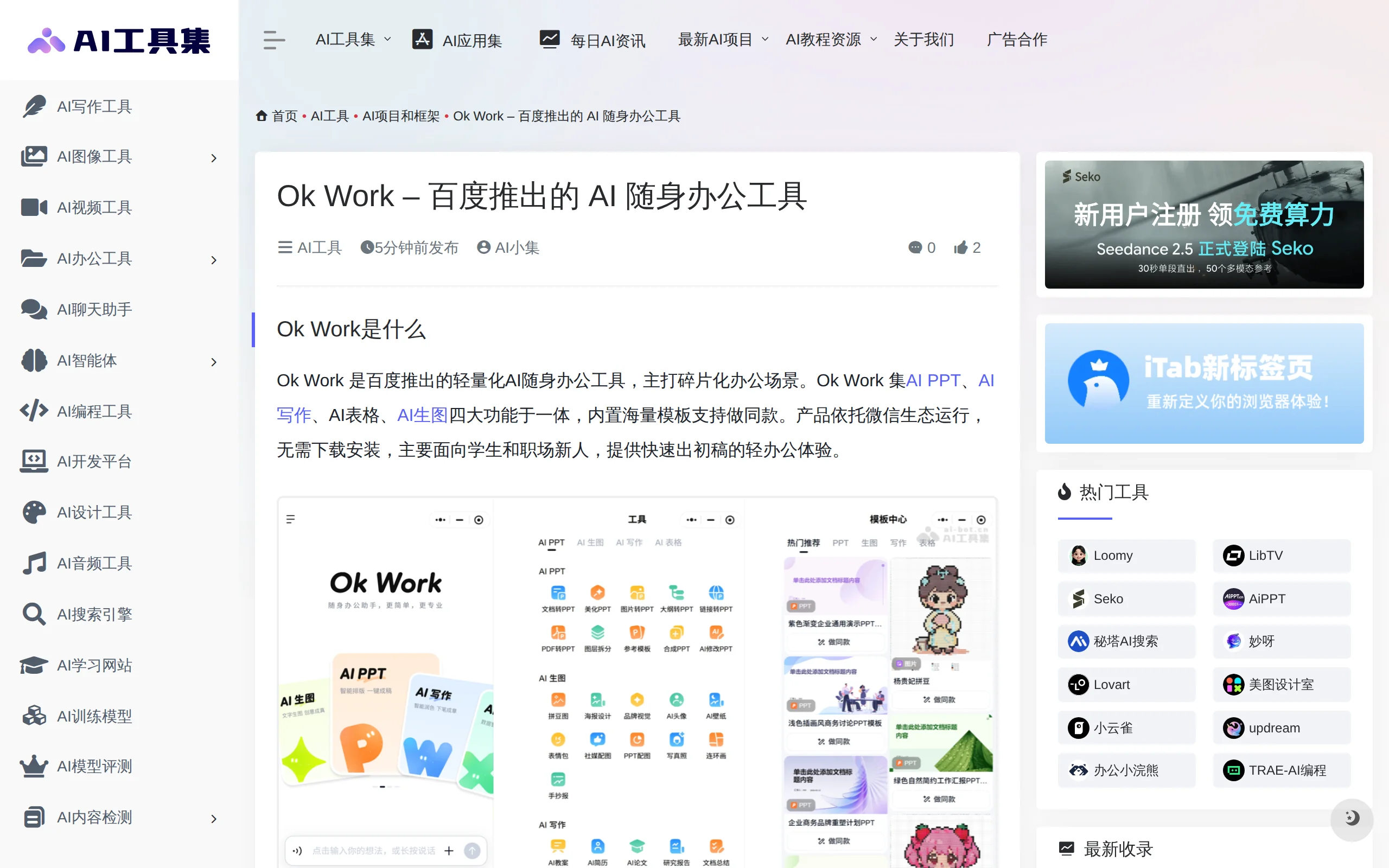
Ok Work – Baidu's AI On-the-Go Office Tool
Ok Work is Baidu's lightweight AI on-the-go office tool, running in the form of a WeChat Mini Program, targeting students and new professionals, and focusing on fragmented office scenarios. The produc...
In-Depth Evaluation of TeleOCR – The Open-Sourced Document Parsing Model by China Telecom's XingChen Lab
TeleOCR is an open-sourced document parsing model developed by China Telecom's XingChen Lab. It employs a lightweight vision-language architecture with approximately 1.2B parameters, unifying the proc...
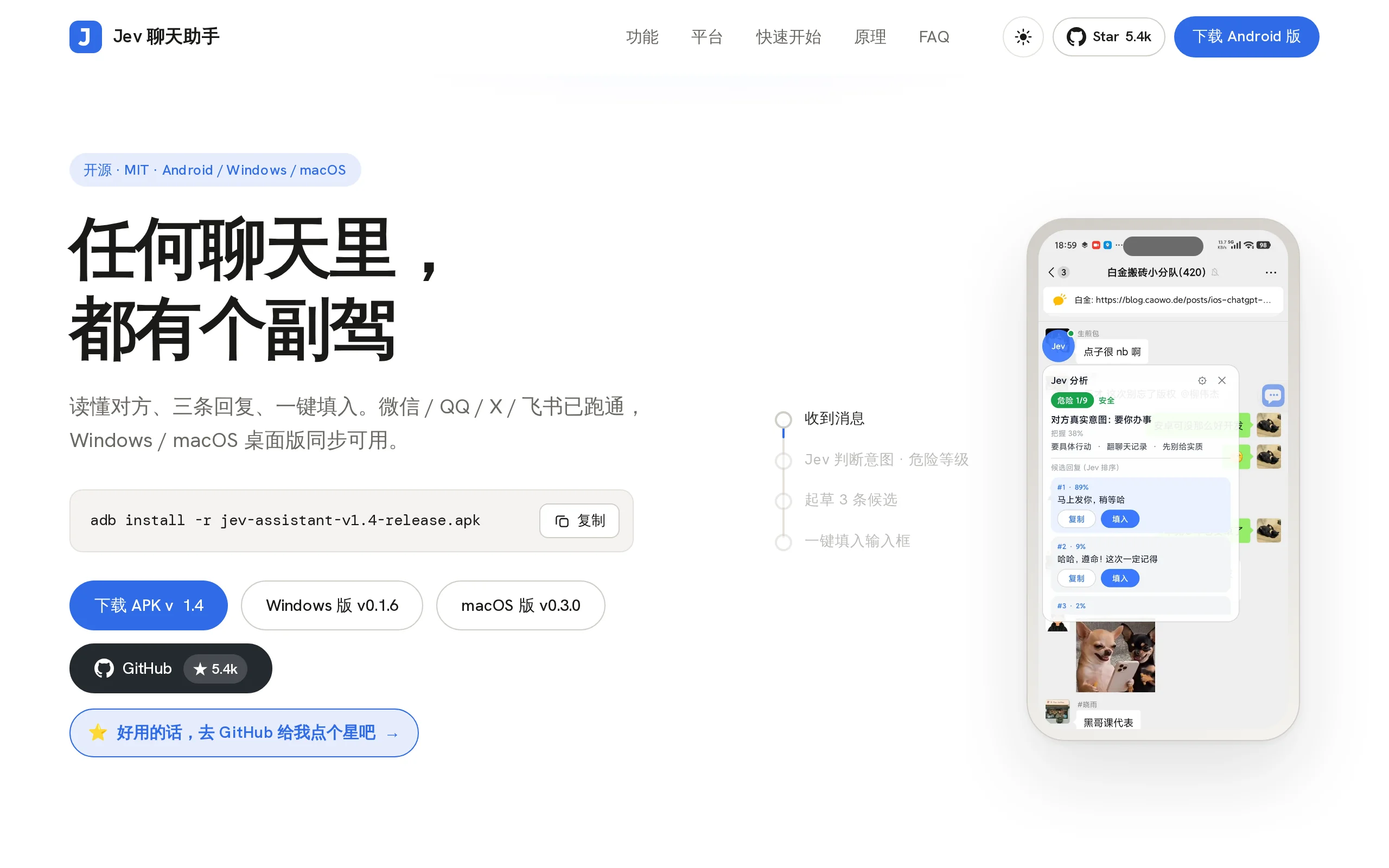
Jev Chat Assistant – Open-Source AI Chat Companion for Generating the Most Appropriate Responses
Jev Chat Assistant is an open-source, non-intrusive AI chat assistance application that provides real-time reply suggestions in popular messaging scenarios such as WeChat, QQ, X, and Feishu. The tool ...
© All Rights Reserved. Some content on this site is partially generated by AI with human review.