
Aholo Viewer – Manycore Tech's Open 3D Gaussian Splatting Browser
Executive Summary:
Aholo Viewer is Manycore Tech's (群核科技) open high-performance Web renderer for 3D Gaussian Splatting (3DGS). Its chunk-level LOD streaming loads city-scale scenes with up to 1 billion Gaussians for sec...
1. What Is Aholo Viewer
Aholo Viewer is Manycore Tech's (群核科技) open high-performance Web renderer for 3D Gaussian Splatting (3DGS). Its chunk-level LOD streaming loads city-scale scenes with up to 1 billion Gaussians for second-level startup and smooth roaming—even on phones. It supports ply, spz, sog, splat, and related formats, with built-in LOD generation, format conversion, and collision mesh tooling—key infrastructure for Manycore's "3D internet" vision, pushing 3D from "viewable" to "usable."
Technical positioning and domain: Real-time neural rendering on the Web— not just a viewer but a developer platform for large real-world 3DGS reconstruction and interaction, filling the gap for billion-point Web performance.
Development background: From Manycore (Kujiale/酷家乐 ecosystem)—motivated by making high-fidelity large 3D accessible on consumer hardware without native apps.
Core value: Solves 3DGS scale and device limits via streaming LOD—turning "download an app" into "open a link."
Technical characteristics: Chunk-level LOD tree (vs splat-only LOD) for cache hit rate and scale; multi-precision data, frustum-priority streaming, OpenUSD hybrid cloud rendering.
2. Key Features
Billion-Gaussian rendering: Chunk LOD + streaming for city scenes; sub-10s first paint in tests—rare on Web 3DGS today.
Install-free multi-device: Phones, desktops, VR browsers—share like a video link.
Format compatibility: ply, spz, sog, splat, lcc, ksplat native—minimal conversion friction.
End-to-end toolchain: LOD generator, converters, collision generator, pick/edit helpers—no patchwork of libs.
Voxel collision from 3DGS: Ray/capsule/ground/wall queries enable walk mode, camera collision, basic physics—beyond passive viewing.
OpenUSD hybrid cloud rendering: Mix 3DGS + high-fidelity meshes in one frame; stream to weak clients.
Render presets: Effect-first, performance-first, ultra-performance trade quality for FPS on low-end hardware.
3. How to Use
Requirements: Modern dev machine—8GB+ RAM, GPU ~GTX 1060 class; Node.js 18+ and pnpm; Windows/macOS/Linux.
Clone and install:
git clone https://github.com/manycoretech/aholo-viewer
cd aholo-viewer && pnpm install
Dev and build:
pnpm dev    # local preview
pnpm build  # production static assets
Integrate via npm:
import { createViewer, SplatLoader } from '@manycore/aholo-viewer';
const viewer = await createViewer({ container: document.getElementById('viewer-container') });
const scene = await SplatLoader.load('path/to/your/scene.ply');
viewer.addScene(scene);
Config tips:
viewer.setViewerConfig({ renderMode: 'performance' }); generate colliders withColliderGeneratorfor walk/interaction; preprocess mega-scenes with built-in LOD tools; use ultra-performance on mobile.
4. Pros and Cons
| Pros |
|---|
| Performance lead: ~10× max Gaussians vs Spark 2.0 (1B vs 100M); ~2× load, ~3× render, ~½ memory at 300M scale in cited benchmarks. |
| Full toolchain in one repo: LOD, convert, collide—faster time-to-app. |
| Web-native reach: Critical for tourism/exhibitions needing zero install. |
| OpenUSD hybrid + cloud stream: Film/industrial paths on weak devices. |
5. Comparison with Similar Tools
| Dimension | Aholo Viewer | Spark 2.0 (World Labs) | Luma AI (UE Plugin) |
|---|---|---|---|
| Architecture | Chunk LOD + streaming | Splat-based LOD | Unreal C++ pipeline |
| Scale | Up to ~1B Gaussians | ~100M cap | Often sub-10M in UE |
| Features | Collisions, convert, LOD gen | Basic Web render | UE blueprints |
| Deploy | Pure Web | Web browser | UE desktop/VR |
| Ease | High; simple API | Medium | Low (UE skill) |
| License | MIT | Open | Closed plugin |
Selection guidance: Web tourism/exhibitions/digital twin previews → Aholo. UE-native AAA interaction → Luma UE. Algorithm R&D → Nerfstudio; Aholo for shipping large Web scenes.
6. Editor's Take
Aholo moves 3DGS from papers to billion-point Web delivery. Chunk-level LOD is architectural—not incremental—beating splat-only trees on load/render/memory vs Spark 2.0 at cited scales.
Integrated toolchain (LOD/convert/collide) is the practical win: teams focus on product, not plumbing. Clear fit for digital culture, online education, virtual expos, spatial Web teams.
MIT license + Manycore platform could make this a Web 3DGS standard if docs/community catch up.
— −0.5 for ecosystem/docs; top-tier core performance and utility.
7. Use Cases
- Digital tourism / smart city: Drone/camera captures → browser roam on phone or desktop.
- Virtual production: Real locations as 3DGS + mesh props in hybrid cloud previz.
- Games / interactive walks: Collision-enabled exploration in reconstructed streets or heritage sites.
- Embodied AI sim: InteriorGS-class semantic indoor scenes for navigation/manipulation training.
8. FAQ
Q: Free for commercial use?
A: Yes—MIT license, no royalty.
Q: Low-end PC?
A: Use performance/ultra-performance modes; integrated graphics OK for moderate scenes; huge scenes stream progressively.
Q: Supported formats?
A: ply, spz, sog, splat, lcc, ksplat; built-in converter included.
Q: Walking and collisions?
A: Run ColliderGenerator, attach to viewer physics API—see repo examples.
Q: Huge scene slow?
A: Precompute LOD chunks before deploy; runtime loads visible chunks only.
9. Project Links
Related AI Model Articles

Jev Search: Open Source AI Search Engine, Achieving Intent Parsing and Multi-Engine Aggregation Based on the Jev Model
Jev Search is an open-source AI search engine frontend developed by the Search1API team. Its core functionality lies in leveraging the Jev structured decision model introduced by the TypeSafe team, en...
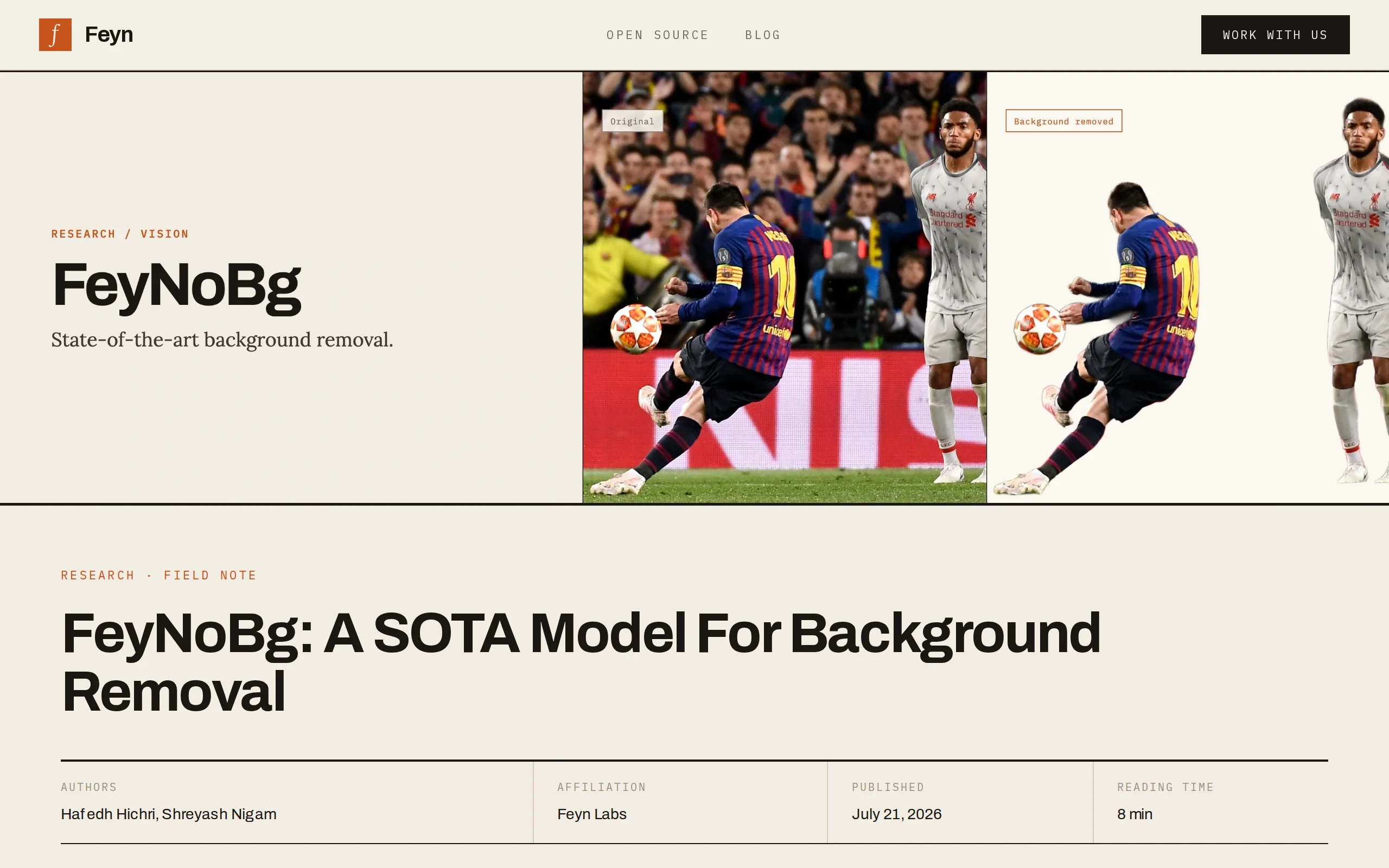
FeyNoBg – An Open-Source Automatic Background Removal Model from Feyn Labs
FeyNoBg is an open-source automatic background removal model developed by Feyn Labs, built upon the BiRefNet architecture with deep optimization, and features 263 million parameters. The model achieve...
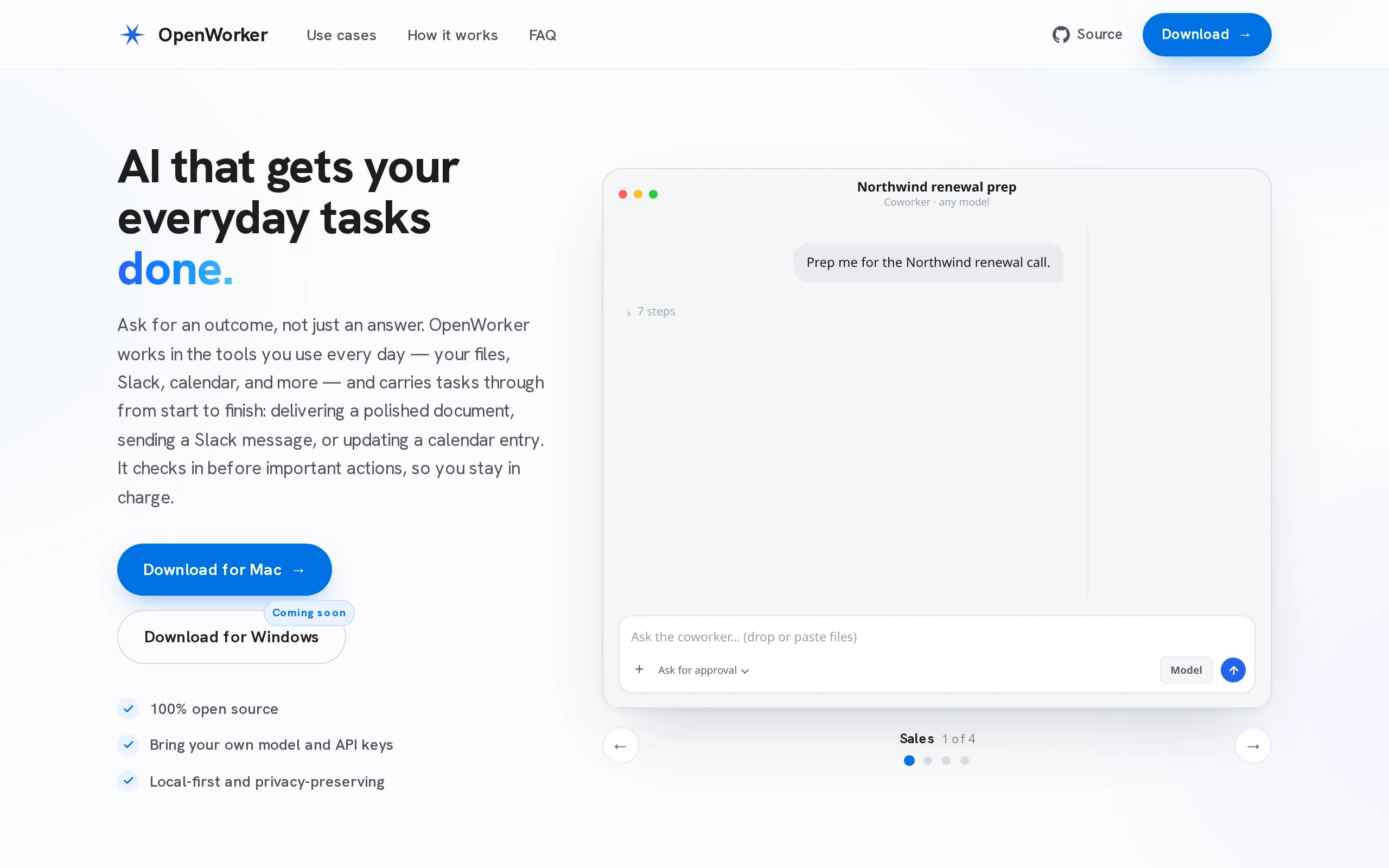
OpenWorker – Andrew Ng's Open-Source, Free, Local-First AI Desktop Agent
OpenWorker is an open-source AI desktop agent released by Andrew Ng, fully free under the MIT license. It is not a traditional chatbot, but rather a local-first AI colleague oriented toward "deliverin...
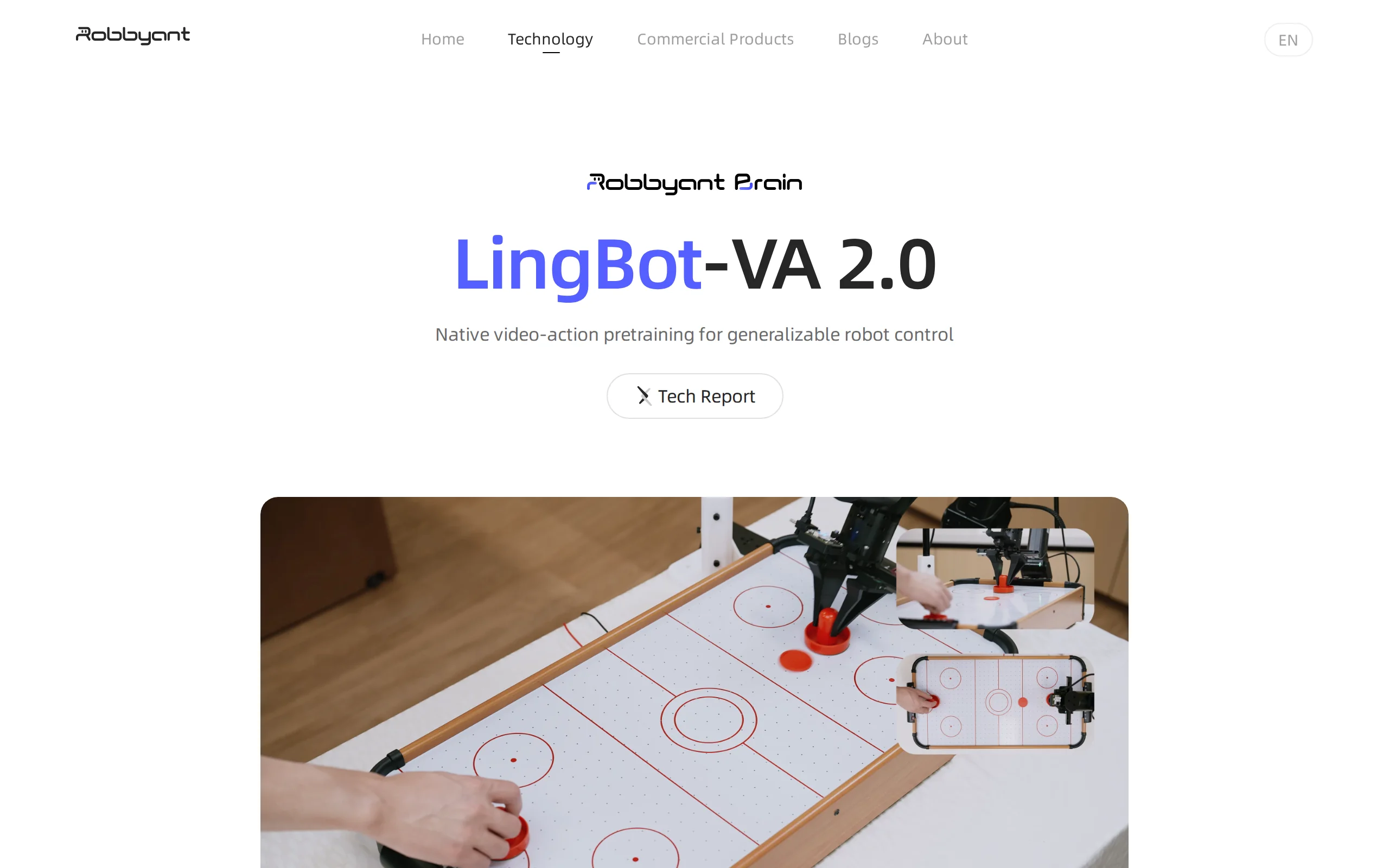
LingBot-VA 2.0 – AntWorld's Native World Action Model for Embodied Intelligence
LingBot-VA 2.0 is AntWorld's industry-first native world action model for embodied intelligence, pre-trained from scratch based on an autoregressive architecture, enabling robots to possess general-pu...
© All Rights Reserved. Some content on this site is partially generated by AI with human review.