
ABot-World Studio – A General-Purpose World Model Workshop Launched by AutoNavi

Executive Summary:
ABot-World Studio is a general-purpose world model workshop launched by AutoNavi Maps. It innovatively unifies interactive video generation with 3DGS (3D Gaussian Splatting) scene generation within th...
1. What is ABot-World Studio
ABot-World Studio is a general-purpose world model workshop launched by AutoNavi Maps. It innovatively unifies interactive video generation with 3DGS (3D Gaussian Splatting) scene generation within the same product framework. Users can generate AI worlds that support real-time interaction by simply inputting text or images. It enables local deployment on a single consumer-grade NVIDIA RTX 5090 GPU, with continuous inference duration exceeding one hour per session. The workshop also features an inbuilt "Space-Time Portal" mechanism to achieve seamless world transitions. This platform aims to reduce the barriers to producing high-quality 3D world content, offering high-fidelity, interactive, and exportable digital space solutions for scenarios such as embodied AI training, open-world gaming, and film production.
Image source: Official article
Image source: official article
Technical positioning and domain: ABot-World Studio belongs to the intersection of generative AI and spatial intelligence, positioned as a general-purpose world model workshop that covers full-scale spatial generation, from indoor scenes to aerial city views. It differs from tools that focus solely on video generation or single 3D reconstruction tasks. Development background: Developed by the AutoNavi team, leveraging its deep expertise in spatial data, navigation technology, and computer vision, the platform aims to bring map-level spatial understanding capabilities down to an open creative platform. Core value: It addresses key pain points in existing world models, such as short inference durations (typically under one minute), inability to export reusable 3D assets, and dependency on specialized computing clusters, achieving hour-long continuous inference and operation on consumer-grade hardware. Technical features: It employs the self-developed ABot-World0 video generation model and ABot-3DWorld0 scene generation model, which share the same inference pipeline. A modular design of "Generation – Evaluation – Repair" ensures output quality; all models are deeply optimized for consumer-grade GPUs, resulting in high inference efficiency.
2. Key Features
- Text/Image-to-World Generation: Supports user input of textual descriptions or uploaded images, with the system automatically generating corresponding interactive 3D worlds. It also outputs video files and 3DGS format spatial assets, enabling rapid transformation from creative ideas to actual scenes.
- Real-time Interactive Exploration: Users can navigate in first-person or third-person perspective using keyboard WASD and mouse/directional keys. The world evolves and provides real-time feedback consistent with physical rules, rather than passively playing a pixel stream.
- Space-time Portal: Embed portals within any scene to instantly teleport to another complete 3D world. Supports the creation of a multi-world exploration network, breaking through the limitations of single scenes.
- Dual-modal Generation: Simultaneously supports interactive video generation (providing a real-time operable visual stream) and the generation of 3DGS spatial assets with real geometric structures, balancing real-time experience with permanent asset preservation.
- Long-duration Reasoning: The architecture has no upper limit on reasoning duration, allowing for stable continuous reasoning for over one hour per session, without crashes or quality degradation—far exceeding the typical one-minute limit of similar models.
- Physical Consistency and Full-scale Coverage: Highly replicates real-world physical rules, with the world providing precise feedback in response to user actions. The same architecture spans indoor spaces, street scenes, and aerial city views, ensuring depth perception and geometric accuracy across all scales.
3. How to Use
- System Requirements: A computer equipped with an NVIDIA RTX 5090 consumer-grade GPU is required. It is recommended to use Windows 10/11 or Linux (Ubuntu 20.04+) as the operating system. Install the latest NVIDIA drivers and CUDA 12.x runtime. Ensure that the system has at least 32GB of RAM and 100GB of available disk space for model caching and output storage.
- Access the Official Website and Launch: Open the ABot-World Studio official website (link to be updated after official release).
- Input Prompt to Generate the World: Upload an image (supporting JPG/PNG, recommended resolution of 1024×1024 or higher) or input a text description (supporting both Chinese and English) in the input box. The more detailed the description, the richer the generated world will be. Click the "Generate" button, and the system will begin inference. The first generation may take several minutes.
- Real-time Control and Exploration: After generation is complete, use the WASD keys on your keyboard to control character movement, and use the mouse drag or arrow keys to adjust the viewpoint for first-person or third-person navigation. The world will update in real time as the user interacts, supporting basic actions such as jumping and running.
- Use the Spacetime Portal: Locate the pre-set portal icon within the scene or manually place a portal using the interface tools. Clicking the portal will allow you to travel to another newly generated 3D world, enabling seamless transitions.
- Export Assets: After exploration is complete, you can save the current world as an MP4 video file (with customizable resolution and frame rate) or as 3DGS format point cloud/mesh assets via the "Export" button in the interface. These assets can be used for further editing in tools such as Blender or Unity.
Notes: The first inference requires downloading the model weights (approximately 10GB), so ensure a stable internet connection; prolonged inference will continuously consume GPU memory, so it is recommended to monitor the temperature; exporting 3DGS assets may require additional processing time for complex scenes.
4. Pros and Cons Analysis
| Pros |
|---|
| Unified Multimodal Output: For the first time, it provides both interactive video and savable 3DGS spatial assets within a single product, balancing real-time experience with asset reusability, significantly expanding the application boundaries. |
| Extended Inference Duration: Continuous inference can last over one hour without crashing or quality degradation, far exceeding the one-minute limit of similar models, providing ample time window for complex scenario exploration and content creation. |
| Full-Scale Spatial Coverage: The same architecture spans indoor environments, street scenes, and aerial city views, allowing the generation of multi-scale scenes without switching models, offering a significant advantage in generalizability. |
| Open Source and Open Ecosystem: The model and code are fully open-sourced under the Apache 2.0 license, available on GitHub and Hugging Face, supporting both commercial and academic use, which lowers the barriers for secondary development and customization. |
5. Comparative Analysis with Similar Tools
| Comparison Dimension | ABot-World Studio | Google Genie 2 |
|---|---|---|
| Inference Duration | Single continuous inference exceeds 1 hour without crashes or quality degradation. | Can generate a consistent world for about 1 minute, then requires a reset. |
| Modal Coverage | Outputs interactive video and savable 3DGS spatial assets simultaneously. | Primarily outputs interactive 3D video environments, with no native 3D asset export. |
| Deployment Threshold | Can run on a single consumer-grade GPU (RTX 5090) locally, without requiring dedicated computing power. | Currently only available as a research preview, with no local deployment or external API access. |
| World Expansion | Built-in "Anydoor" mechanism enables unlimited inter-world jumps and weaving. | Has long-term memory within a single world, but limited cross-world expansion capabilities. |
| Open Source Ecosystem | Full model and code open source, available on GitHub and Hugging Face. | Not open source, with capabilities only showcased through official blogs and papers. |
| Application Stage | Open to public testing, directly usable for content creation and embodied training. | Positioned as a research tool, suitable for rapid prototyping and AI agent evaluation. |
Selection Recommendations: For content creators and embodied intelligence researchers requiring long-duration, cross-world exploration and the ability to retain editable 3D assets, ABot-World Studio is currently the only open-source solution that meets these requirements. Google Genie 2 excels in maintaining memory consistency within a single world, making it suitable for short-term interactive experiments, but it lacks asset export capabilities and is not open source. Decart Oasis focuses on real-time generation for gaming scenarios, but has high hardware requirements and limited functionality. If budget is limited and the focus is primarily on short-term video-level interaction, the research preview of Genie 2 can be used; however, for asset reuse and multi-world transitions, ABot-World Studio is the preferred choice.
6. Editor's Summary
ABot-World Studio demonstrates GaoDe's technical expertise in the field of spatial intelligence through its innovative technology. Its core breakthrough lies in unifying interactive video generation with 3DGS scene generation within the same architecture, and achieving ultra-long inference stability through a modular design of "generate—evaluate—repair." Compared to Google Genie 2, ABot-World Studio not only offers open-source access but also provides exportable 3D assets, making it unique among similar products. In terms of practical value, this workshop directly lowers the barrier to creating high-quality 3D world content, making it particularly suitable for scenarios such as embodied intelligence training (high-fidelity simulation environments), open-world games (dynamic map generation), and film storyboarding (rapid multi-perspective content generation). The target users include AI researchers, game developers, film professionals, and educational content creators. In terms of future development potential, with the continuous improvement of consumer-grade GPU performance and contributions from the open-source community, ABot-World Studio has the potential to become one of the foundational infrastructures in the world model domain. However, the current version still has room for improvement in terms of physical accuracy, documentation completeness, and 3D asset format compatibility, requiring joint iteration from the community and development team.
7. Application Scenarios
- Embodied Intelligence Training: Provides a high-fidelity physical simulation training environment for robots, simulating perception and decision-making in real-world scenarios. Researchers can generate diverse indoor and street scenes, allowing agents to learn navigation, obstacle avoidance, and operational skills through hours of continuous interaction, thereby shortening the migration cycle from simulation to reality.
- Open-World Gaming: Supports the dynamic, boundaryless generation of game maps and the arbitrary portal teleportation mechanism. Game developers can quickly create vast and coherent game worlds, and players can travel between different regions through portals, breaking traditional level boundary constraints and enhancing exploration freedom.
- Film Pre-Visualization: Rapidly transforms single-perspective materials into multi-camera storyboards. Directors or concept artists can input textual descriptions or reference images to generate interactive 3D scenes, freely adjusting perspectives and compositions, compressing the creative validation cycle from weeks to hours and accelerating pre-production visualization.
- Cultural Tourism Immersive Experiences: Users can step into famous paintings or historical civilization sites from a first-person perspective, transforming from passive observers to active participants in the scene. Museums or cultural tourism institutions can generate interactive ancient cities or natural wonders based on textual or image inputs, offering visitors immersive guided experiences.
- Educational Simulation Classrooms: Creates interactive virtual spaces for geography and history education. Teachers can input descriptions such as "Roman Forum" or "Tropical Rainforest Ecosystem," and students can freely explore the generated 3D world, enabling immersive, inquiry-based learning and enhancing comprehension and retention.
8. FAQ
Q: What hardware configuration is required for ABot-World Studio?
A: It is recommended to use an NVIDIA RTX 5090 GPU with at least 24GB of VRAM, 32GB or more of system memory, and 100GB or more of storage space. While theoretically compatible with other RTX 40-series GPUs, inference speed and stability will significantly decrease. AMD GPUs and integrated GPUs are not supported.
Q: Is the model fully open source? Can it be used for commercial purposes?
A: The model weights and inference code have been open-sourced on GitHub (Apache 2.0 license) and Hugging Face, supporting both commercial and academic use. However, please note that the third-party libraries used for 3DGS asset export may have separate licenses, and users should verify them independently.
Q: Can the generated 3DGS assets be used in other software?
A: The exported 3DGS format is currently designed for the built-in renderer of ABot-World Studio. To import into tools like Blender or Unity, the assets need to be converted into a common format (e.g., PLY, OBJ). The official team plans to provide conversion scripts, but the current version requires users to handle this manually.
Q: Can the inference duration really exceed 1 hour? Does the quality degrade?
A: According to official testing and public demonstrations, a single continuous inference session can run stably for over 1 hour without noticeable degradation in visual quality. However, long inference sessions will continuously consume GPU memory. It is recommended to run in a well-cooled environment and to save progress regularly.
Q: What input methods are supported? How is Chinese supported?
A: It supports text descriptions and image uploads, with text input available in both Chinese and English. Chinese descriptions perform well in generating common scenarios such as interiors and street scenes, but may lack precision for very obscure cultural concepts. For best results, it is recommended to combine Chinese text input with image input.
Q: How does the Spatiotemporal Portal work?
A: The portal is essentially a trigger point within a scene. When the user approaches or clicks on it, the system initiates a new inference process in the background to generate a complete new world based on the context of the current world or user-specified prompts, then seamlessly switches to it. This is similar to parallel generation and dynamic loading of multiple worlds.
9. Project Links
- Project Website (Online Experience): https://abot-world.amap.com/
- GitHub Repository (Code and Models): https://github.com/amap-cvlab/ABot-World
Related AI Model Articles
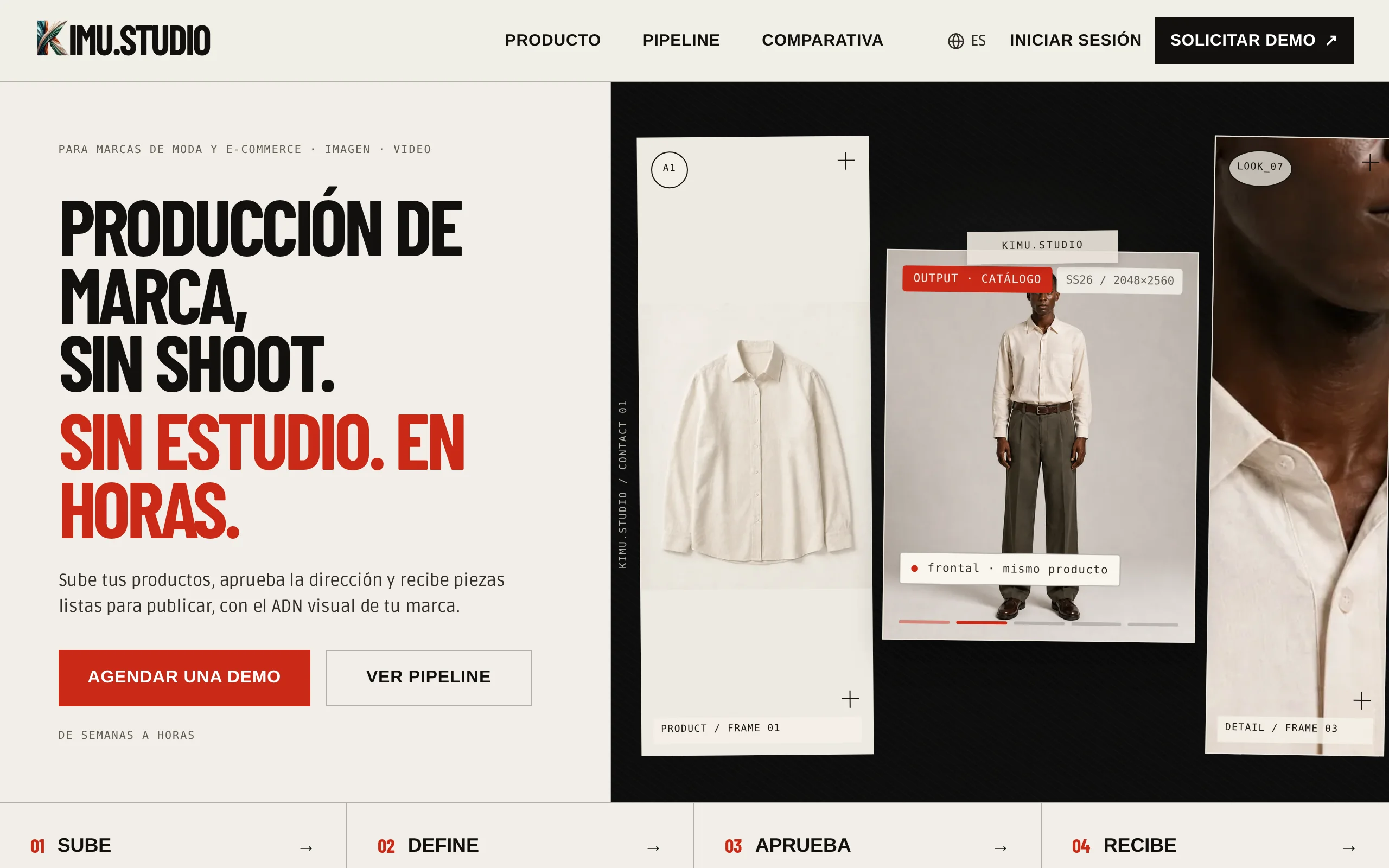
Kimu: In-Depth Review of the Open-Source AI Video Editor from the trykimu Team
Kimu (officially named Kimu Studio) is an open-source AI video editor developed by the trykimu team. Its core concept lies in describing requirements through natural language, allowing AI to automatic...

Qwen-Audio-3.1: A Full-Stack Evaluation of the Qwen Audio Large Model Series
Qwen-Audio-3.1 is a series of large audio models launched by Alibaba's Qwen. It consists of five models: ASR speech recognition, ASR-Next audio understanding, TTS speech synthesis, TTS-Next audio crea...

Qwen3.8-LiveTranslate – A Real-Time Simultaneous Interpretation Model Launched by Alibaba Tongyi
Qwen3.8-LiveTranslate is a real-time simultaneous interpretation large model launched by the Tongyi Qianwen team at Alibaba. Based on the Interleave single-stream architecture, it processes audio and ...
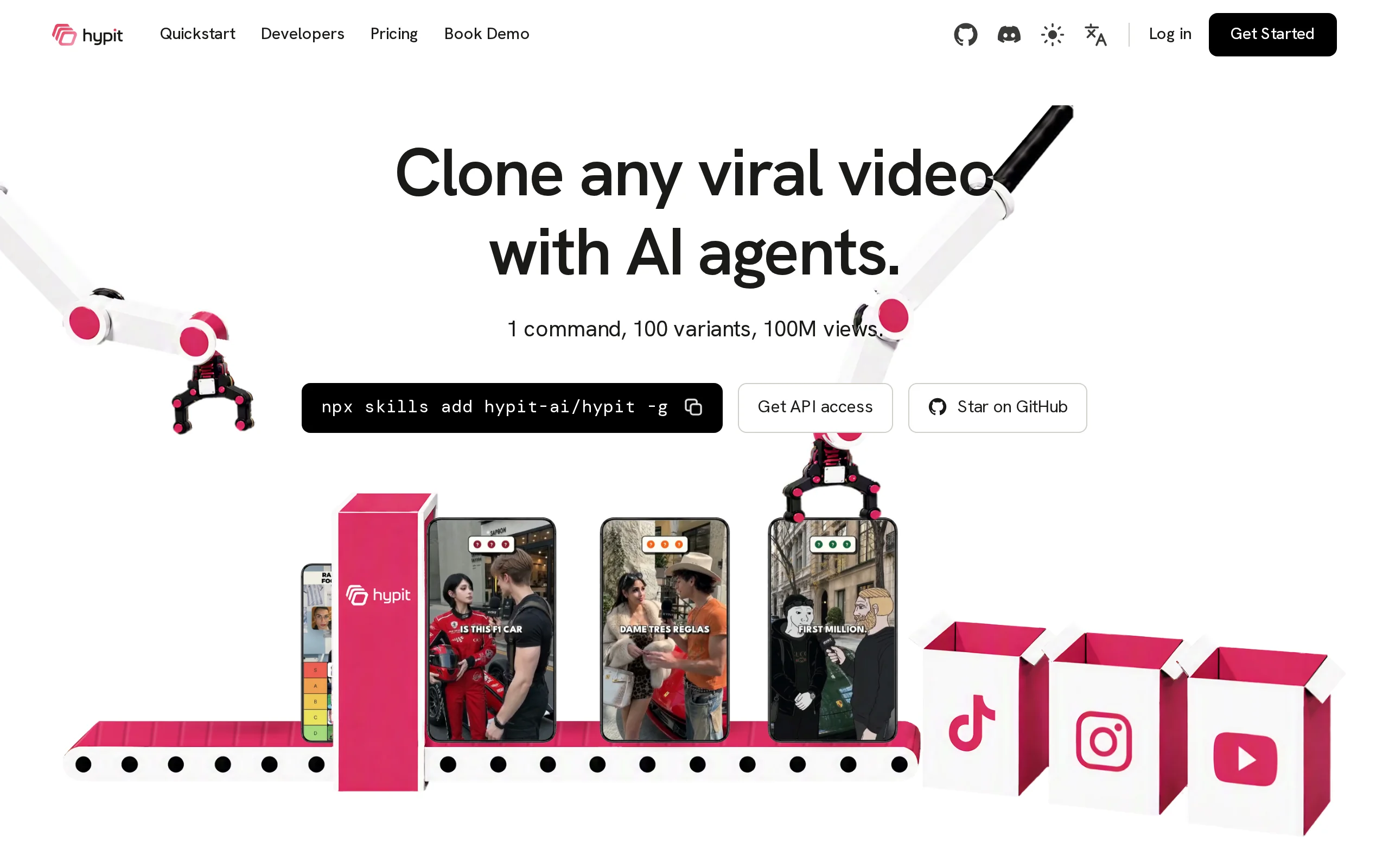
Hypit – Open-Source AI Video Generation Tool, Automatically Replicates Viral Videos
Hypit is an open-source AI video generation tool, centered on the methodology of "Provide an Agent with a viral video, and it will automatically replicate the entire workflow." It breaks down viral vi...
© All Rights Reserved. Some content on this site is partially generated by AI with human review.